The Phase Most Riders Mess Up
How to Get Better Without Riding at All
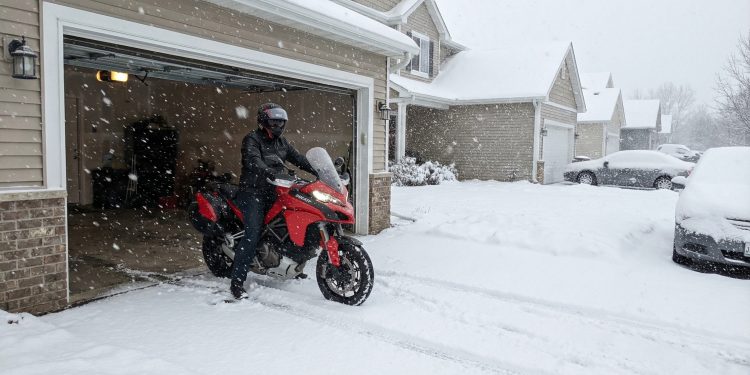
Winter shows up, the roads freeze, and the motorcycle gets pushed into the corner of the garage. Suddenly, you’re driving your car like it’s a refrigerator with wheels. Your reactions slow down, your eyes wander, and your timing becomes… optimistic at best. By the time spring rolls around, many riders feel rusty before they even leave the driveway.
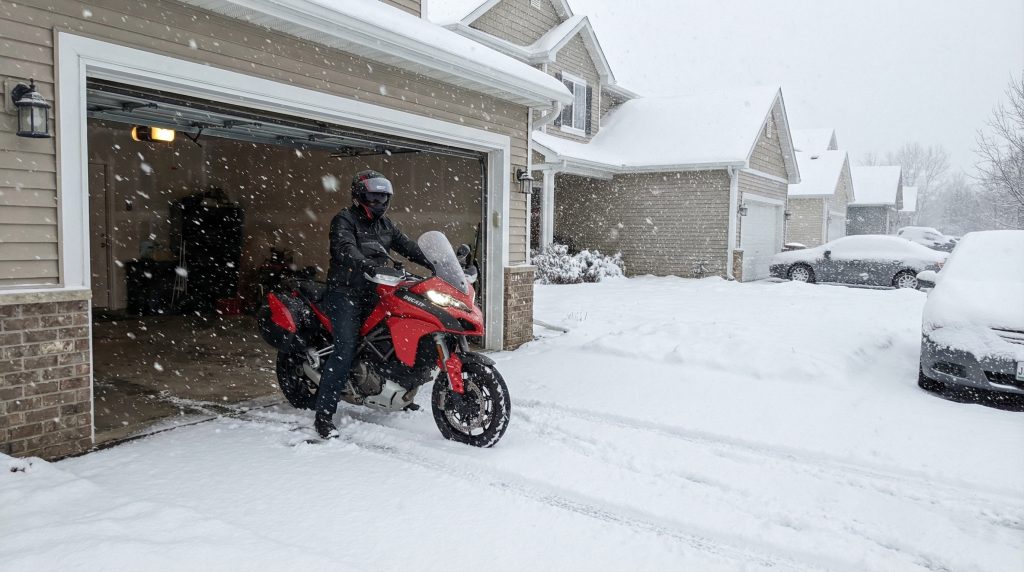
The good news is that winter doesn’t have to make you worse. If you use it intentionally, it can quietly make you better. You can sharpen core riding skills without touching a motorcycle at all, and you can do it in ways that are safe, repeatable, and surprisingly effective.
If you must ride in winter, or if you are looking for some top shelf winter riding gear, our supporter Revzilla has what you need!
Lean Angle, Grip, and Why Cars Are Better Teachers Than You Think
Lean angle equals risk. That’s one of the most fundamental ideas in riding. More lean means less grip, and less grip means fewer options when something unexpected happens. That relationship doesn’t magically disappear just because you’re sitting in a car instead of on a bike.
A car behaves the same way, even though it leans in the opposite direction. The more steering input you add, the more grip you’re asking the tires to give up for cornering. On cold pavement, that grip is about as committed as a teenager asked to clean their room, which makes winter driving the perfect place to practice smoothness and timing.
Instead of treating your car like transportation you tolerate until riding season returns, treat it like a training tool.
Using Your Car to Practice Trail Braking and Timing
Here’s how it works.
When the steering wheel is straight, imagine the motorcycle upright. This is maximum grip. This is where you do your initial braking, using a smooth, progressive press on the brake pedal. The chassis is stable, the tires are happy, and life is good.
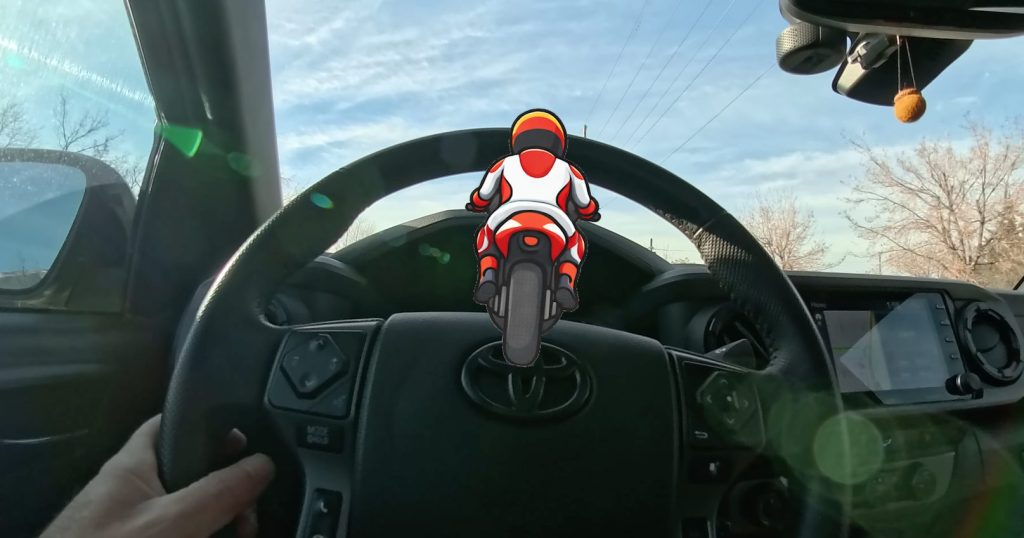
As you begin turning the wheel, imagine the bike leaning. As that imaginary lean angle increases, you ease off the brake pressure, just like you would on a motorcycle. You’re trail braking, only now you’re doing it at car speeds, in a heated seat, with a cup of coffee nearby.
Your slowest speed should happen when the wheel is turned the most, because that’s your maximum imaginary lean angle. From there, you begin unwinding the wheel. As steering input comes out, grip returns. Only then do you add throttle.
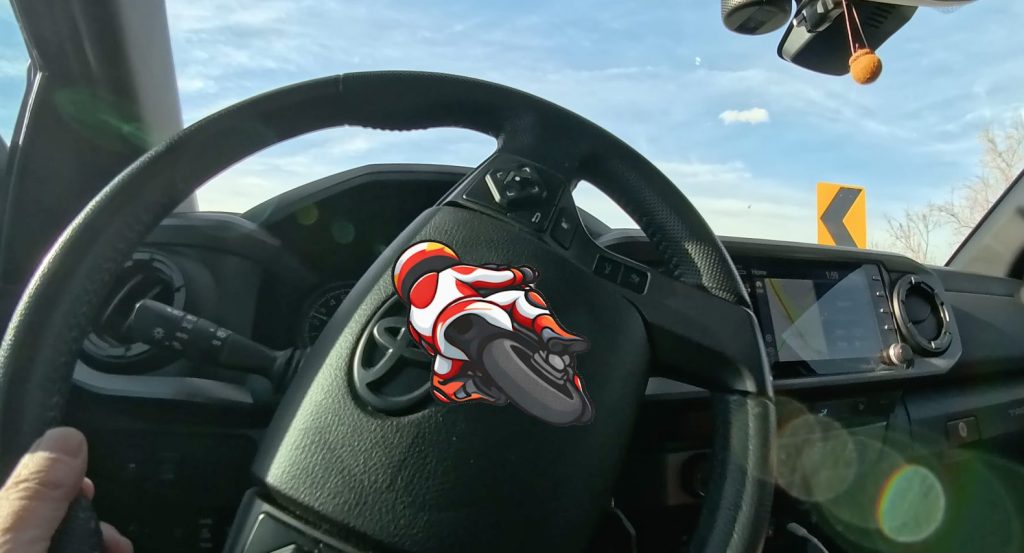
The timing is identical to what you use on a motorcycle. Straighten, brake, lean, release, unwind, accelerate. Same rhythm. Same sequence. Just far more forgiving.
Why Corner Exits Matter More Than Entries
There’s a truth about cornering that riders love to ignore: the most important part of the corner is not how you enter it, it’s how you exit it. Statistically, riders crash more often by running wide on corner exits than by entering too hot.
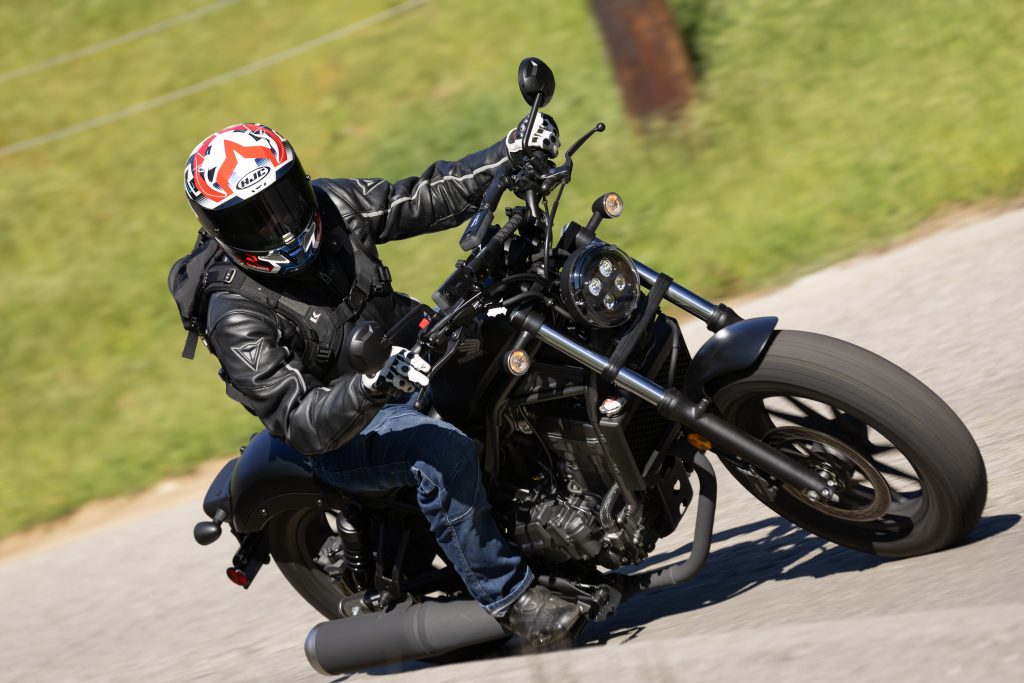
Winter driving is perfect for fixing this habit.
Speed determines radius. At slower speeds, you can hold a tighter arc. At higher speeds, the radius widens. This isn’t just a motorcycle lesson, it’s a rolling physics demonstration, and your car gives you constant feedback without serious consequences.
Brake with the wheel straight. Ease off as you add steering. Reach your slowest speed at maximum steering. Then comes the hard part for riders: patience.
Hold the radius. Hold the steering. Maintain just enough throttle to stay neutral. Wait until you can actually see the exit of the corner before you start taking steering input away. Only when the road opens up do you straighten the wheel and smoothly add throttle.
This trains your brain to wait for conditions instead of reacting to excitement. You don’t accelerate because it feels good. You accelerate because the corner has been earned.
Cars are brutally honest teachers. Add throttle too early with the wheel still turned and the car simply widens its line or gives you a gentle tire protest. No drama. No high side. Just clear feedback that says, “Not yet.”
Do this all winter, and when you get back on the bike your eyes will find the exit sooner, your patience will improve, and your acceleration will be cleaner and more confident.
Fast Eyes Are the Real Secret
Everything you just practiced depends on one thing: vision.
Your hands follow your eyes. Your timing follows your eyes. Your sense of grip, radius, and risk all follow your eyes. If your eyes are slow, everything else is slow.
Instead of staring out the windshield like a tourist on a bus, practice active vision. Look far ahead to understand the big picture, then bring your eyes back to pick up details like lane edges, patches of snow, or the car drifting into your lane because someone just received a photo of a sandwich. Then send your eyes back out again.
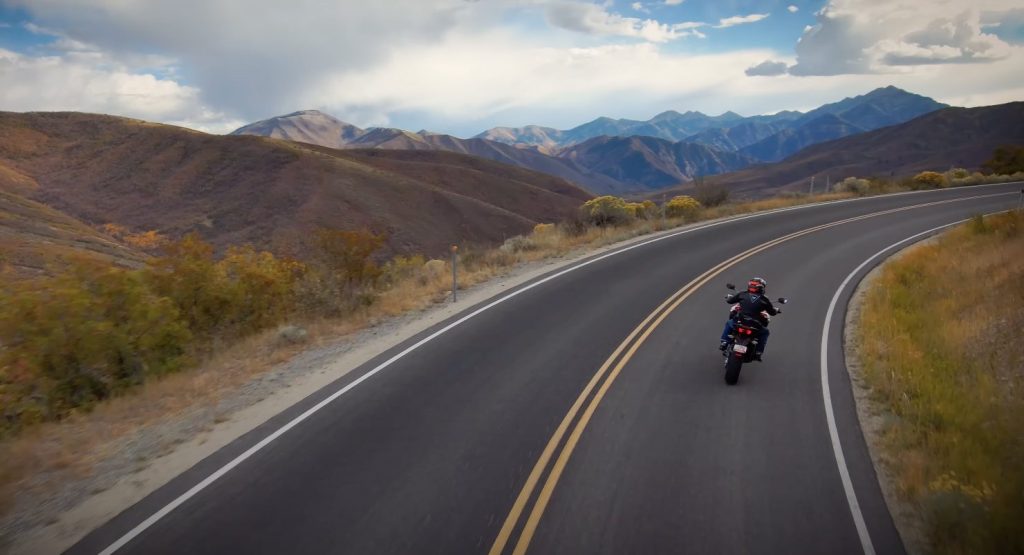
Wide view. Close view. Wide view again. That rhythm matters.
You don’t even need a car to train this. A tennis ball works just fine. Toss it against a wall and catch it. If you stare at the wall, you’ll miss. If you stare at your hands, you’ll miss. The trick is seeing the whole picture while still tracking the details. If you want to level it up, write numbers on the ball and try to read them before you catch it.
Steve McQueen didn’t ride like that because of movie magic. He rode like that because he trained his eyes relentlessly. Winter gives you time to do the same, with more snacks and less concrete.
Don’t Forget the Motorcycle Itself
All of this skill work doesn’t matter much if your motorcycle spends the entire winter quietly decomposing in the garage.
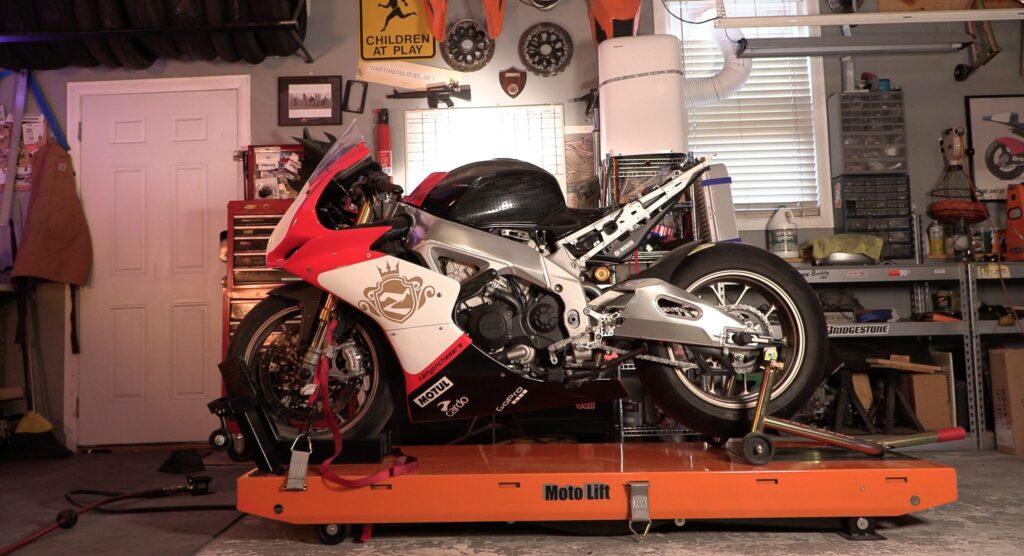
Winter is the best time to schedule service. Shops are quieter, technicians are less rushed, and they actually have time to do things properly. Many shops offer discounted labor in winter because they’d rather work on your bike than reorganize shelves for the fifteenth time.
Tire prices also tend to go up after the new year, which means the smartest move is buying them before everyone else remembers they need rubber. Wait until the first warm weekend and shops get overwhelmed, appointments vanish, and suddenly you’re riding on worn tires wondering why nothing feels right.
Handle this now, and spring becomes a formality instead of a scramble.
Rider Hardware Matters Too
The motorcycle isn’t the only hardware involved. Unfortunately, rider hardware doesn’t come with a service manual, only opinions from strangers on the internet.
Still, the truth is simple. Small improvements in strength, mobility, and fitness make riding easier and more enjoyable. You don’t need to become an athlete. You just need a body that doesn’t file a formal complaint every time you swing a leg over the bike.
Stretch more than once. Build a little strength. Eat fewer cookies than the holidays suggest are mandatory. Everything on the bike feels lighter when the rider isn’t held together by caffeine and stubbornness.
I’m right there with you on this part.
Use Winter Instead of Fighting It
So here’s the plan.
Drive your car like it’s your motorcycle. Practice braking, steering, patience, and exit timing. Train your eyes until they’re faster than your reflexes. Get your bike serviced before the rest of the world remembers it owns one. Take care of the rider as well as the machine.
Do that, and when spring arrives you won’t be shaking rust off. You’ll be ahead of it. While everyone else is booking last-minute service appointments, you’ll already be gone, heading for the twisties and wondering why everyone looks so tentative.
Winter doesn’t have to win. Use it. Sharpen up. And when the snow melts, you’ll ride better than you did last fall.
Now go find a tennis ball before Steve McQueen shows up and starts judging your form.