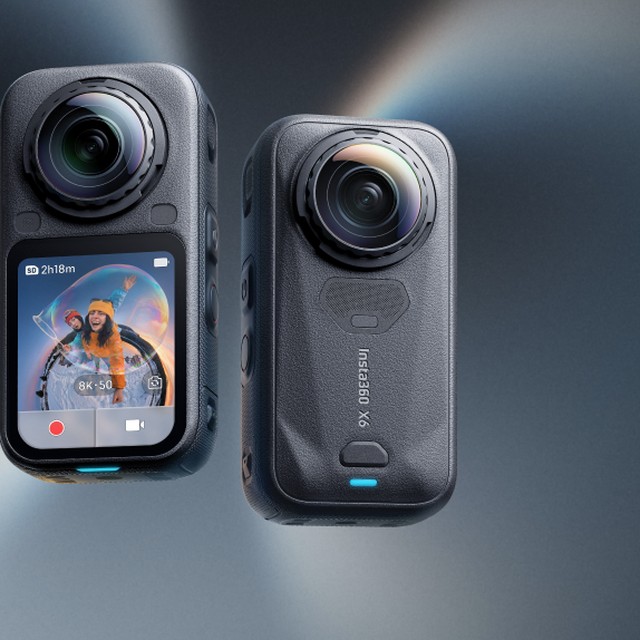
Insta360 X6 Review: I Tried to Remake Top Gun on a Motorcycle
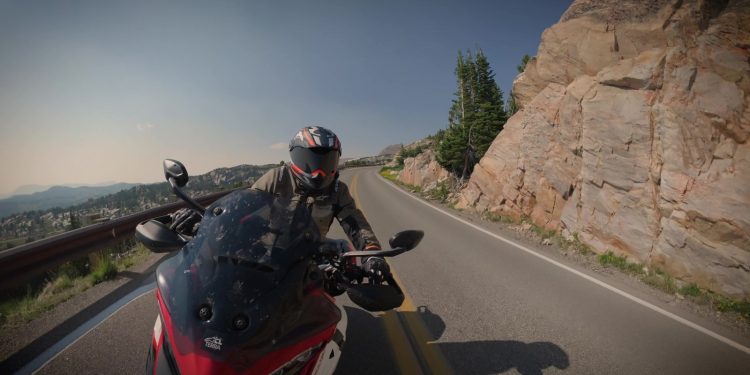
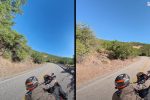
That is me, on a public road, going, and I want to be very clear about this, the speed limit. Everything in the film at the top of this was shot on one camera the size of a candy bar. No helicopter, no second rider, no film crew. Just me, a handful of clamps, a selfie stick, and a genuinely stupid amount of editing. So let me show you how a 360 camera, a fighter jet’s worth of angles, and the most expensive two minutes in modern cinema taught me how to make you feel like your hair is on fire.
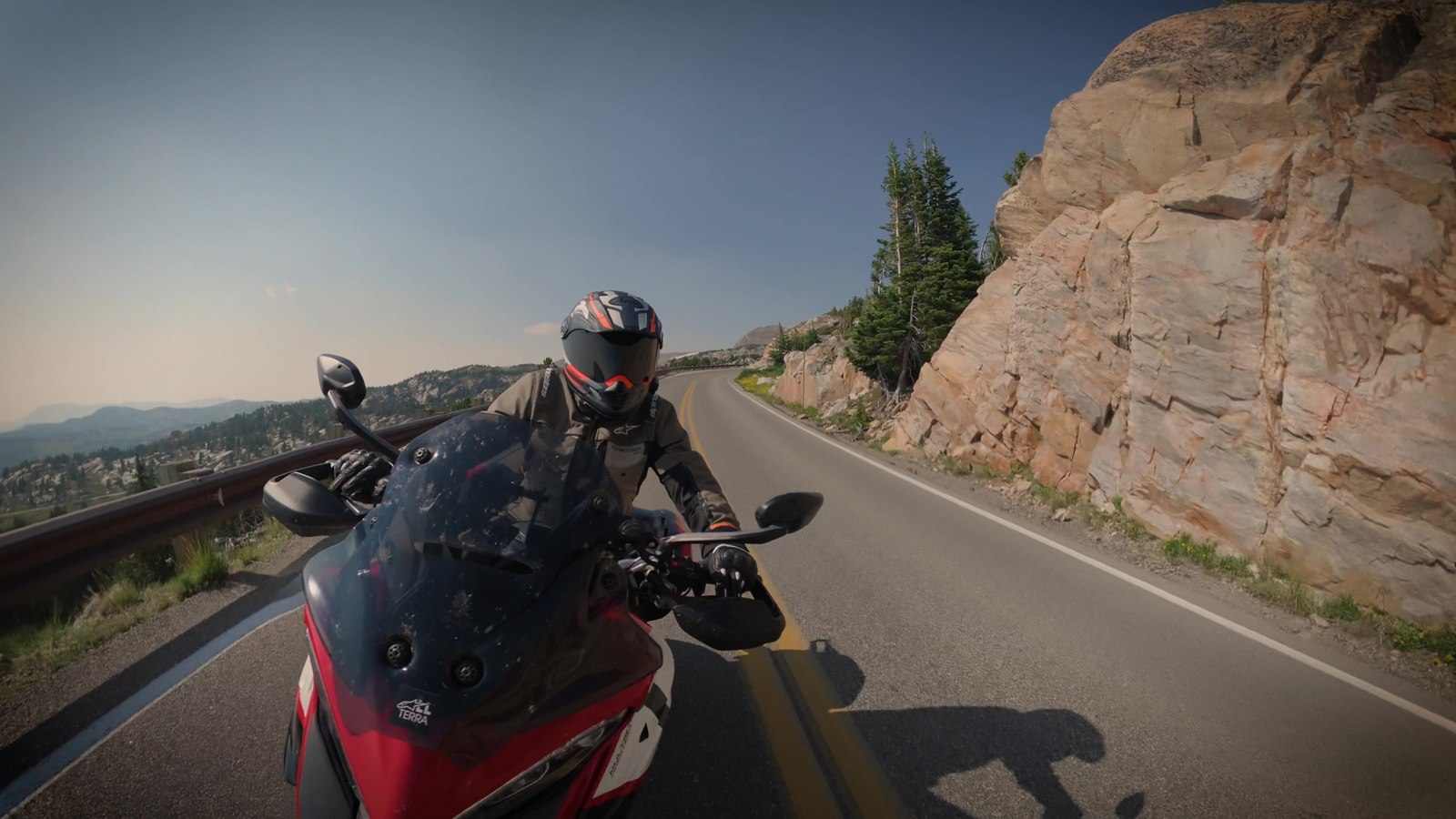
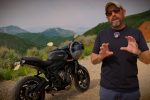
I have been using the Insta360 X6 for over a month now, and in that time it has been to more places than some of my relatives. It shot a few full bike reviews and even went to Iceland, where it spent a week being rained on, dropped, and pointed at things significantly more photogenic than I am. So this is not a first-impressions video. I know this thing inside out, which is exactly why I did not want to make the review the box wants me to make. The box, and the forty page briefing document that came with it, wants to tell you about sensors. We will get to the sensors. But specs are boring and you can read them anywhere. What I actually wanted to know was simpler, and a little mad: could I take one camera bolted to a motorcycle and steal the single best piece of cinematic flying ever put on film.
This is CanyonChasers, and the greatest flying sequence ever committed to film is, of all things, called The Canyon Run. I would love to tell you I planned that. I did not. A lifetime of chasing canyons on a motorcycle, and Hollywood just handed me that on a plate. Frankly it would have been rude not to.
Get the Insta360 Kit From This Video
Insta360 X6Includes a free replaceable lensGet the X6 ›Insta360 Mic ProThe chest mic I use for clean voice audioGet the Mic Pro ›Trade-In Program$50 off with any old camera, even a GoPro or DJITrade In & Save ›The Six Things I Actually Care About
If you want every sensor and every last number, my buddy Chase over at Chase on Two Wheels breaks that stuff down better than anyone I know. I am going to distill it to what actually changes how I shoot.
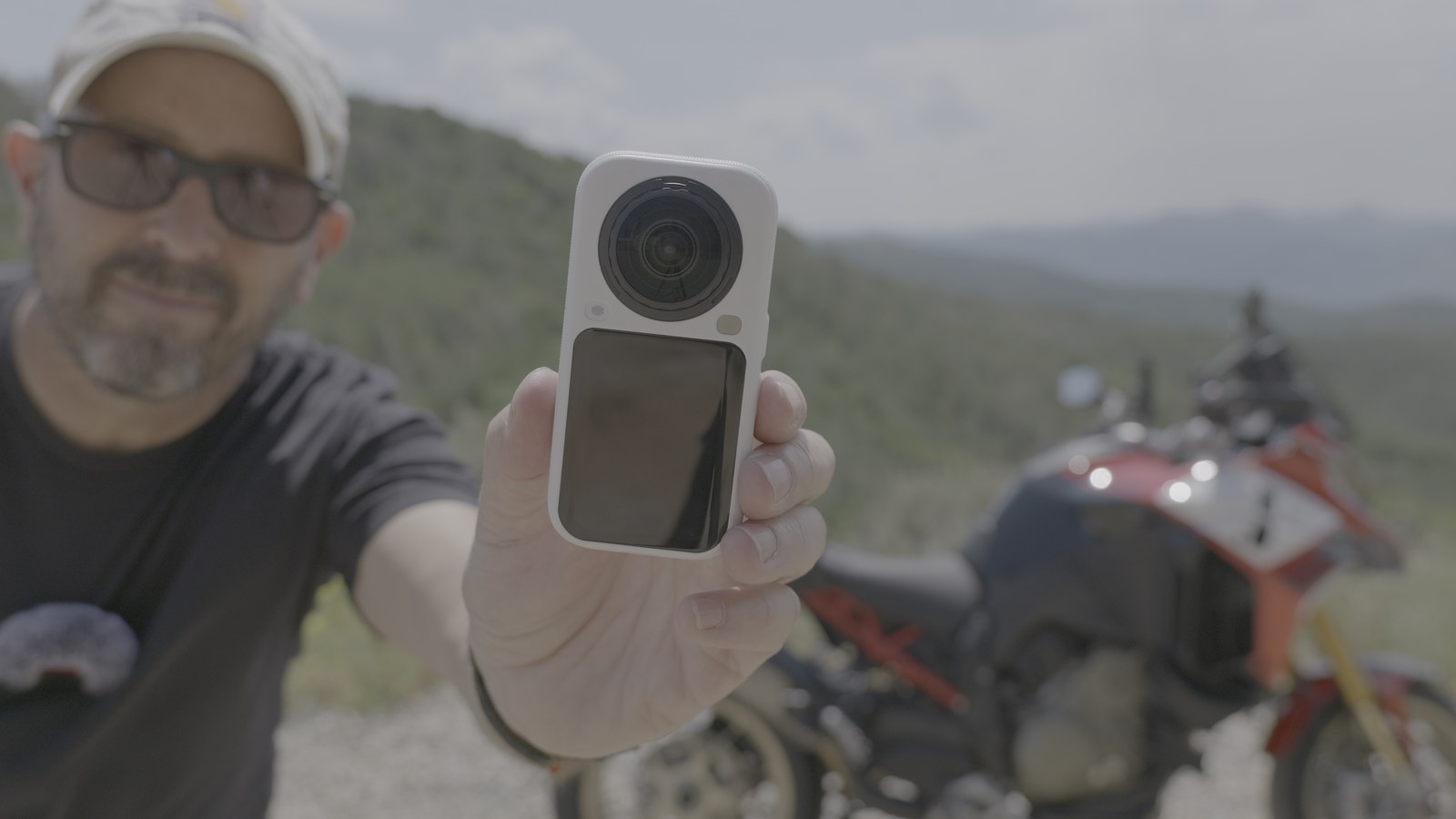
One, the engine microphone, and this is the one that hooked me. Insta360 hid a second microphone inside the X6 whose entire job is to ignore the wind and listen to your engine. For the first time, my exhaust sounds like what I actually hear inside my helmet. Here is the clever part. It does not really hear the engine through the air. It feels it, picking up the vibration straight through the bike, which means the mount matters more than you would think. Clamp it to something solid and rigid and the results are incredible. Put it on a soft, isolating arm and the vibration gets damped, and so does the sound. Hold onto this one, because it becomes the whole back half of the story.
Two, the image quality is the first genuine leap in a while. I have lived with every one of these cameras and the older ones are brilliant, reliable, and take an absurd amount of abuse without so much as a shrug. Every generation got quietly better than the last, so I do not use the word leap lightly. This one is a leap. Two custom one-over-1.1-inch Sony sensors, ten bit color, and an I-Log profile. In plain English: a bigger sensor, more color information, and a flatter capture that hangs onto detail in the bright bits and the dark bits at the same time. That combination saves your bacon in awkward light. I shoot a lot of early mornings and late evenings, and that low, warm, weird light is exactly where the bigger sensor shines, pulling in enough clean light that the color stays rich instead of muddy. The ten bit keeps those sunrise gradients smooth instead of banding into stripes, and I-Log holds a blazing sky and dark ground together.
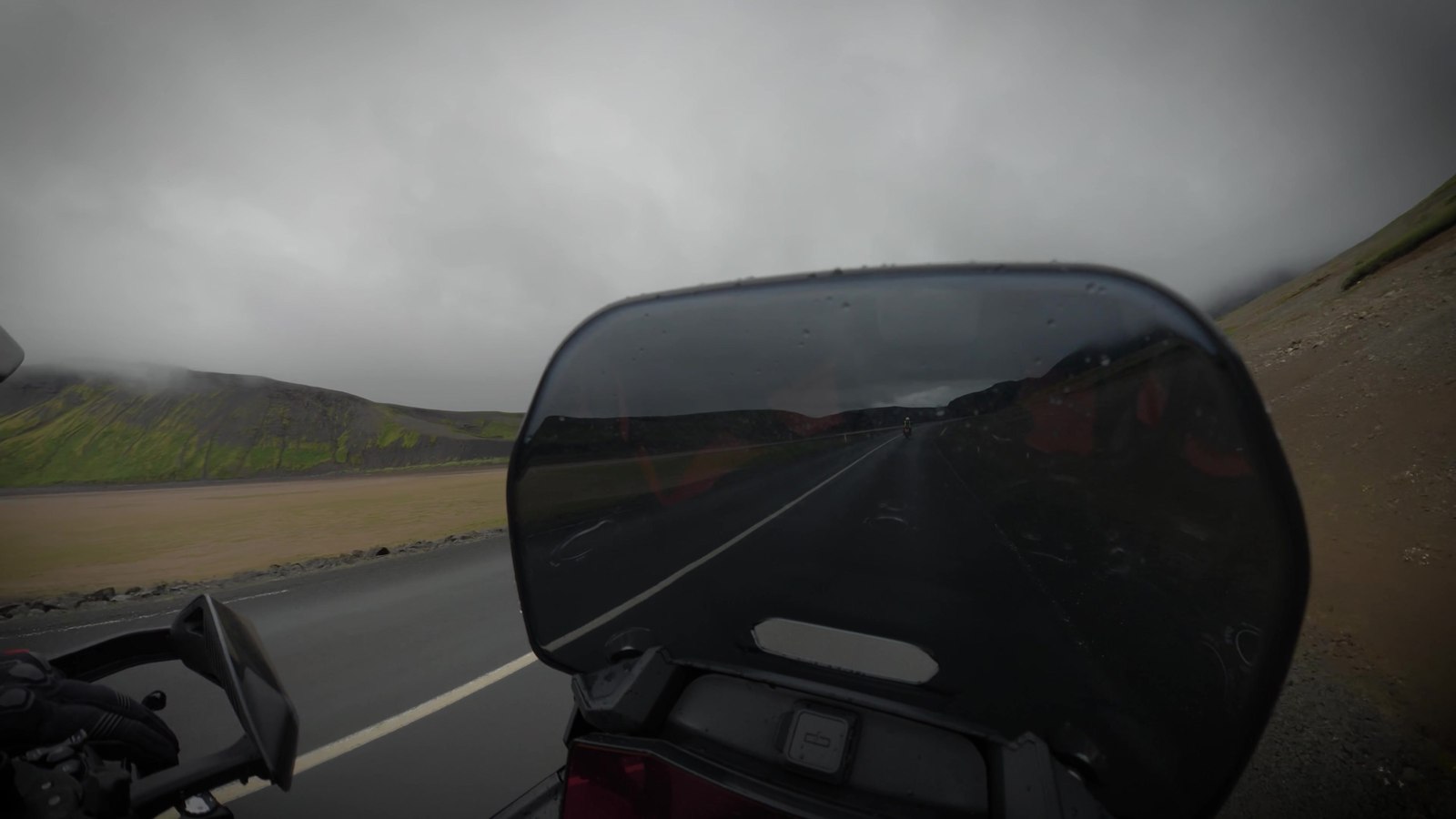
There is a clever detail most people walk straight past, too. See the little metal sensor on the outside of the body? That is a dedicated color temperature sensor. Most cameras guess your white balance from the image itself. This one reads the actual color of the light around you and sets it from that, which is a big part of why the color looks so good rolling from open sun into deep shade.
Three, the battery, and this is the one that genuinely changed how I pack. With the X5 I never left the house without two big endurance batteries in my jacket. With the X6 I went to Iceland and shot all day, in the cold and the wet, the exact weather that normally kills a battery by lunchtime, and I did the whole day on the single battery that came in the box. Back at the hotel that night it still had fifteen percent left. To be fair, I do not film every single second, I turn it on when there is a shot worth having. But a full day of Iceland weather on one charge is a real change.
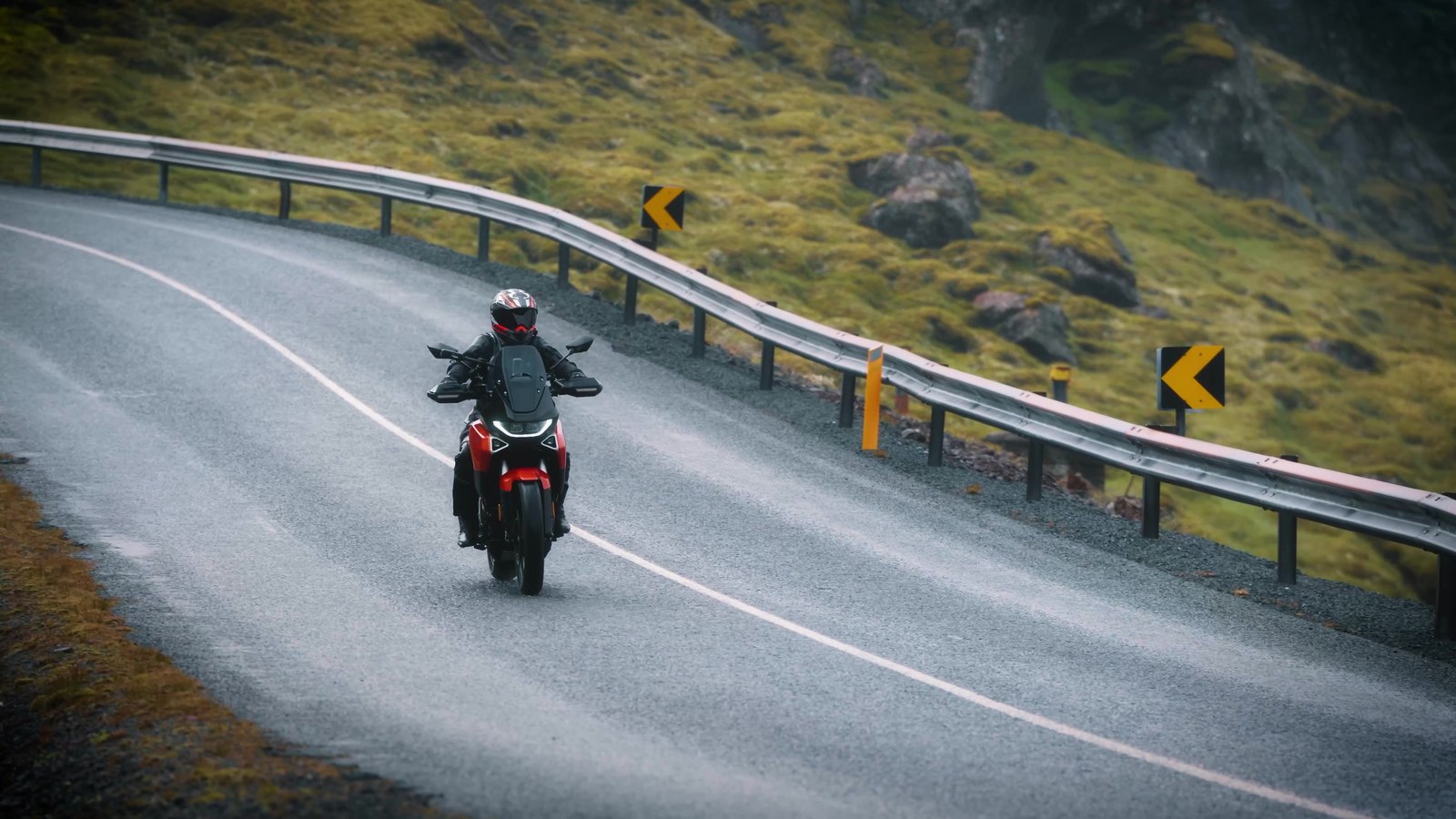
Four, one camera, many angles. It films in every direction and you choose your shot afterward, at your computer or on your phone, instead of at 45 miles an hour. One mount gives you a POV, a chase shot, and a floating third person, all at once, from one camera. Five, the boring stuff that keeps a ride filmable at all: waterproof without a case, replaceable lenses for when you inevitably scratch one, plenty of built-in storage for the day you forget an SD card, and automatic plate blurring. It is all deeply boring, and it is also the only reason you ever come home with footage worth editing.
Six, the camera can edit the whole ride for you, and that is a bigger deal than I want to admit. There is an AI mode that watches your entire ride and hands you a finished, cut-together film while the camera just sits there. For me personally that matters less, because editing is my whole existence and I am not ready to outsource the one thing I actually do. But for you, if you have a real job and a life that does not revolve around timelines and keyframes, this is enormous. You go ride, you go have the adventure, and the camera quietly hands your memories back already assembled. It works far better than you would think.
Standing on the Shoulders of Giants
So I really wanted to recreate the Canyon Run from Top Gun: Maverick, and I need to be clear about something. I am not trying to duplicate it. You cannot. I wanted to sit at the feet of the people who made it and figure out how they think. The film was directed by Joseph Kosinski and cut by an editor named Eddie Hamilton, and the numbers behind it are frankly obscene. A real F-18, really Tom Cruise in the back seat, flown by an actual Navy pilot who reportedly landed and said he would never do it again. They bolted six cameras inside a single cockpit to get six angles at once. They had a chase plane for the wide shots. And then Eddie Hamilton spent three months cutting roughly two minutes and fifteen seconds of film.
I had one camera, a weekend, a five year old Mac Studio, and a few passes back and forth on one stretch of road. For the wide shots I had a drone, Insta360’s Antigravity A1, which is of course also a 360 camera, same trick, just up in the air. Film everything, decide later. Credit to my buddy Mike for flying it. When I broke the sequence down, it is actually only a handful of shots: the face wide, medium, and close, the hands on the controls, the side shot, and the over-the-shoulder looking left and right. Eight framings, and not one exotic rig among them. Better still, every one of them comes off two accessories: an Insta360 clamp and the selfie stick. That is it.
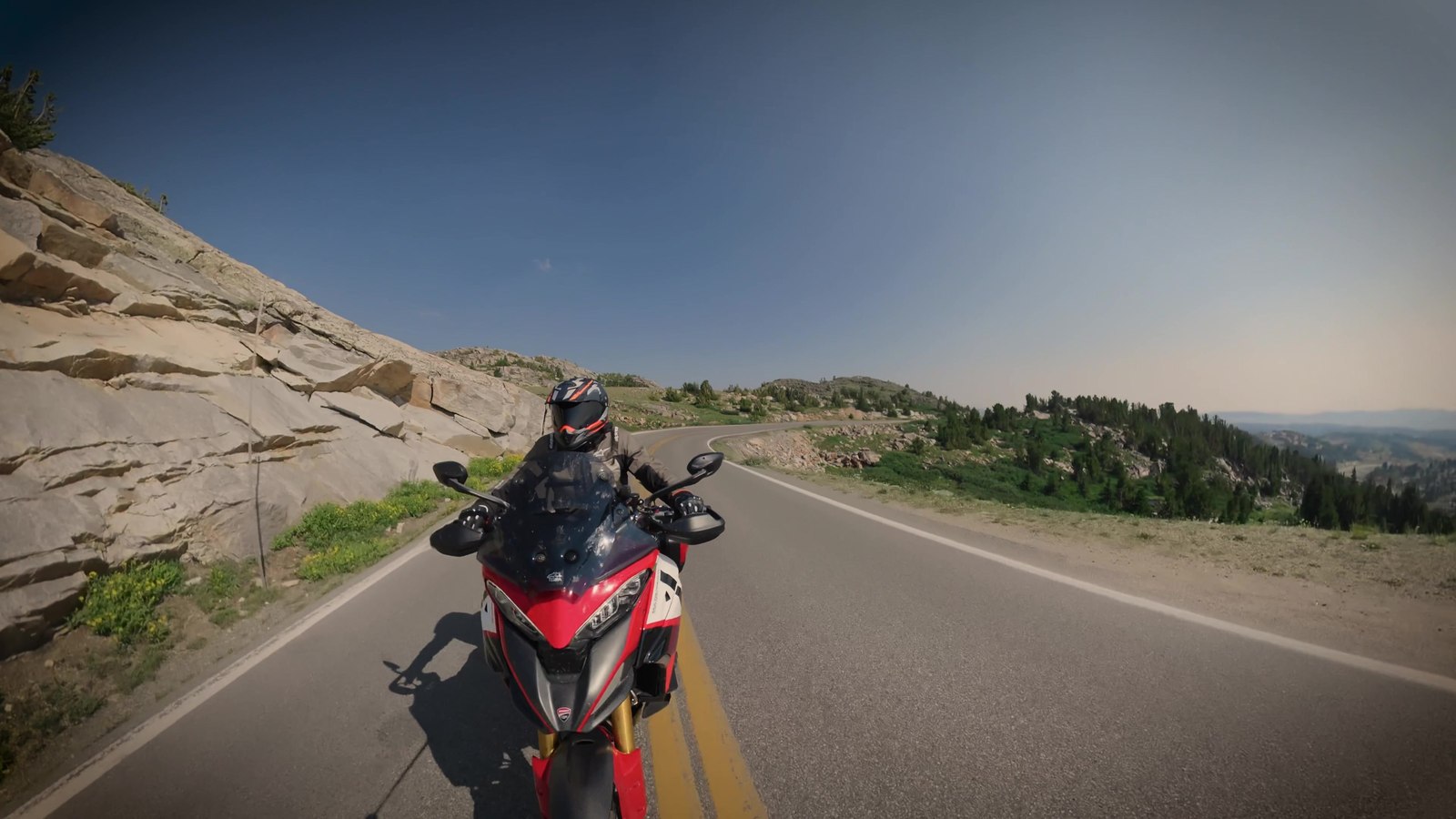
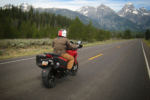
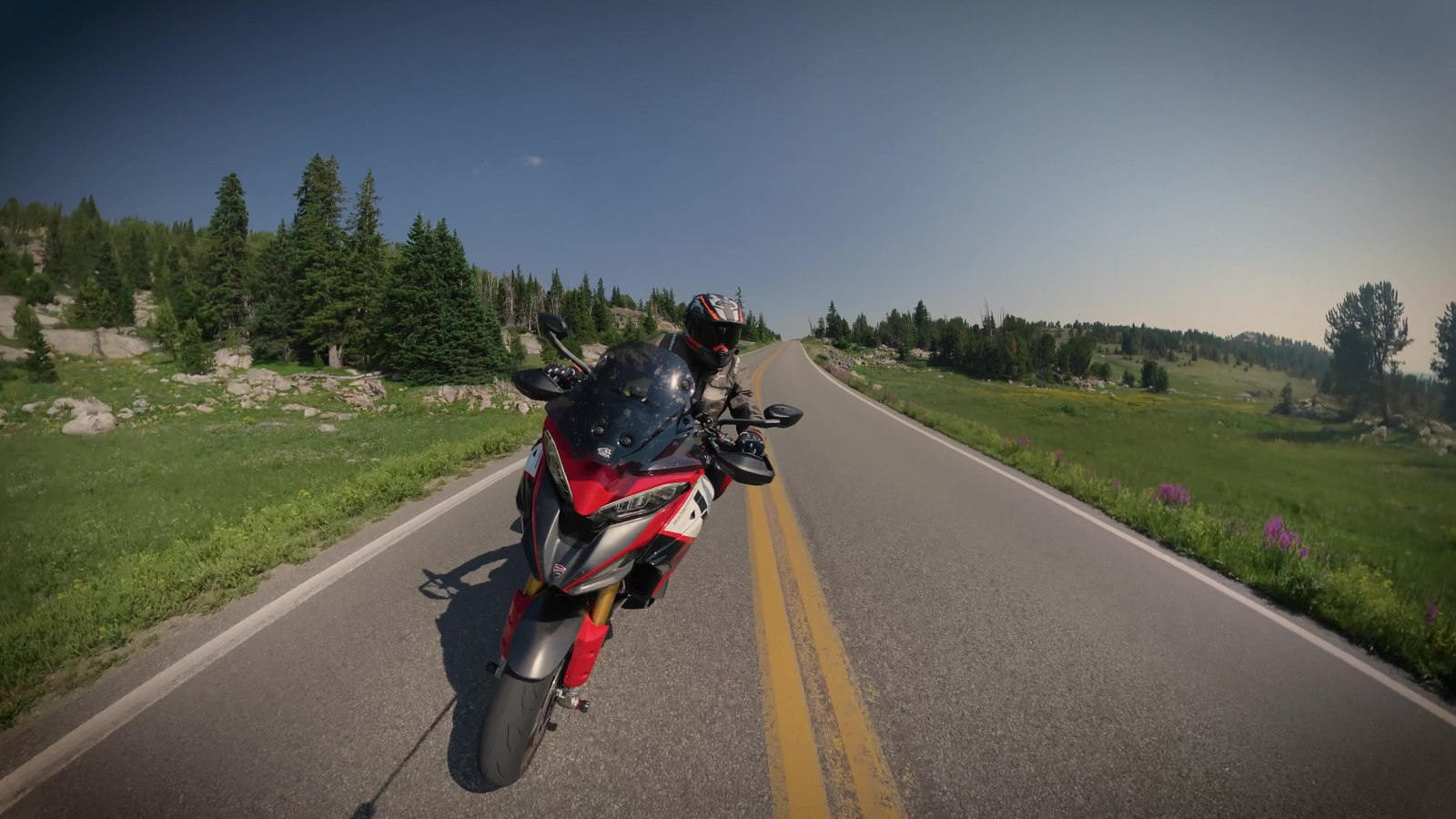
And then there is my favorite trick of the lot: the flyby. No second rider, no drone. You set the camera down at the side of the road, walk away, and ride past it. Because it films in every direction, you physically cannot miss the shot. It catches you coming and going, every single time. One pro tip that is the difference between a clean flyby and a ruined one: point the stitch line, the seam where the two lenses meet, straight across the road, perpendicular to the way you are traveling. When you rip past, the bike crosses that seam at the exact moment it is a motion-blurred streak, and the stitch just disappears into the blur.
A Small Confession
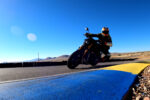
That whole sequence turned into the perfect way to stress test this camera, but I owe you a confession about what you saw. I was not going fast. At all. I was doing somewhere between 35 and 45 miles an hour, on a public road, like a responsible adult with a selfie stick hanging off my handlebars. Almost every shot is sped up, because the X6 shoots 8K up to 50 frames with a big clear sensor, which gives you the headroom to ramp the speed up or down without the footage falling apart.
And that is the whole thing, really. When you read this camera’s spec sheet, half of it sounds like noise. High frame rates, ten bit color, log profiles, dynamic range, numbers for nerds. But those numbers turn into tools the moment you sit down to tell a story. The frame rate let me fake the speed. The color let me sell the golden hour. The dynamic range held onto the sky when I rode into the sun. None of it sounds relevant until you need it, and then it is the only thing that matters. A full day battery for the ride that runs long, waterproofing for the day it absolutely buckets, onboard storage for the day you forget the card, loop recording for the moment you never saw coming. Every one of those reads like a throwaway line on a box, right up until it is the one thing that saves your shot.
Here is why that matters to you, even if the fanciest thing you ever do is a Sunday ride with your buddies. You get one shot at that ride. A normal action camera points one way, so you aim it, you hope, and half the time you get home and find it was not pointed where you wanted. This one films everything, in every direction, all at once, so you physically cannot miss it. You just ride, and you pick the shot later, on the couch. One camera doing the job of three and a gimbal.
So, Is It Worth It?
Time for the honest part. Insta360 has sponsored this channel for a long time, and they sponsored this video, and normally that is the bit where a reviewer’s credibility quietly leaves the room. But the truth is this: I use these cameras because my entire livelihood is built on them. When the footage does not work, I do not eat, so I do not get excited easily. I have shot with every one of these things, from the X2 to the X4 to the X5, and they are proper workhorses that take an absurd amount of abuse without complaining. Each generation moved things on a little. The X4 did not even have replaceable lenses, then the X5 added them, and on it went.
But the X6 feels like more than the next step. It feels like the camera Insta360 has wanted to make since the very beginning, and they were just waiting for the technology to catch up to the idea. Battery density, chip efficiency, the sensors, it all finally landed at once, and you can feel it. The engine mic alone changes what onboard footage can sound like. The battery got me through a full day of Iceland weather on a single charge. And the fact that one small camera gave me the coverage a fighter jet needed six cameras to get still makes me laugh. If you watched my Norton Atlas video, I shot massive chunks of it with this camera, and the most common comment was that it looked cinematic, without me ever saying which camera I used.
I am not telling you to buy it. I am telling you I put it through its paces and I am very impressed. It is the best 360 camera I have used, and if the engine mic were the only new feature, it would still be reason enough to upgrade.
For the price of one body you get the 360, the reframing, the gimbal-style shots, the wide-angle action cam, that engine sound, and an AI that will cut the whole thing together while you grab a coffee. I have used just about everything you can bolt to a motorcycle, and nothing else does all of that at once, this well. It is how I feed my family, so I need it to work every single time, in the rain, in the cold, on a deadline. That is a high bar, and it clears it.
Riding Gear in This Video
The kit I wear on the road. These are RevZilla affiliate links: they cost you nothing extra and help keep the channel going.
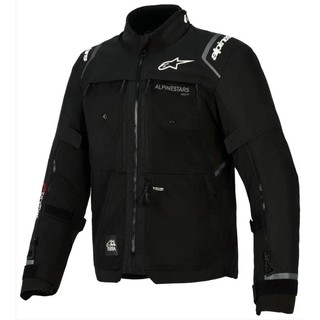
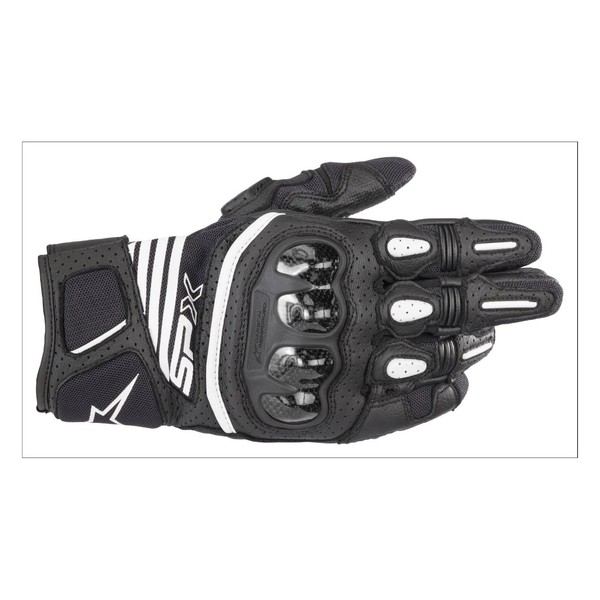
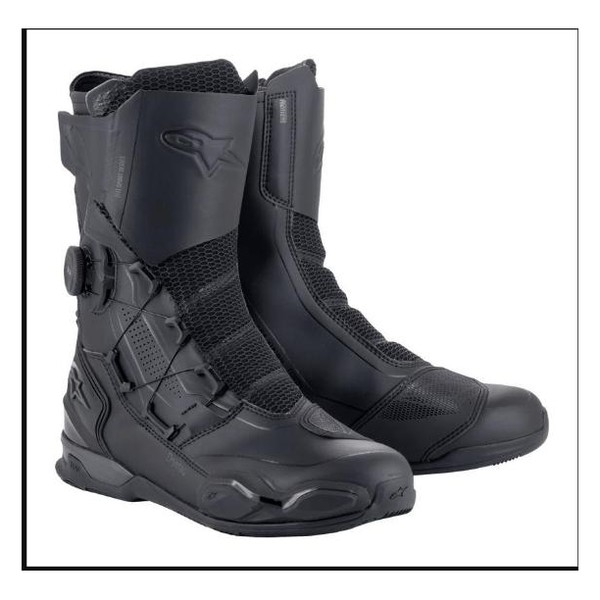
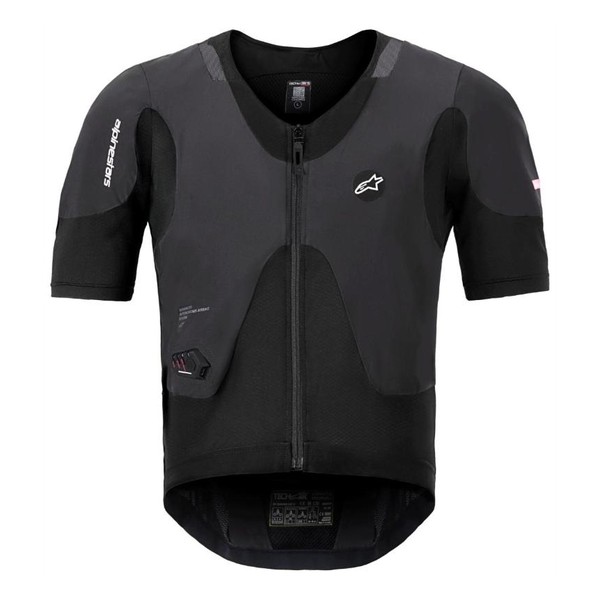
HelmetAlpinestars Supertech R7View on RevZillaJacketAlpinestars Cusco DrystarView on RevZillaGlovesAlpinestars SP-X AirView on RevZillaBootsAlpinestars SP-X Boa DrystarView on RevZillaAirbag VestAlpinestars Tech-Air 5 PlasmaView on RevZilla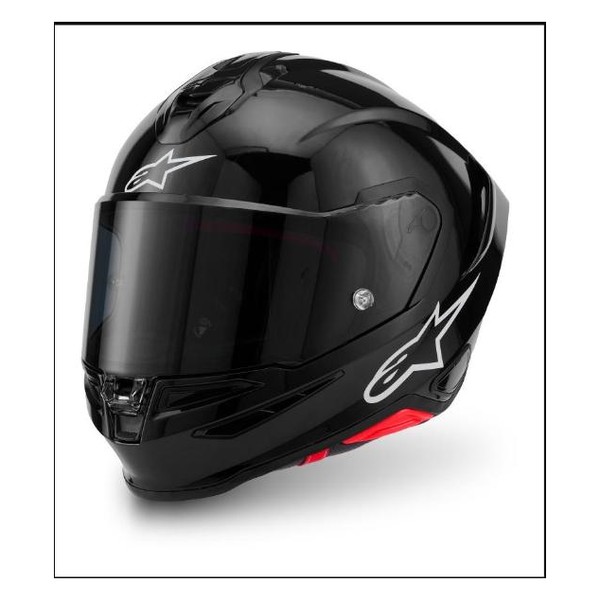
Cameras, Comms & Drone I Use
How I film and stay connected on the bike. Cardo coupon code: RideWell. Sena coupon code: CanyonChasers.
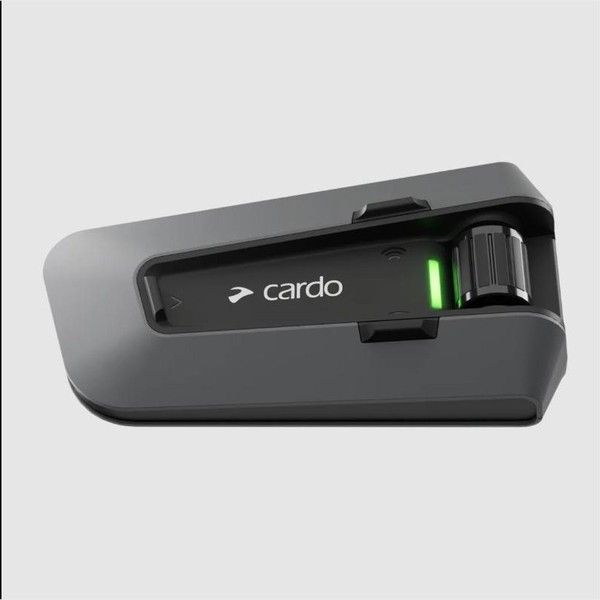
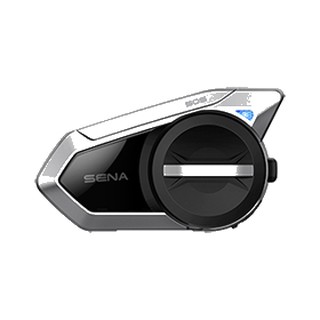
Comms HeadsetCardo Systems PacktalkShop CardoMesh HeadsetSena 50SShop Sena360 DroneAntigravity A1Shop Antigravity360 CameraInsta360Shop Insta360