Inside Moto Guzzi’s New Mandello del Lario Factory and Museum
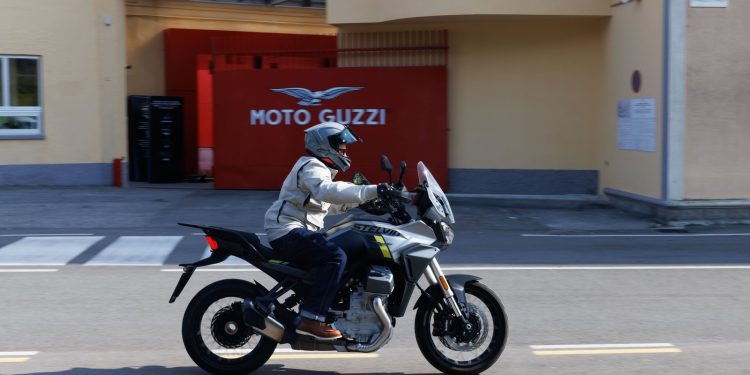
If somebody starting a motorcycle company today suggested Mandello del Lario, they’d be shown the door. It’s a town of about 9,000 people pinned between Lake Como and a wall of Alps. The road in is a narrow lakeshore two-lane that runs through tunnel after tunnel, and most of those tunnels seem to have a cyclist in them. There’s no port and no steel mill. Every part comes in on that road, and every finished motorcycle leaves on it.
Moto Guzzi has built bikes here since 1921. Piaggio, which owns the brand, just spent almost five years and more than 50 million euro making sure that doesn’t change. The new factory and museum opened in September, during Moto Guzzi World Days, and I was there for it.
This is a look at what they built, what it’s like to walk through, and why staying put may be the smartest thing anybody has done with this brand in decades.
The Wrong Place to Build Motorcycles
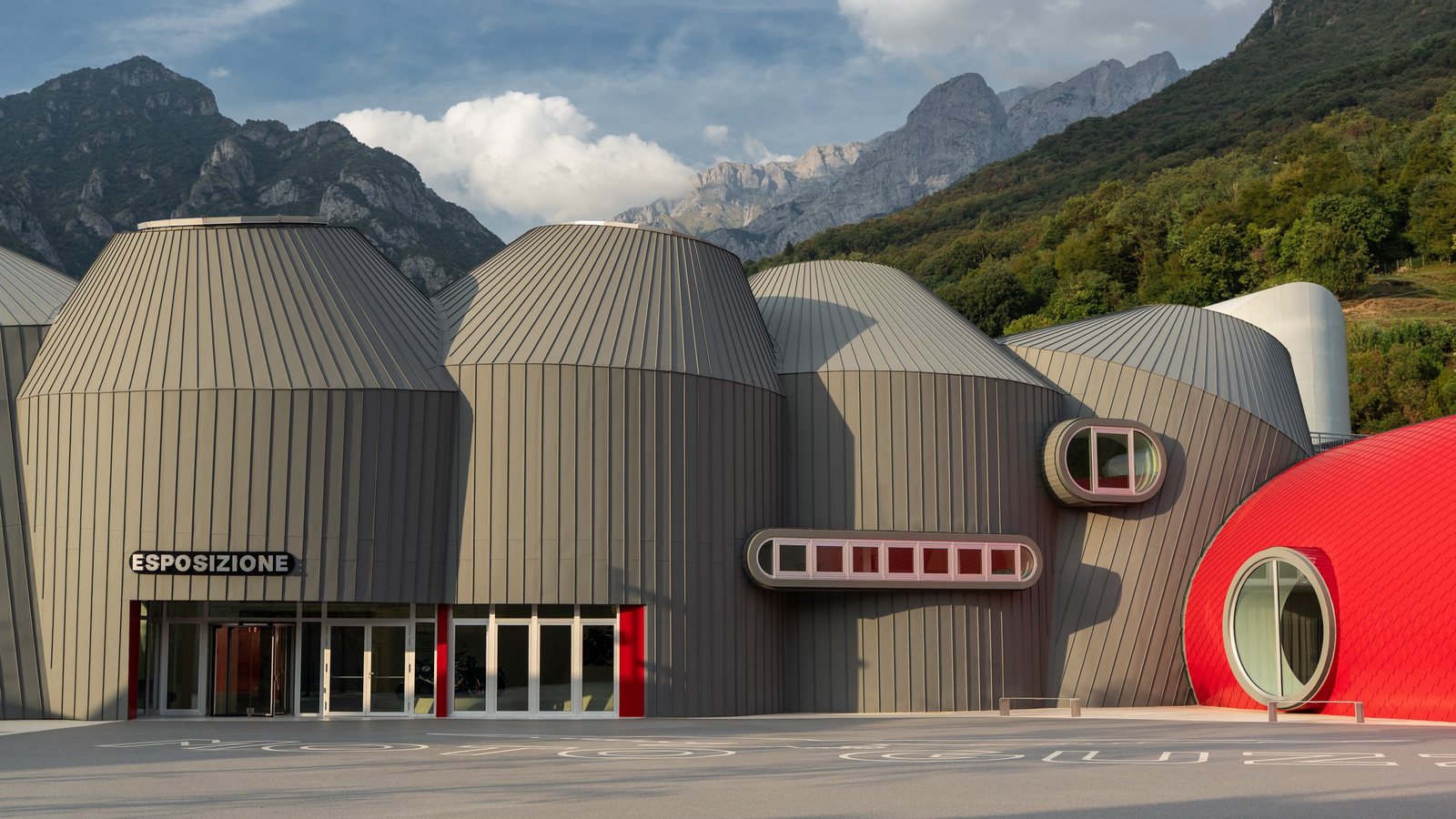
Carlo Guzzi was from Mandello, and that’s the whole reason the factory is here. It made sense in 1921. A century later it’s a liability on paper. The site is boxed in by the town, the lake and the mountain, so there’s nowhere to sprawl.
Consider the shape Moto Guzzi was in when Piaggio took over on the second to last day of 2004. The brand had spent two decades changing owners, and the factory on the lake was in rough shape. A new owner in that spot has an obvious move. Keep the eagle on the tank, keep a nice heritage museum by the water for the tourists, and build the actual motorcycles somewhere with a highway and cheaper rent. Nobody in a finance department would have argued.
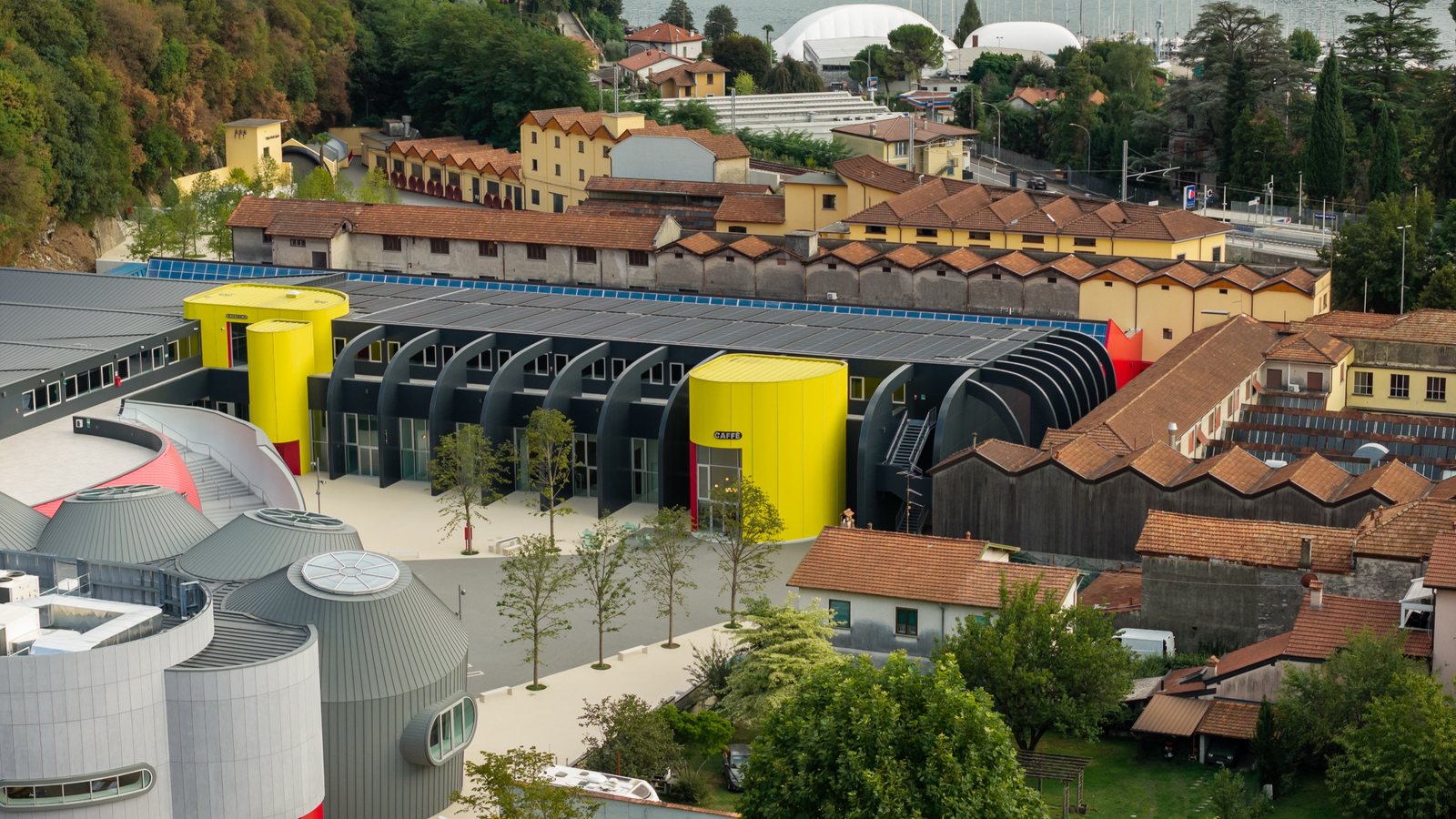
Piaggio went the other way. The new plant sits inside the original factory perimeter, on the same ground. They added about 59,000 square feet of new industrial buildings, which brings the whole site to roughly 410,000, and raised capacity to more than 30,000 motorcycles a year.
That’s still a small factory. The big Japanese manufacturers count production in the millions. Thirty thousand a year is a company deciding how big it wants to be and then building exactly that much factory, in the one place it couldn’t be replaced.
The Gate They Left Alone
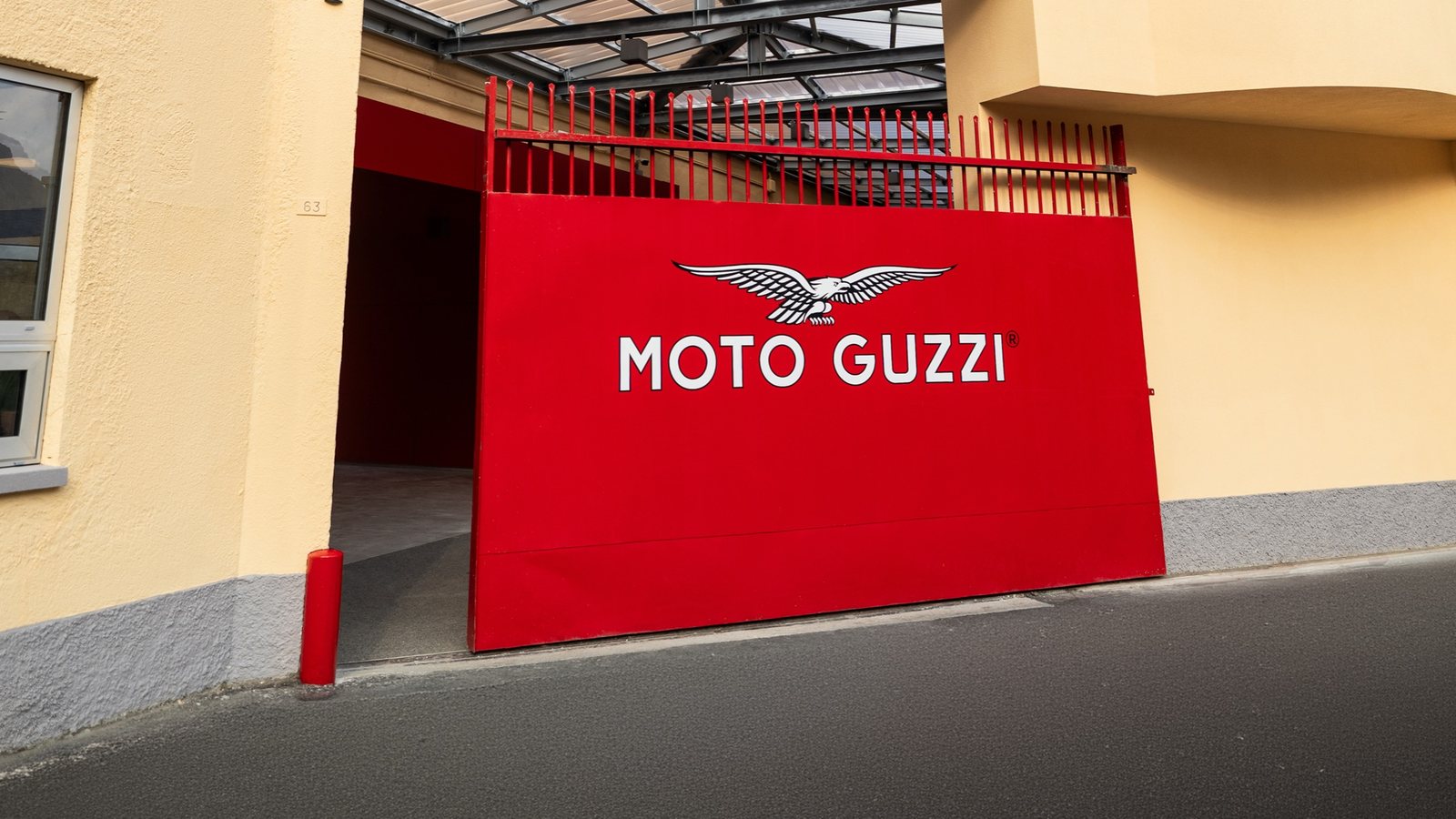
The entrance to the factory is a red gate on Via Parodi. Workers, engineers and racers have walked through it since 1921, and Guzzi riders from all over the world make the trip just to stand in front of it. For a lot of owners, a photo at that gate is the proof you made it.
So when the old buildings came down, the gate stayed exactly where it was. That detail says a lot about who this project was built for. An architect would happily have given them a grand new entrance. They kept the one their customers ride across continents to see.
What’s Behind the Gate Now
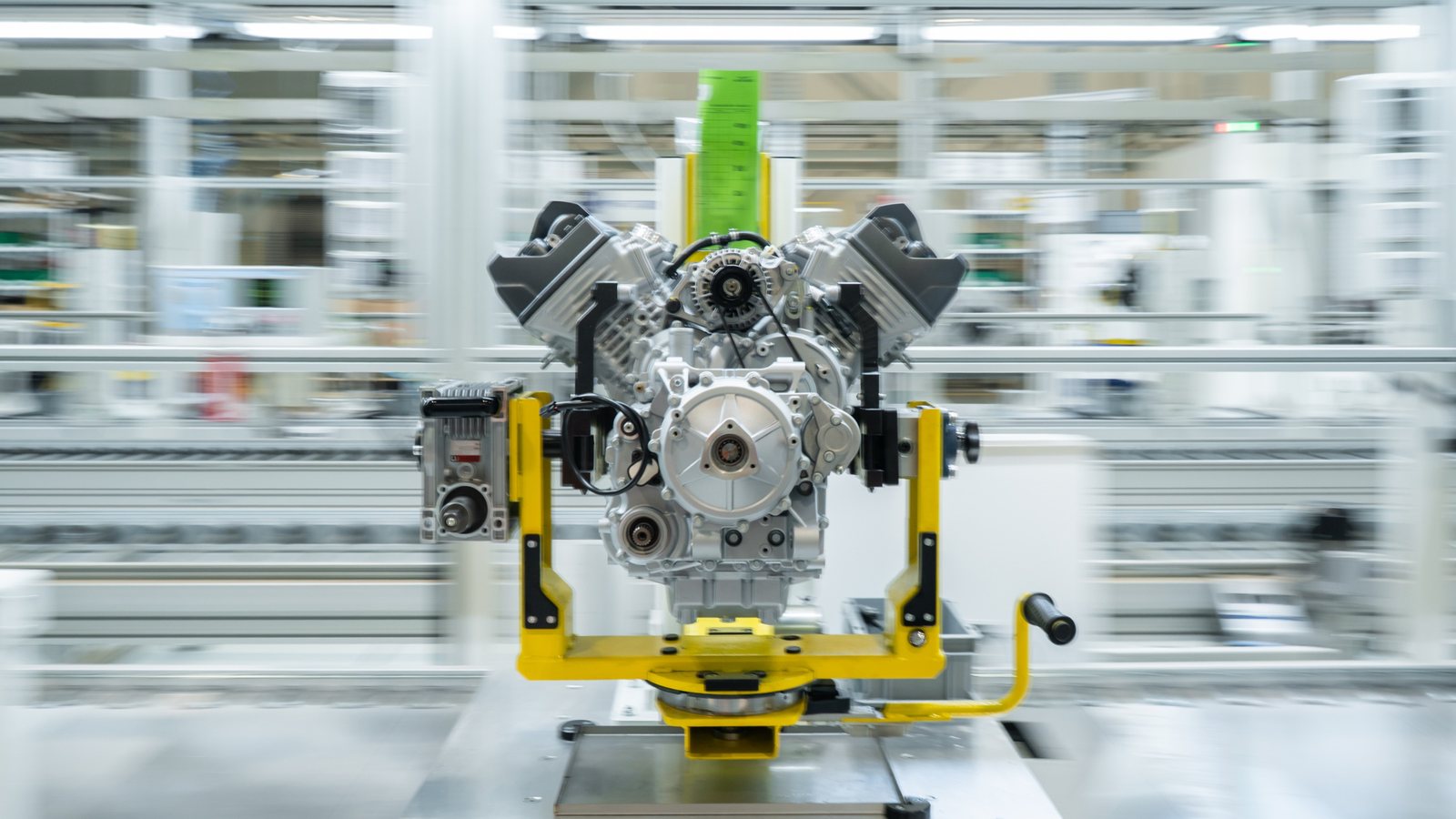
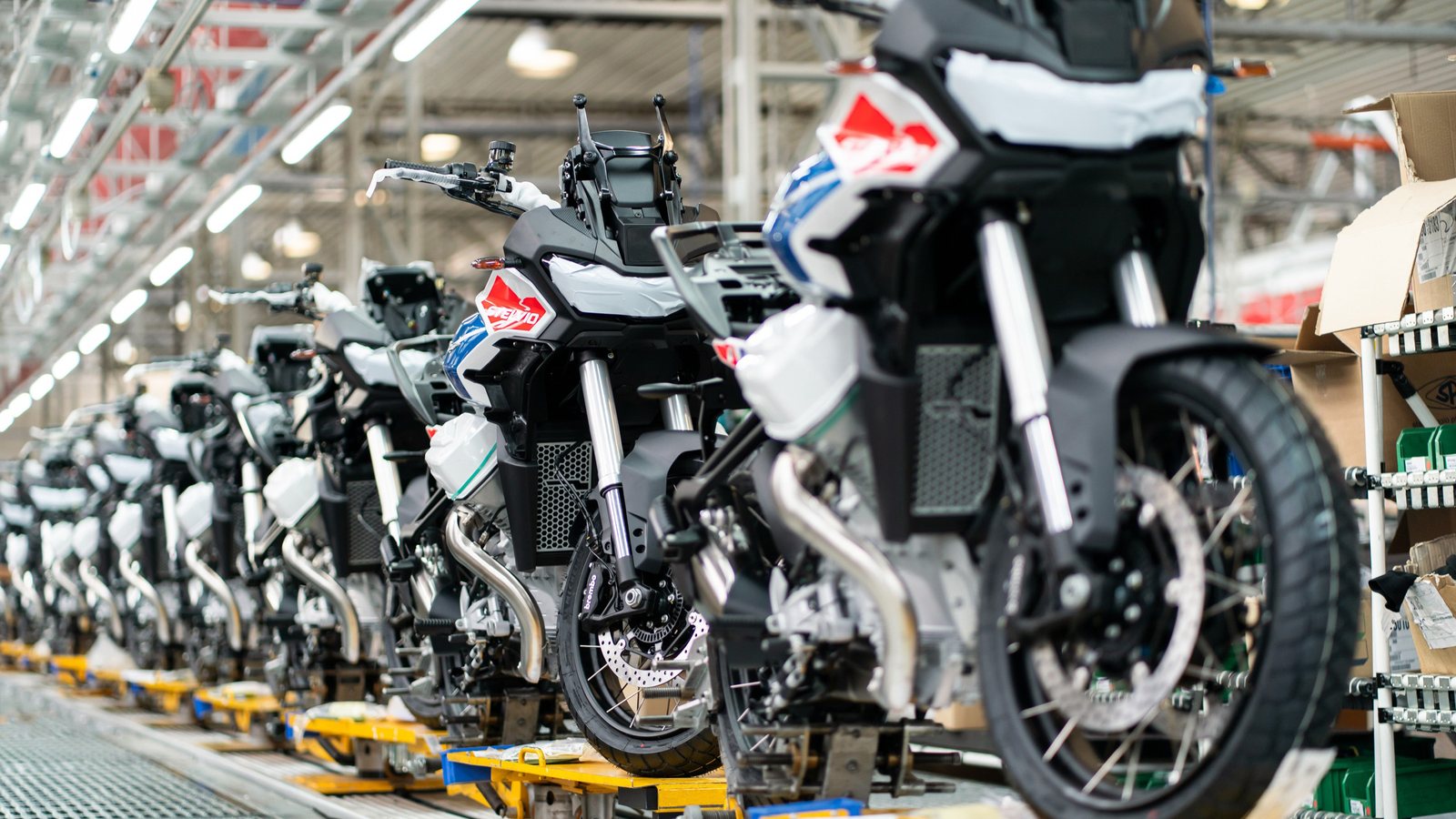
The engine assembly lines are entirely new buildings with entirely new equipment, and they’re automated. Every one of those transverse twins is built in Mandello, cranks, gears, heads and all, on a line where a screen tells the technician exactly which bolt he just torqued and to what value. The finished engine is handed to a robotised conveyor that carries it across to final assembly, where the rest of the motorcycle goes together around it.
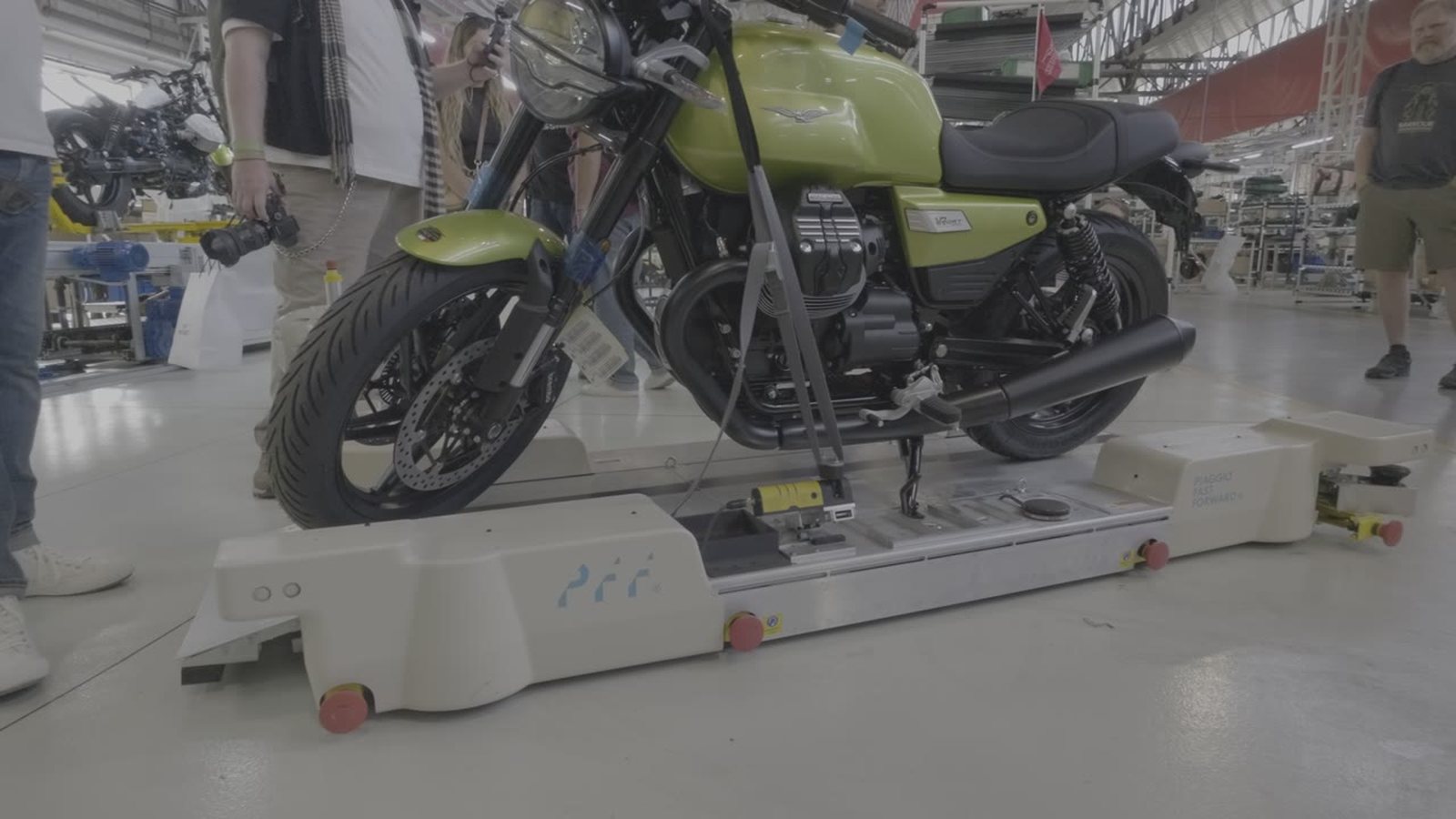
At the end of the line, the finished bike gets strapped onto a kilo. That’s a ground drone, designed and built in Boston by Piaggio Fast Forward, and its entire job is to carry a brand new Moto Guzzi to final testing so that no human has to push 500 pounds of motorcycle across the floor.
There’s about 14,000 square feet of solar panels on the roof, and the whole thing is designed to pull in as much natural light as possible.
A Museum With a Window Into the Factory
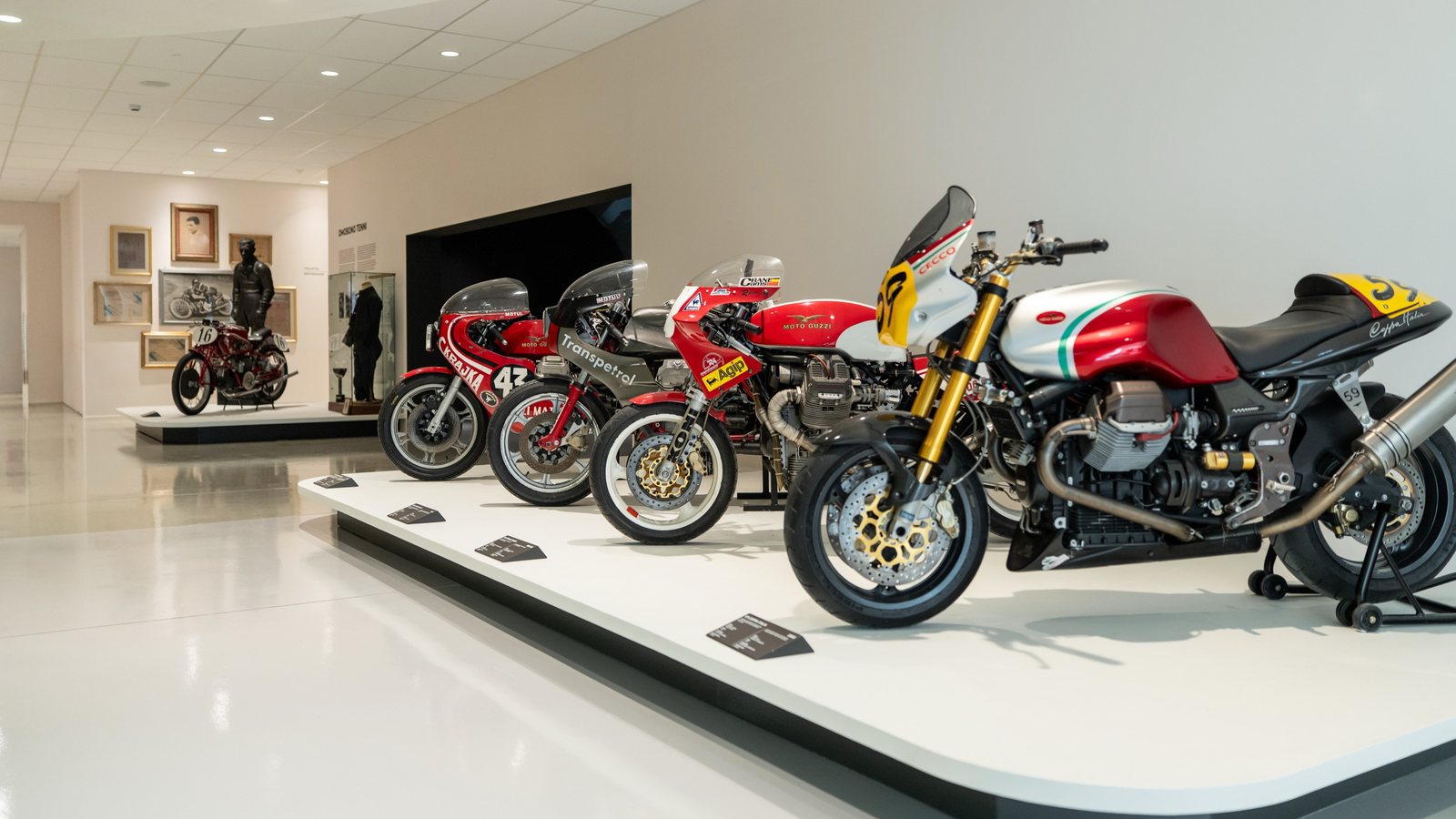
The museum is next door, in its own new 32,000 square foot building, with more than 160 restored bikes. The collection starts with the G.P., the 1919 prototype that carries the initials of Guzzi and Parodi, and runs all the way to current production. Along the way there are sections on racing, travel, cinema, the arts, and the military and police bikes.
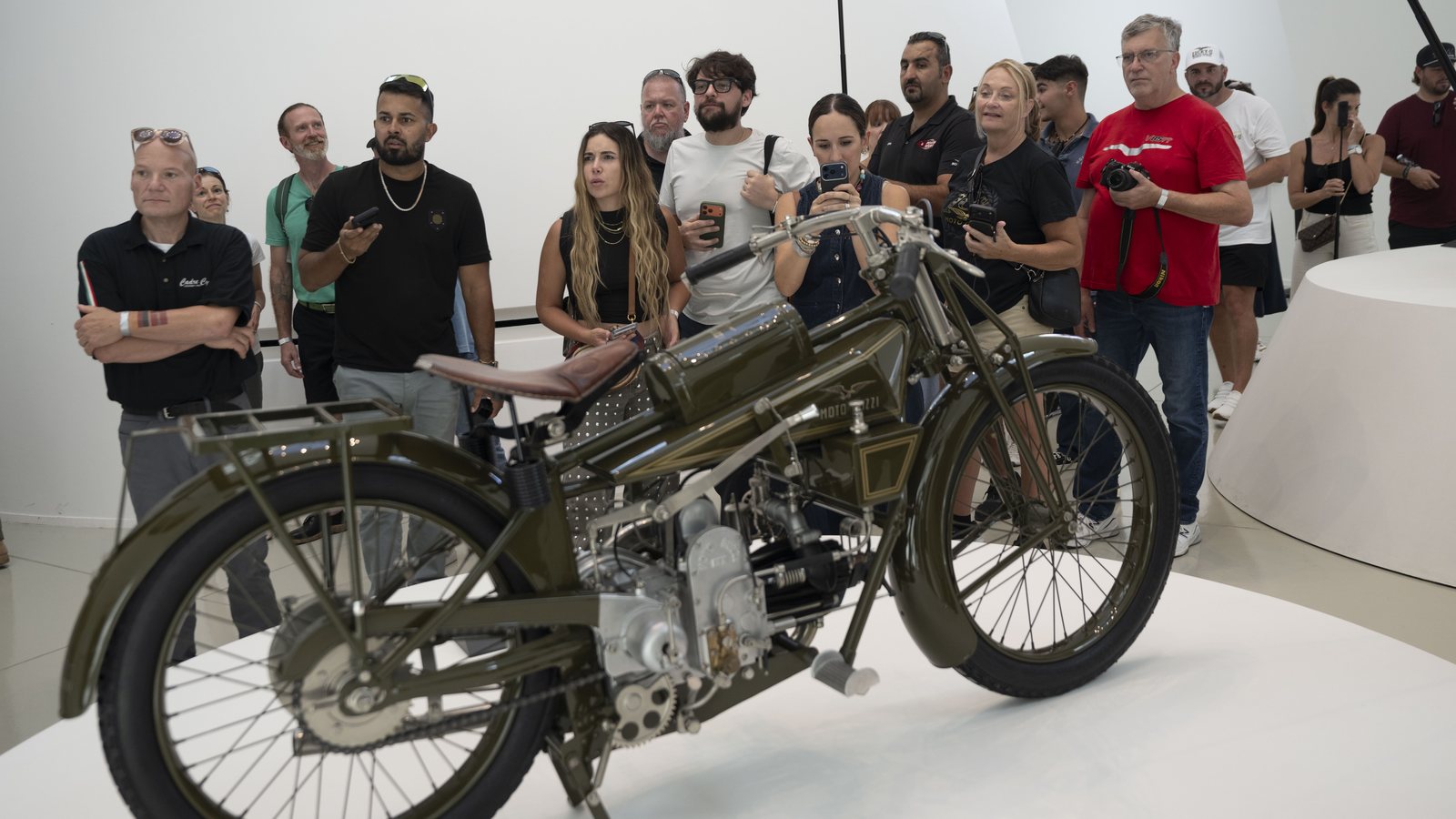
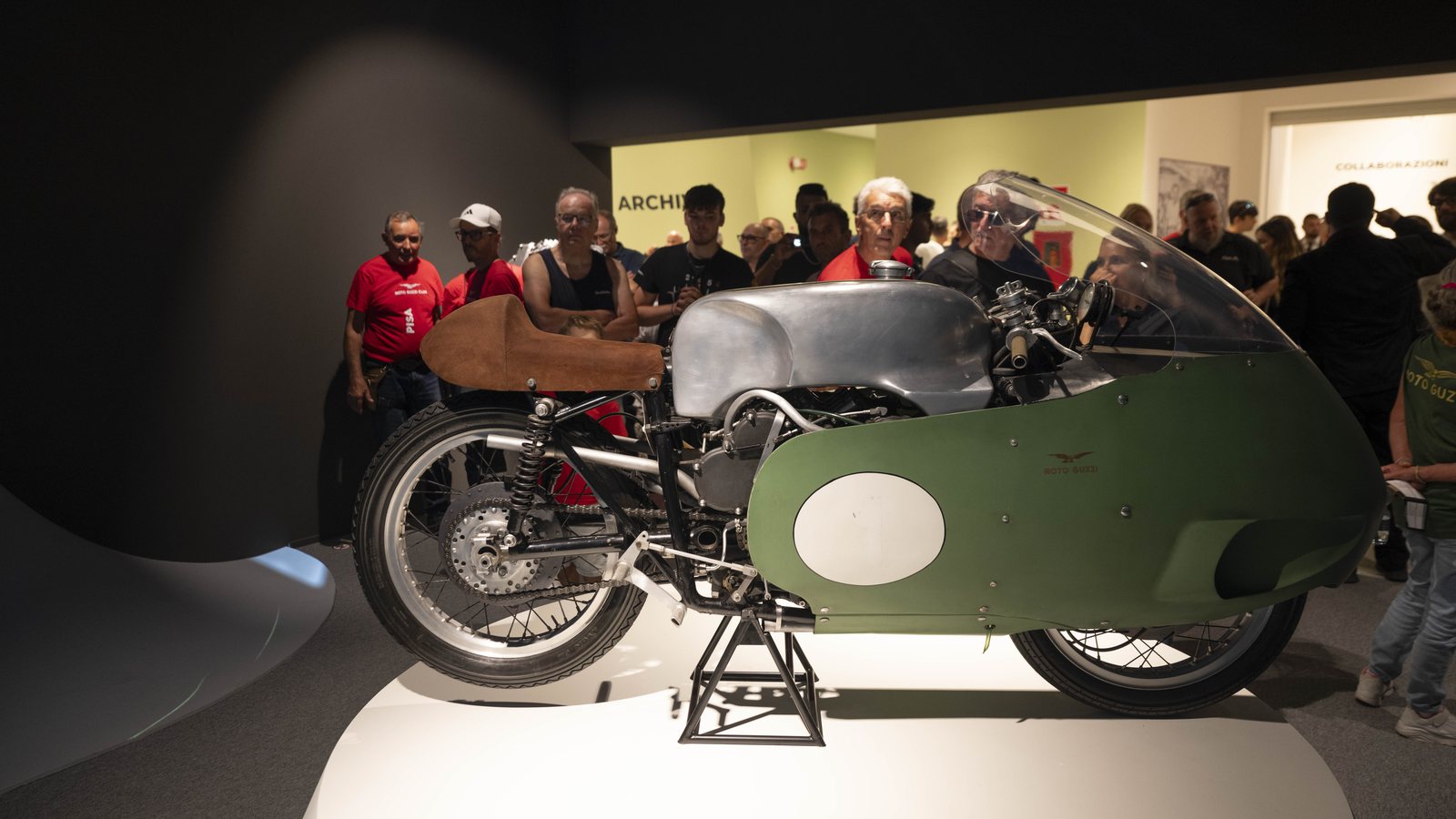
The racing bikes are the main event. The dustbin-faired Grand Prix bikes of the 1950s are here, and so is the 500cc V8, an engine layout nobody has put in a Grand Prix motorcycle since. I got to hear one run for a few seconds. Up close, it looks like it wants to hurt you.
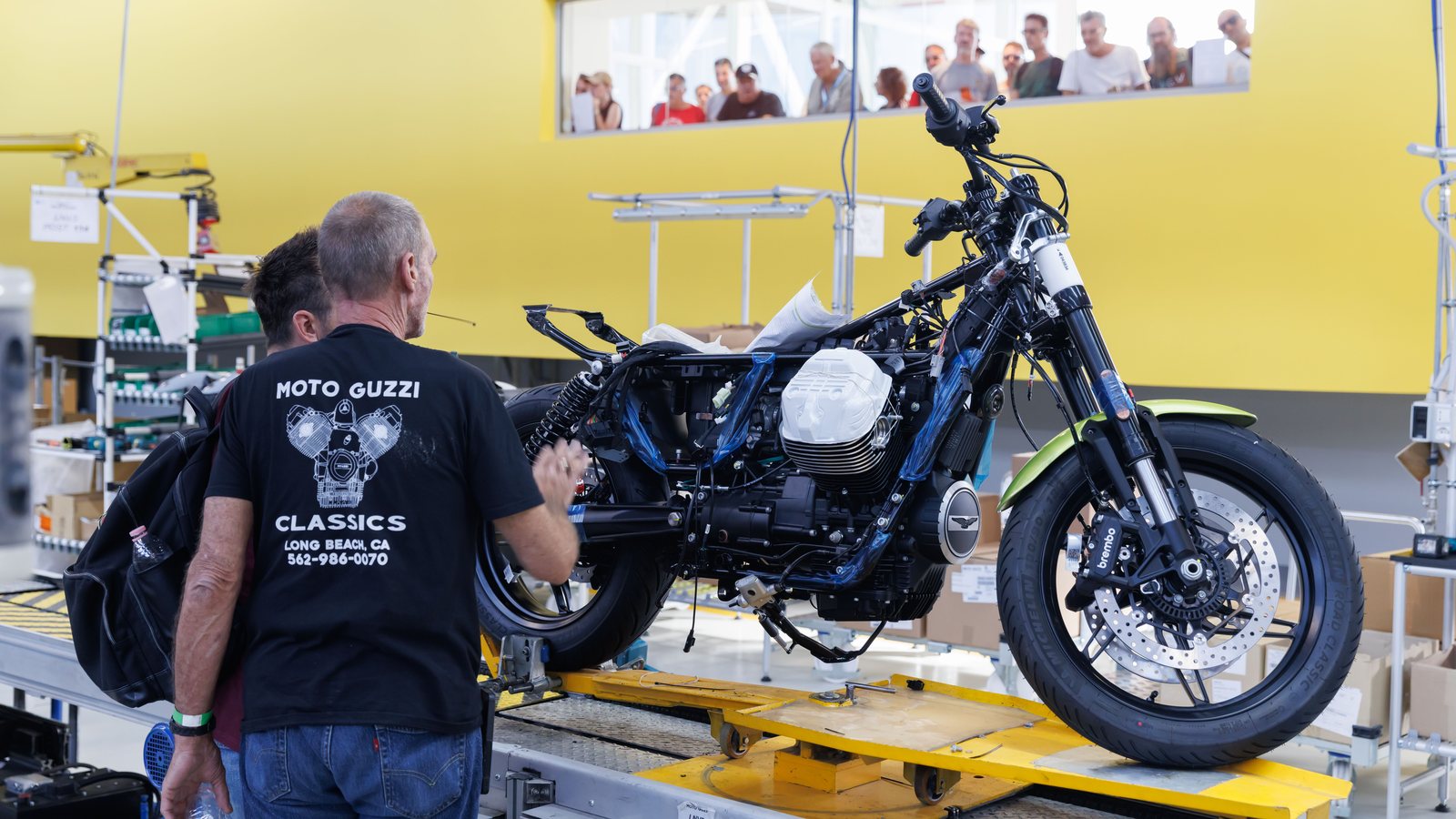
The best feature of the building is easy to miss. The museum has windows that look straight onto the assembly lines. You can stand among bikes from the 1920s and watch this year’s bikes get bolted together through the glass.
Most factory museums are a building full of things the company used to do. This one has a view of what it does now.
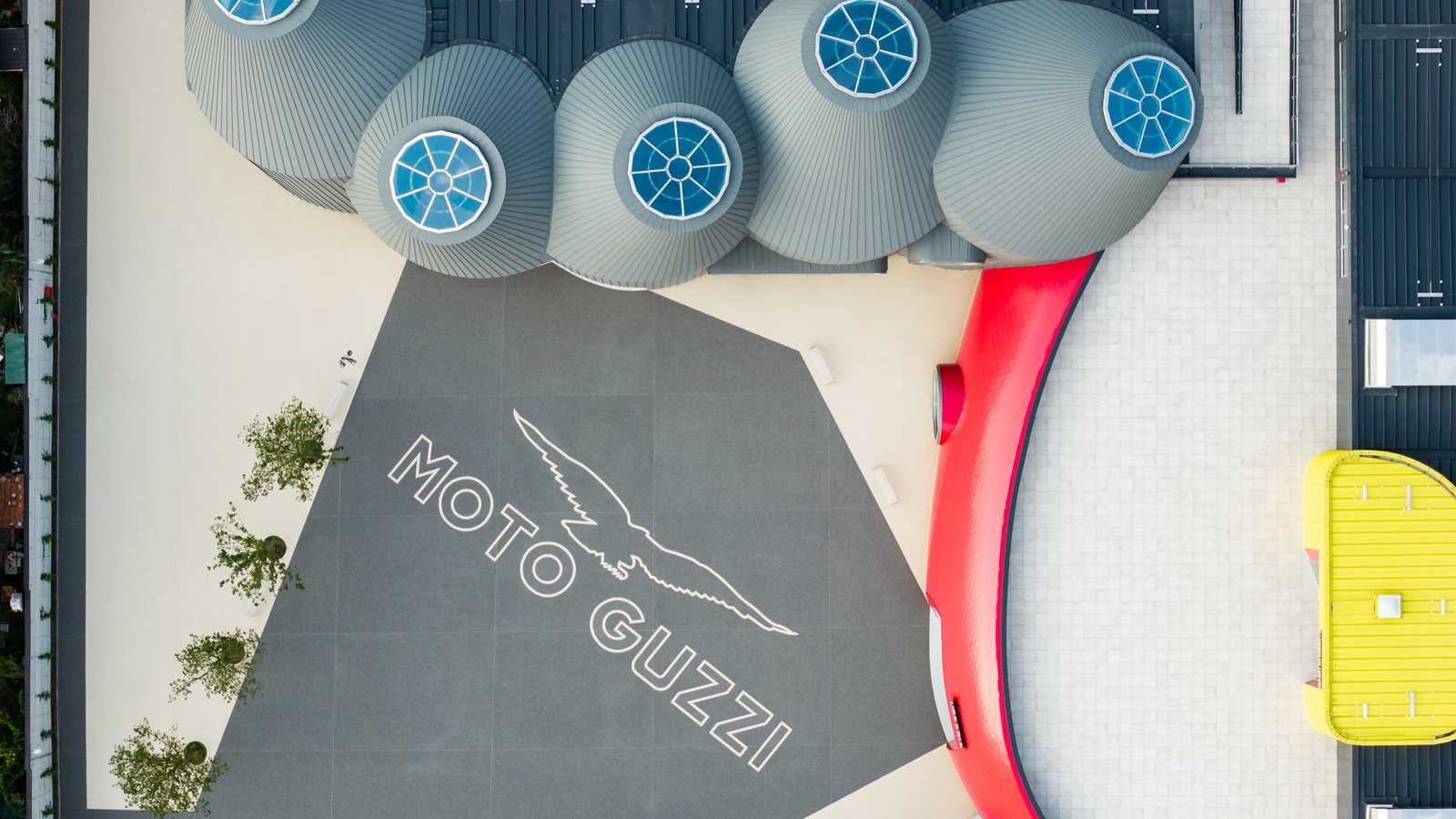
The wind tunnel is restored and open too. Moto Guzzi built it in 1950, the first motorcycle manufacturer in the world to have one, and it was designed by Carlo’s brother Giuseppe, who everyone called Naco. Outside there’s a piazza with a giant mosaic of the eagle, a cafe, a store, an auditorium, and about 45,000 square feet of space that exists purely for visitors. The plan is for it to be open all year.
World Days Is the Proof
The opening was timed to Moto Guzzi World Days, the annual gathering of the faithful, which ran September 3 to 6 this year. Tens of thousands of people rode in. When Guzzi held it for the centennial in 2022, more than 60,000 showed up from all over Europe, plus the USA, South America, Australia, Indonesia and Japan.
The factory doors opened at 10 every morning. Museum and wind tunnel visits were free. There were test rides every afternoon, and on Saturday a parade formed up in Lecco and rode up the lake to the gate.
One detail from the program stands out. Members of The Clan, which is Guzzi’s official owners community, could bring their own bikes into the factory’s workshop for a service and a tune-up. An owner can ride a thirty year old Guzzi across Europe, and the factory that built it will check it over before the ride home.
That’s how a brand ends up with one of the most loyal followings in motorcycling. Spend a day around these owners and it gets on you.
The Road Is the R&D Department
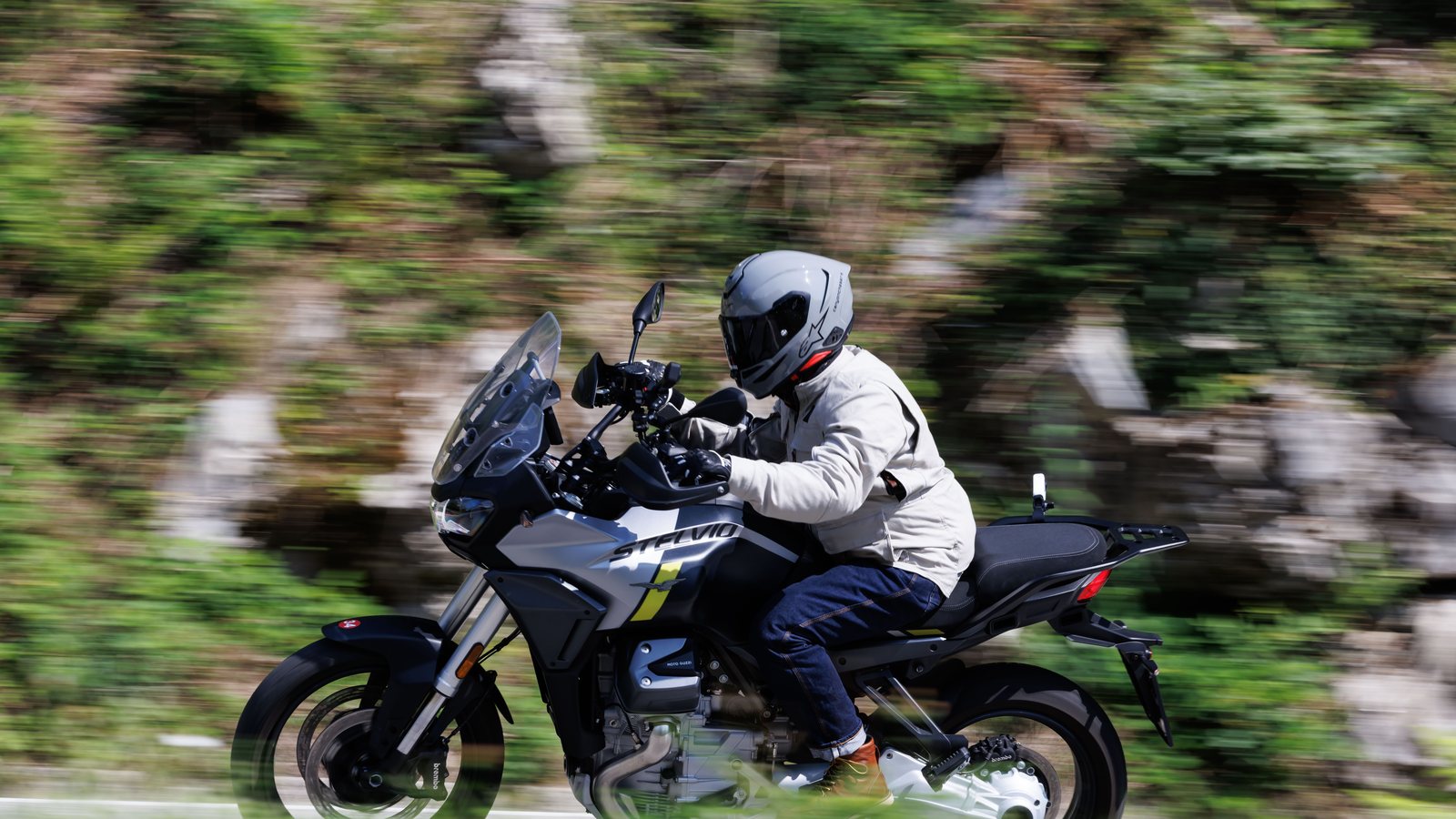
The lakeshore road is beautiful and no fun at all on a motorcycle. It’s narrow, crowded, and half of it is tunnel. The bikes for the day were a V85 and a Stelvio, one styled like the past and one like the future.
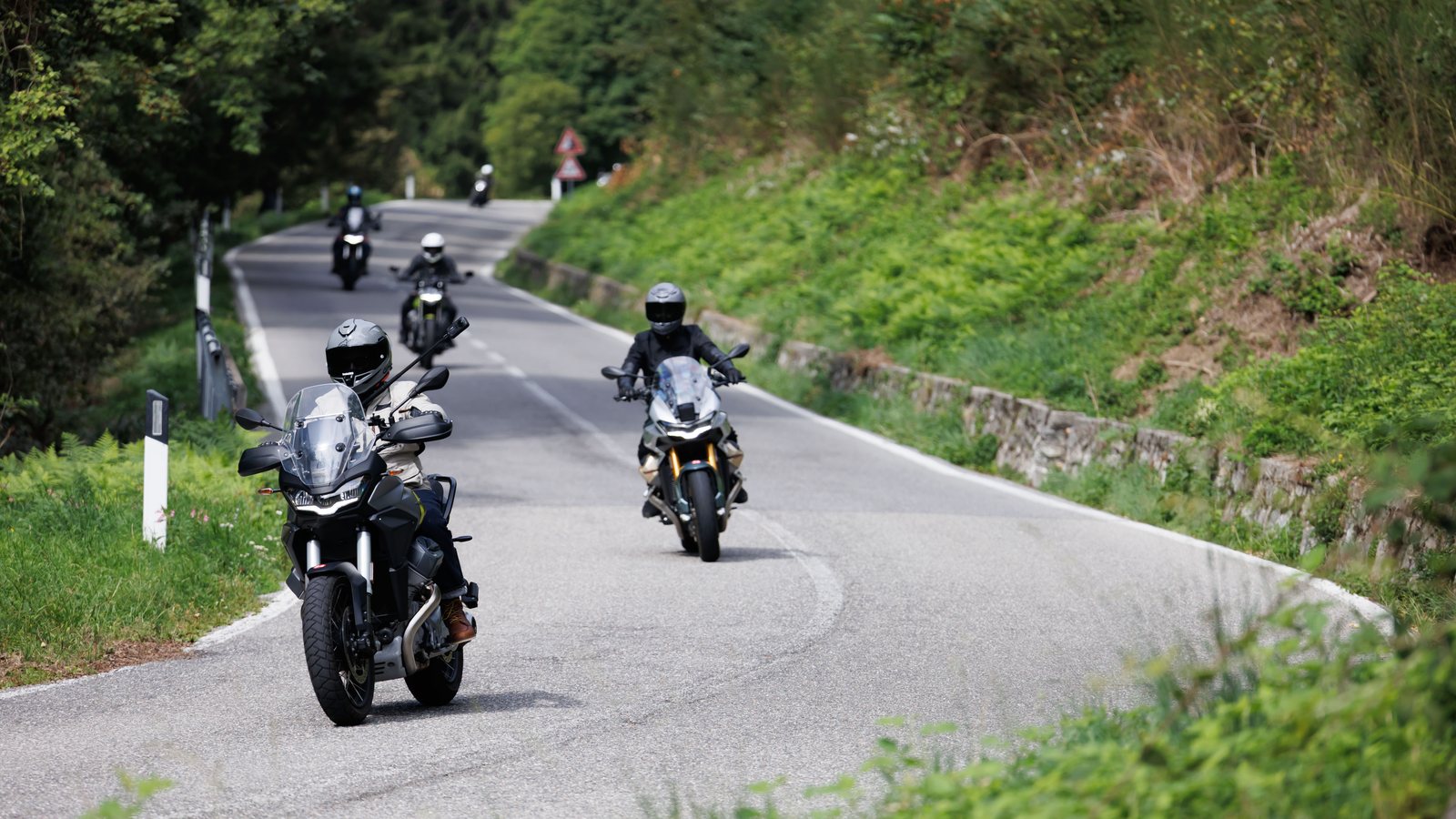
Then the road turns away from the water and goes up. It’s one of the most technical roads I’ve ridden this year. First and second gear hairpins stacked on top of each other, on grades so steep the bike is basically doing a wheelie on the straights. This is where the sideways engine makes sense. All the torque lives down low, right where you need it when you’re leaving a hairpin at 15 miles an hour with a wall on one side and a drop on the other. You open the throttle and the bike shoves you up the hill. The handling is so neutral you stop thinking about the motorcycle.
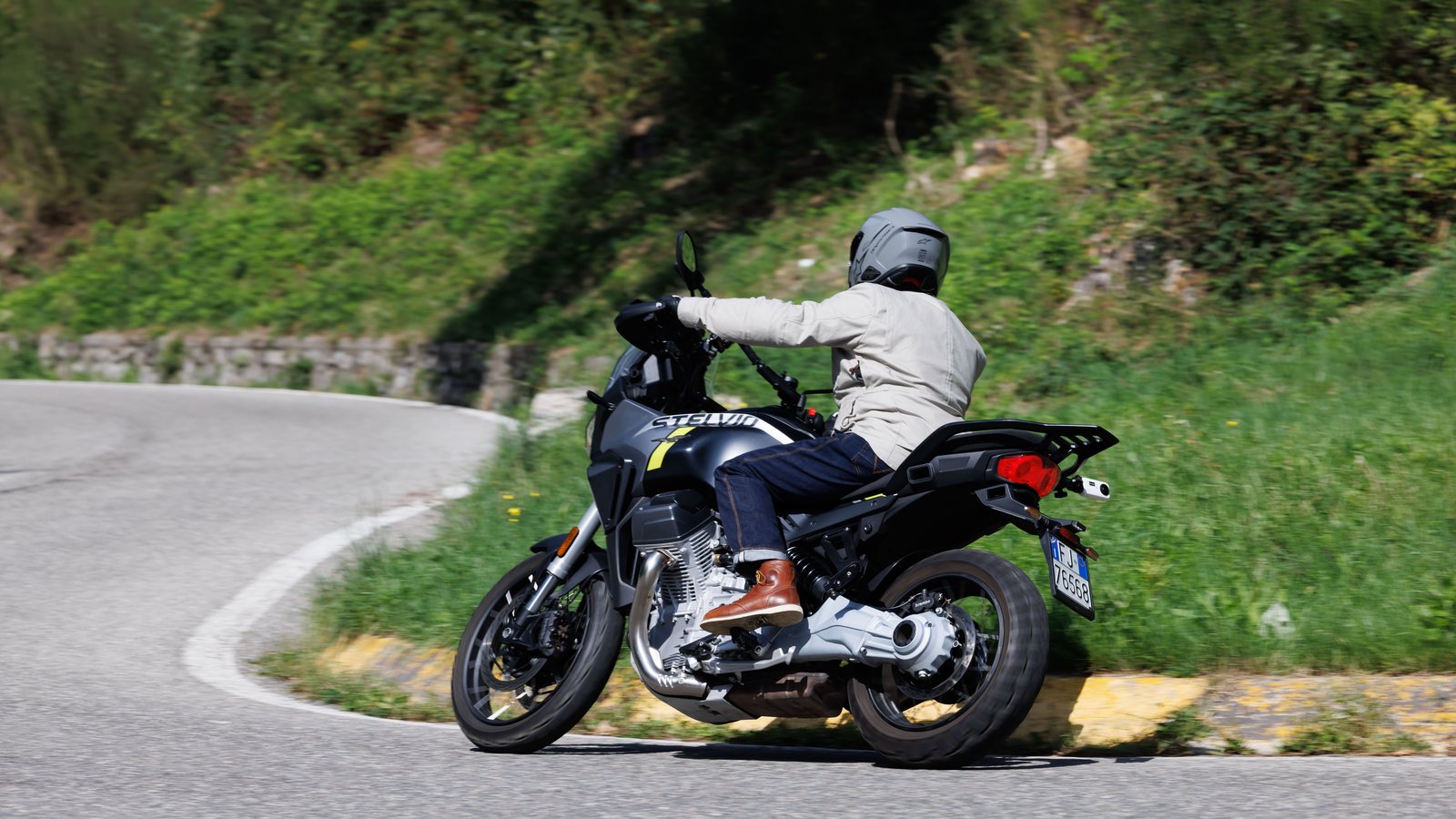
Every bike Guzzi has ever made was tested on these roads. The people who design them, build them and argue about them ride this exact climb home from work.
That’s the case for the 50 million euro. Move the factory to an industrial park and you keep the drawings, the tooling and the badge. You lose the commute. Somebody at Piaggio seems to have understood that the commute is the product.
Win a 2027 Moto Guzzi V85 TT
Moto Guzzi is easy to dismiss if cruisers aren’t your thing. Nice engine, wrong bike. A day in Mandello makes that a lot harder to say, and one day on a press bike isn’t enough to understand a company like this.
So I bought one: a brand new 2027 Moto Guzzi V85 TT. And it’s the next giveaway bike.
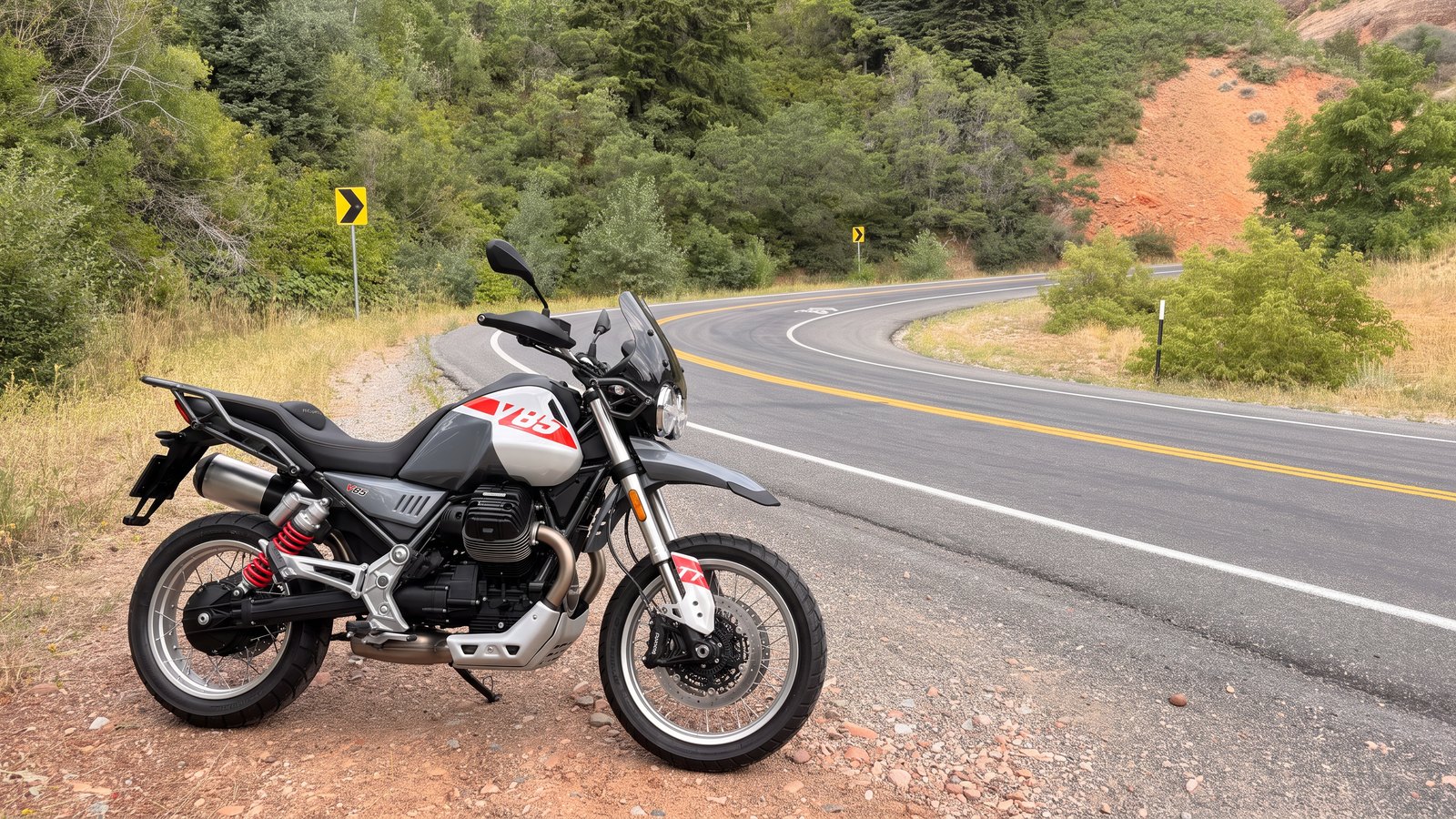
The V85 TT is the model that brought Guzzi back to the adventure segment in 2019, and it’s the whole Mandello story on two wheels:
- 853cc air cooled transverse V-twin, about 80 horsepower and 61 lb-ft
- Six speed gearbox and shaft drive, so there is no chain to adjust, ever
- 6.1 gallon tank
- 19 inch front and 17 inch rear spoked wheels, 170mm of travel at both ends
- Barely 500 pounds wet
- Ride by wire, ride modes, cornering ABS, traction control, cruise control and a TFT dash
All of it wrapped in a bike that looks like it was designed in 1975 by someone who was right all along.
After a few weeks of riding, it goes to one of you. The giveaway runs through Fanathem, a veteran-owned small business, and all the details are on their page.
Win This 2027 Moto Guzzi V85 TT
Brand new, bought for this giveaway, and headed to somebody’s garage. Details and entry are at fanathem.com/canyonchasers.
Thank you to the folks at Piaggio, who helped make the numbers work on a brand new giveaway bike, and to Eurosports Utah for working through all the details.
If You Go
- Where: Mandello del Lario, on the Lecco side of Lake Como.
- The gate: Via Parodi. Bring a camera.
- The museum: Right next to the factory, with the wind tunnel, the store and the cafe on the same site. It is built to take visitors year round, but check with Moto Guzzi for hours before you travel.
- World Days: Early September. The parade is on Saturday.
- The riding: Enjoy the lakeshore for the view, then take any road that climbs away from the water.
Disclosure: Piaggio hosted me in Mandello del Lario and helped with the pricing on the giveaway bike. The opinions are my own. Factory and museum photos marked as such are courtesy of Moto Guzzi.