Moto Morini X-Cape 1200 Review: Why Is This Italian 1200 So Cheap?
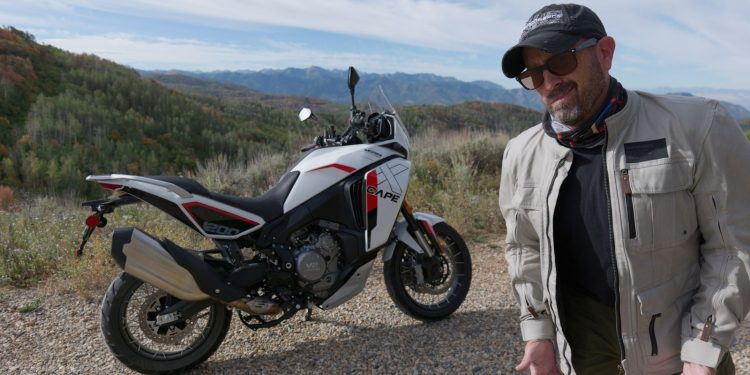
Start with the spec sheet, because that’s what makes people stop scrolling. A 1200cc Italian V-twin. Brembo monobloc calipers on a radial master cylinder. Fully adjustable KYB suspension. Blind spot radar, a dash cam, cruise control, a quick shifter. Heated grips, heated rider seat, heated passenger seat. A three year, unlimited mileage, transferable warranty. Price: $12,999.
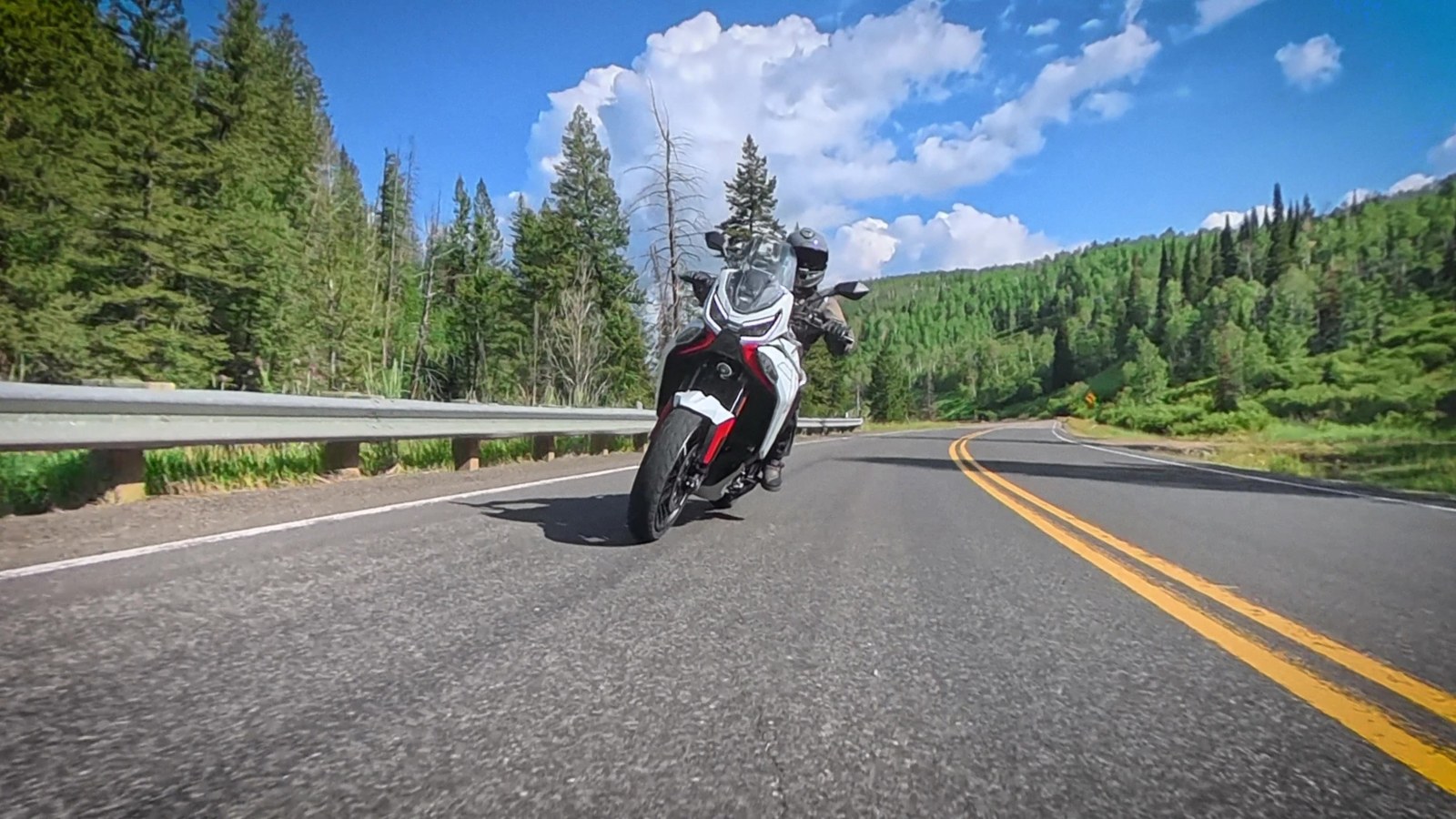
Most riders have never heard of the bike it’s bolted to. It’s the Moto Morini X-Cape 1200, and I’ve spent the last six weeks and about 500 miles on one, which is three or four times the seat time you get on a normal press launch. That’s long enough to stop being impressed by the equipment list and start noticing the small stuff.
So this review is going to be pickier than usual. I’m going to complain about details I would normally let slide, and I’m doing that for a specific reason: this is a good motorcycle, and nearly everything on my list of complaints could be fixed for the price of a nice dinner. A bike this close to being great deserves the scrutiny.
| Engine | 1,187cc 87° V-twin, 107 x 66 mm (“Corsa Corta”), Morini’s own design |
| Rev limiter | 8,750 rpm; peak torque at 7,000 rpm |
| Chassis | Steel trellis with aluminum sections, cast aluminum swingarm |
| Suspension | 48mm fully adjustable KYB fork, KYB shock with remote preload, 7 in. travel |
| Brakes | Brembo radial master, Brembo monobloc calipers, twin 320mm discs |
| Wheels | 19 in. front / 17 in. rear, spoked, tubeless; 170-section rear tire |
| Weight | 523 lb dry (US site), 571 lb dry (EU site), 610 lb ready to ride (Big Rock Moto scale) |
| Seat | 33.1 in., non-adjustable, heated (rider and passenger) |
| Electronics | 7 in. TFT, blind spot and rear radar, dash cam, TPMS, cruise, quick shifter, heated grips |
| Warranty | 3 years, unlimited miles, transferable |
| Price | $12,999 |
Who Is Moto Morini?
Moto Morini has existed since 1937, which means it has outlived a world war, the Castiglioni brothers, and roughly as many financial collapses as a regional airline. Alfonso Morini founded the company in Bologna. He was a racer and an engineer, which in Italy is one job.
The company’s great moment came in the 1970s, when chief engineer Franco Lambertini designed a 350cc V-twin called the 3½. It was the first volume-production motorcycle in the world with electronic ignition, a toothed belt driving the cams, and a six speed gearbox. This was 1973. Most of the industry was still gapping points with a matchbook cover.
After Alfonso died, his daughter ran the company until 1987, then sold it to the Castiglionis, who owned Cagiva and Ducati at the time. Morini spent the next two decades in the drawer where Cagiva kept the brands it forgot about. It surfaced again in the mid 2000s with the Corsaro 1200, a naked bike built around a brand new big V-twin, again from Lambertini. Bankruptcy followed, then an Italian rescue, and in 2018 the whole company was bought by Zhongneng, a large Chinese manufacturer best known for scooters.
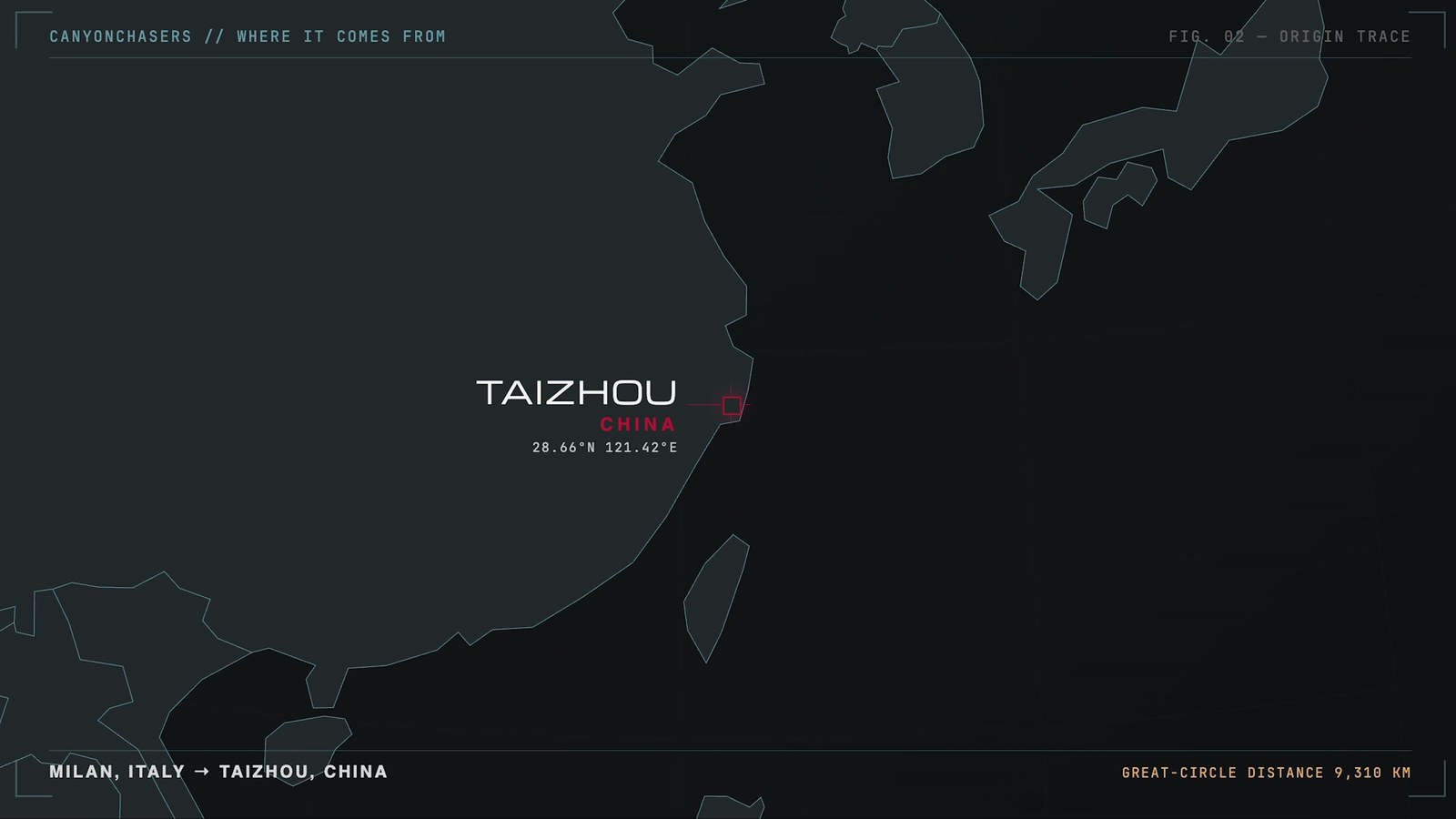
Today a Moto Morini is designed in Trivolzio, just outside Milan, and built in Zhongneng’s factory in Taizhou. So is your phone, your laptop, and a growing share of the components inside motorcycles wearing far more expensive badges. If your first reaction to the price is “that’s why,” hold that thought. The real answer is more interesting than “China,” and I’ll get to it at the end.
One clarification the internet gets wrong daily: Morini’s smaller bikes, the X-Cape 650, the 700, the 450, use engines built by CFMoto, descended from the old Kawasaki ER-6 parallel twin. The 1200 does not. This is Morini’s own engine, a Lambertini design. That distinction is about to matter.
Adventure Bike or Sport Tourer on Stilts?
Everything about the X-Cape’s appearance says adventure bike. Rally-style nose. Nineteen inch front wheel and seventeen inch rear, both spoked and tubeless. Seven inches of suspension travel at each end. Ride modes named Off Road and All Terrain. Then you ride it, and what you have is a sport tourer. A tall one. Call it a tall-rounder. At that job, it’s superb.
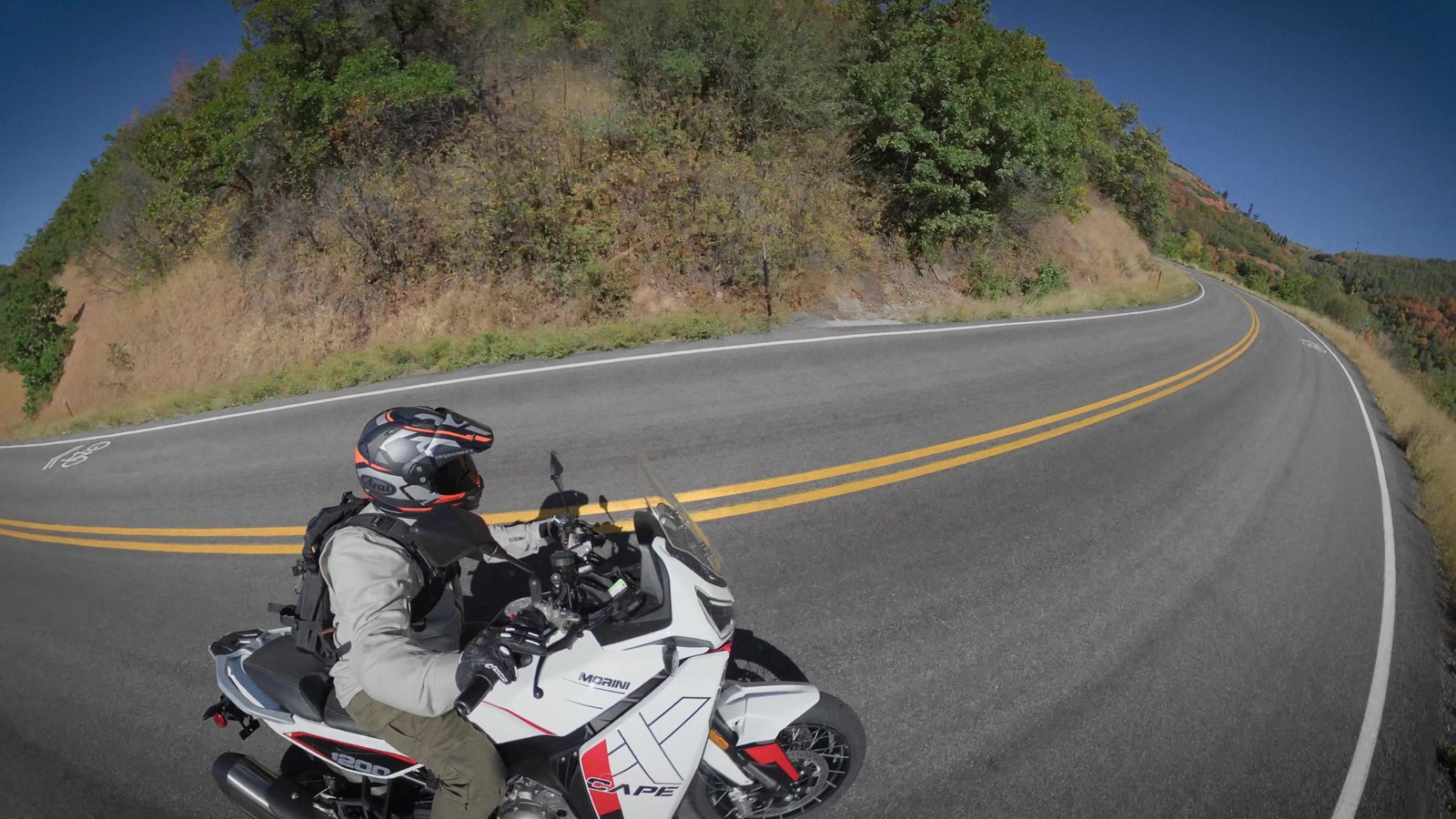
Ian at Big Rock Moto called it a half-price Multistrada, and I think that undersells it. A base Multistrada 1200 was $17,000 in 2012, which is roughly $25,000 in today’s money, and its electronics package amounted to a clock, four ride modes, ABS and traction control. The X-Cape is $13,000 in 2026 with radar. That comparison is the entire story of this motorcycle: it delivers the sport touring experience the big Italians and Germans charge twice as much for, wearing an adventure bike costume. I’m fine with the costume. I just wish Morini would admit what’s underneath it.
The Corsa Corta Engine and the 8,750 rpm Problem
The engine is my favorite thing about this bike and also my biggest complaint, and both of those are true at the same time.
At normal speeds it’s charming. Lumpy V-twin torque, a soundtrack like an Italian arguing with a lawn mower, and clean fueling right off the bottom, with only a hint of the surging that every modern bike seems to have. Around town, on the highway, on a lazy Sunday, it’s lovely.
Hustle it up a canyon and the character changes. The only way to make the X-Cape feel fast is to hold each gear until the rev limiter, and the limiter arrives early. Below 5,000 rpm the engine is a pussycat. Above 5,000 it gets athletic. The usable window is narrow enough that I found myself dancing on the shift lever like I was on a 400, just to keep a 1,200cc twin where it’s happiest.
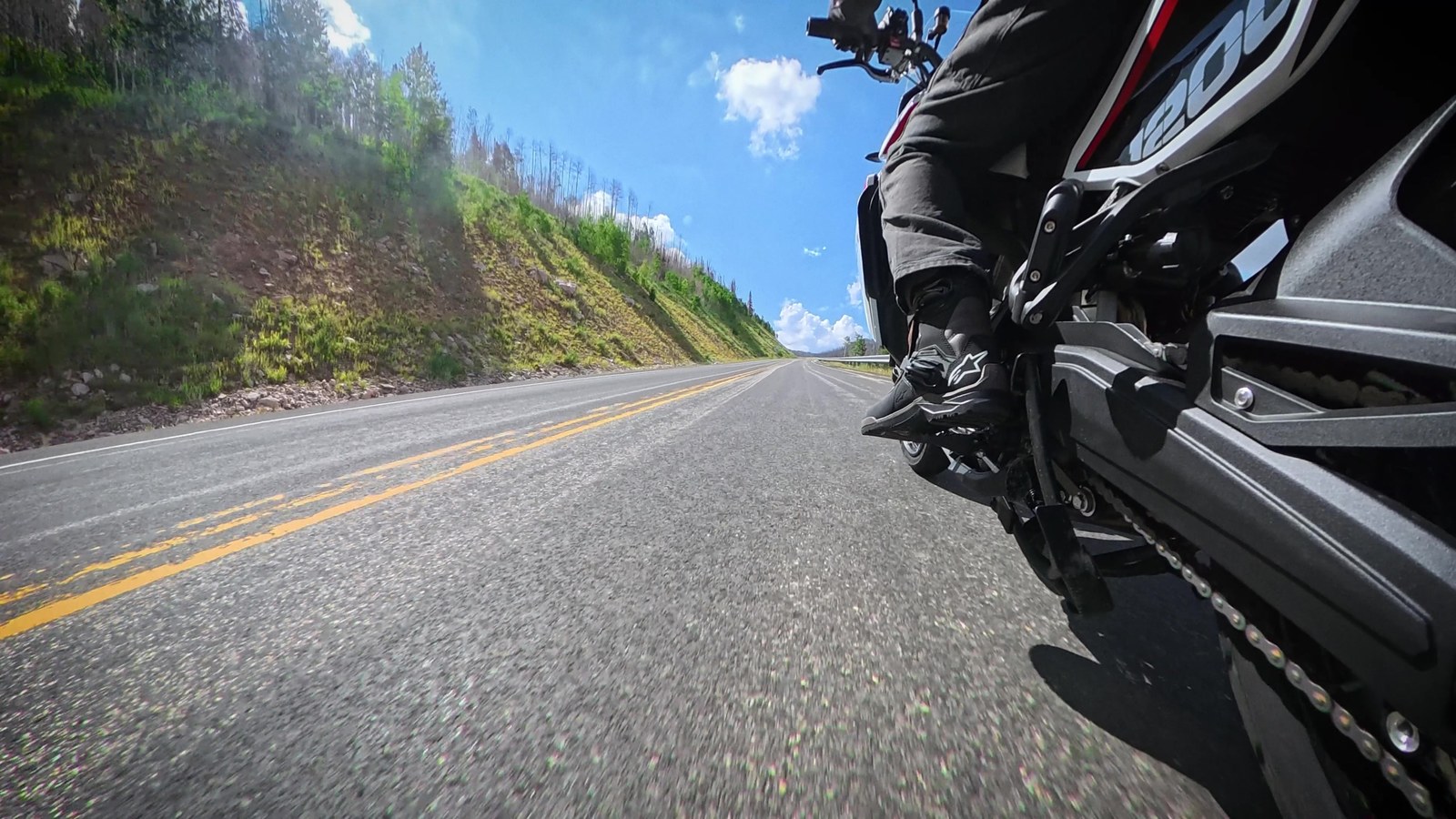
The reason is in the name. Corsa Corta is Italian for short stroke, and at 107 x 66 mm this engine is more oversquare than anything it competes against. It’s built like a superbike motor: big bore, big pistons, big valves, short stroke, so the piston speed stays sane while the engine spins fast. Engines like this make their power up high by design. Expecting muscle-car torque at idle from a bore-and-stroke ratio like this is expecting the wrong thing.
So far, so logical. Peak torque lands at 7,000 rpm, the bike comes alive at 5,000, and below that it’s soft. That’s what short stroke engines do. What’s odd is what Morini did next: they set the rev limiter at 8,750 rpm. Run the piston speed math at that limiter and the engine is barely jogging. Ducati took a motor of almost identical proportions and pulled 150 horsepower out of it fifteen years ago. Morini built an engine that needs revs to make power, then capped the revs, presumably in favor of long term durability.
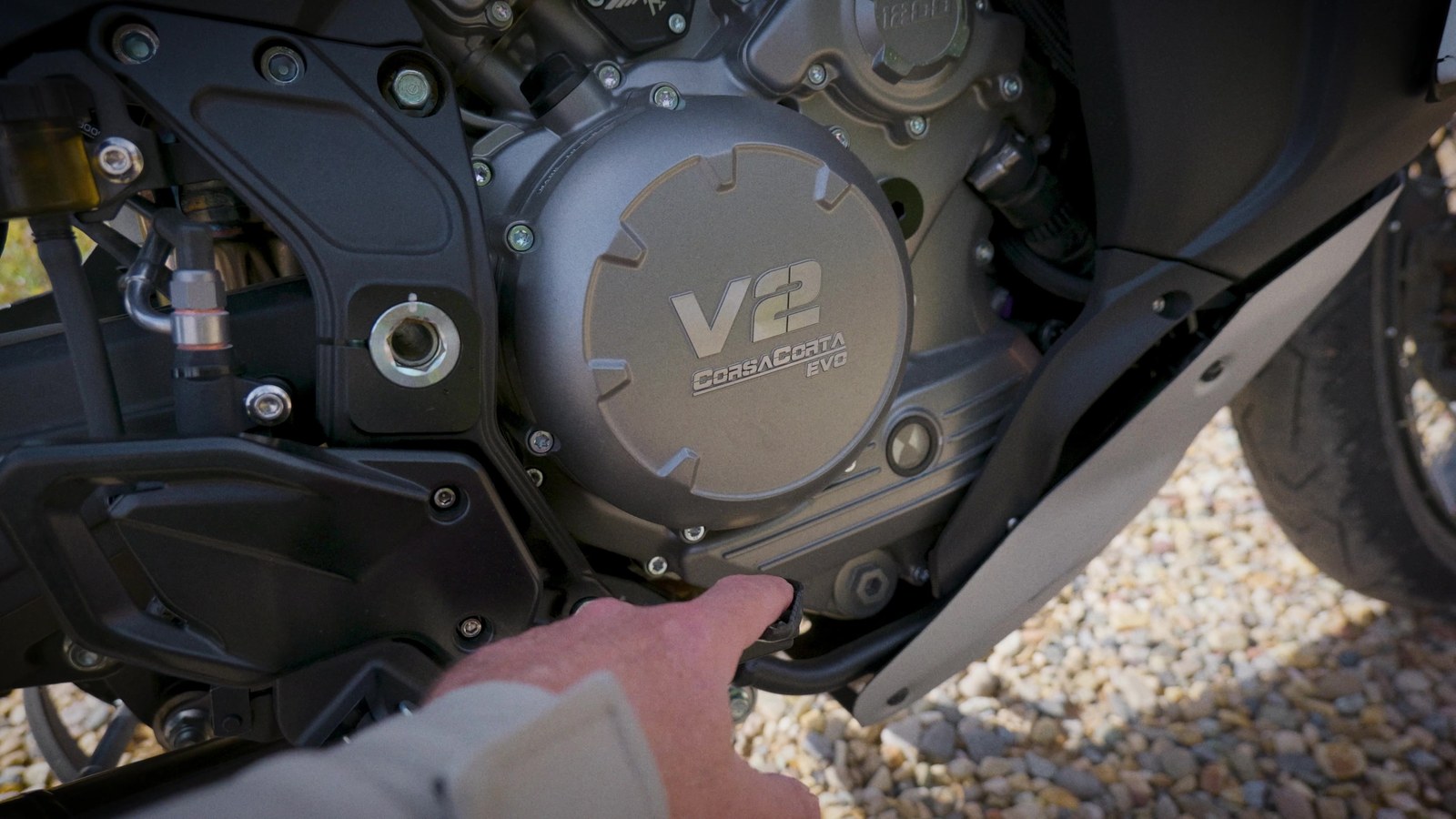
The headroom is real. A Moto Morini rep told me the engine is rated for 180 horsepower, and a full teardown of the motor on YouTube reaches the same conclusion. Somewhere in Italy there is a man with a laptop who could make this the best engine in the class before lunch, and he appears to be on holiday. I don’t think the bike wants 180. Give it 140, maybe 150, and it goes from fun at normal speeds to fun everywhere. That’s a tune, maybe a cam, and it would barely move the MSRP. Item one.
Handling: One of the Best Switchback Bikes I’ve Ridden
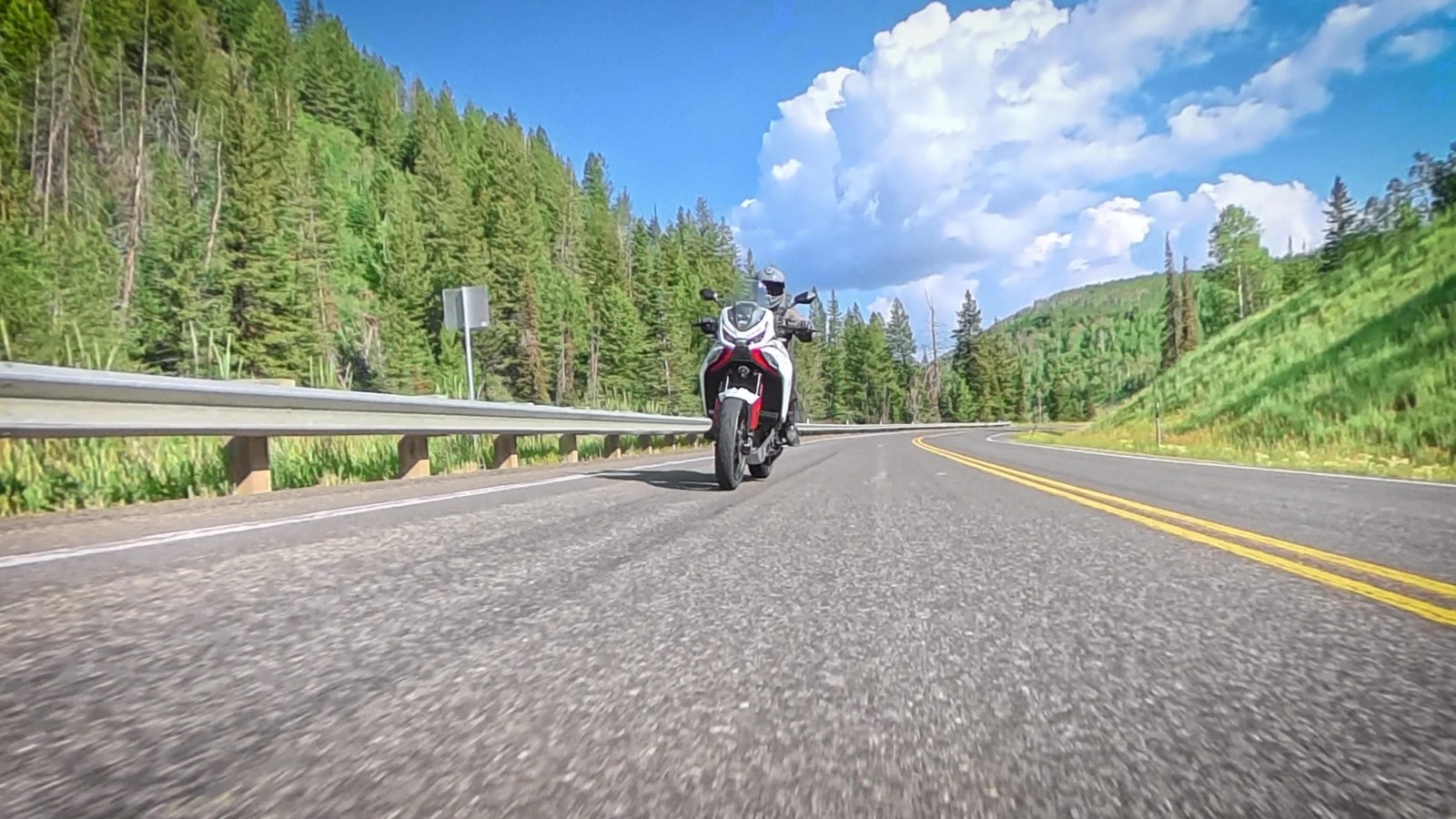
Here’s the part that surprised me. I ride a lot of motorcycles through a lot of tight switchbacks, in Europe, in South America, and at home in Utah, and the X-Cape 1200 is one of the best I’ve ever ridden through a tight switchback. That includes bikes costing twice as much and weighing 150 pounds less. It drops in, holds the line, and changes direction like a bike half its weight. I kept coming out the far side of hairpins wondering what all the fuss about ultralight motorcycles was for.
The bones are conventional and good: a steel trellis frame with aluminum sections, a cast aluminum swingarm, a fully adjustable 48mm KYB fork and a KYB shock with a remote preload adjuster. What’s unusual is that the damping feels like it was set up by somebody who rides. You’d think that was standard practice in this industry. It isn’t.
How Much Does It Really Weigh?
It’s heavy, and Moto Morini would rather not discuss it. The American website claims 523 pounds dry. The European website says 571 pounds dry. That 48 pound gap is either a rounding error or an average bulldog, and neither site will tell you what the bike weighs with fuel in it. Ian at Big Rock Moto put one on a scale: 610 pounds, ready to ride. For scale, that’s a BMW R 1300 GS with full luggage and a week of clothes packed.
You don’t feel it once you’re rolling, and the reason is a piece of engineering hidden behind the bodywork. The fuel tank is split, with the fuel carried low on both sides of the bike, behind those big side panels, rather than up top where a tank normally sits. Forty pounds of gasoline rides down by the cylinder heads instead of up by your chest. Aprilia did the same thing on the brilliant, underpowered Caponord, and it’s expensive to package, which is why I didn’t expect to find it at this price. It’s Dakar-grade problem solving, and it does more for the way the bike feels than any spec sheet number.
Brakes and the Rear Tire
The braking hardware is legitimate: Brembo radial master cylinder, Brembo monobloc calipers, twin 320mm discs. At normal speeds the brakes are excellent, with real feel and good feedback. The trouble is physics. A brake is a device for converting speed into heat, and the heat it has to absorb scales with mass and with the square of speed. Haul 610 pounds down from real velocity two or three times in a row and you can feel the rotors run out of headroom before the calipers do.
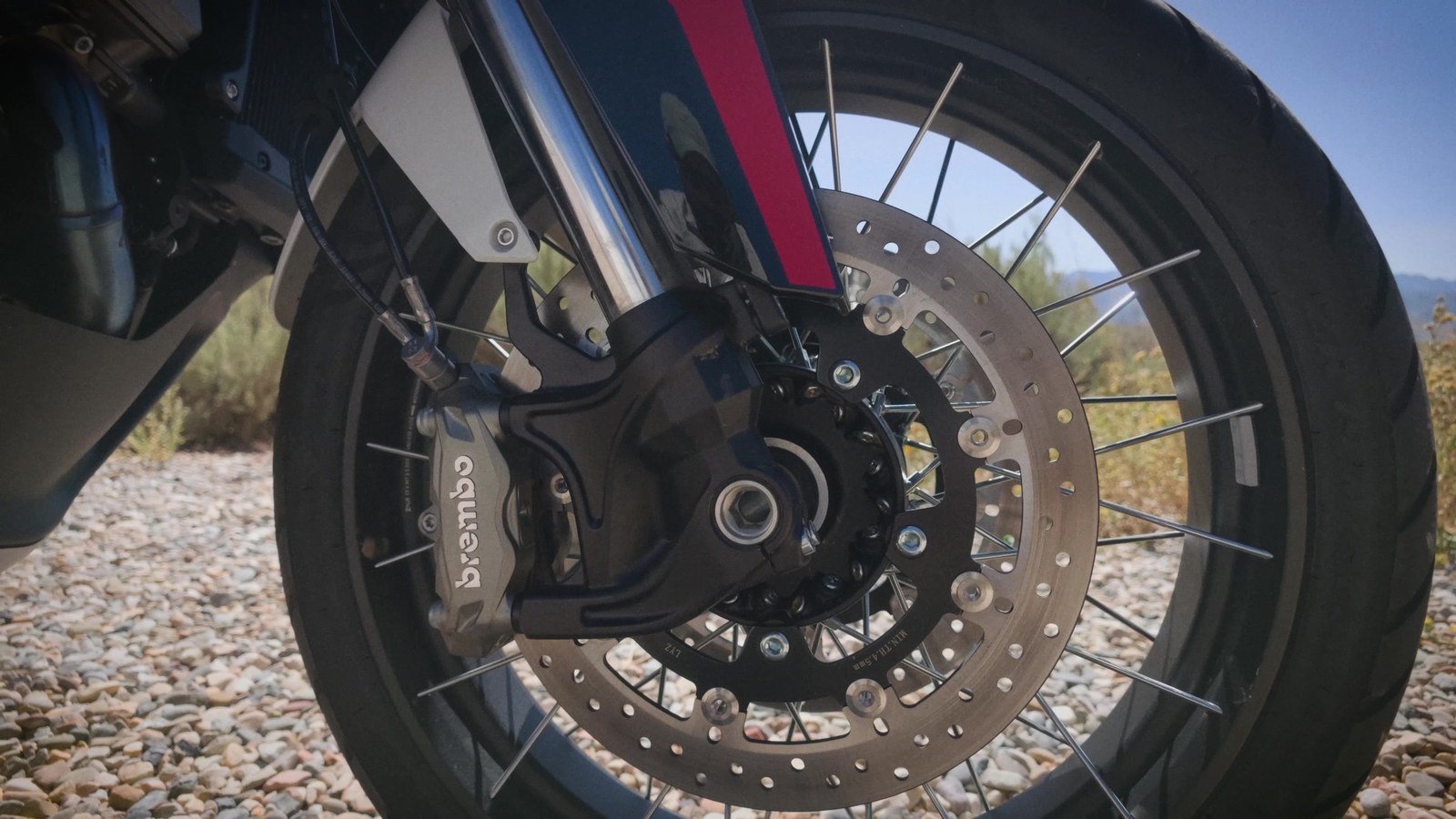
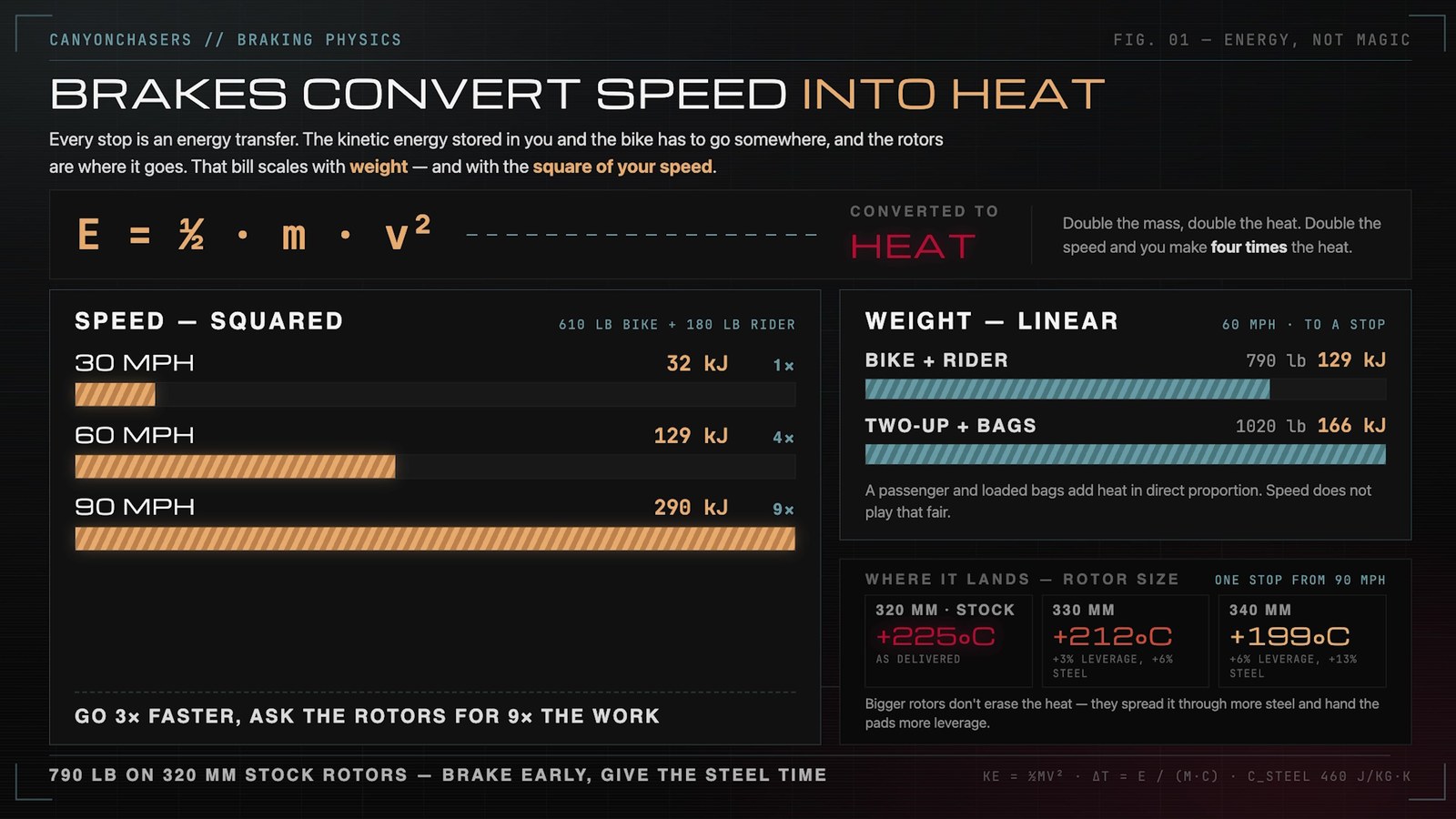
The fix is less bike or more disc, and only one of those is cheap. Ducati fits 330mm rotors to the Multistrada V4. Do that. Item two.
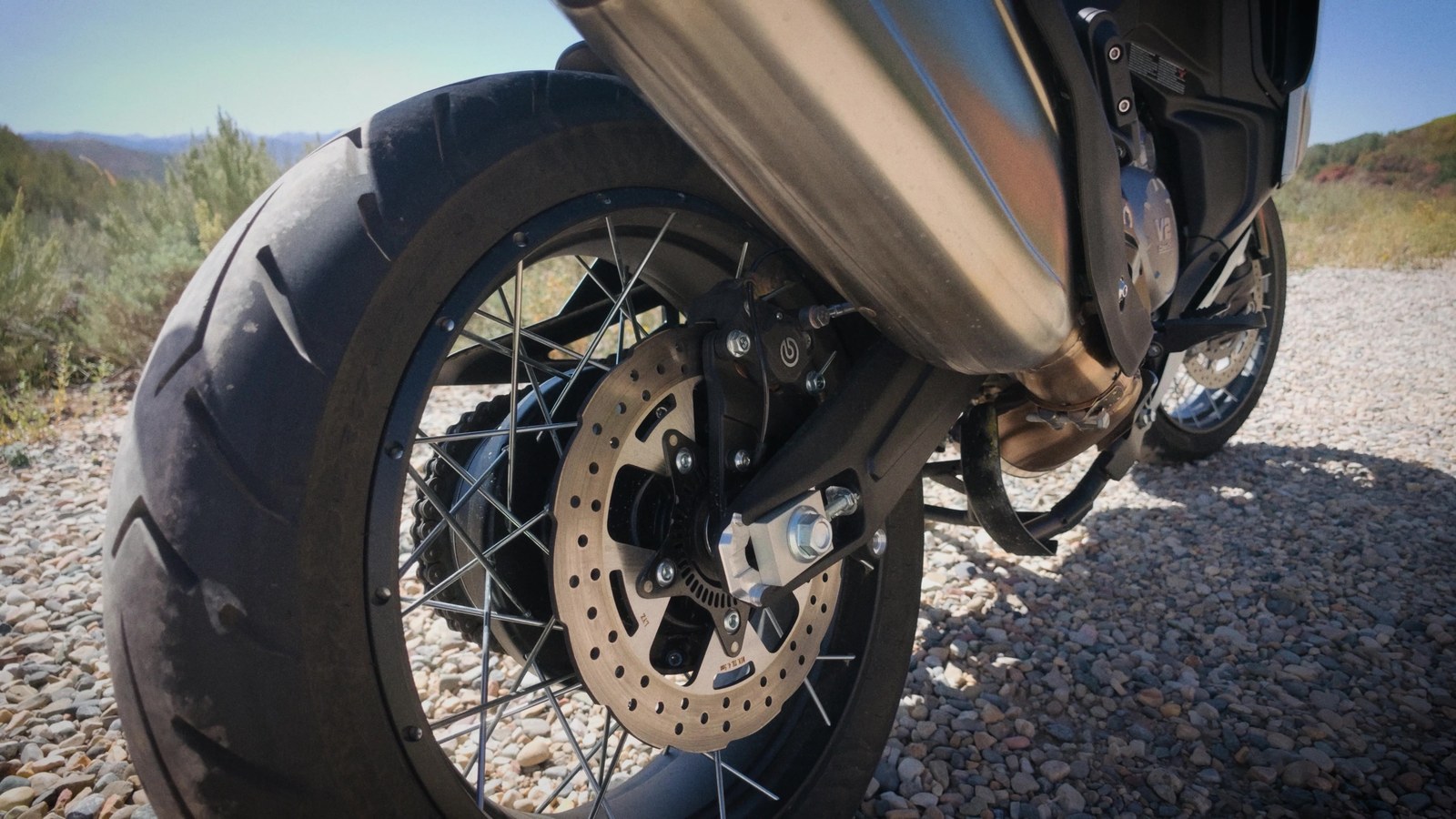
While we’re on sport touring hardware: the rear tire is a 170. A bike that corners like this one should be on a 180 or a 190, on a rim wide enough to carry it. The chassis has earned it. Item three.
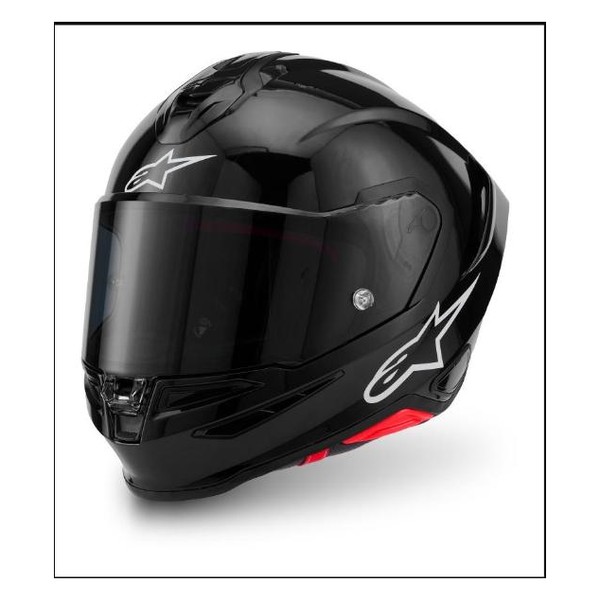
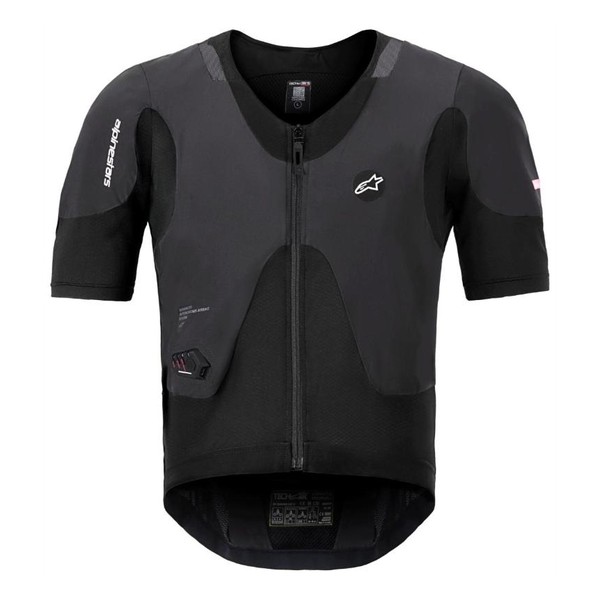
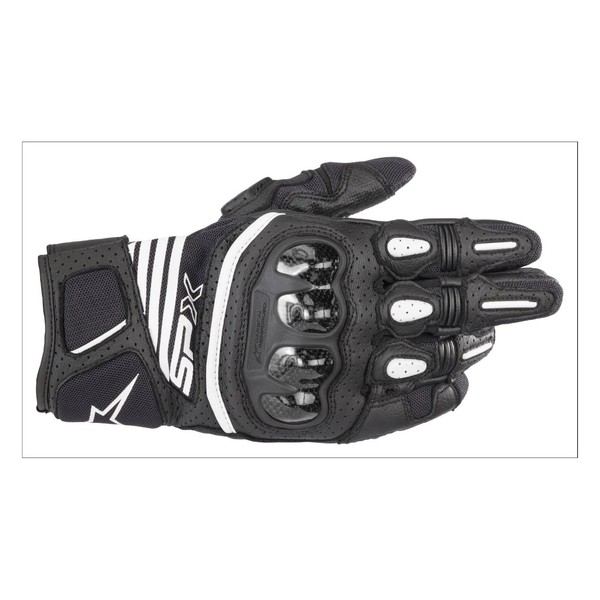
Gear I Wore in This Video
Links go to RevZilla. Buying through them supports the channel at no extra cost to you.
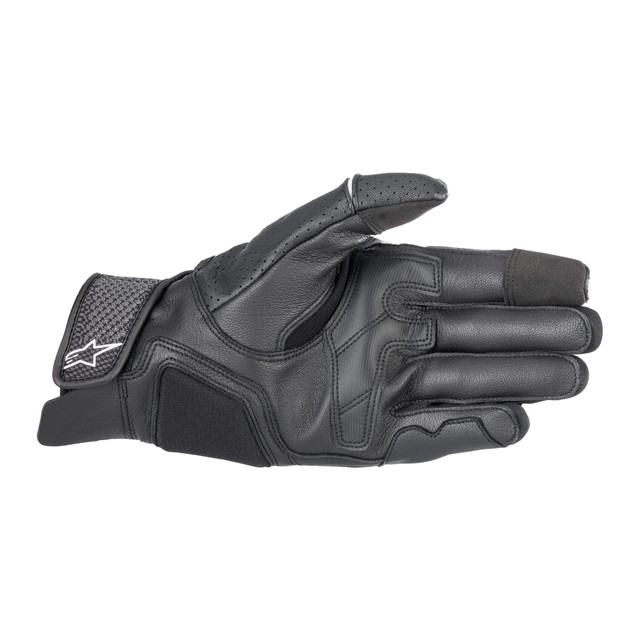
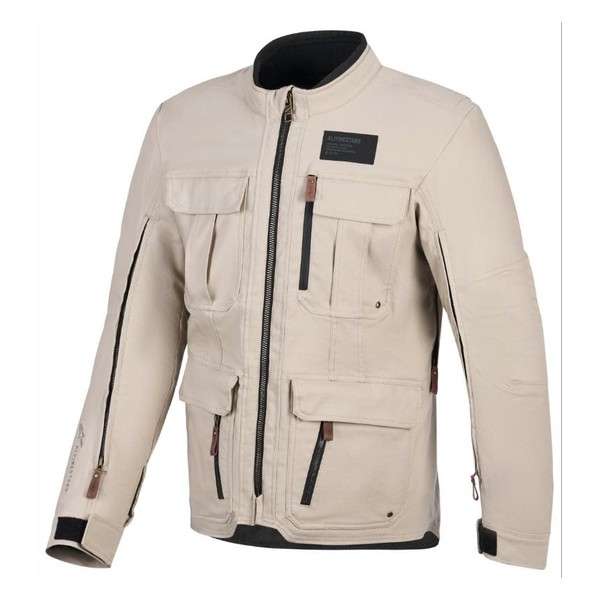
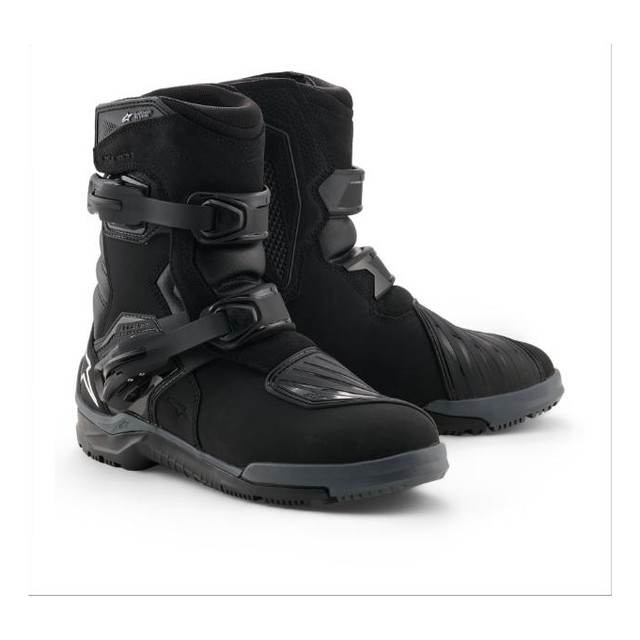
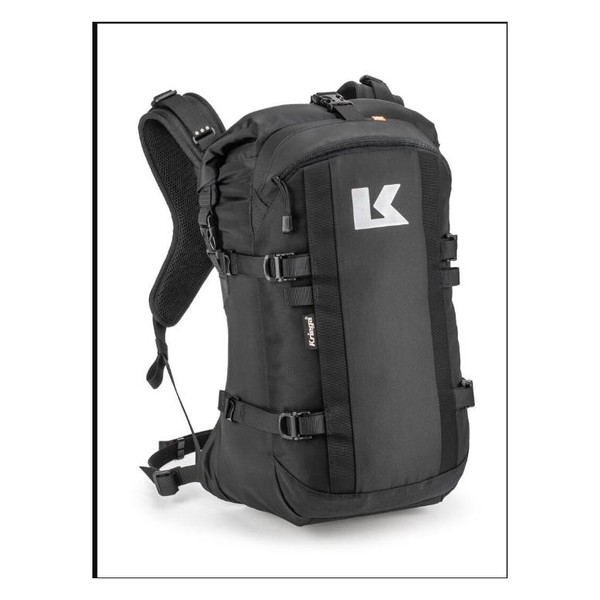
The Niggles: Heat, Windscreen, Seat
Now the small stuff I promised. The side panels have vents that channel hot air off the engine and aim it, with real precision, at your kneecaps. I rode this bike through a Utah July and into early autumn. Today, with the leaves turning, the warmth on my legs is lovely. In July it felt like being slow-roasted by someone who finds your discomfort funny. Angle the vents outward, or reshape the panel so the airflow carries the heat past the rider instead of into them. It’s a piece of plastic. Item four.
The windscreen adjusts, a little fiddly but I’m glad it’s there. I’d still like it an inch and a half or two inches shorter, because in its lowest position the wind hits me exactly where I don’t want it. Yes, you’re probably taller than I am. But with an adjustable screen, why not start low and let the tall riders raise it? Item five.
The seat is 33.1 inches and doesn’t adjust. Both rider and passenger seats are heated, which is a genuine luxury at this price, but given my well documented inseam problem I’d trade some of that for a lower option.
TFT and Features
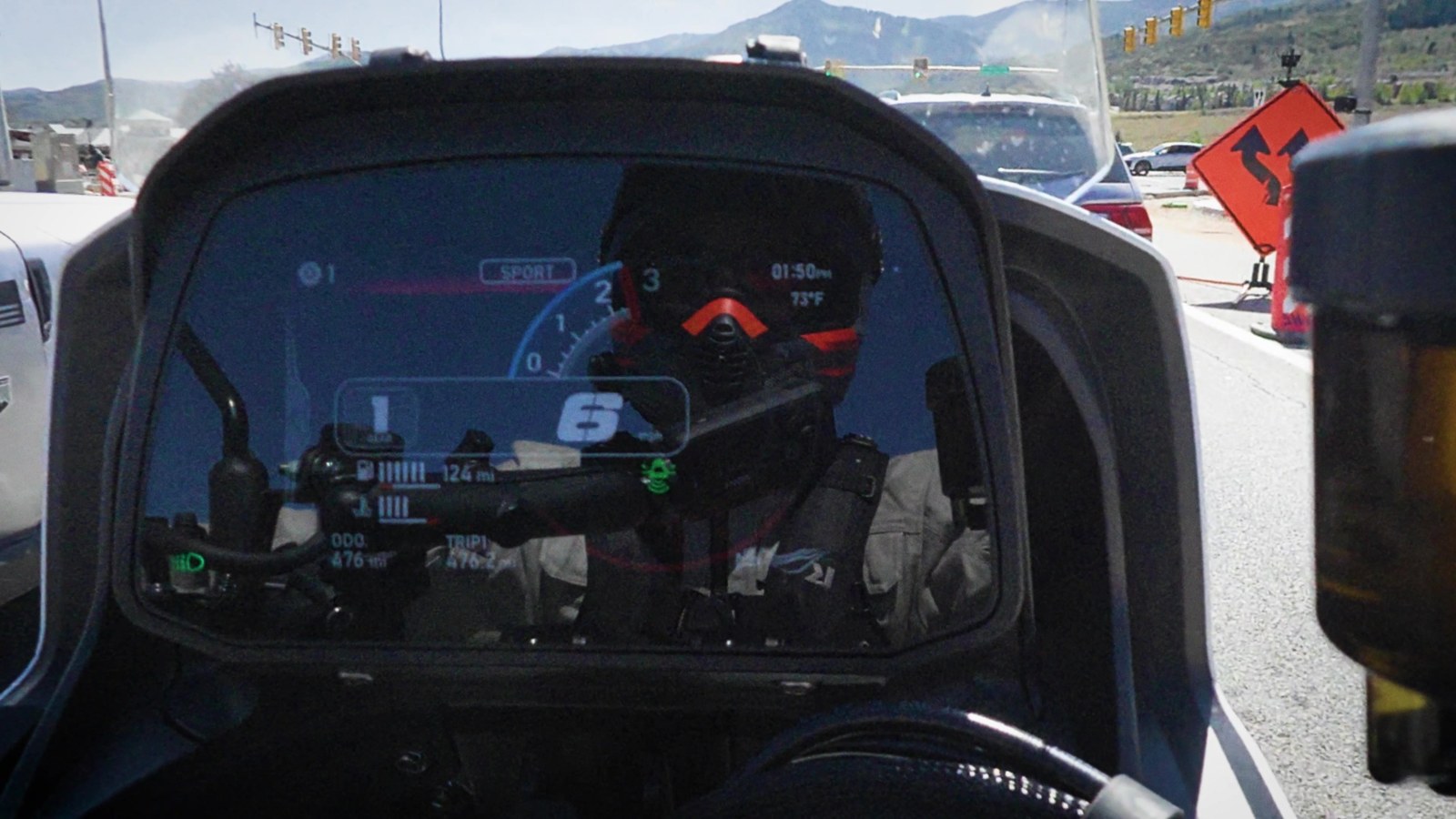
The seven inch TFT has more features than I can list: dash cam, radar, tire pressure, Bluetooth, and a mild case of too much going on. It’s busy. I don’t buy motorcycles for the dash, and I’d argue nobody should, but the list of usable equipment on this bike is hard to argue with. Add Apple CarPlay and it would be the best feature set on any motorcycle at any price.
The Rear Radar Every Motorcycle Should Have
One feature on this bike should be mandatory on every motorcycle sold anywhere. The rear radar, tucked under the license plate light, watches the road behind you. When a vehicle closes on you fast, it flashes the brake light at the driver.
Think about what that means. Every other piece of rider-assist technology on the market exists to protect you from yourself. This one is aimed at the guy in the pickup who’s looking at his phone because somebody texted him a photo of a sandwich. And it runs on hardware the bike already carries for blind spot detection. BMW, Ducati, KTM, Honda: you all have radar on your flagships. Copy this.
Moto Morini X-Cape 1200 Oil Change
Moto Morini sent the supplies for the first service, so I did the oil change in the garage. It’s messier than average, and the layout is worth knowing before you’re under the bike with a drain pan.
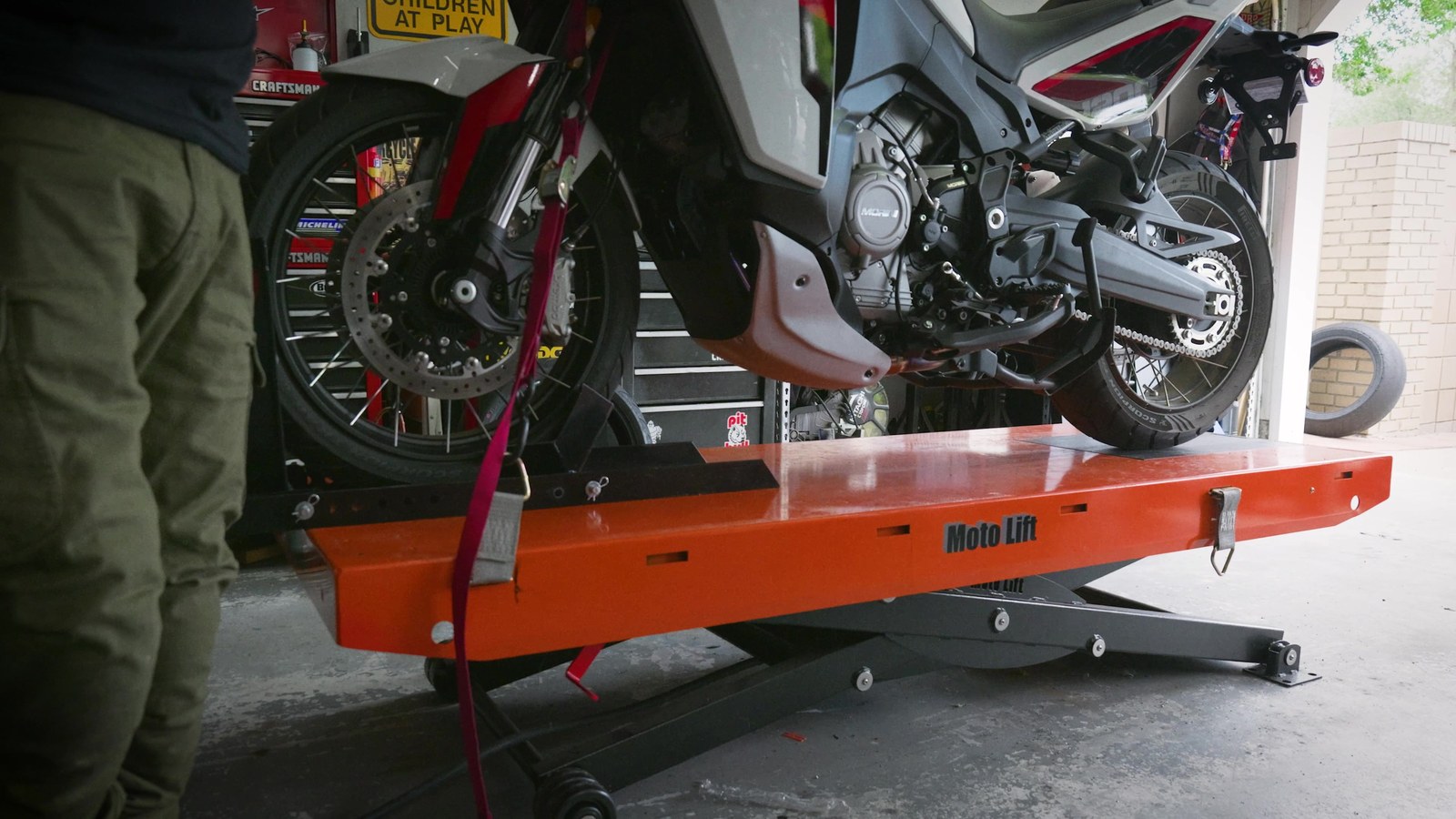
The oil filter lives behind a three-bolt cover on the left side of the engine, and it’s a cartridge element rather than a spin-on. The drain bolt is a 19mm sitting in the center of the engine directly above the header pipe, which is awkward to reach and guarantees the old oil runs down the exhaust on its way out. Below the sight glass is a second, larger 20mm cap covering the primary oil screen, which also dribbles onto a bracket when you pull it.
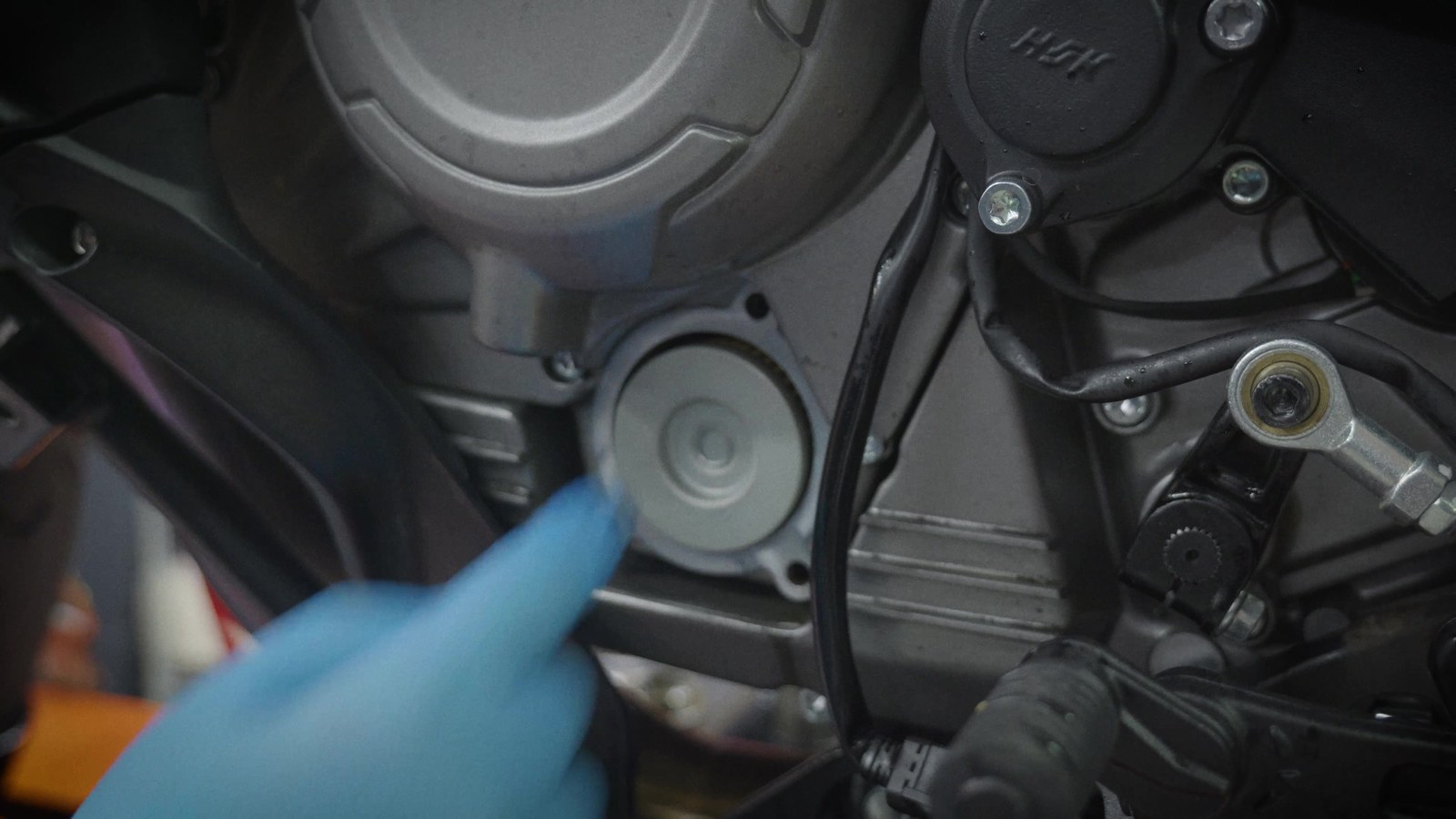
Reassembly: drain bolt in first. The new element goes in with the hole facing inward so oil can pass through it, with a fresh O-ring behind it and the detent spring seated in front. Snug the three cover bolts evenly; tightening one all the way down before the others will crack the cover. Fit a new O-ring on the screen cap too. On this first change the screen held a few tiny flakes of metal, which is normal break-in debris. The one easy part is the air filter, which sits right behind the lower triple clamp and takes seconds. Not an elegant system, but it’s Italian, so we’ll call it character.
Styling and the Body Panels
The X-Cape is styled as though it could enter Dakar on a whim. If “off road” means a graded dirt road, it’s perfectly happy there, and the soft low-rpm delivery makes it confidence inspiring on gravel, with the caveat that I’m the world’s most mediocre off-road rider. But it’s never going to cross Mongolia or finish a rally stage. Its stages end in a Starbucks parking lot, and it looks great pulling into one. So why not style it for the job it’s actually brilliant at?
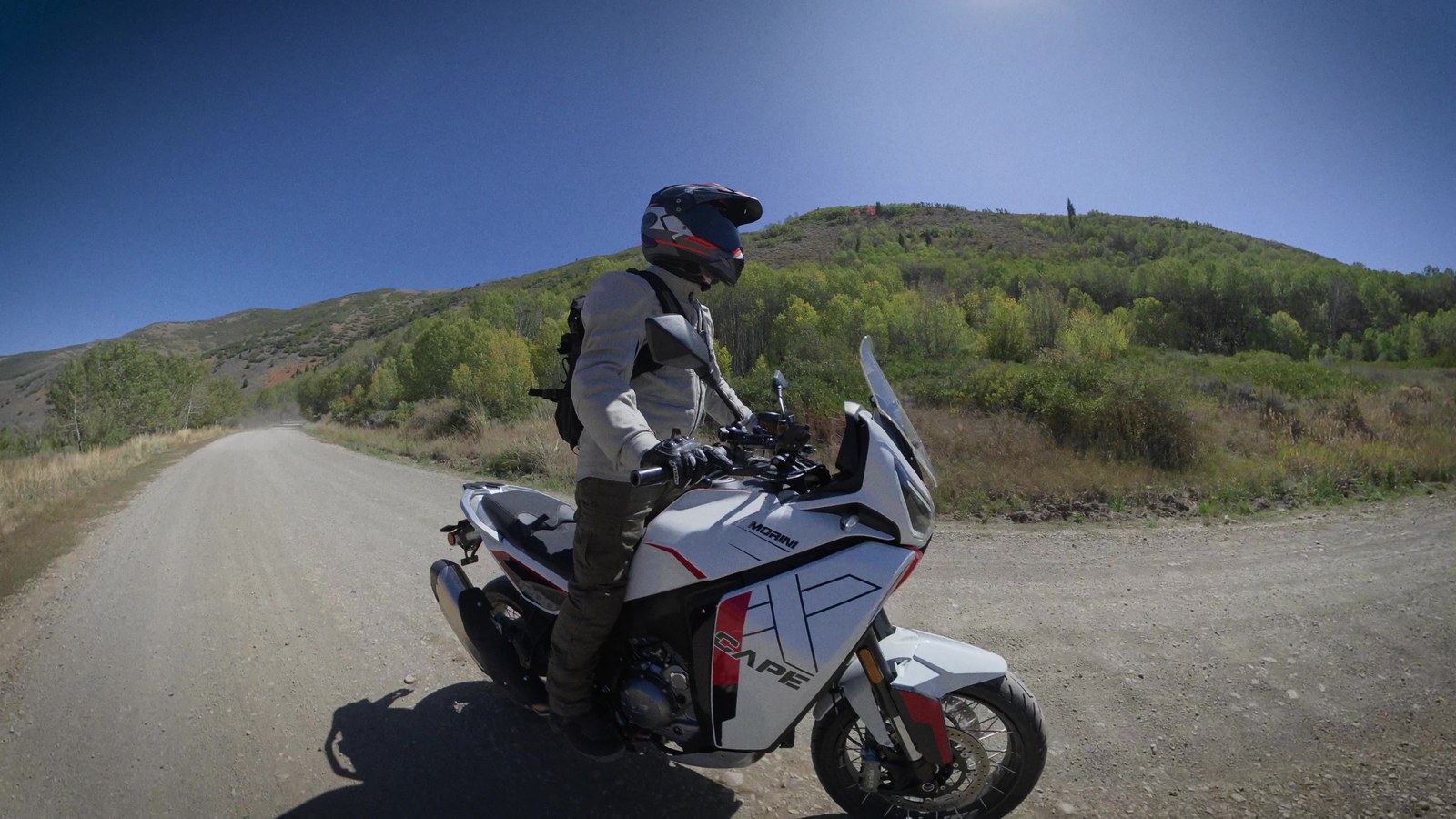
The side panels are the problem. They’re big and flat and run parallel to the bike’s centerline. I understand why they’re big: they wrap the radiator and hide the split fuel tank. But big doesn’t have to mean flat. The X-Cape is physically about the same size as a Multistrada V4, yet in person it reads as enormous, because Ducati angles every surface to hide the bike’s visual mass and Morini doesn’t. Some tapering would shrink the bike dramatically without changing a single hard part. Item six.
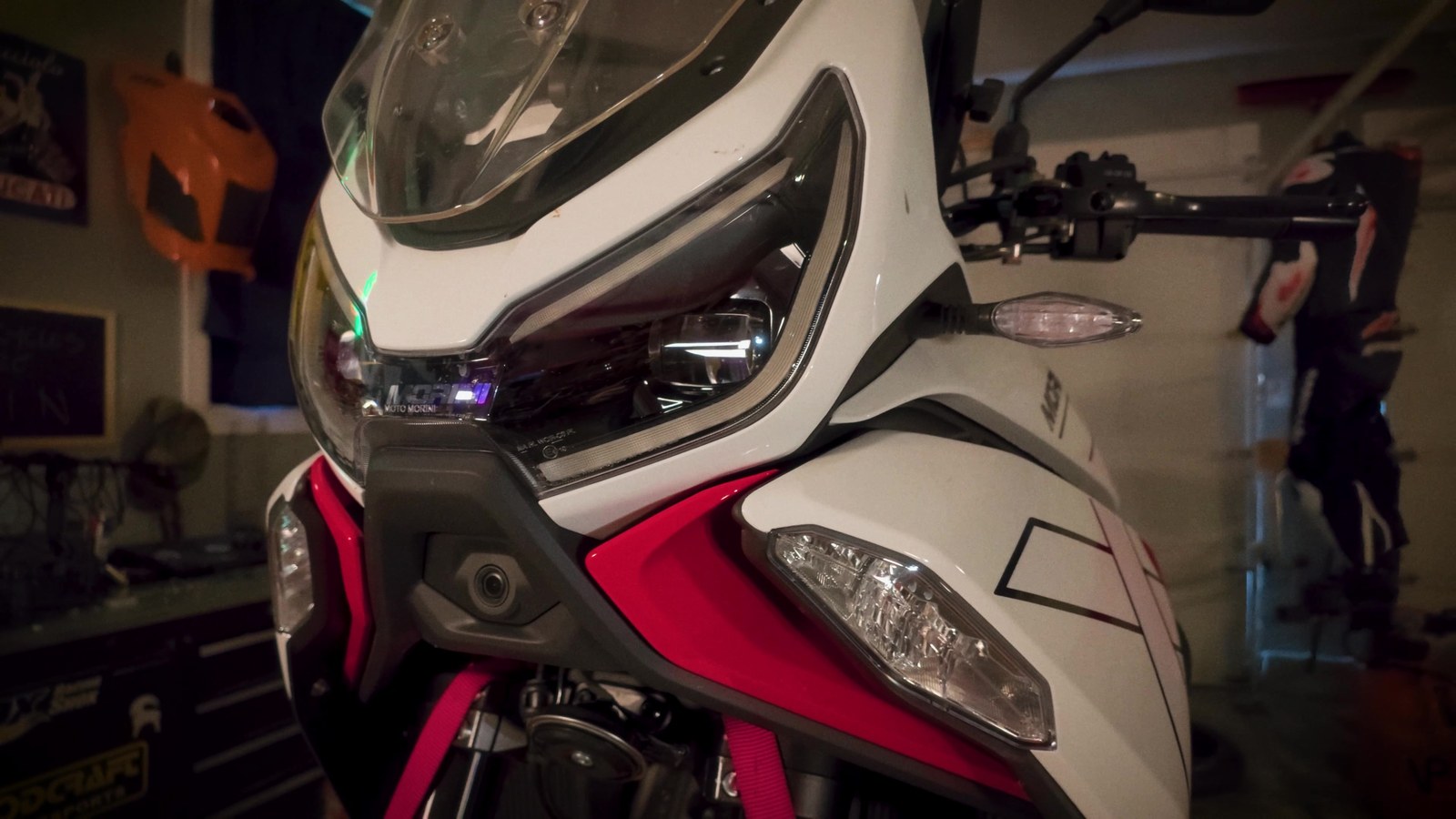
Then there’s the face. If Venom is your favorite Marvel character, you’re going to love it. My complaint is that it looks like it’s been pressed against a window. It needs a nose. Item seven.
The Details: Pegs, Switchgear, Dash Cam
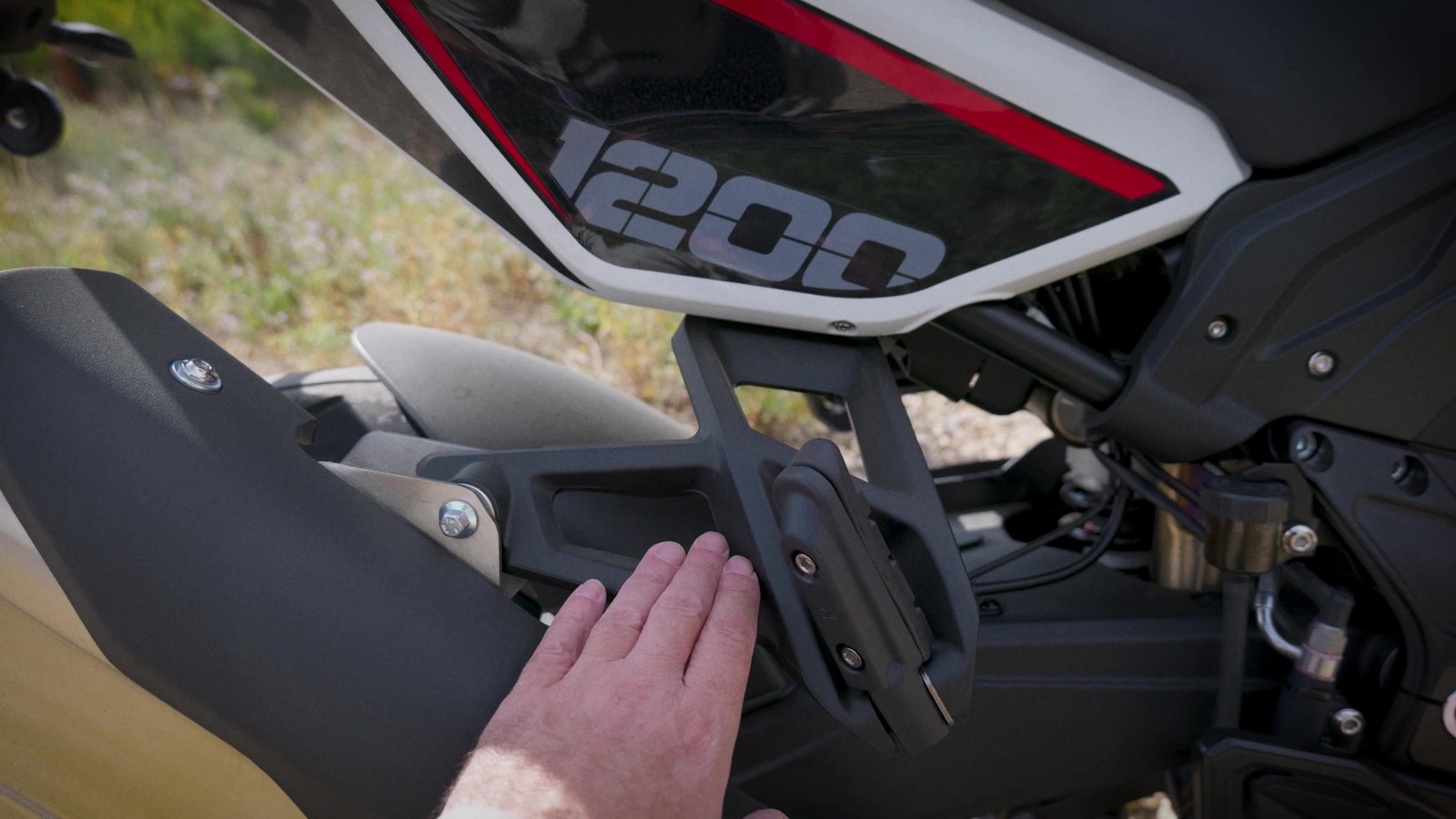
The foot pegs came with rubber inserts. I think rubber on pegs is a mistake, so I pulled them, and the bare pegs underneath are excellent. The pad is removable and replaceable; I’d like it to be reversible too, one face for sitting and one for standing, because this is still a bike that hasn’t decided what it is. The passenger peg and exhaust hanger is one of the most complicated, convoluted assemblies I’ve seen on a production motorcycle, and I think it’s beautiful.
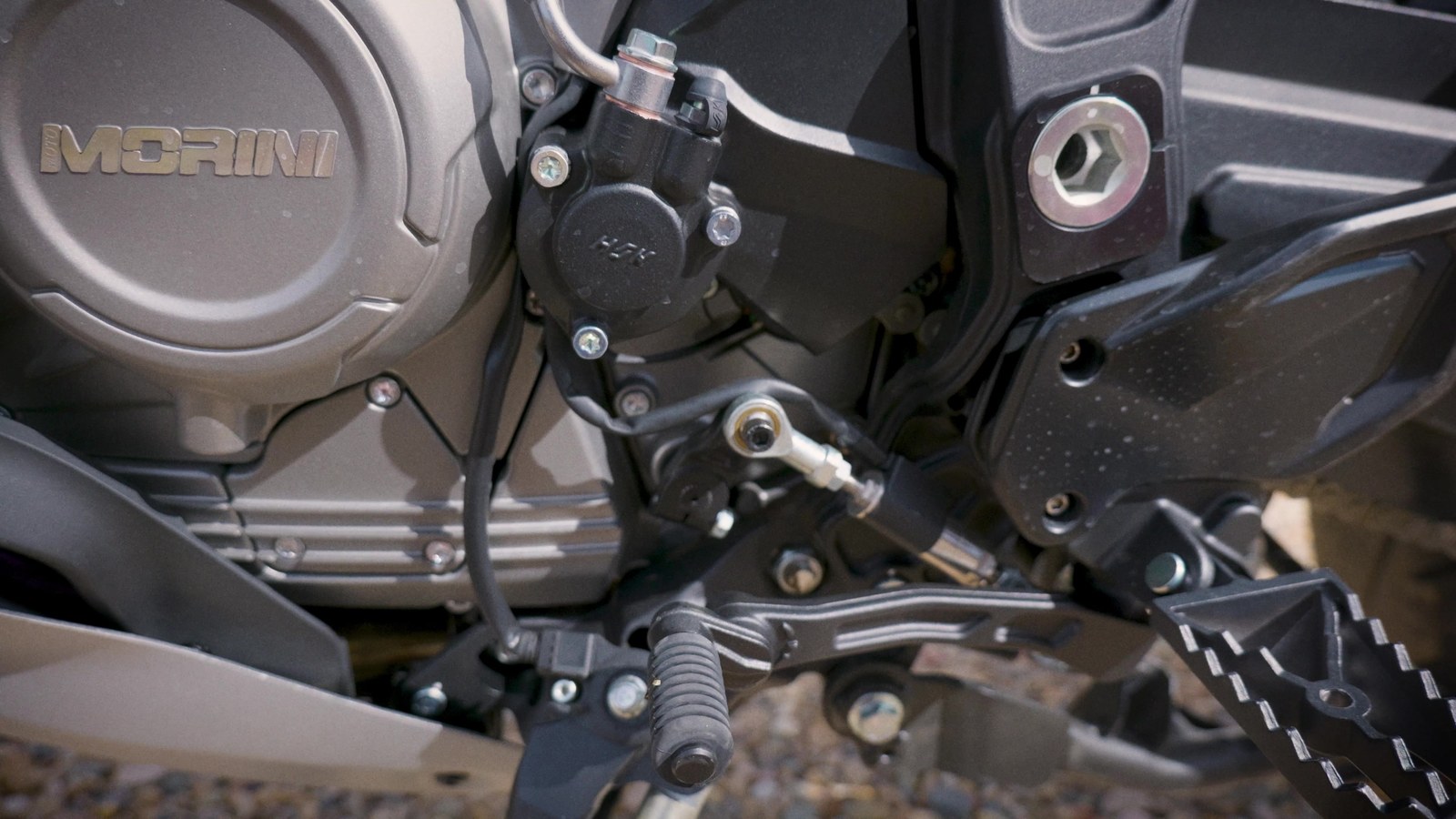
The shift lever has an eccentric adjuster, so the pad position can be changed to suit different boots without pulling the lever off its splines. That’s a small, thoughtful piece of design that most manufacturers skip.
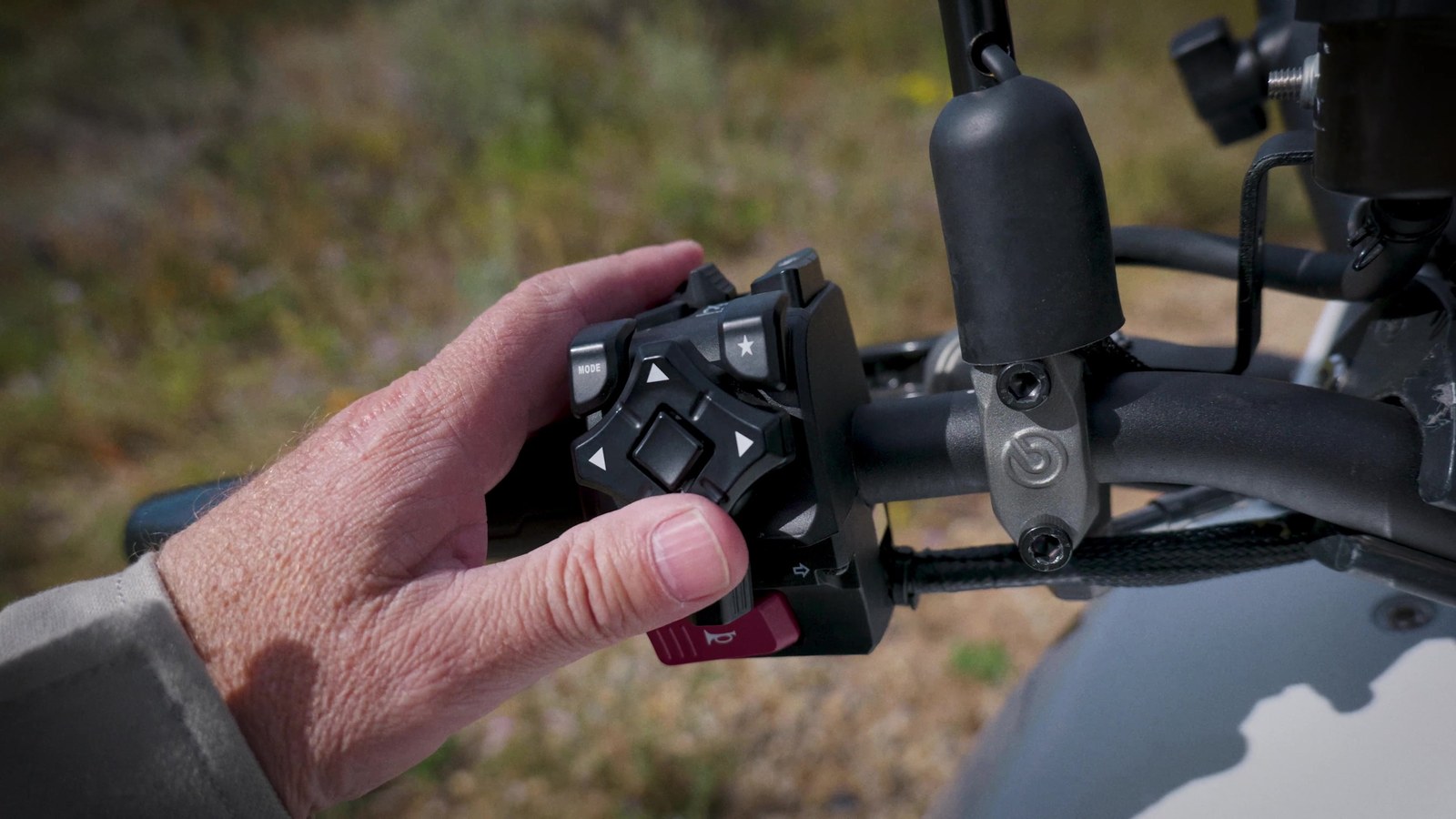
The switchgear looks big, clunky and slightly comic. In use it’s one of the most intuitive systems I’ve tried. A USB port sits up front where a phone or GPS can reach it, and the dash cam lens is just above it. How well that camera survives a season of road grime is an open question, but it’s a clever inclusion.
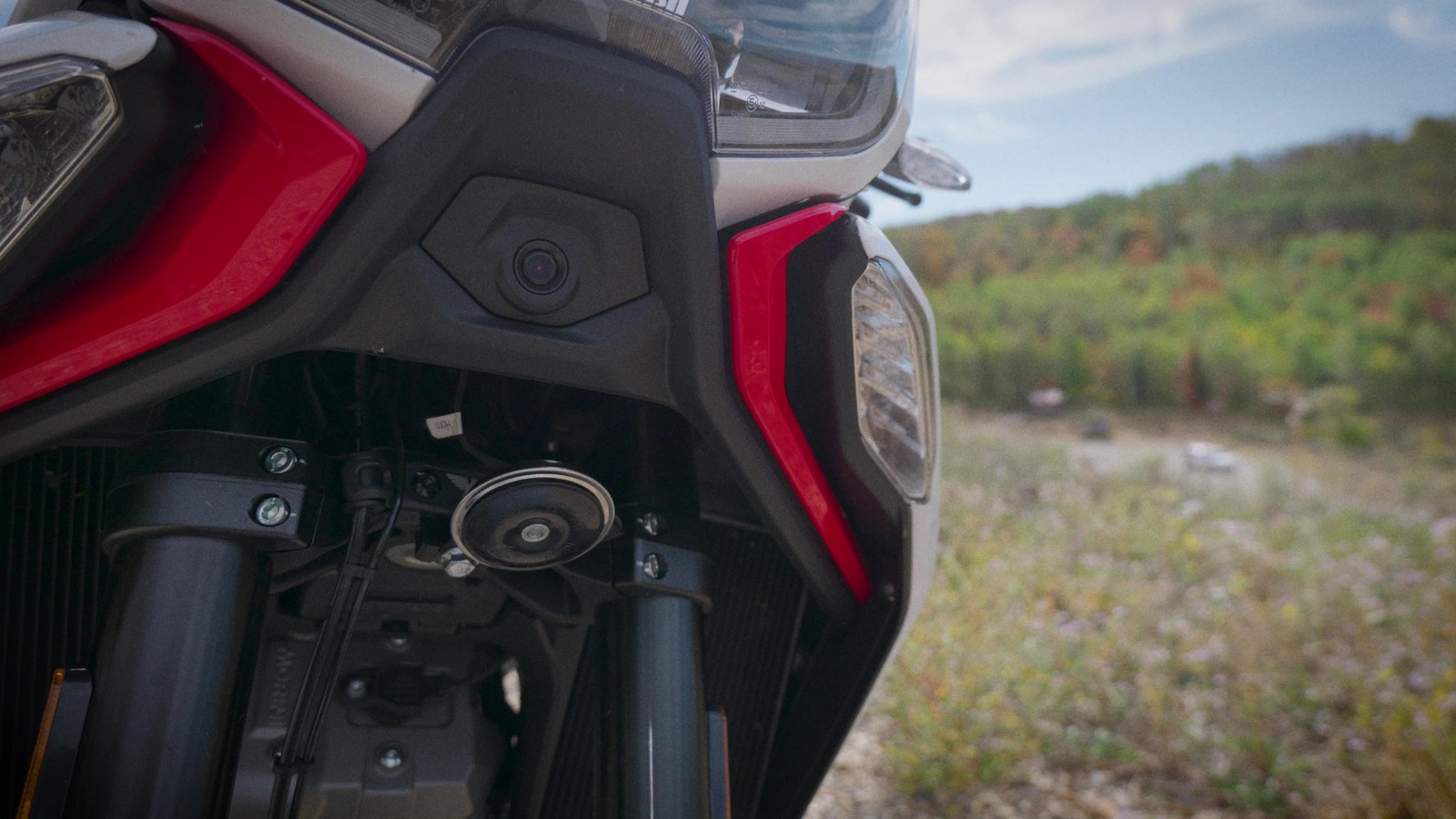
The best visual detail on the bike is the pair of red X panels up front. They look stunning, and they hint at what the rest of the bodywork could be.
Why Is the Moto Morini X-Cape 1200 So Cheap?
Now the question everyone asks. The Brembo, KYB, Bosch and Pirelli parts on this bike are the real thing, and that’s the first clue. The supply chain for premium components is global now. Moto Morini, CFMoto and Kove are shopping from the same catalog as Ducati and BMW.
What you pay for on a Ducati or a BMW, beyond those parts, is engineering that’s still being amortized, dealer margin, a serious racing budget, and the badge. Moto Morini carries none of those costs. That’s the honest answer, and it’s less sinister than “built in China.”
Only one of the missing ingredients is an actual problem, and it’s the dealer margin, because what you’re also not buying is a dealer on every corner. If you live somewhere rural, say Utah, Idaho or Oklahoma, look up the nearest Moto Morini dealer before you fall in love. The warranty is one of the best in the business, three years, unlimited miles, transferable. But a warranty is a promise, and a promise needs someone nearby to keep it.
We’ve spent the last ten years complaining that motorcycles have become too expensive. Well, here we are. This one isn’t.
Seven Cheap Fixes
As it sits, the X-Cape 1200 is an amazing value, and I mean that without the usual “for a Chinese bike” asterisk. It handles beautifully, the engine has real character, the equipment list is longer than my arm, and it costs three grand less than a Multistrada did fifteen years ago. That’s exactly why the list below matters. None of it costs real money, and all of it would move the X-Cape from a bike everyone in this price range should know about to one they should seriously consider buying.
- More horsepower. 140 to 150 would be plenty. It’s a tune, maybe a cam.
- Less weight, or failing that, bigger front discs. 330mm, like the Multistrada V4.
- A 180 or 190 rear tire on a wider rim. The chassis has earned it.
- Aim the hot air away from the rider and toward the road.
- Start the windscreen an inch or two lower. It adjusts up anyway.
- Taper the body panels so the bike looks as compact as it actually is.
- Give it a nose. And stop pretending it’s a dirt bike.
Verdict: Is the Moto Morini X-Cape 1200 Worth It?
At $13,000, with this engine, this chassis, these brakes, radar, dash cam, cruise control, heated everything and a three year unlimited mileage warranty, the X-Cape 1200 might be the best value in motorcycling right now. I can’t name another bike that gives you this much for this little. Even with every complaint above, it punches well above its weight where it counts, on real roads at real speeds.
The risk lives outside the motorcycle. The brand is unfamiliar to most Americans, and the dealer network is still being built. With a dealer within a reasonable ride of home, this is an easy bike to recommend. Without one, you’ll be doing your own oil changes, which we’ve established is no big deal, and betting you never need more than routine maintenance. For 13 grand, that’s a decent bet.
Would you consider a Moto Morini? Tell me in the comments below, or over on the video.