EICMA 2026 New Motorcycles: What I’d Buy and What I’d Skip
Bottom Line
Honda had the strongest stand at EICMA 2026, and its production V3 naked is the new bike most likely to end up in my garage. Royal Enfield’s electric Flying Flea is my personal favorite, CFMoto’s first superbike was the boldest statement on the floor, and the best trend of the show is tubeless spoked wheels turning up on almost everything.
EICMA is enormous. Picture six of the biggest convention centers you have ever walked, then put them all on one site outside Milan. Every major manufacturer brings its new models here, and so do dozens you have probably never heard of.
That second group was my first surprise. I counted at least a dozen brands I didn’t recognize, most of which will likely never sell a motorcycle in the United States: Zontes (judging by the crowd, I may be the only one who hadn’t heard of them), Mondial, VOGE, Shiwei, and a company called Jedi. Yes, Jedi makes motorcycles.
Below is everything that caught my eye from the familiar names, brand by brand, with the specs and prices that were available at the show, plus my honest take on which ones I would actually put money down on.
My EICMA 2026 Shortlist
- Would buy: Honda’s production V3 naked, the most likely candidate for a permanent spot in the CanyonChasers garage.
- Personal favorite: the Royal Enfield Flying Flea electric scrambler. I love everything about it.
- Want to test next: the Norton 450, which does not feel built down to a price.
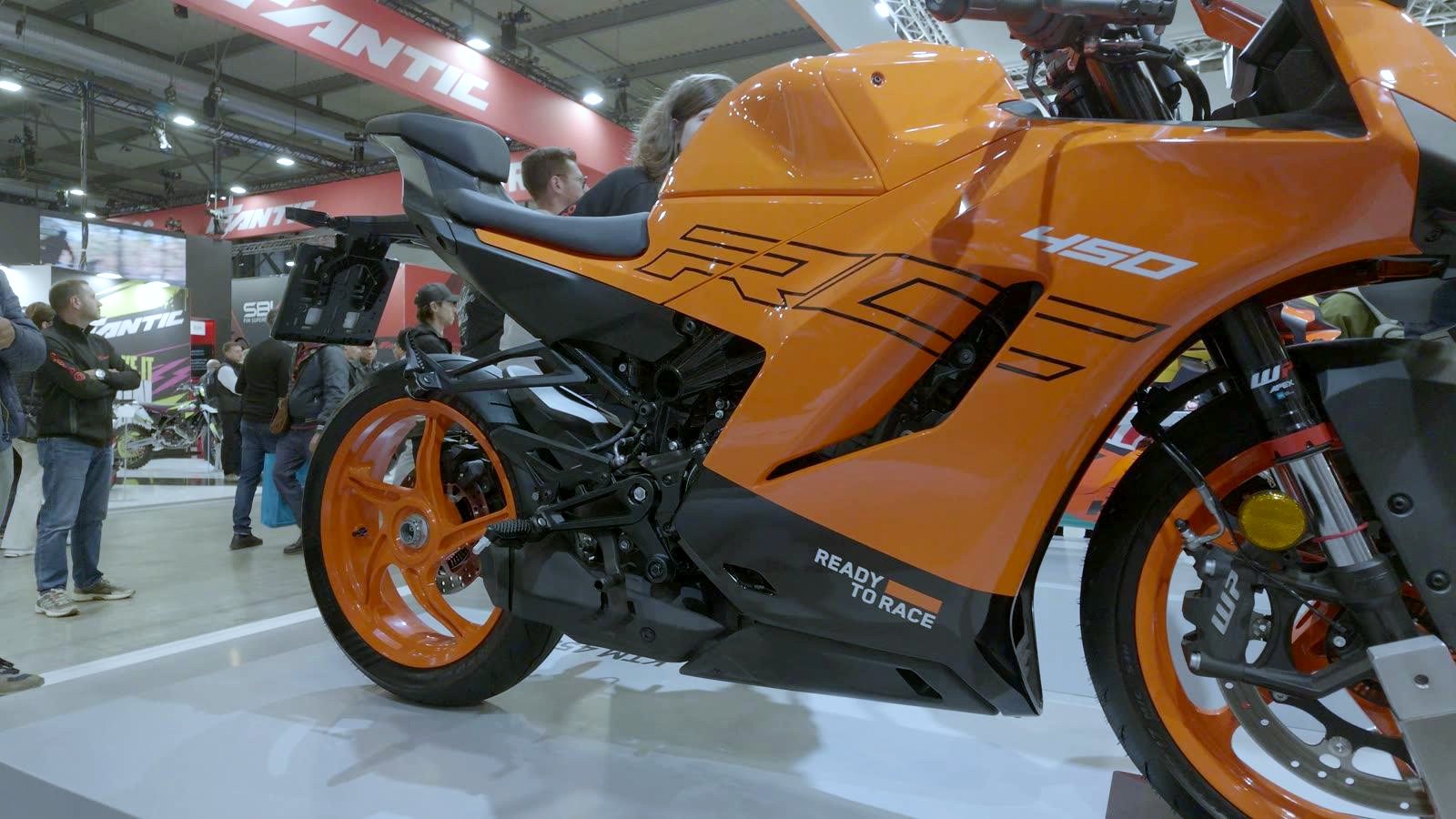
- Best surprise: the KTM RC 450, a single-cylinder track bike with a single-sided swingarm.
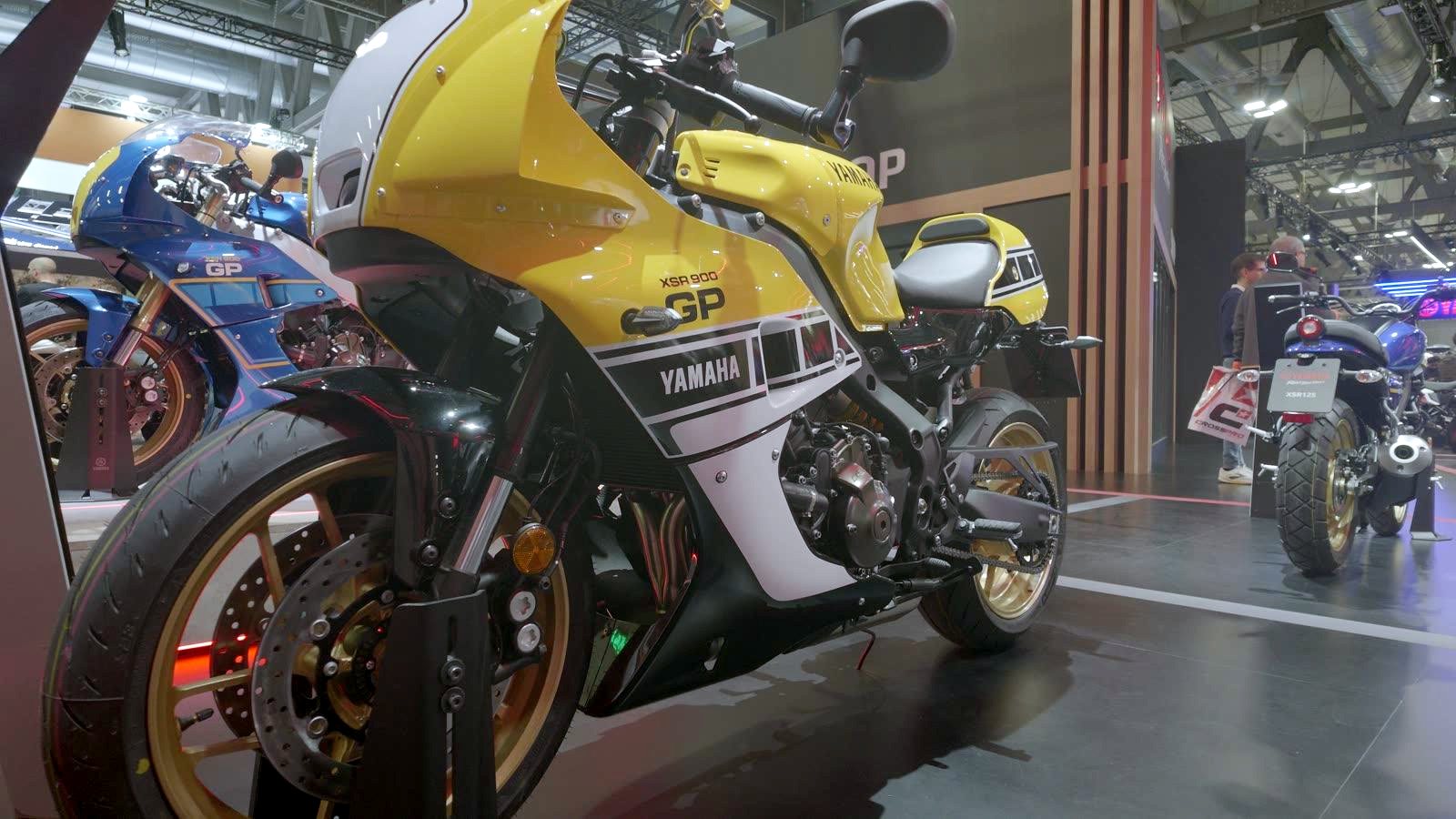
- Hardest to walk past: the Yamaha XSR900 GP in Kenny Roberts colors.
- Not for me: the red-wheel Multistrada livery, and yet another wave of retro roadsters.
- Biggest letdown: no Honda CBR750R, after the hints from Milan Fashion Week.
Honda Brought the Most Exciting Bikes of the Show
Of all the manufacturers in Milan, Honda had the most to get excited about: a whole new Africa Twin family, a new CBR1000RR-R SP, and two versions of the V3 we saw as a prototype last year, a refined naked bike and a race-style prototype. The one absence was a CBR750R. A lot of us expected it after a teaser at a fashion event in Milan a couple of weeks earlier, and it wasn’t there.
The New Africa Twin: A Preview of Future Honda Dashboards
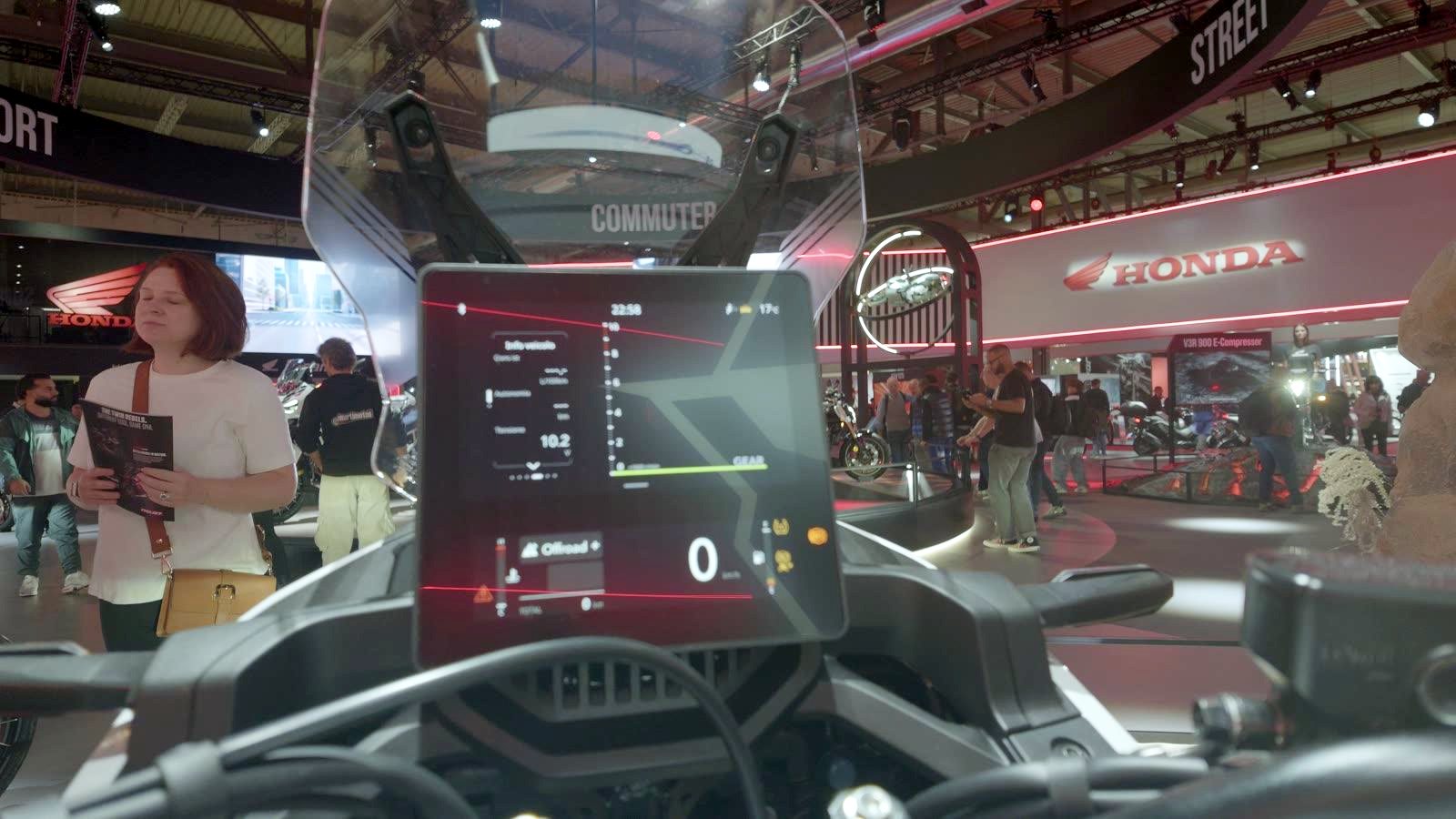
Honda tends to roll out new technology in waves, so the Africa Twin’s cockpit is worth studying. The old bike split its information across a touchscreen TFT (for CarPlay and settings) and a smaller LCD for gear and speed. The new one consolidates everything onto a single large touchscreen that now runs wireless CarPlay, and it is easy to navigate, including power modes. The switchgear is also new. The old pods felt like the controls of a lunar rover; the new joystick and toggles are far more intuitive. Expect to see both on other Hondas soon.
My favorite small detail across the range is the fuel filler, which moves to the side of the tank. Picture filling up with the bike on its side stand: that side becomes the high point, so you can fill the tank fuller and with less fuss.
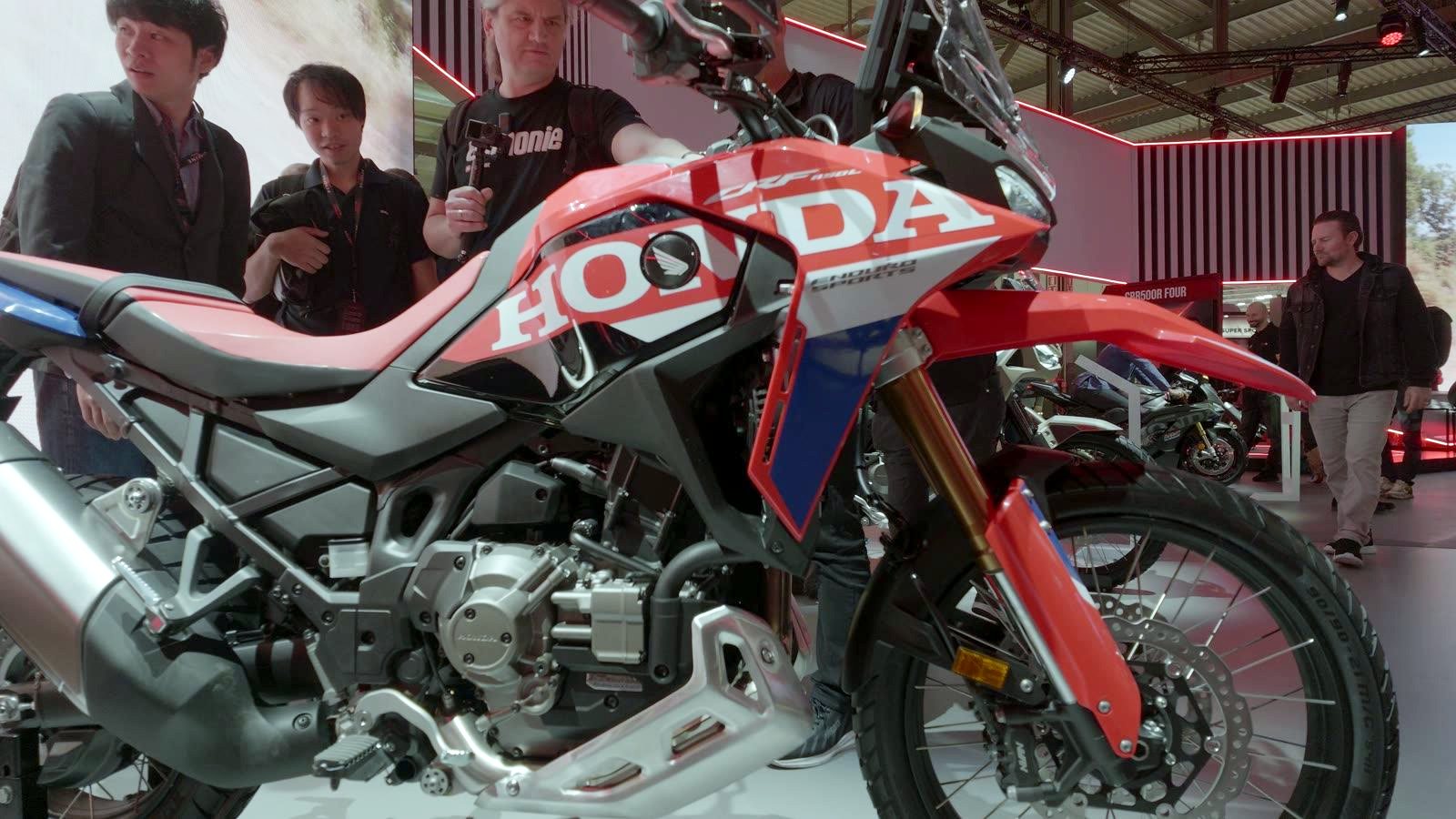
The Enduro model is the one a lot of riders are excited about. Its skill set leans further off-road than mine, but the high front fender, new headlight, rally footpegs and that red paint, which calls back to the original Dakar racers, make it a striking bike. The show bike wore an SC-Project exhaust, which I doubt is stock, but it looks great as an aftermarket option.
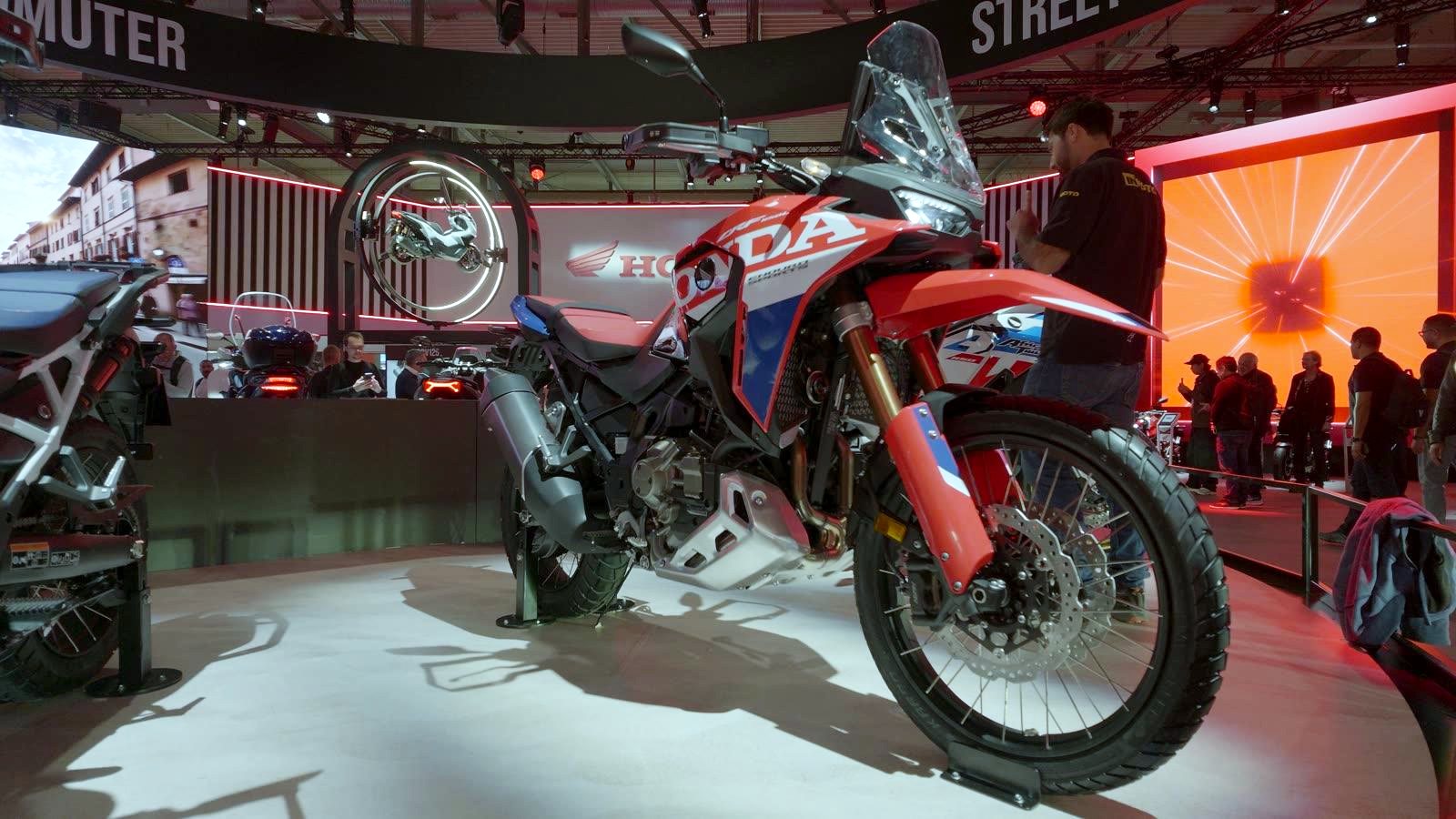
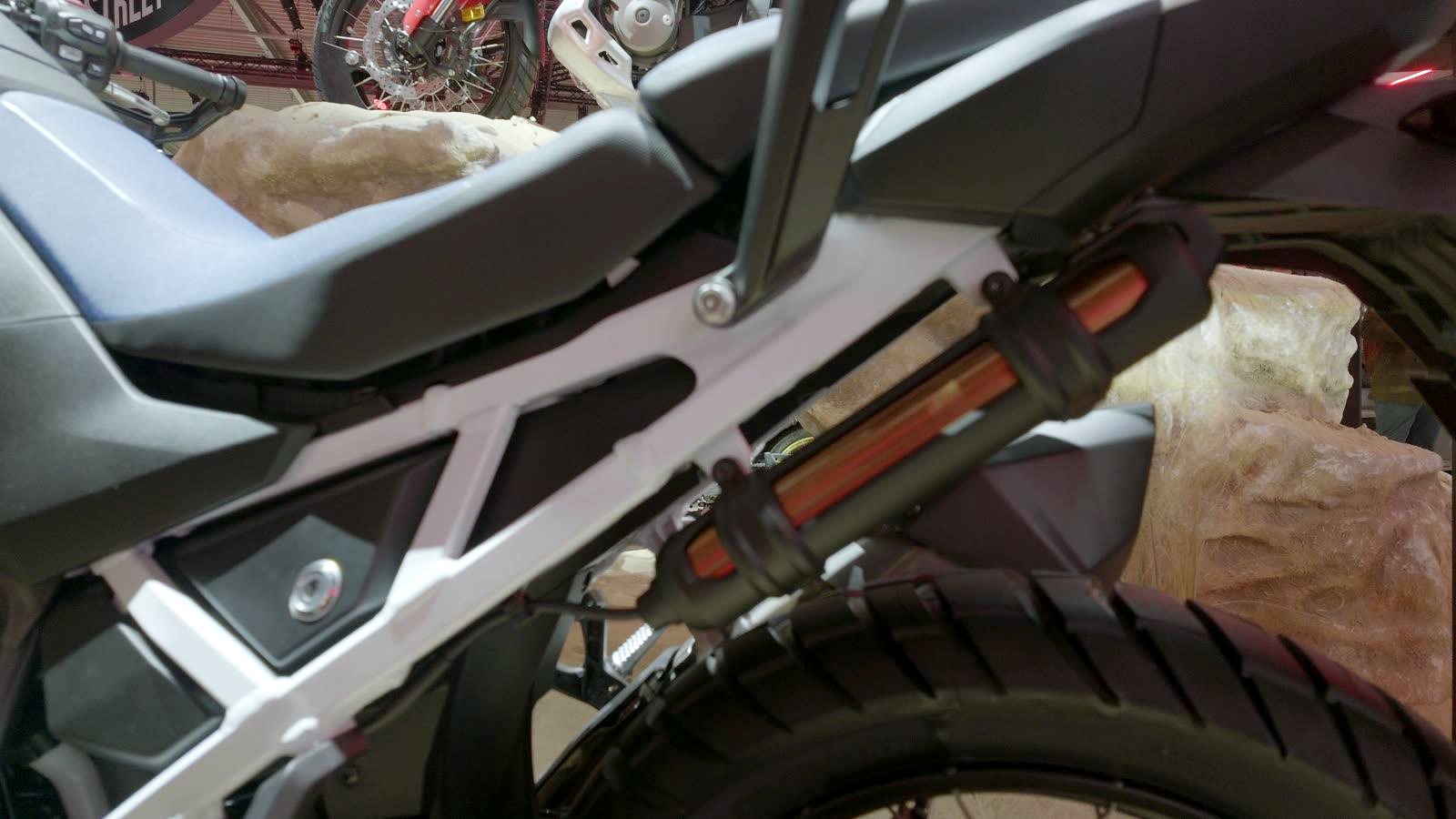
The two versions take different approaches to suspension. The Adventure Sports, the more street-oriented model with a 19-inch front wheel, gets Honda’s new adaptive suspension with selectable ride-height modes, and a large solenoid sits out in the open under the tail section. I’m not too worried about it, since most of these bikes will wear saddlebags, but it is far more visible than the compact units Ducati tucks under the seat of the Multistrada. The Enduro uses a more analog remote preload adjuster, which is the better fit for a bike that will live a harder life.
Where the Africa Twin Started
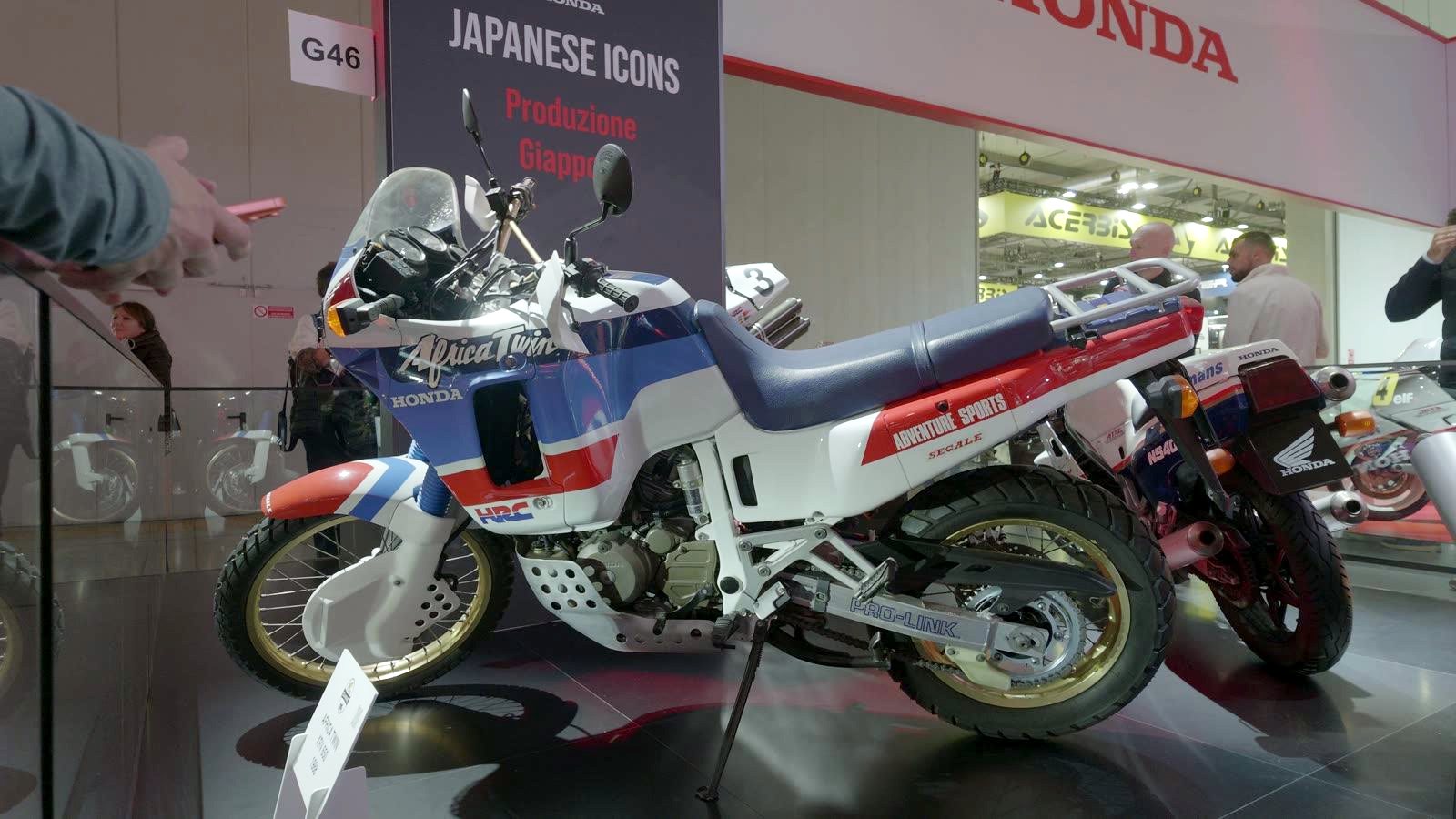
Honda displayed the bike that started it all: the 1988 XRV650 Africa Twin, a 650cc V-twin built on Honda’s Dakar success. That V-twin family also powered the NT650 Hawk GT. The modern Africa Twin uses a different engine, a parallel twin it shares with the NT1100, but the name and the Dakar spirit run straight from 1988 to today.
The V3 Naked Is the Bike I Want
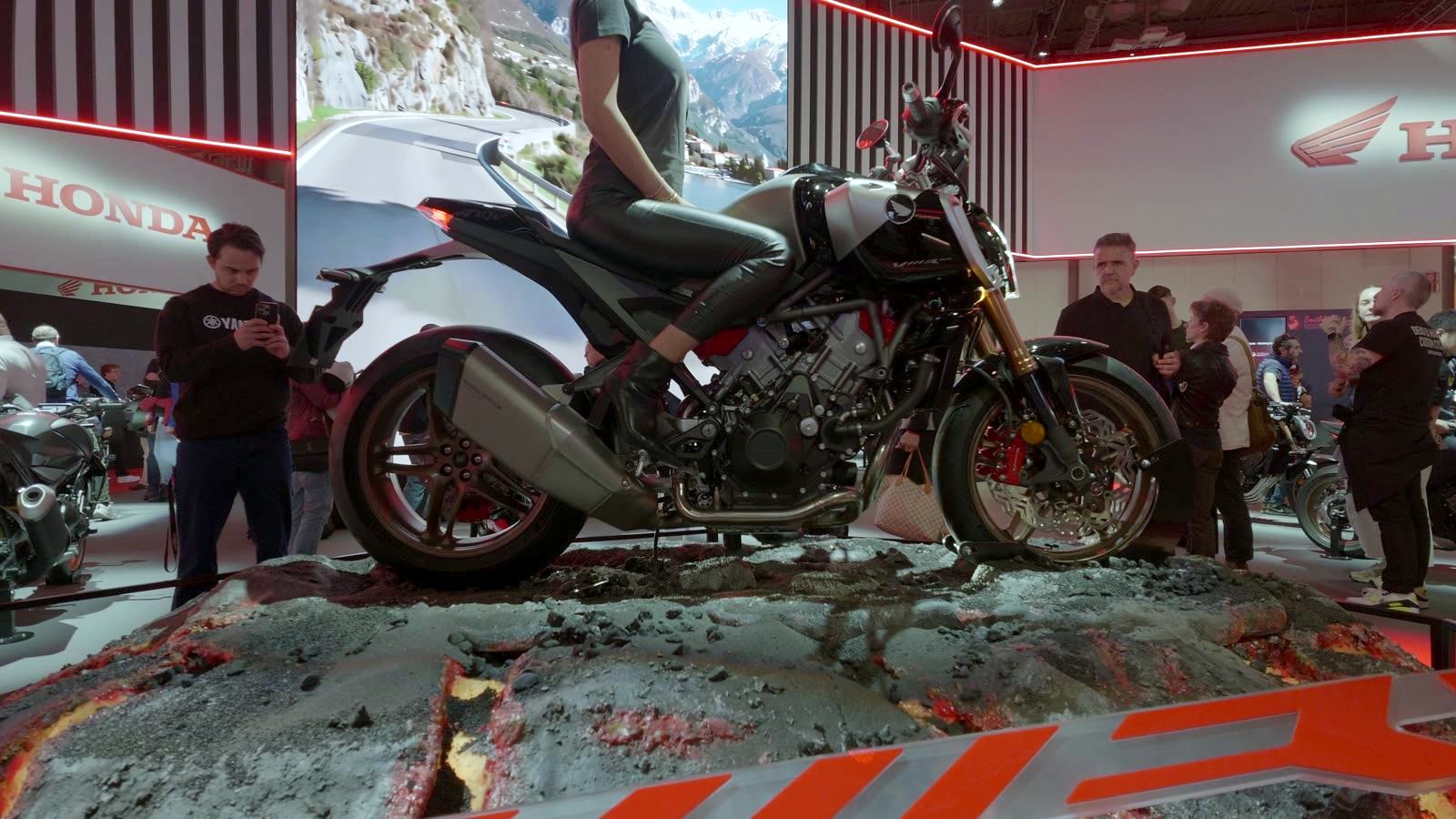
This was the bike I was personally most excited about: the V3 compressor in production naked form. I was afraid it would be stripped of the features we saw on last year’s prototype, but the single-sided swingarm survived, a feature Honda gave us in the 1980s on the Hawk GT and the VFR. The V3 is drawing criticism for its asymmetric face. I think that is part of its charm, and it is the bike from this show most likely to become a permanent resident in the CanyonChasers garage.
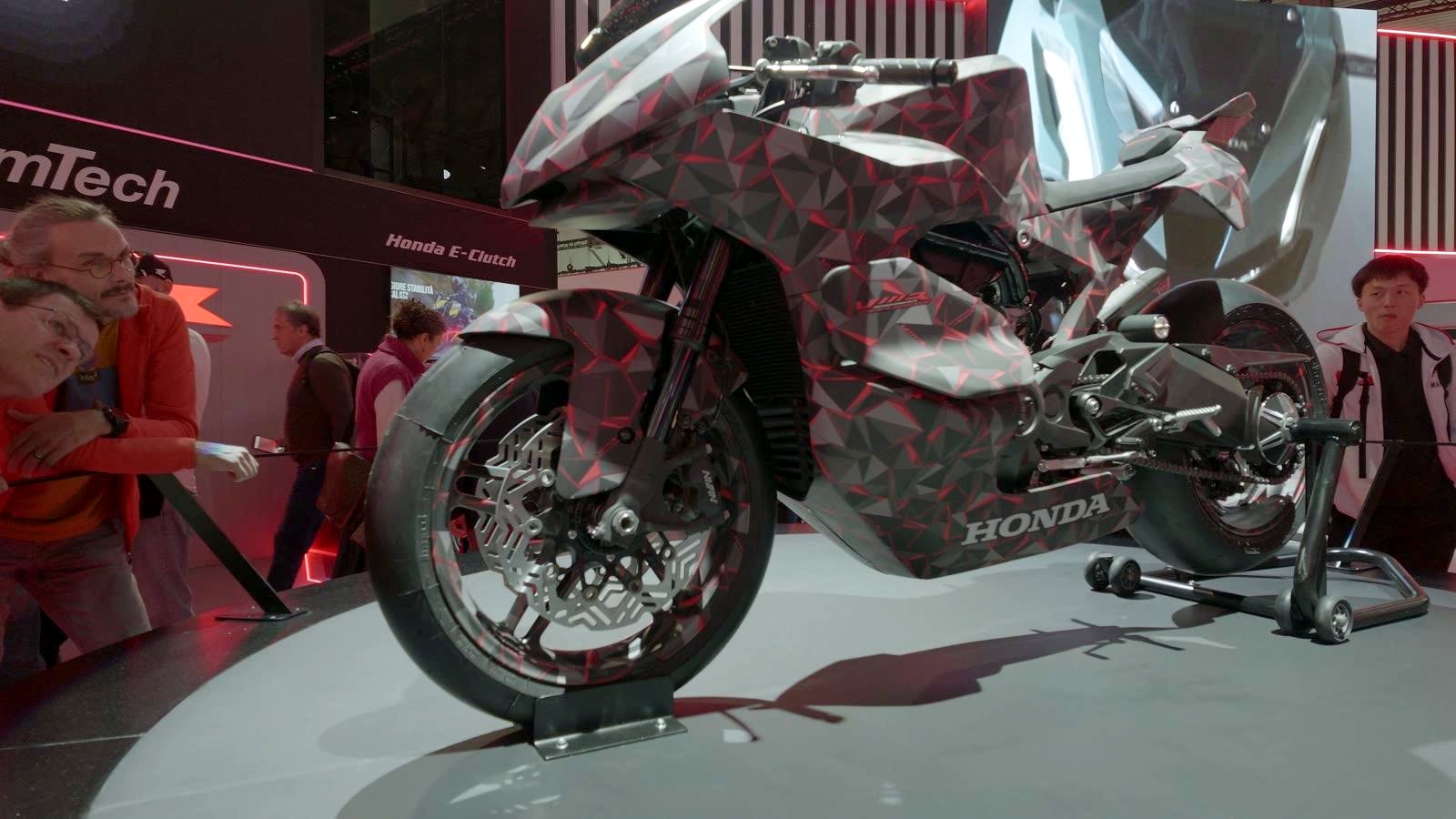
Alongside it sat a fully faired V3 compressor superbike prototype, also with a single-sided swingarm. I hope it follows the same path as the naked bike and reaches production next year.
A 500cc Inline-Four, and an Akira-Style Concept
The bike I didn’t see coming was the new CB500 and CBR500 with a 500cc inline-four. It drew a constant crowd and should give Kawasaki’s small fours real competition. Honda also showed the new CBR1000RR-R SP, with plenty of Rs in the name.
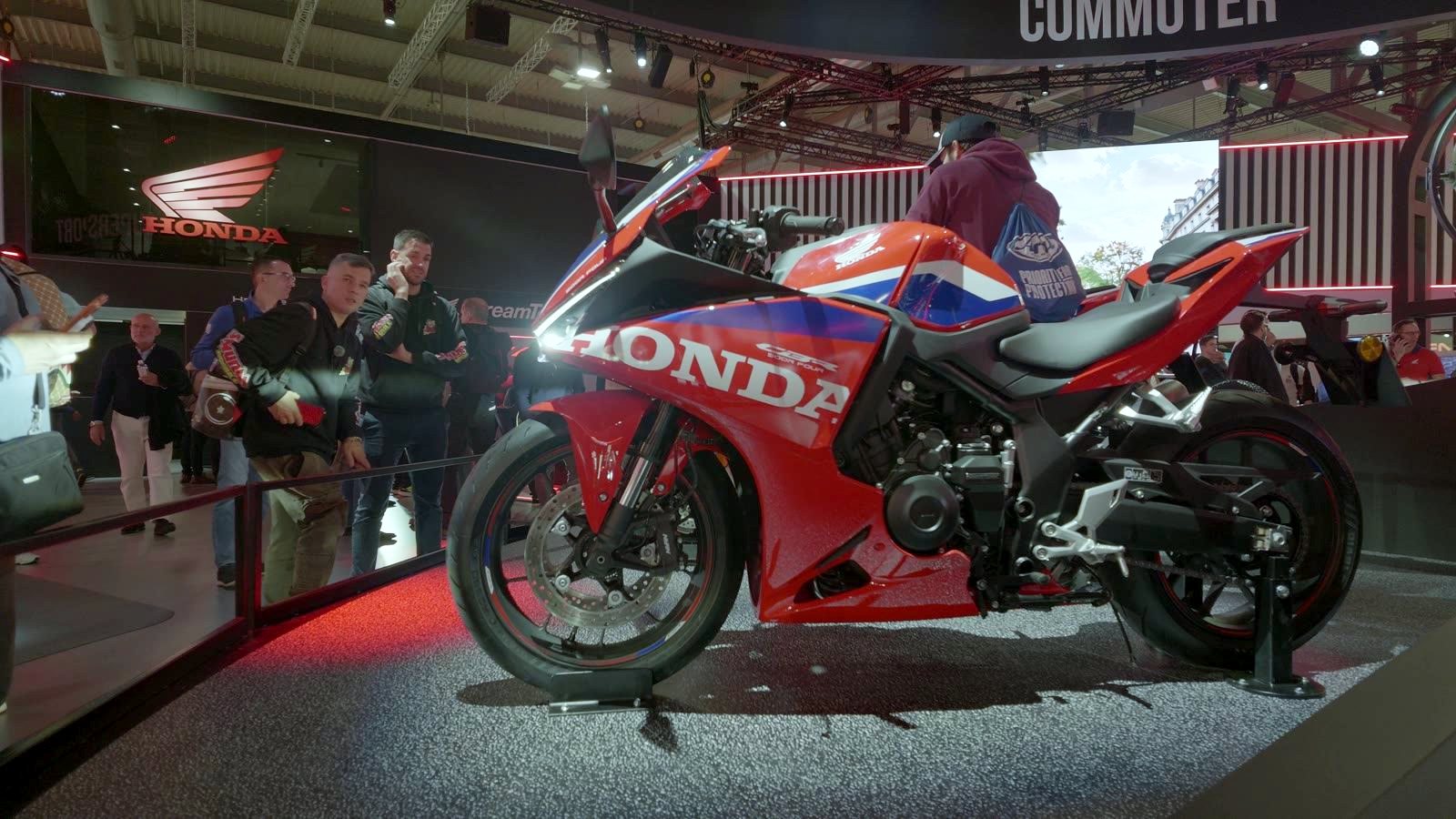
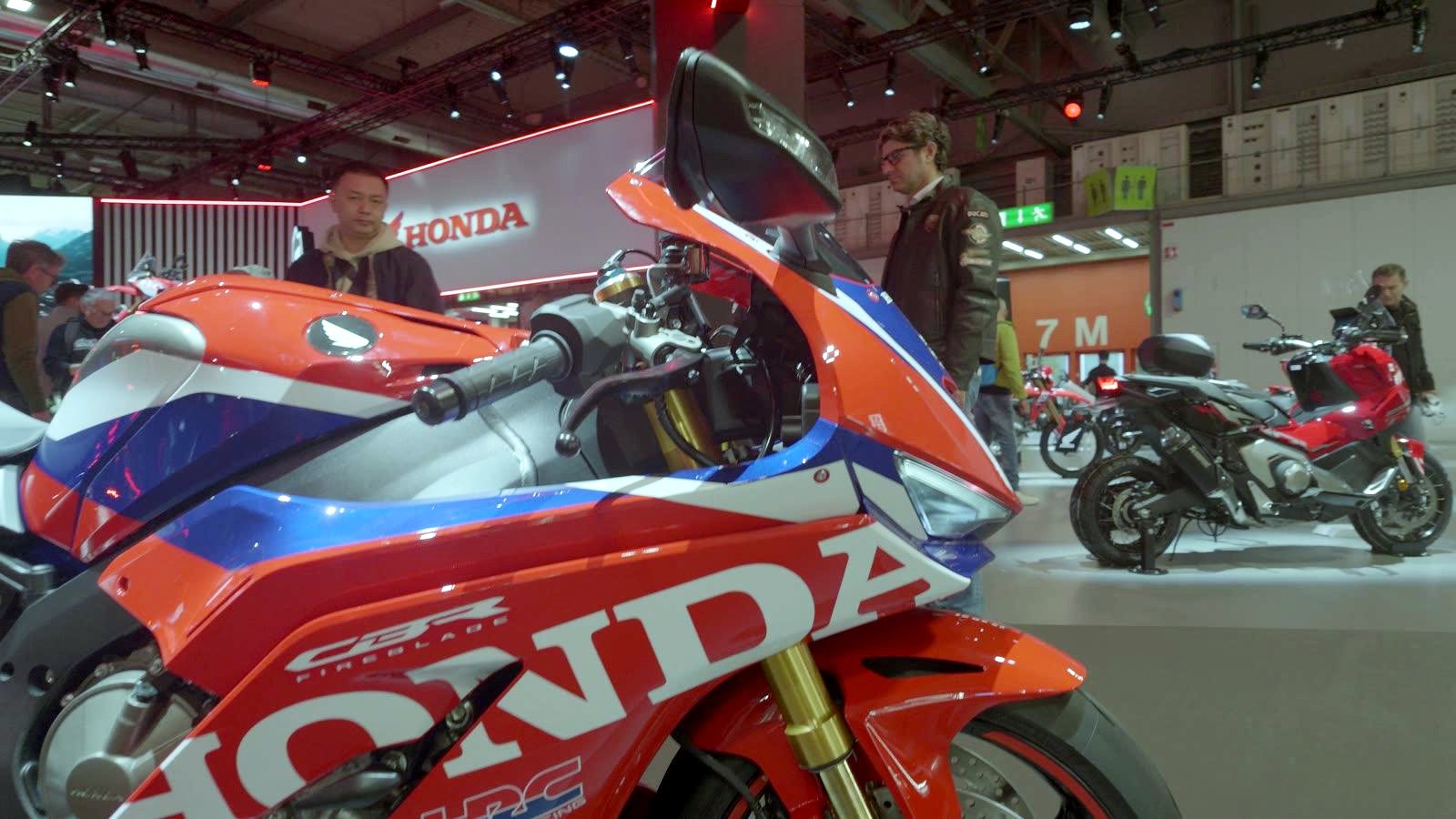
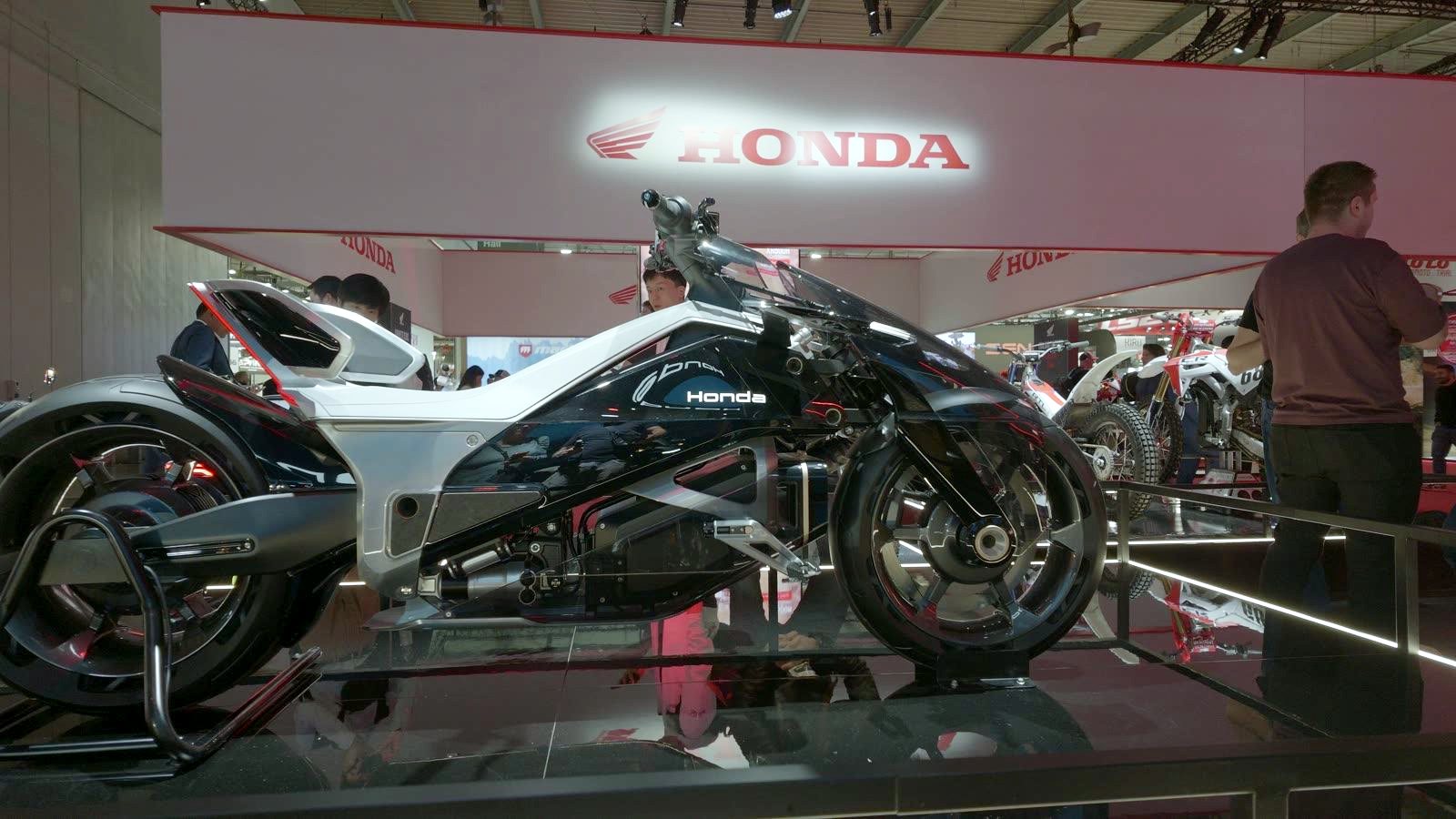
In Honda’s electric corner, almost nobody was looking at a low, recumbent concept that would fit right into Akira. It is classic forward-thinking Honda prototype design, and I don’t know whether we will ever see one on the road, but I found it the most exciting thing nobody was paying attention to.
Ducati: DesertX Rally and the Return of Dark
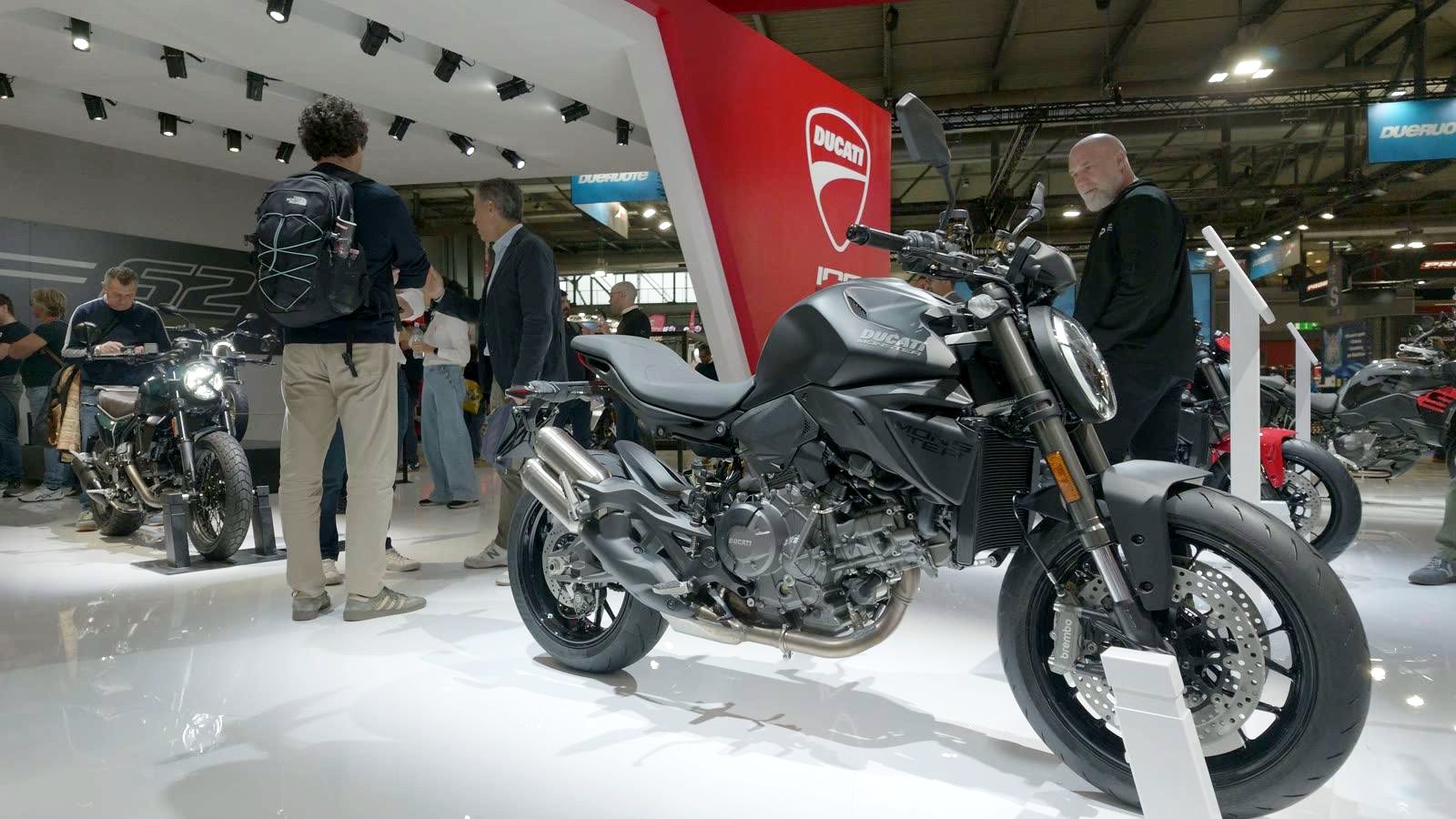
Ducati being Ducati, it brought an even more super superbike, the Superleggera, along with refinements to the Multistrada range and tweaks to the Diavel. The bike that excited me most was the new DesertX Rally.
It keeps the same V2 engine and power but moves to a new monocoque frame and gets its own suspension: a 48mm KYB fork with 20mm more travel. Ducati claims 461 lb without fuel, so it is no featherweight. US pricing starts at $19,995, which is $3,000 more than the base DesertX but well below the roughly $24,000 the outgoing Rally cost. It looks so good it makes you want one.
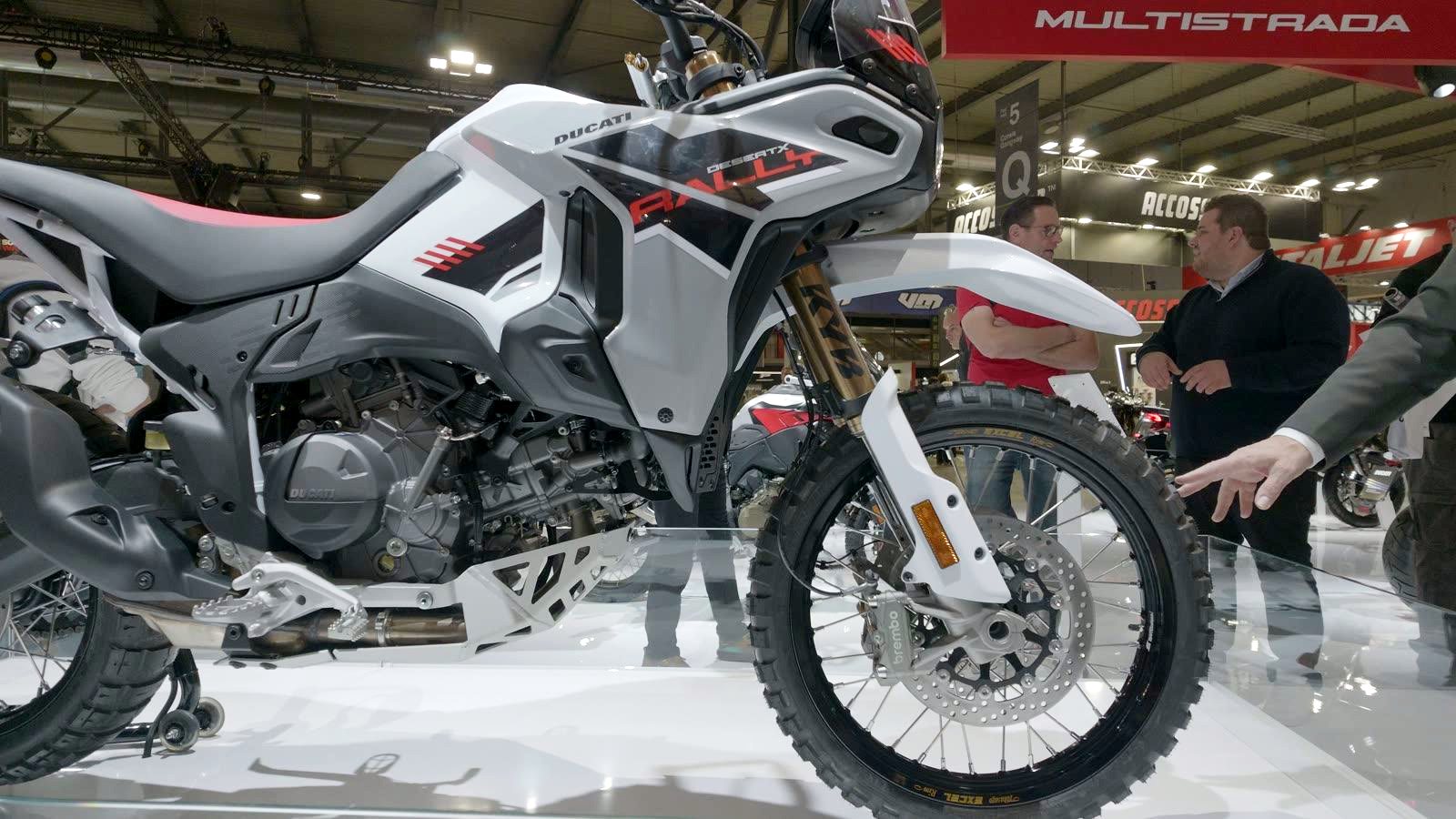
One Multistrada didn’t land for me. I’m a big fan of the Pikes Peak and its 17-inch wheels, but the red wheels and livery on the show bike were a little much.
Ducati is also reviving its Dark line. Since the Monster’s early years, Dark models have been the budget versions: the same bike without the red paint, finished in black with dark wheels and a one-piece seat. Beyond the paint, Ducati cut costs by making the quickshifter, cruise control and navigation optional.
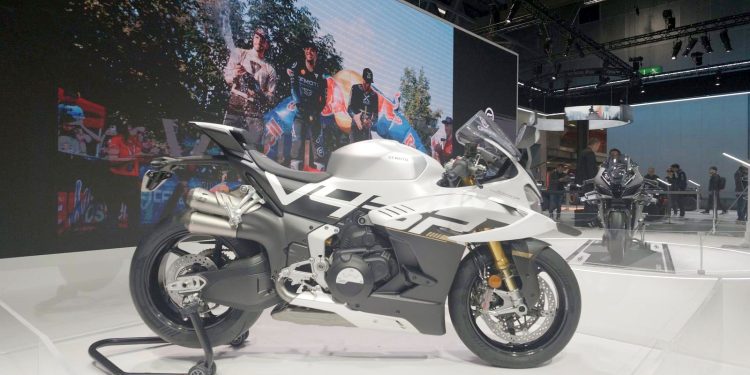
CFMoto’s First Superbike: The V4 SR-RR
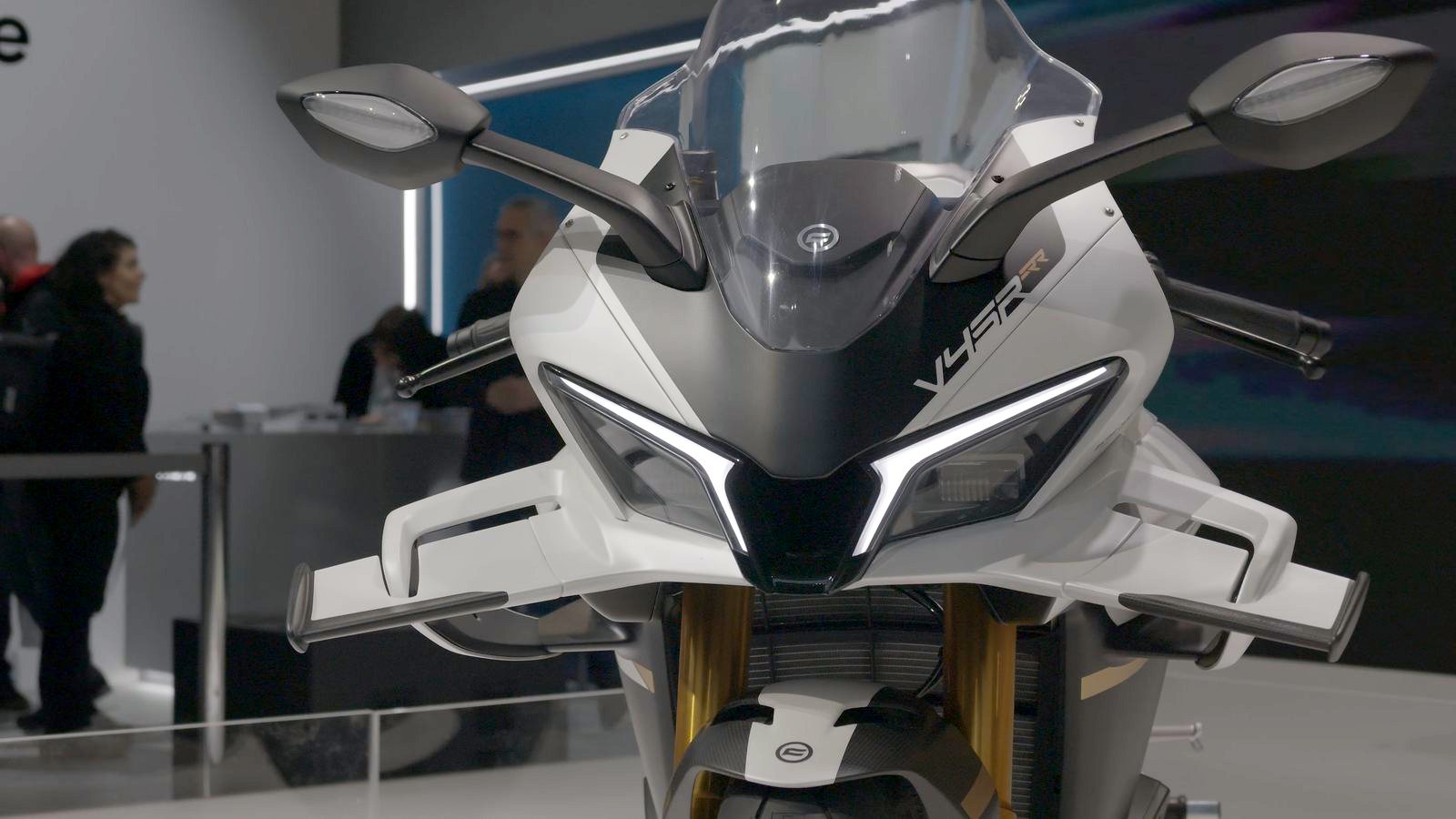
CFMoto’s stand was hard to film, between copyrighted music and loud presentations, but the headliner was impossible to miss: the production V4 SR-RR, the company’s first superbike. It uses an in-house 997cc 90-degree V4 claiming over 210 hp and revving to 15,000 rpm, with a claimed dry weight under 400 lb. It gets independently controlled active winglets, fully adjustable Öhlins suspension, Brembo Hypure brakes and a full titanium Akrapovič exhaust.
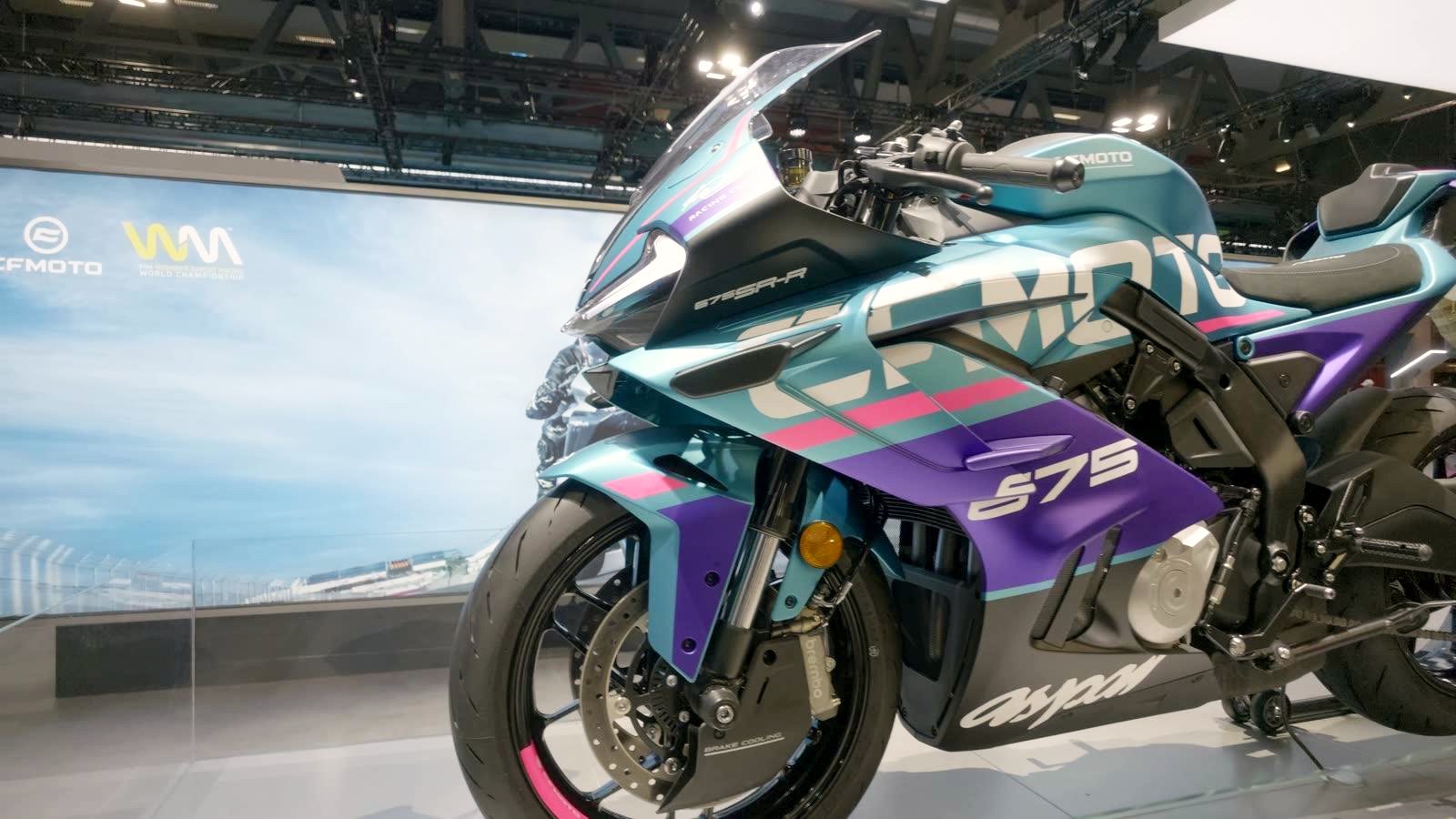
To celebrate its 2026 Moto3 World Championship, CFMoto is also releasing a 675SR-R World Champion Edition with exclusive accessories and detail pieces. For adventure riders, the new 550MT-X gets fully adjustable KYB suspension and still comes in lighter than the 450MT while making about 30% more power.
Royal Enfield: Continental GT 750 and the Flying Flea
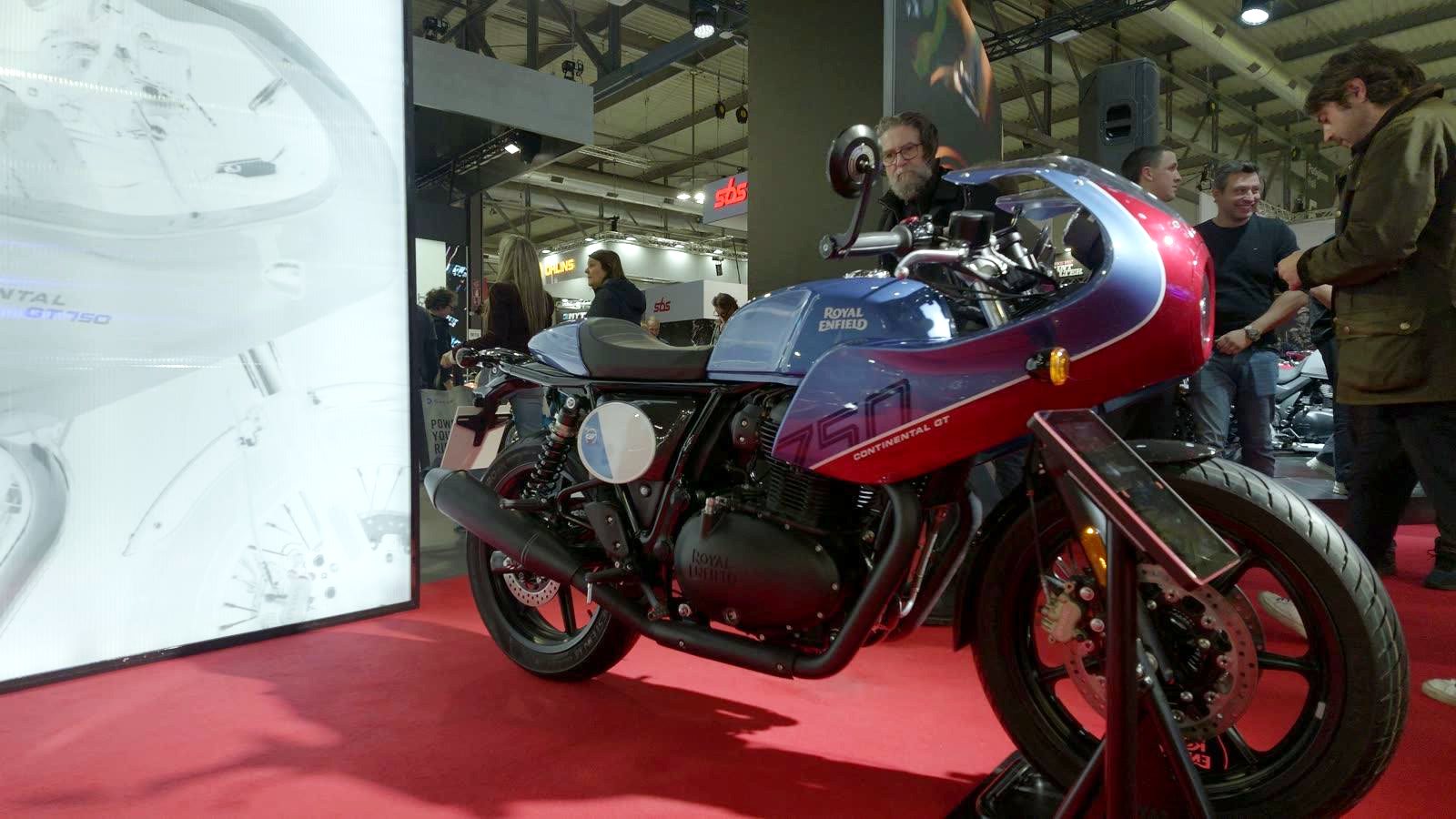
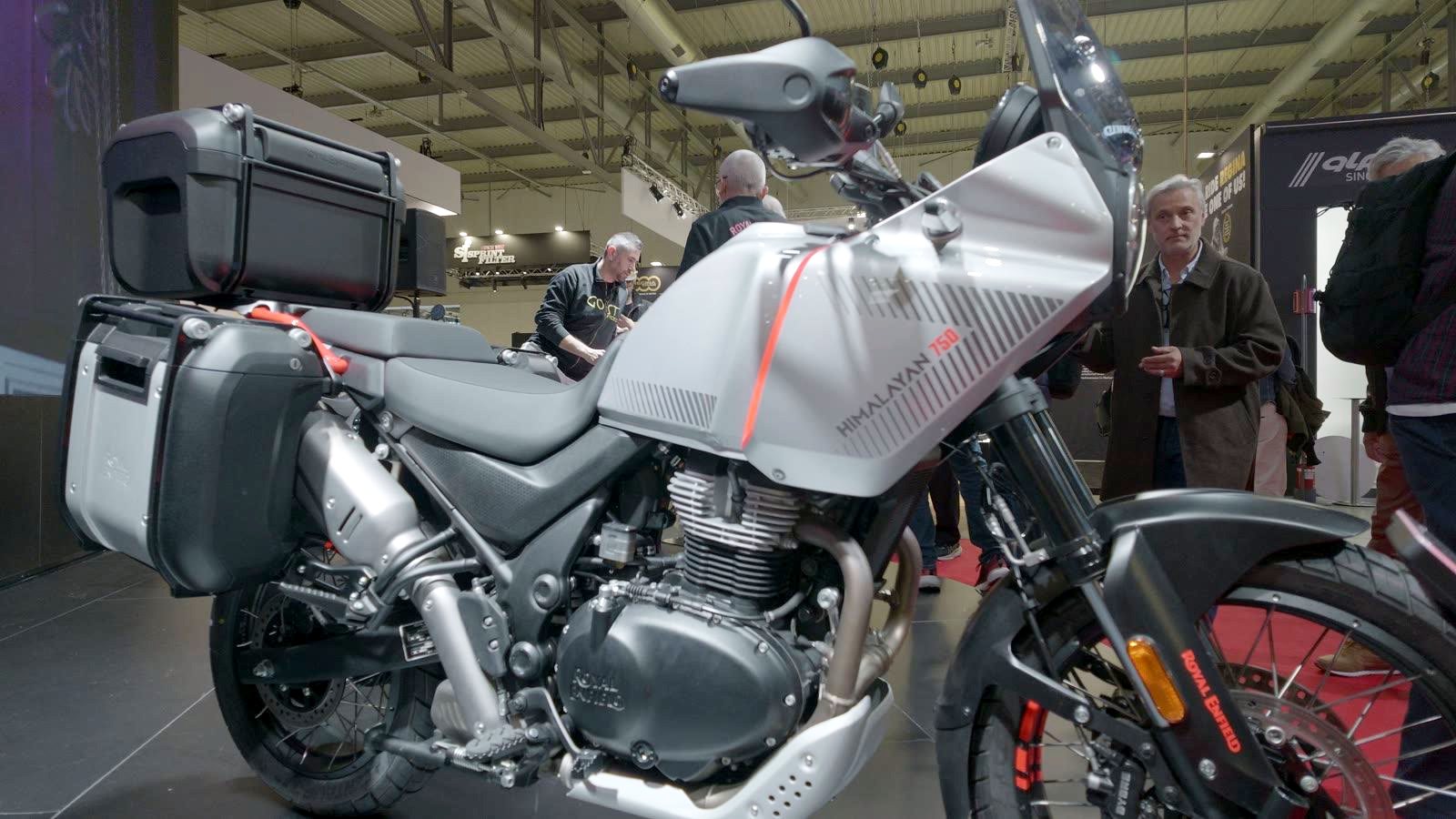
Royal Enfield is one of the most interesting companies in the industry right now, and it brought two bikes that stood out. The Himalayan already has the bigger 750 engine, and now the Continental GT gets it too. It keeps the café racer silhouette and adds twin exhausts, dual front discs, preload-adjustable suspension at both ends and a twin-pod dash with a small TFT inset.
It comes in two setups. Red Line and TT Blue get a gorgeous quarter fairing and a more athletic riding position, while the chrome Master Clean goes without the fairing and sits more upright. Royal Enfield hasn’t released output or pricing, but the same engine makes 55 hp in the Himalayan 750.
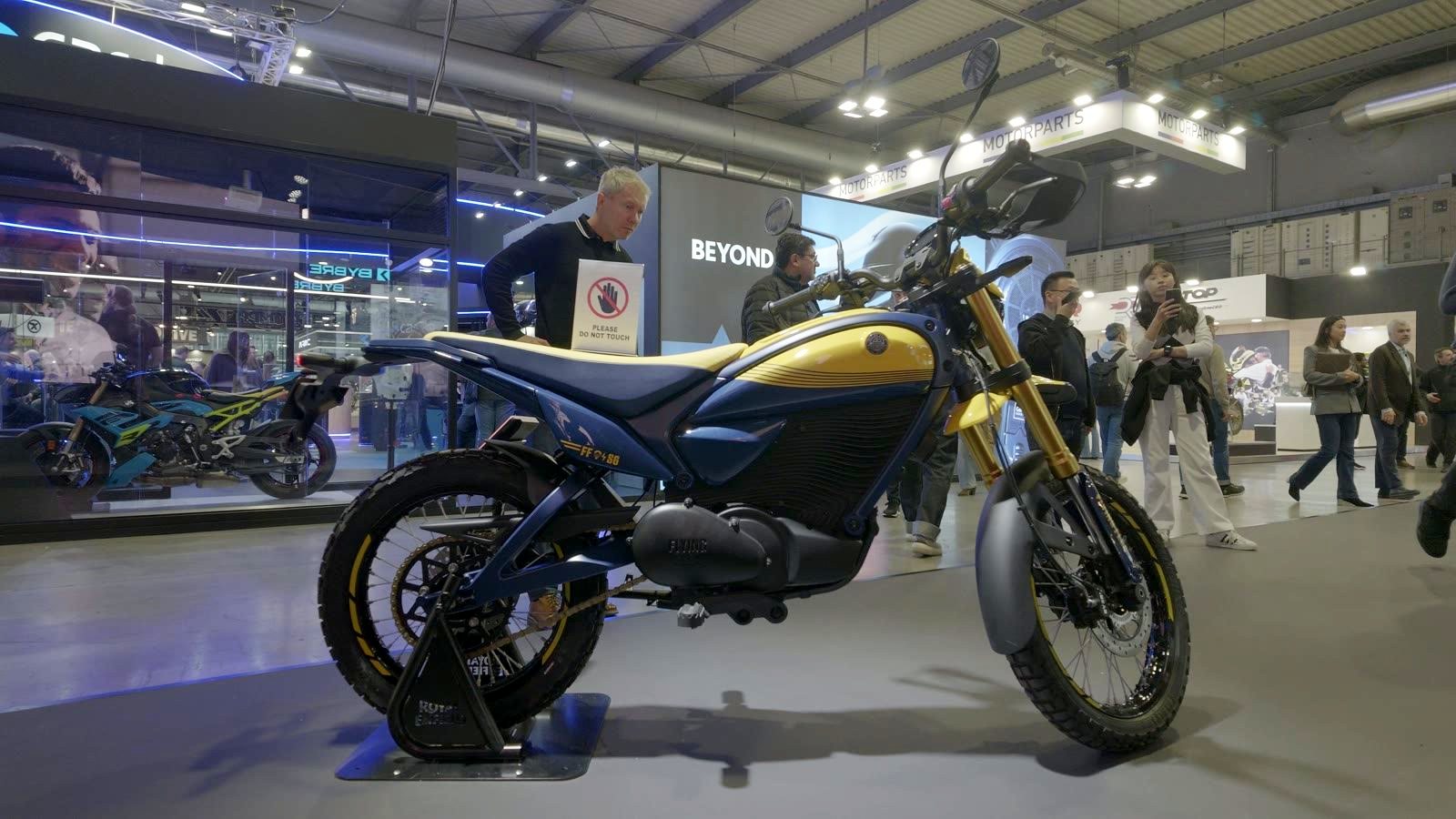
My personal favorite of the whole show was the Flying Flea. The original was a small Royal Enfield built for World War II: a 125cc two-stroke single weighing about 130 lb, light enough to be dropped by parachute in a steel cradle alongside British airborne troops, and it served in real operations including D-Day. The new Flying Flea is an electric scrambler with a long-travel inverted fork, a monoshock, 19/18-inch spoked wheels and chain drive. It goes on sale in 2027, pricing to come, and I love everything about it.
Norton 450: Not Built Down to a Price
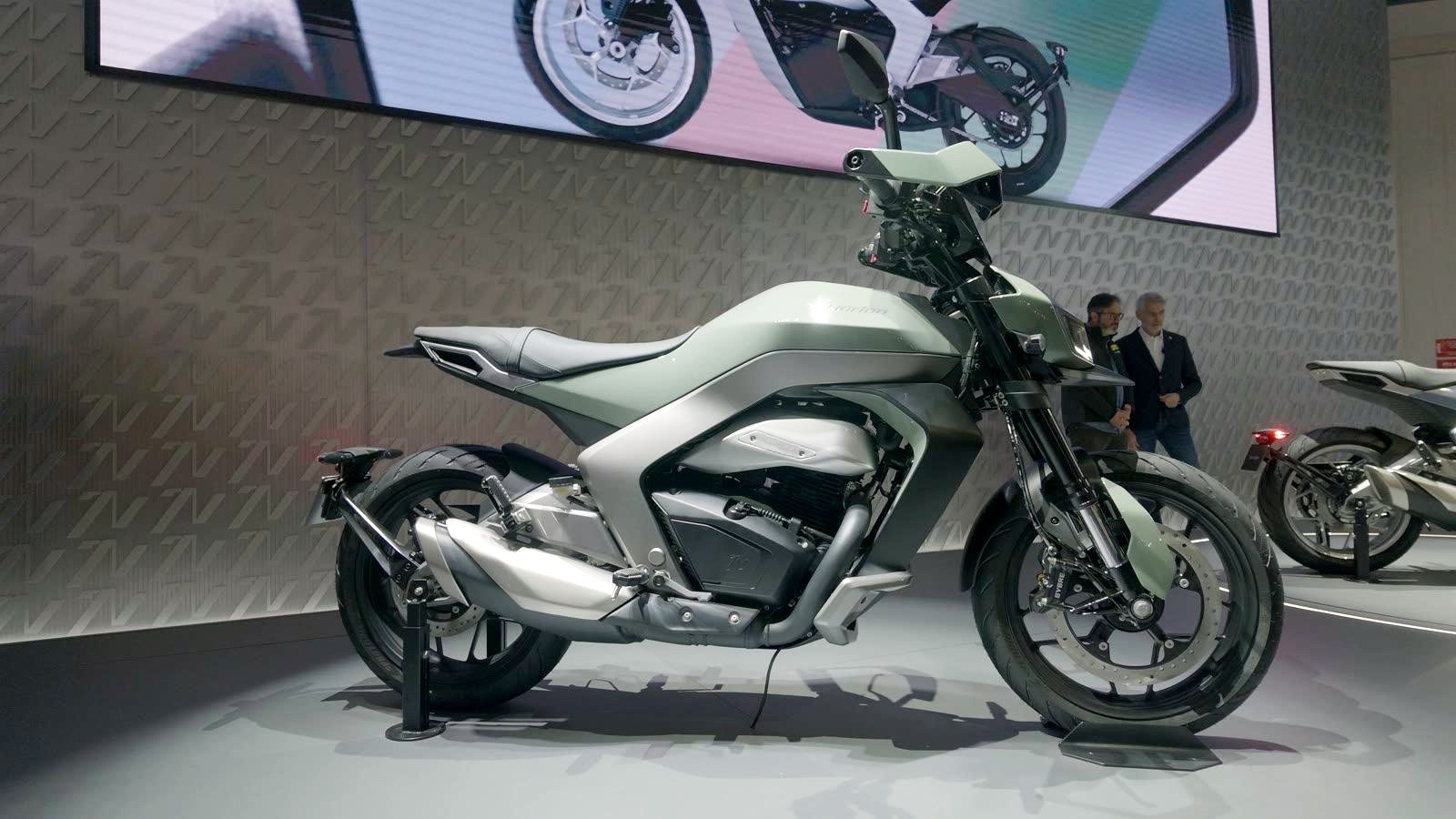
I finally saw the naked Manx in person, and like every Norton, photos don’t capture it the way seeing it does. The bigger news was the new 450, Norton’s entry point and its first single-cylinder, making 47 hp and 33 lb-ft, which keeps it A2-legal. A single fits Norton’s focus on torque better than a small parallel twin would.
It doesn’t feel built down to a price. You get an aluminum frame, a fully adjustable 43mm KYB inverted fork, ByBre brakes with cornering ABS, cruise control, keyless ignition, heated grips, tire-pressure monitoring and an 8-inch TFT touchscreen. Norton is targeting a curb weight under 397 lb, and the styling references the 1927 Norton CS1. There are two versions on the same platform: a road model in blue or rose gold pink, and a more rugged version with black wheels, a flyscreen, handguards and fork guards in a very tasteful green. I hope to test one later in 2027.
Moto Guzzi Trip and Aprilia’s Specials
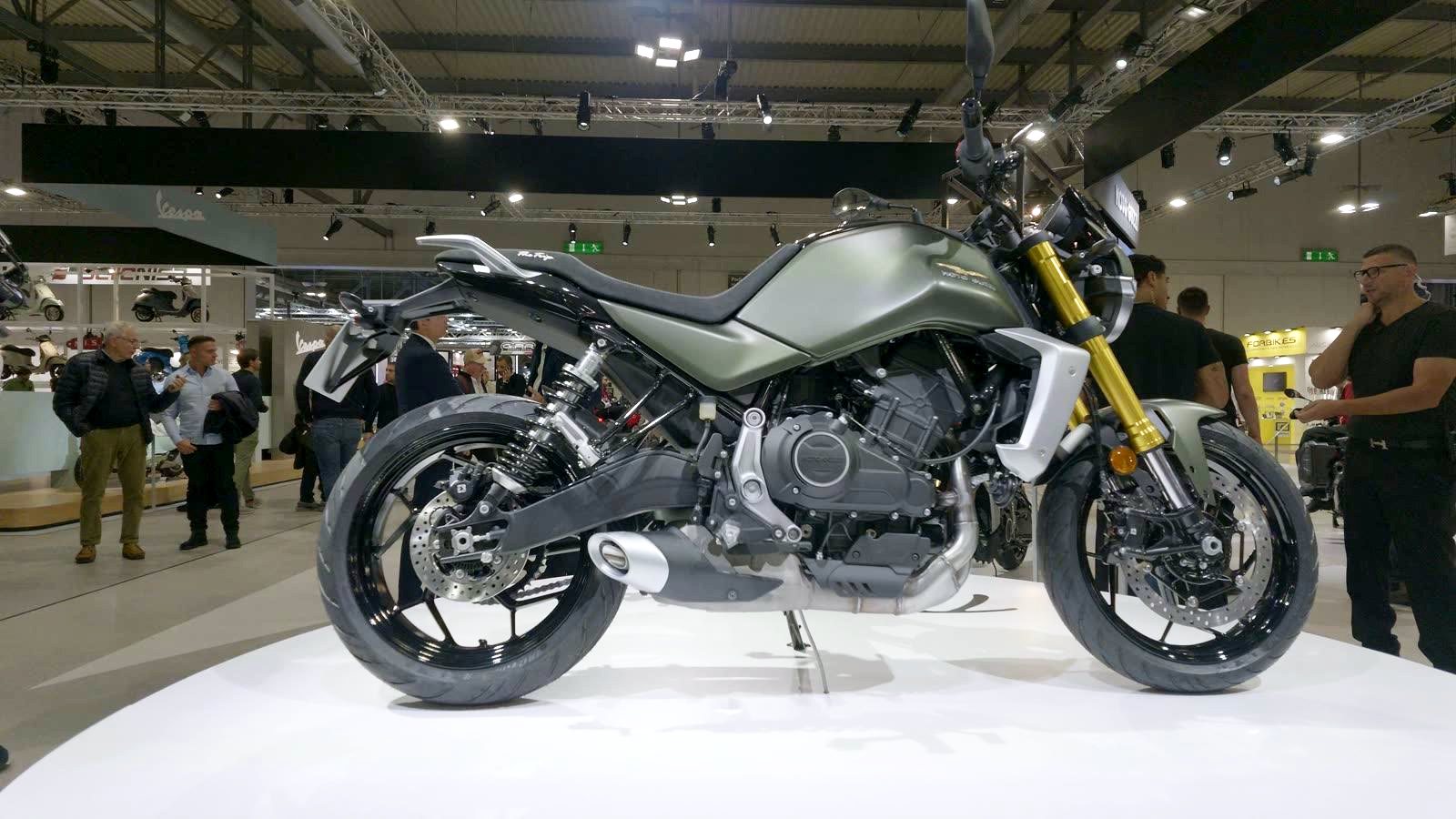
The Trip is the first Moto Guzzi in decades without the transverse V-twin and shaft drive. It uses a 500-class parallel twin shared with Aprilia’s 457 platform, making about 48 hp. Guzzi quotes 397 lb ready to ride and a 31-inch seat, with ride-by-wire and three riding modes, all wrapped in retro roadster styling that doesn’t look like a cost-cutting exercise. It comes in Green Grove, Black Metropolis and Red Beat, plus a launch special called The Opening, and reaches dealers in early 2027 with pricing to come. The historic green was my favorite, though the red drew the most attention.
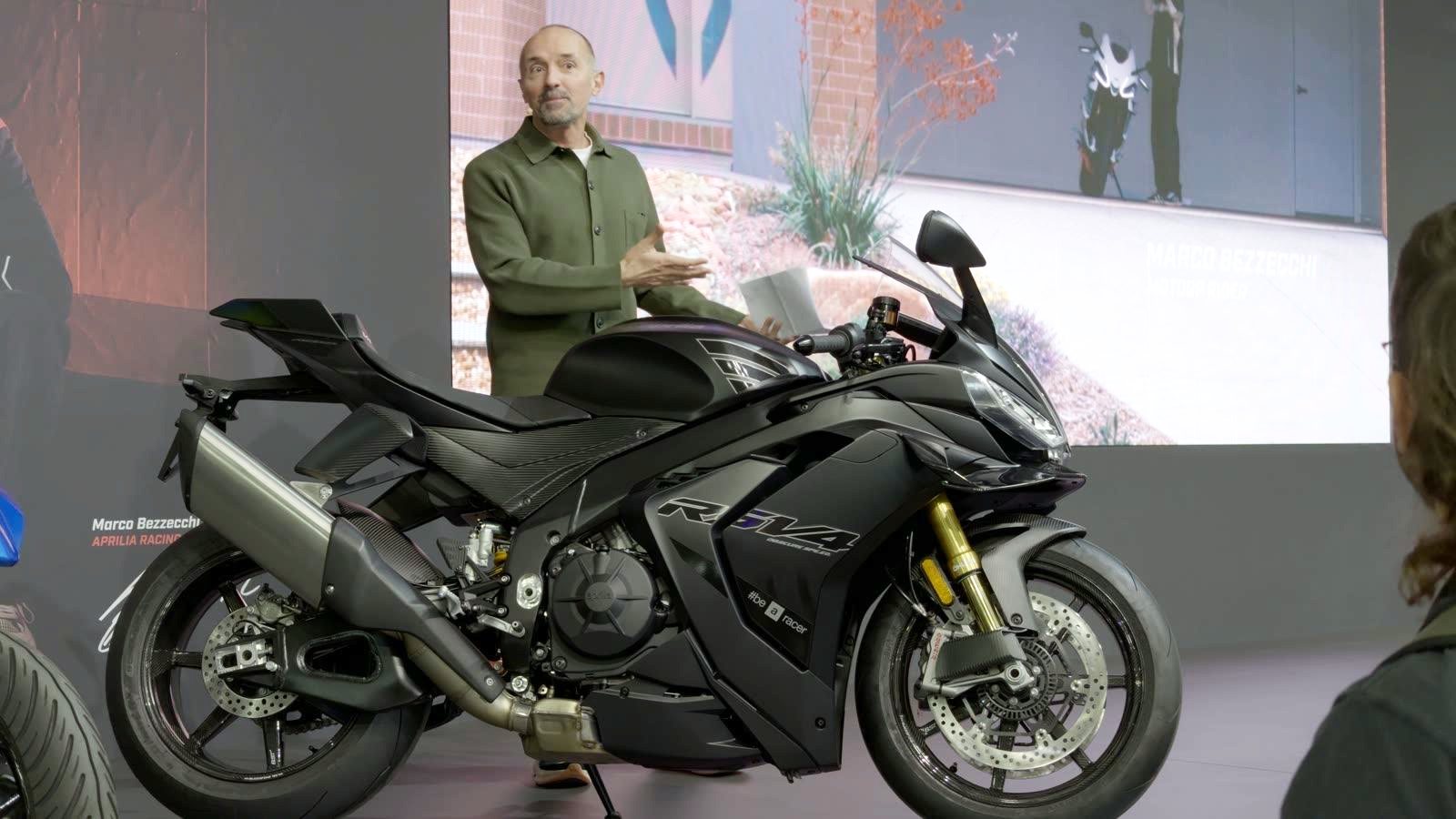
Aprilia’s RSV4 Obscure is a limited run of 500 numbered bikes and the first production superbike with Aprilia’s MotoGP-derived “leg wings,” which add downforce at the rear. It gets carbon BST wheels and manually adjustable Öhlins suspension in place of the Factory’s semi-active setup. Aprilia has confirmed it is coming to the US but hasn’t announced pricing.
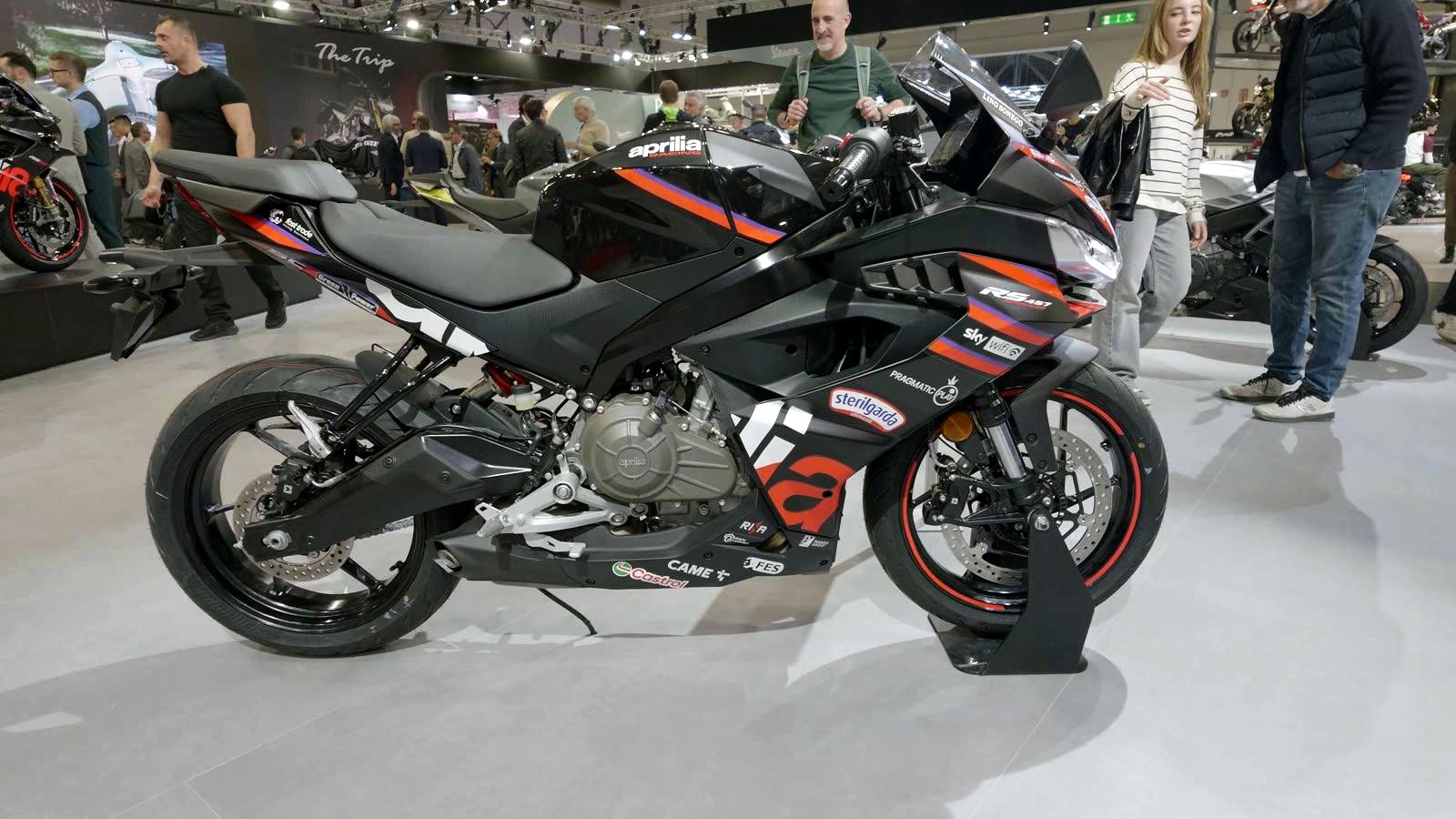
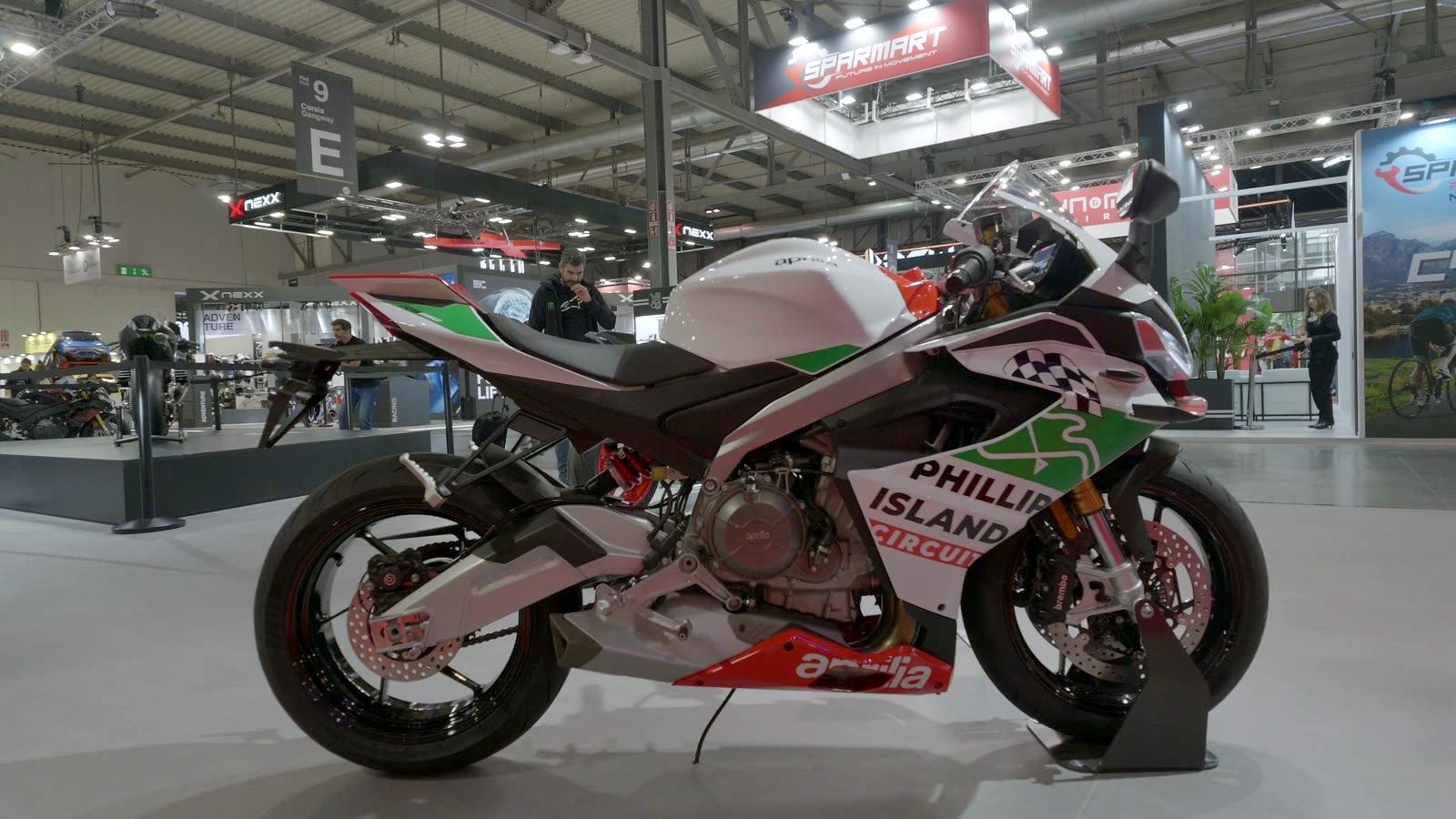
The RS 457 is still the A2 sportbike to beat, and Aprilia showed a GP Replica edition that copies the RS-GP’s black livery and sponsor graphics, with a blacked-out frame and swingarm, a standard quickshifter and new front brake pads. And with MotoGP leaving Phillip Island, Aprilia is marking the occasion with a limited, numbered RS 660 Phillip Island Tribute in a white, green and red livery built around the circuit logo, with red wheels, a tank badge listing Aprilia’s 10 wins there, a standard solo seat cover and the serial number engraved on the top triple clamp. Pricing and production numbers are still to come.
Moto Morini Turns 90
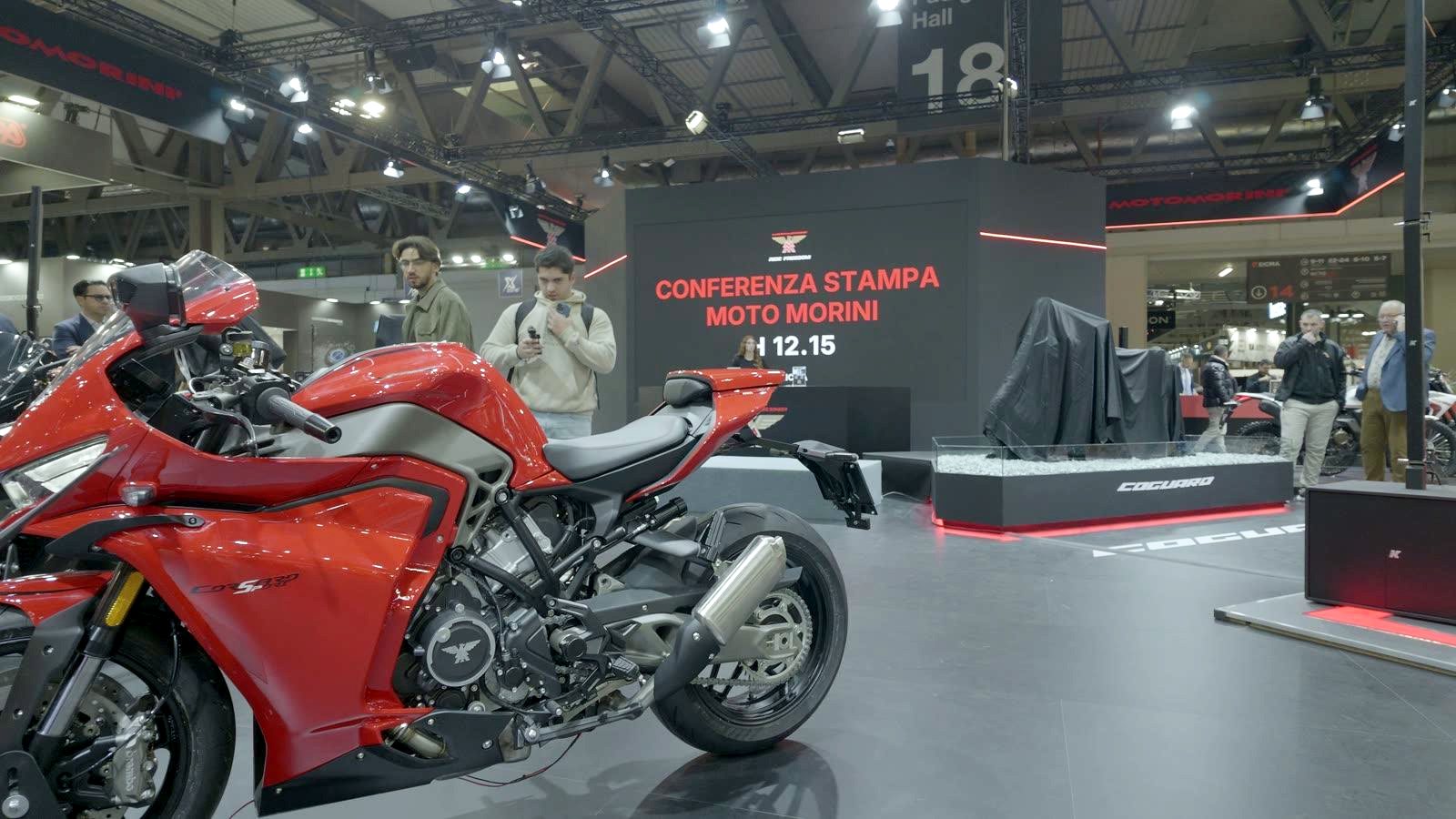
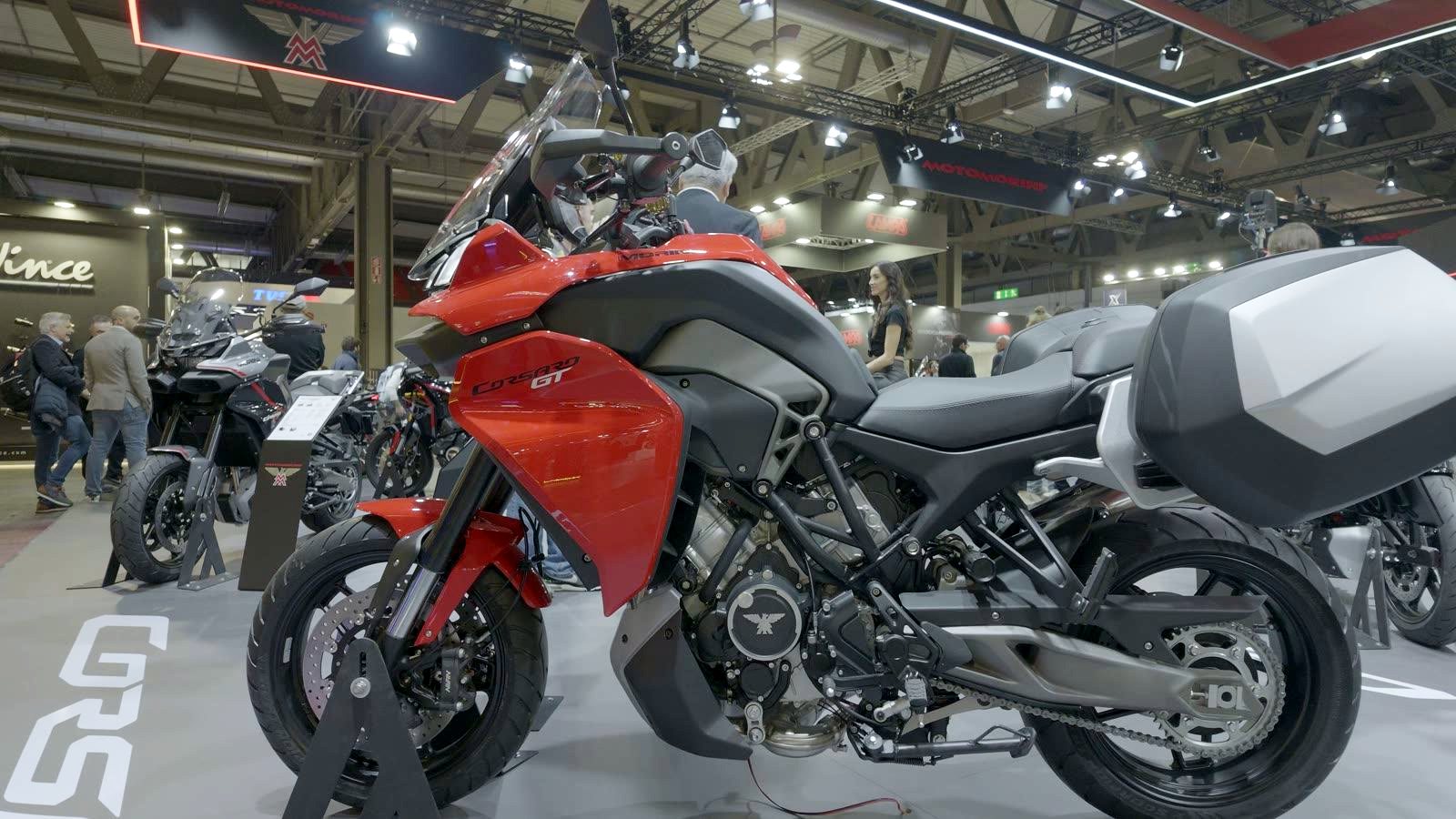
Moto Morini brought its full lineup to Milan for its 90th anniversary. The new Corsaro family shares a 749cc 90-degree V-twin with a counter-rotating crank, claiming around 96 hp, almost the same as the 1200 V-twin. The Corsaro is the naked bike, the Corsaro Sport adds a full fairing, and the Corsaro GT is a sport-touring crossover with a 7-inch TFT and blind-spot monitoring. The frame mixes cast aluminum sections with a trellis, and it looks great up close.
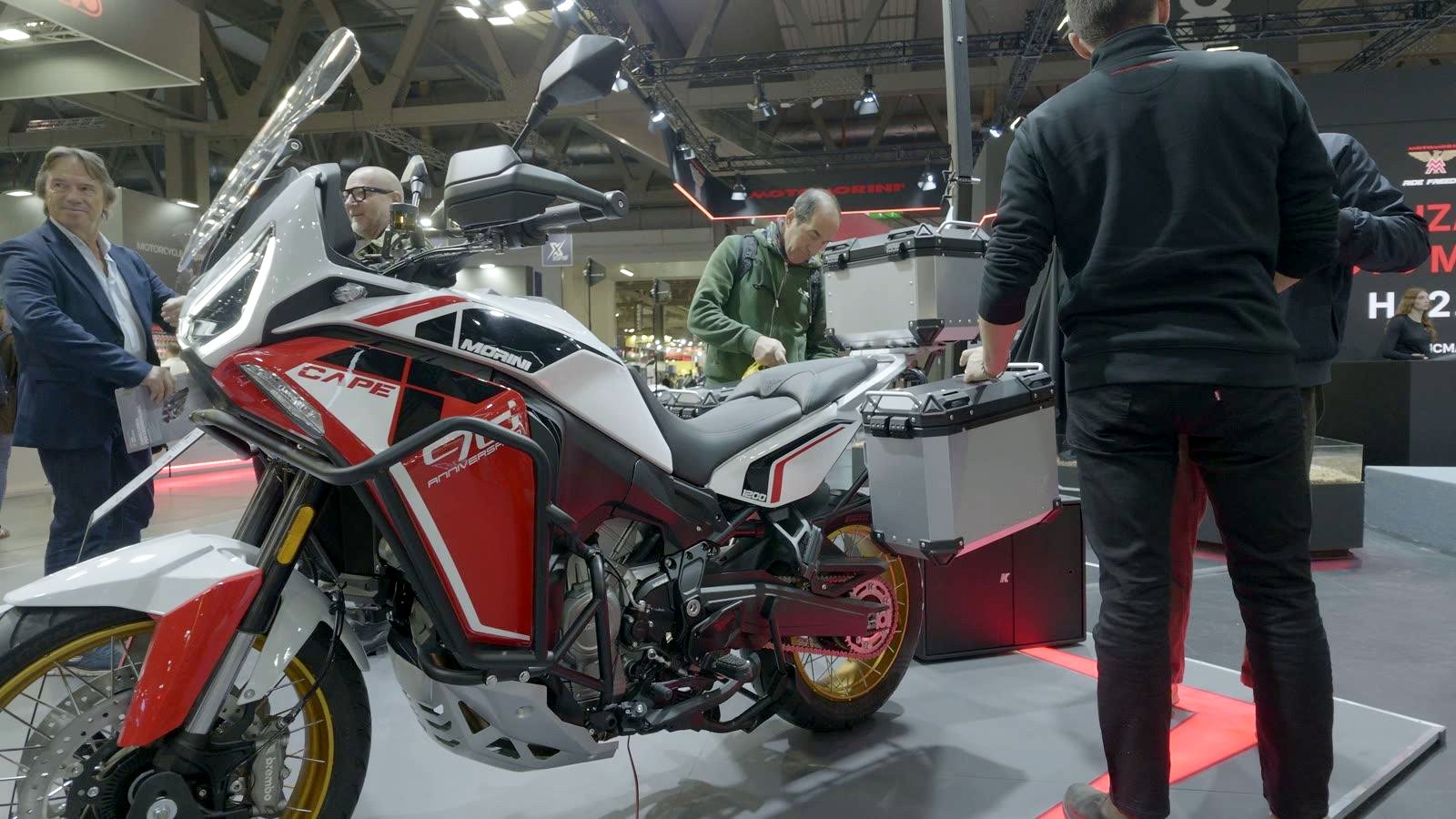
For the anniversary, the X-Cape 1200 gets special paint, gold spoked wheels, three-piece luggage, a taller screen, crash bars and an aluminum skid plate. The X-Cape 700 gets a Red Edition in matte grey with red anodized wheels, and the Vettore gets two new colors that flatter it in a way the white never could. The green is nice, but black is the way to go.
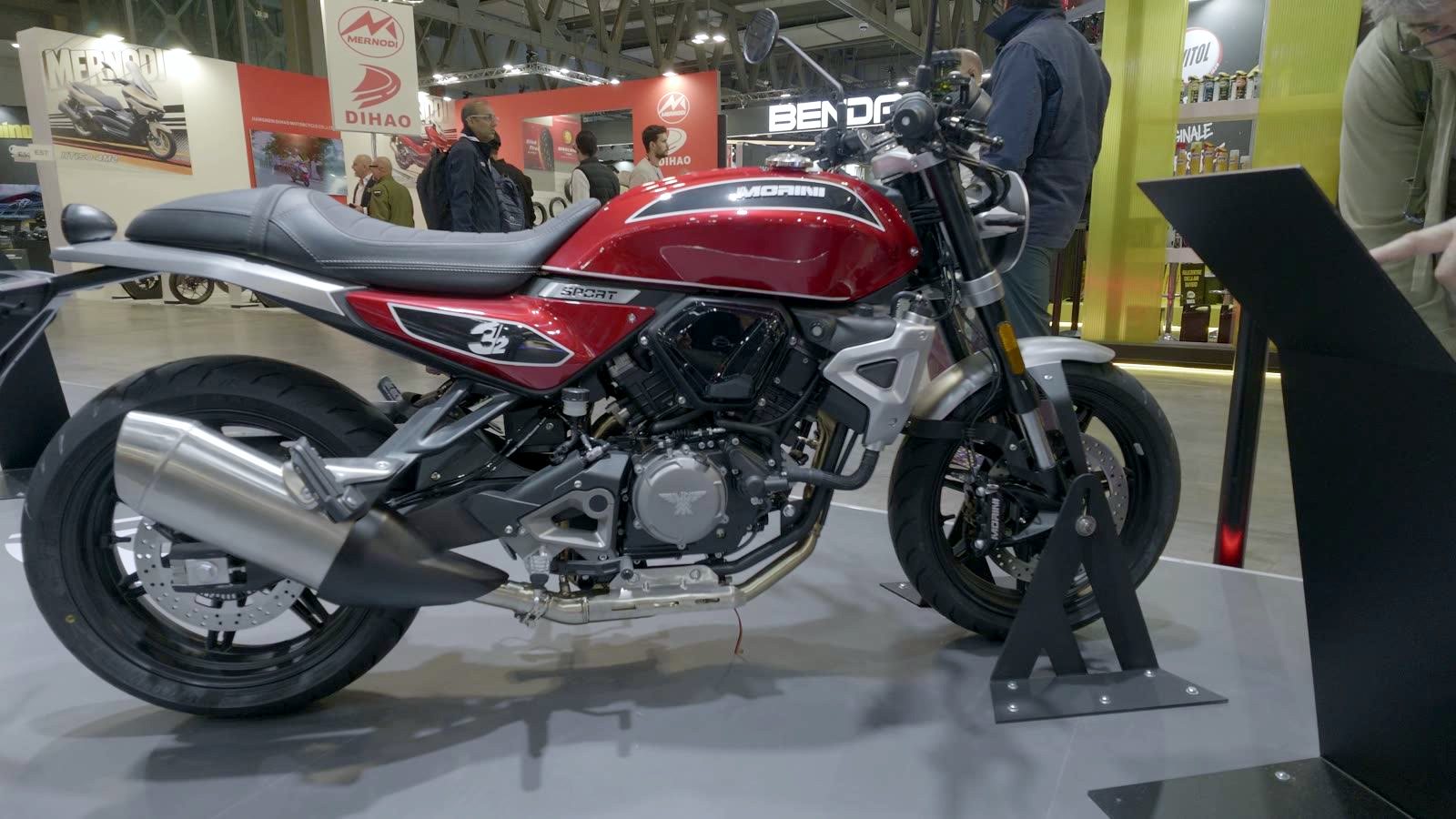
Morini is also bringing back the Tre e Mezzo, complete with the original logo. It is a 350cc liquid-cooled 60-degree V-twin making 32 hp and 22 lb-ft, good for a claimed 87 mph, built around a steel frame and aluminum swingarm with an inverted fork, a preload-adjustable shock, a radial-mount four-piston front caliper and 17-inch wheels. It is light, approachable and A2-compliant, sells in the UK for £4,299, and Moto Morini USA lists it as a future model.
Suzuki: The GSX-R1000 Gets Wings
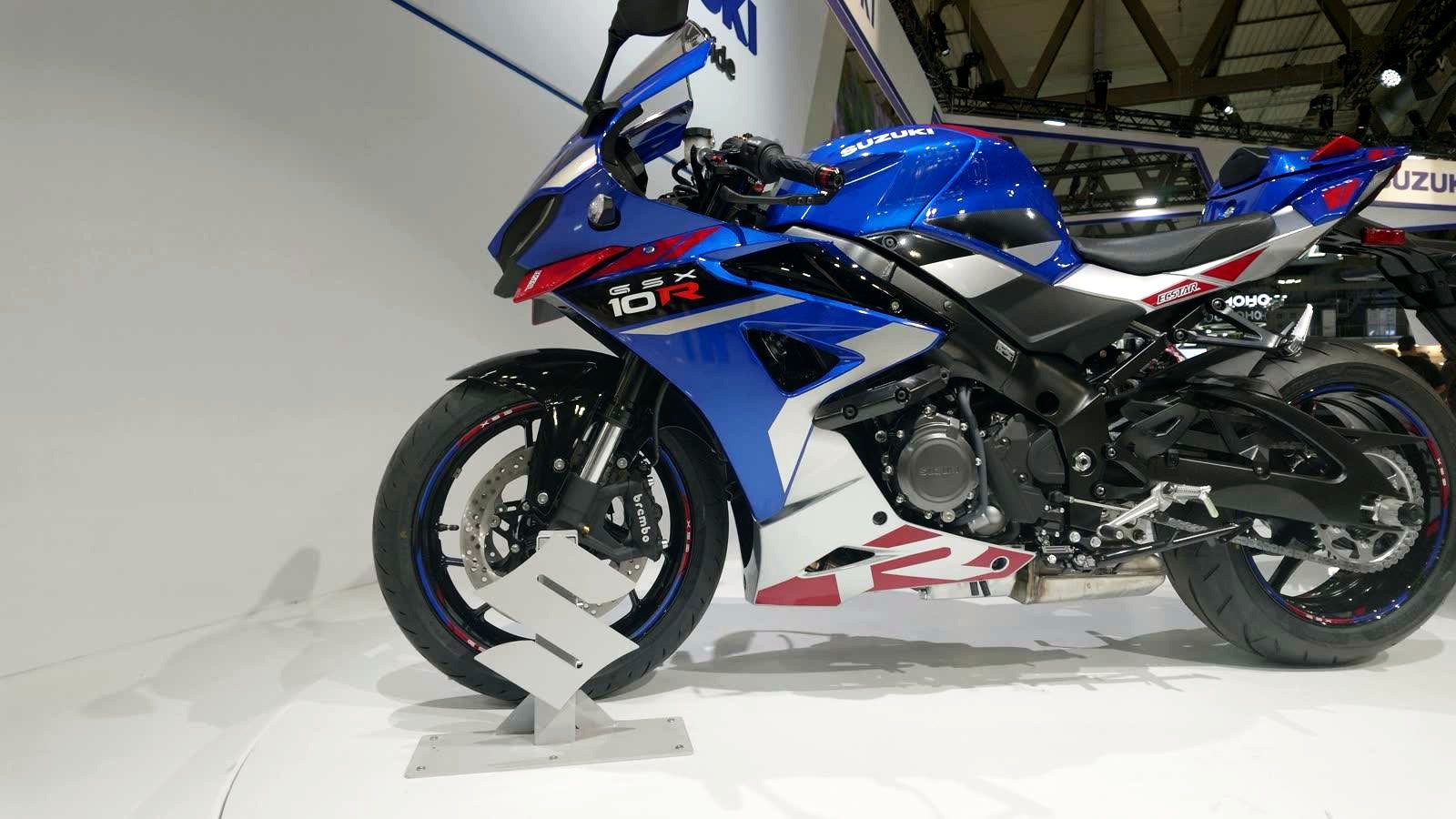
Suzuki is not known for changing things often, but it brought two notable updates. The GSX-R1000 is back, and it looks like every Gixxer you have seen for the last 20 years, now with wings. I honestly love it. It is a modern take on the superbikes of my youth, and it looks brilliant.
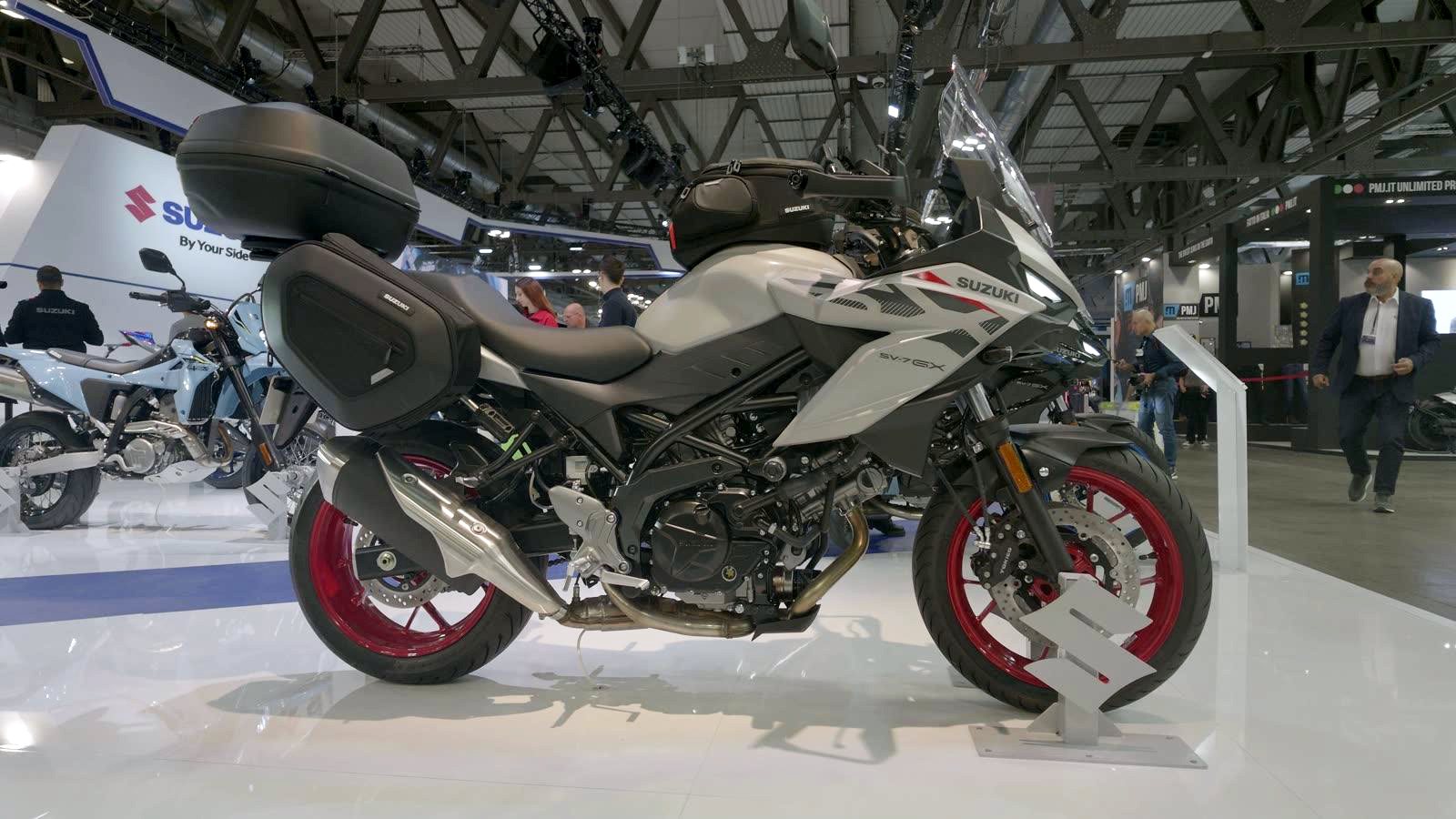
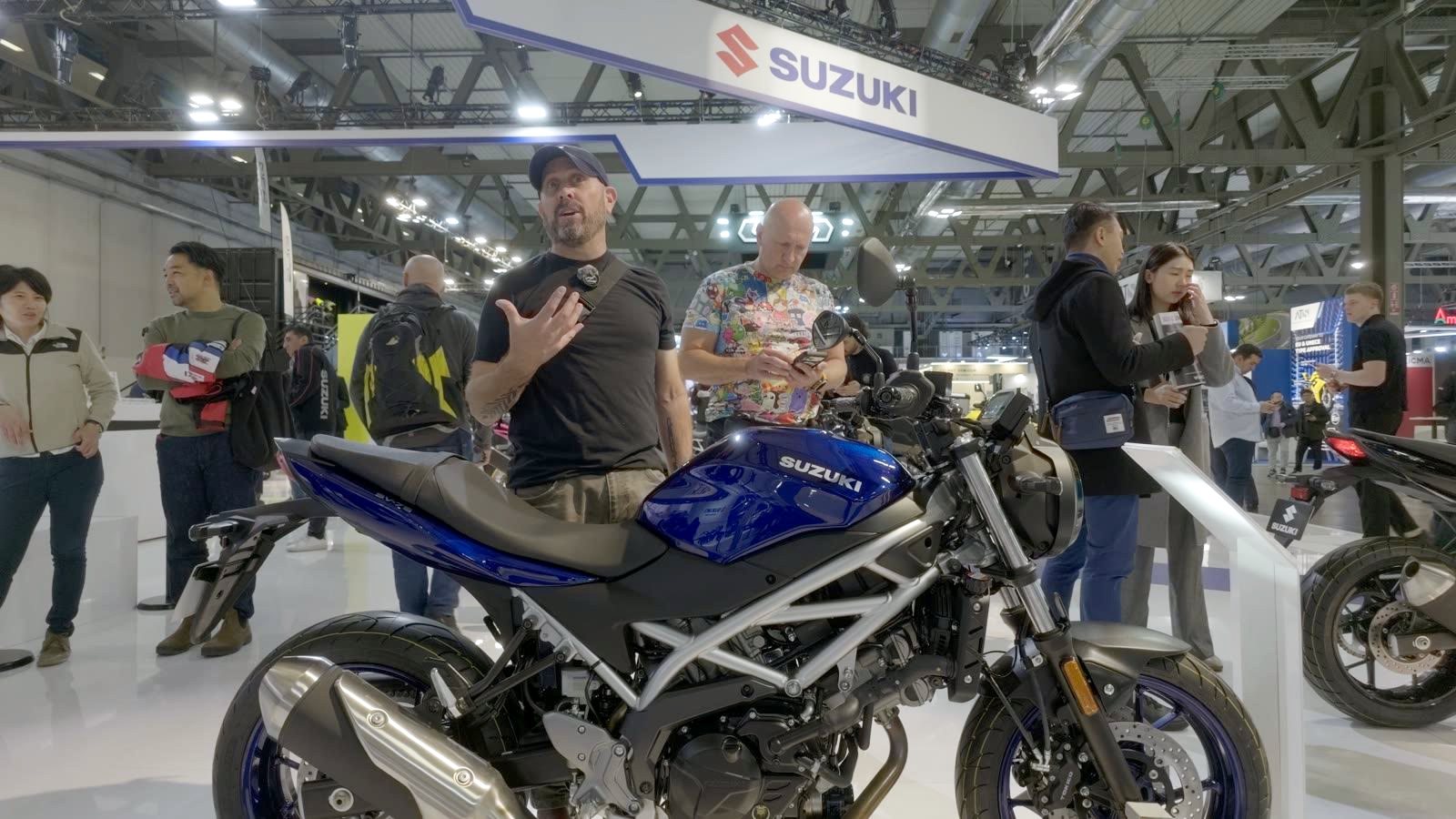
The SV-7GX turns the long-running SV650 V-twin into a sport-touring crossover. It gets ride-by-wire, a new exhaust and revised gearing, making 72 hp and 47 lb-ft with the same character that has kept the SV alive since 1999. Suzuki added a three-position adjustable windscreen, handguards, a rear rack, USB-C and a TFT dash with smartphone connectivity. A naked sibling, the SV-7S, officially replaces the SV650.
Yamaha: An Adventure Scooter, a Ténéré Concept, and Nostalgia Paint
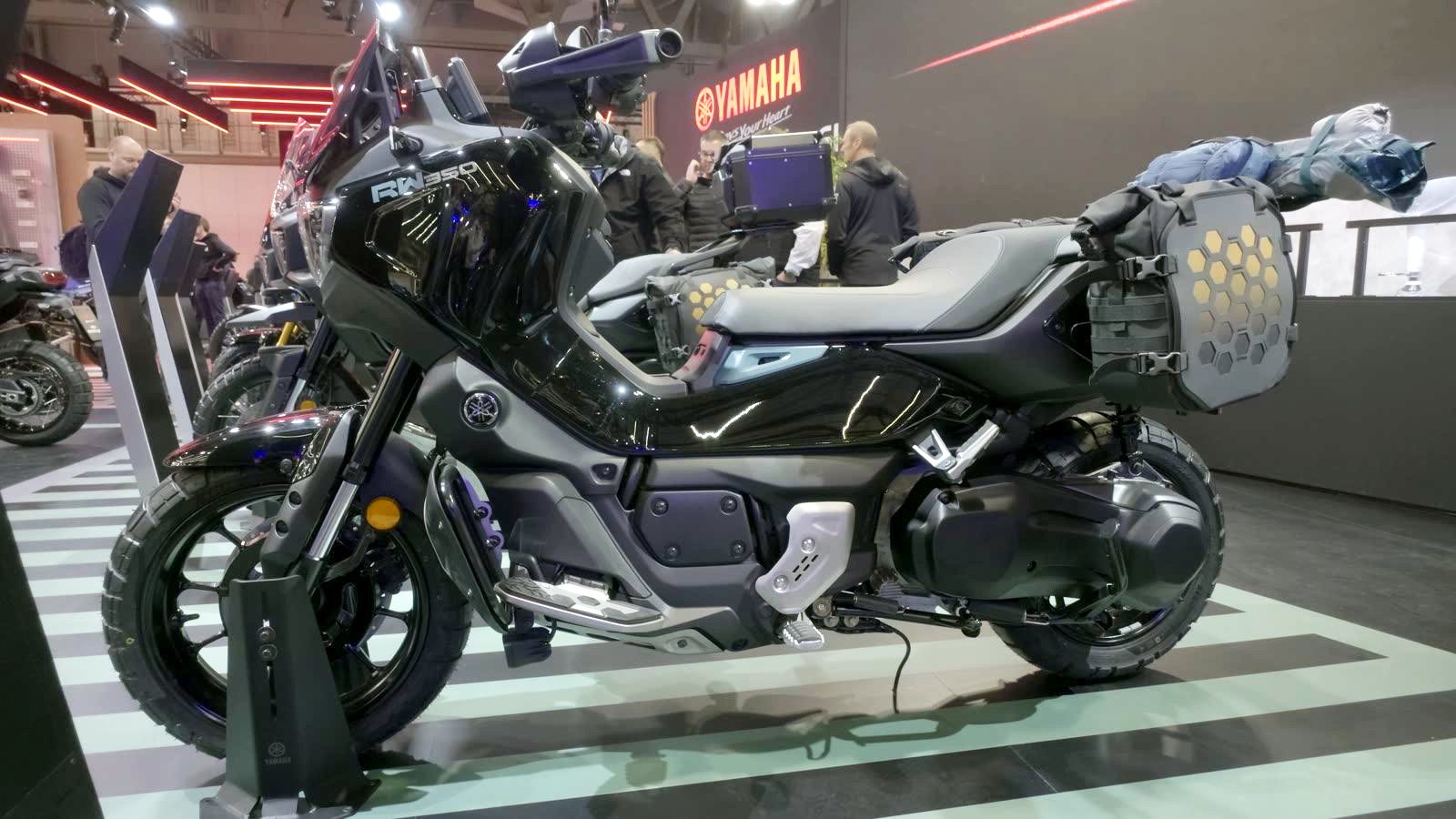
The talk of Yamaha’s stand was an off-road adventure scooter. It is a polarizing design, and honestly, I’m okay with it.
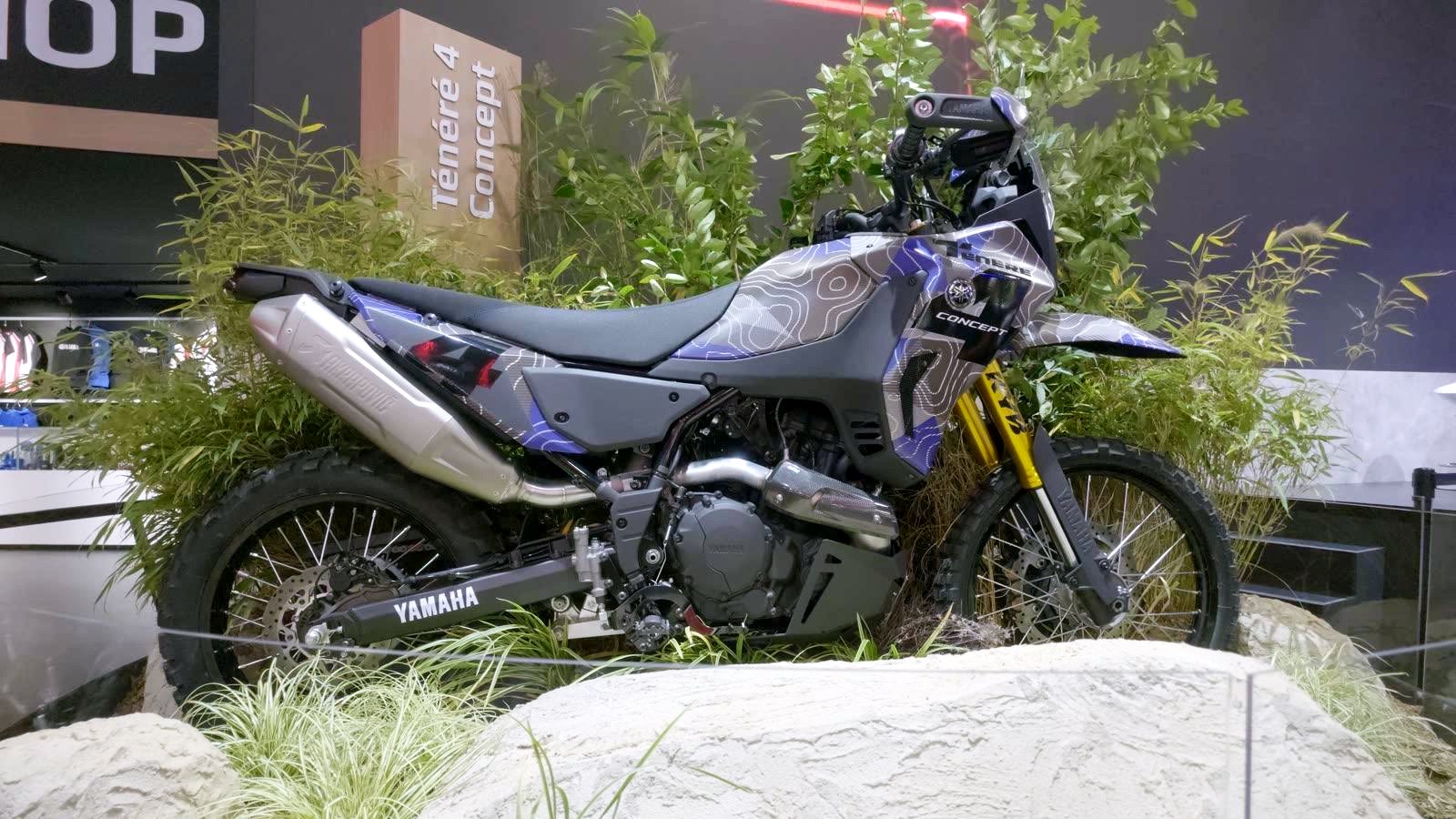
There was a lot of excitement around the Ténéré concept too. Many of us hoped for a Ténéré 900 in showrooms this year, and this looks like what we will likely see next year. I’m a sucker for the contour-line graphics and hope the production bike keeps them.
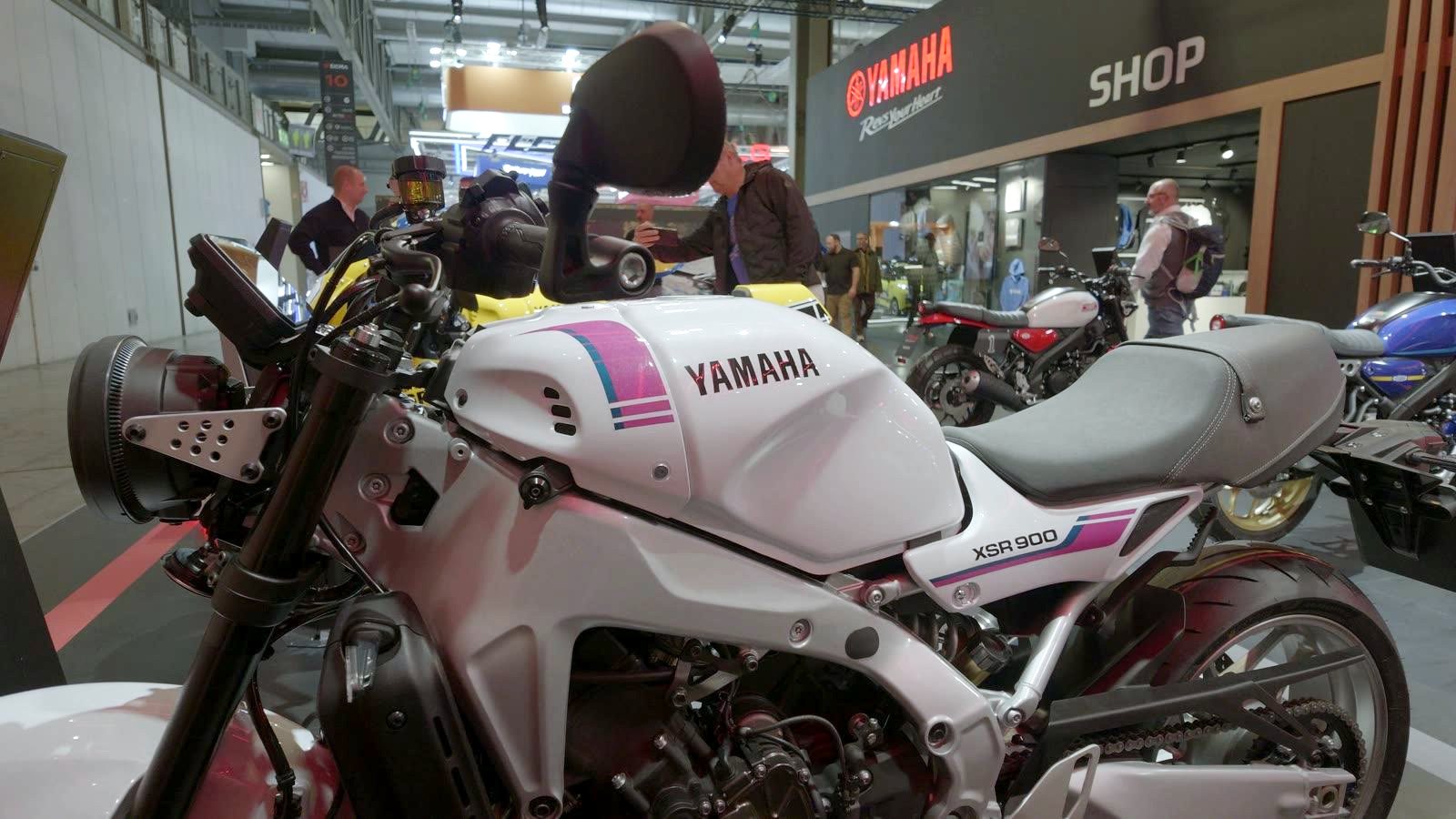
The new XSR900 colorways hit close to home. My first sportbike was a 1991 FZR600, black with pink and blue stripes, and these colors brought that right back. You can get the small nose fairing or the fully faired XSR900 GP, shown here in a brilliant Kenny Roberts livery. We don’t know yet what comes to America, but if this does, it will be hard to walk past on a showroom floor. Tying a modern bike to the company’s past like this is outstanding work by Yamaha.
KTM Is Back
KTM is clearly putting a lot of energy into this show. After Bajaj bailed the company out, it is back on the grid, and that is what we all want to see. The complete surprise was the RC 450, a rocking little track bike with a single-sided swingarm on a 450. That is bonkers cool, and it would be a great bike for younger riders or newer track riders. The 1390 Super Adventure is back too, with a 17-inch front wheel, a big V-twin and plenty of power, a competitor for the Multistrada Pikes Peak.
Almost every spoked-wheel motorcycle at this show has tubeless spokes. The industry is listening to us.
Triumph, Kawasaki and Harley-Davidson
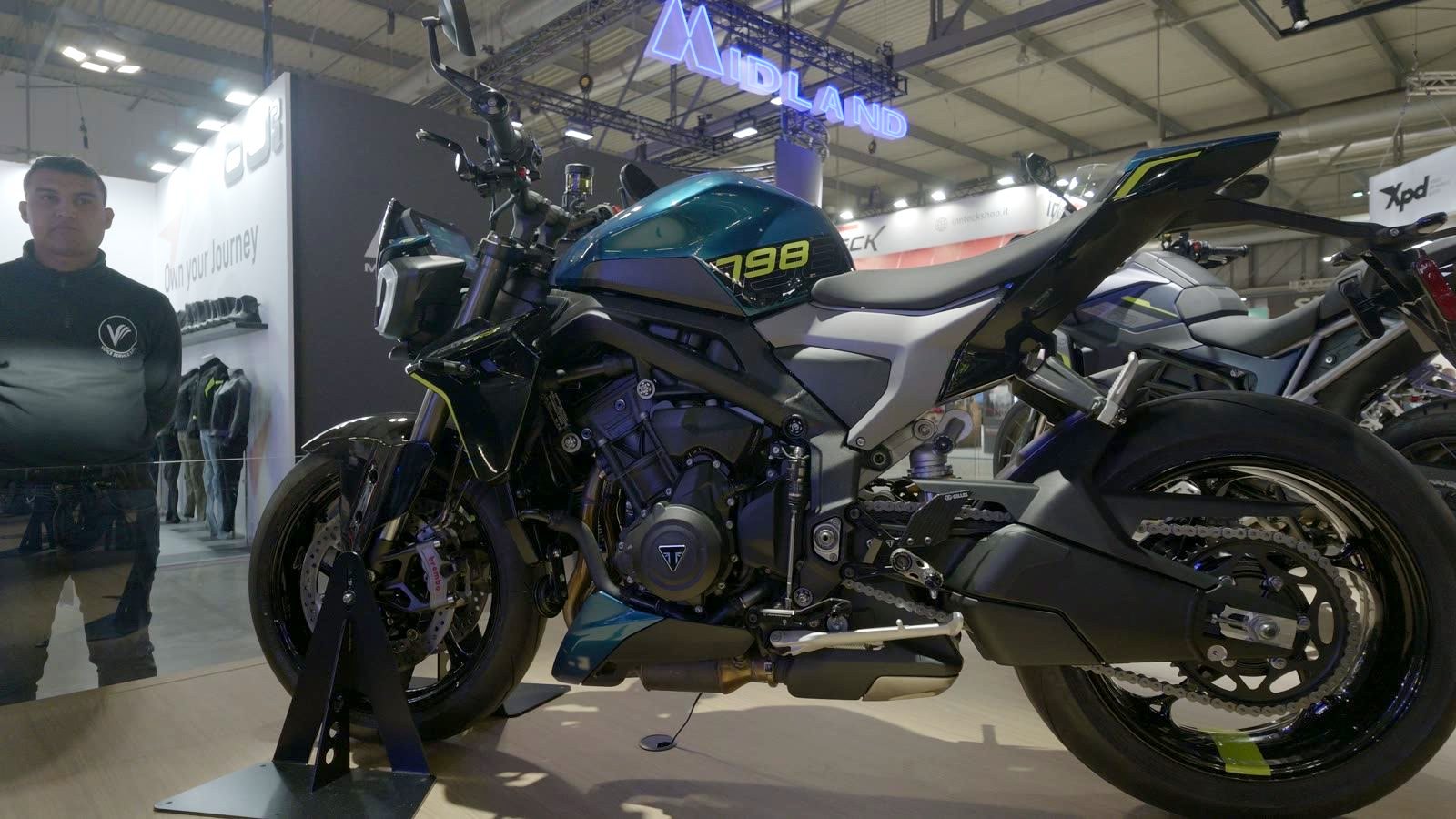
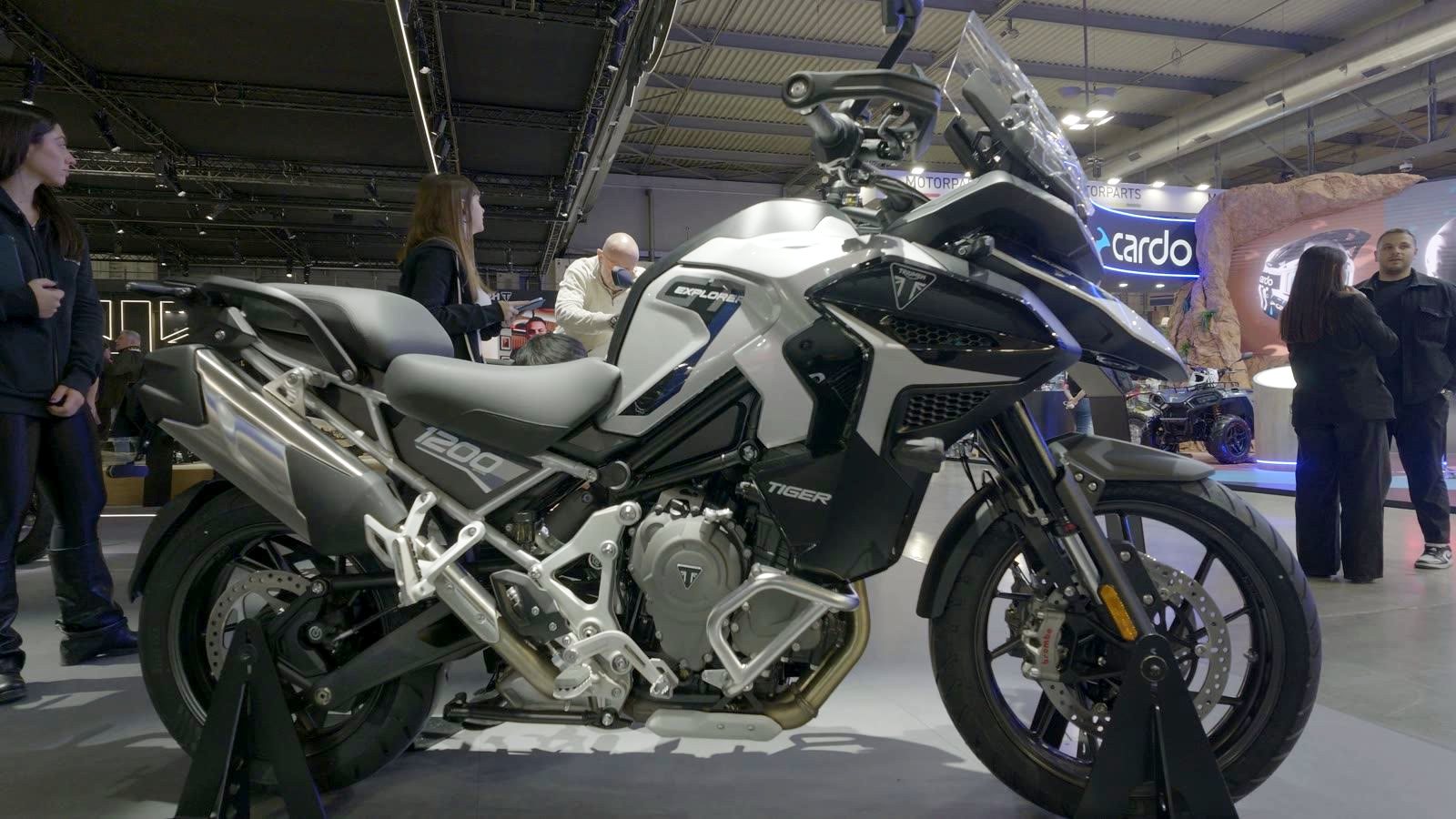
Triumph launched a whole range of new bikes, and the one that excited me most was the new Street Triple RS, especially in its yellow and blue colorway, with its new headlight design. I also saw the new Tiger in person, and it looks even better in real life.
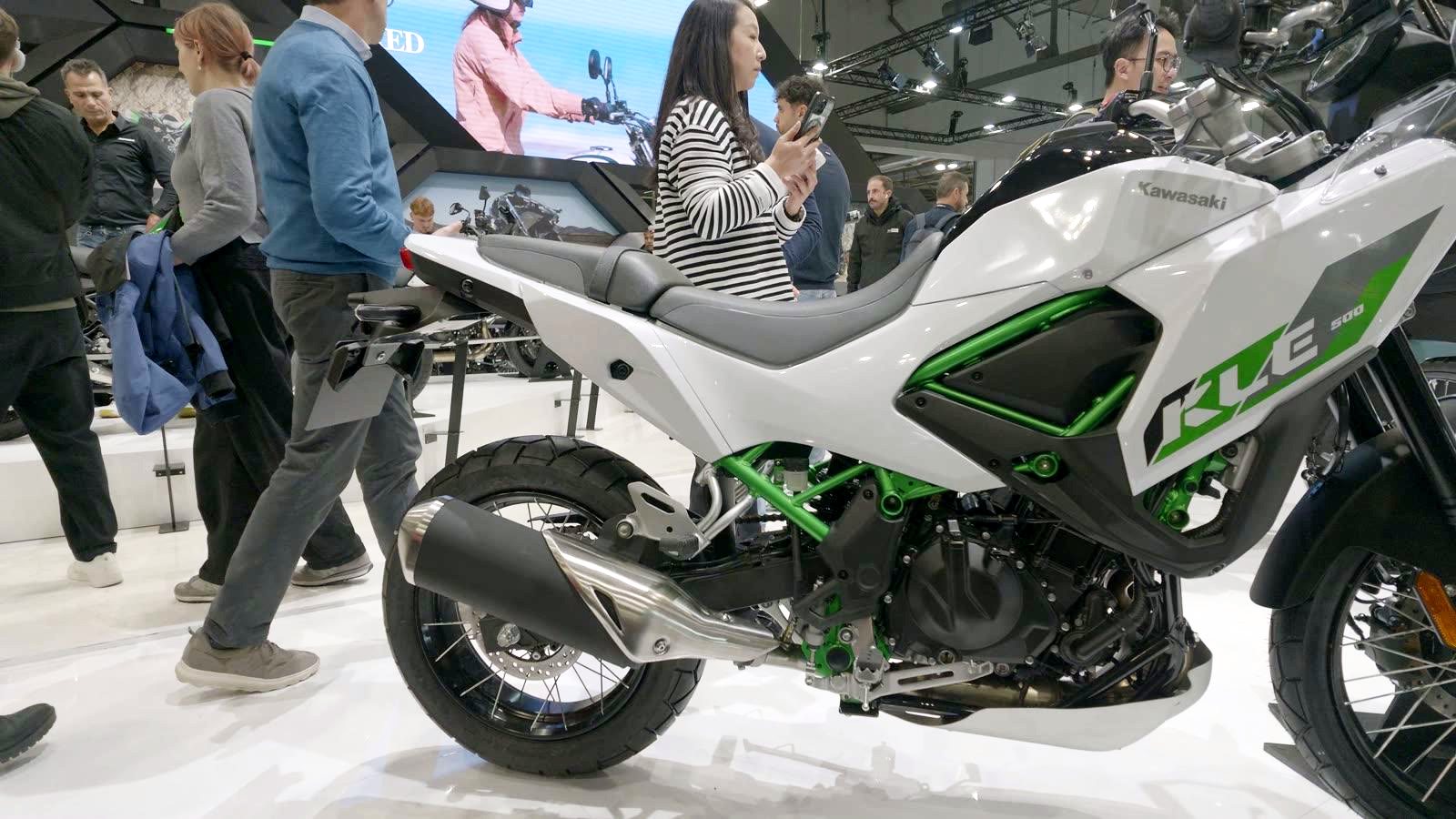
Kawasaki had two interesting bikes: a new Versys, and the KLE 650, which looks striking in white and even more interesting in silver. Imagine what you could build on that little platform.
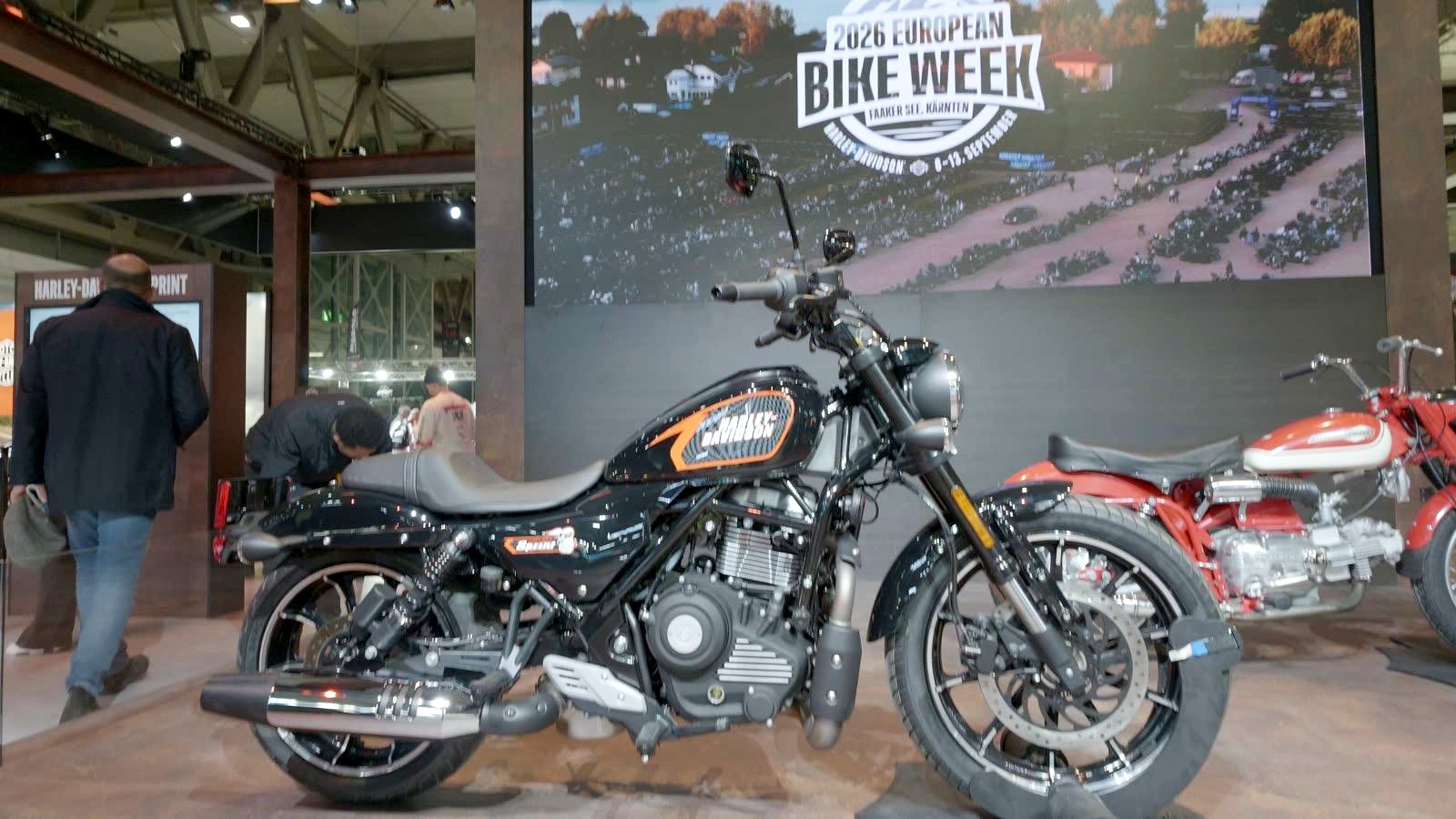
Harley-Davidson is bringing back the Sprint name with a 650 single at around six grand. That is a pretty good deal. Should every Harley be a V-twin? Let me know what you think.
BSA, Benelli and the Brands We Don’t Get
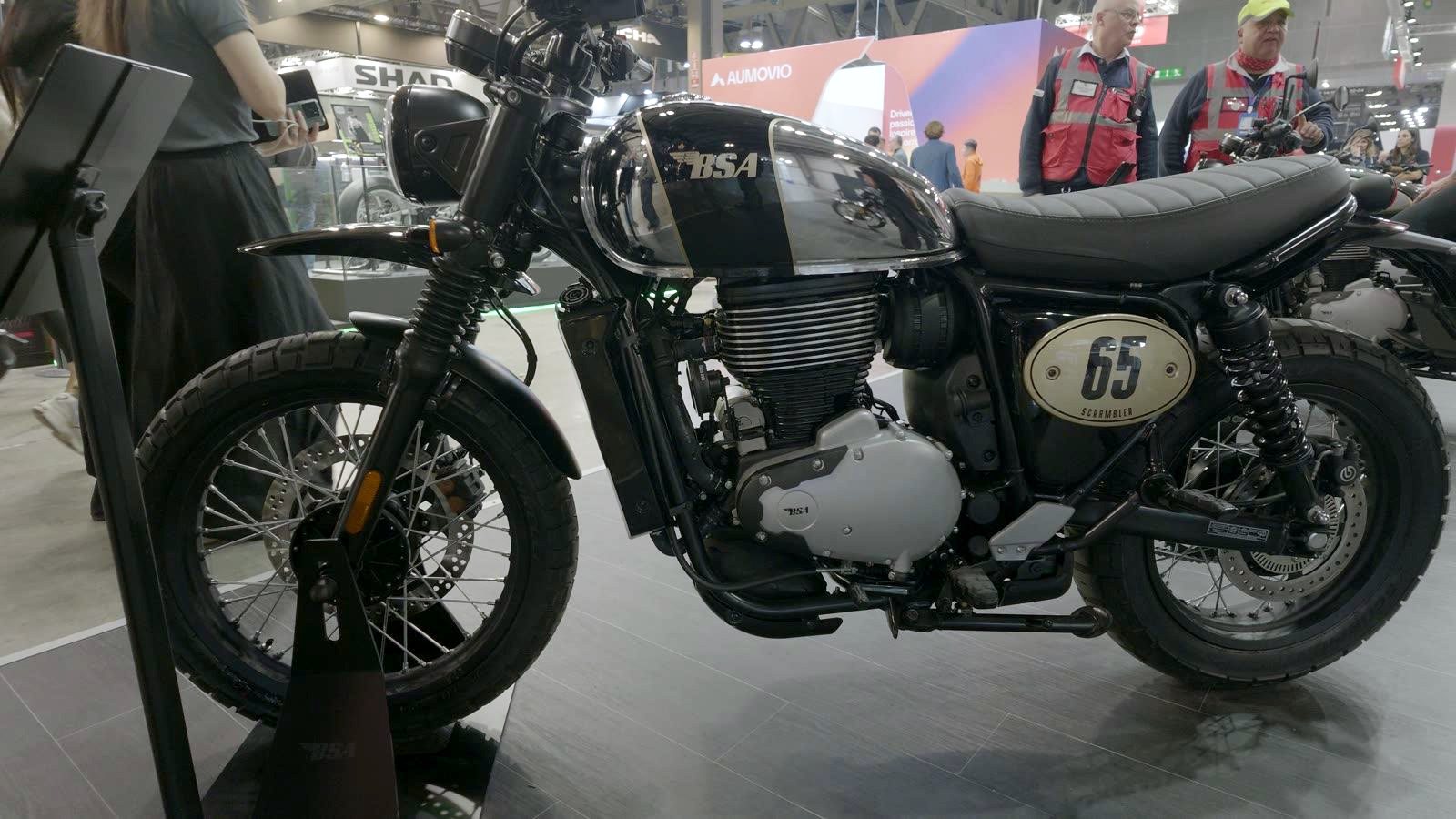
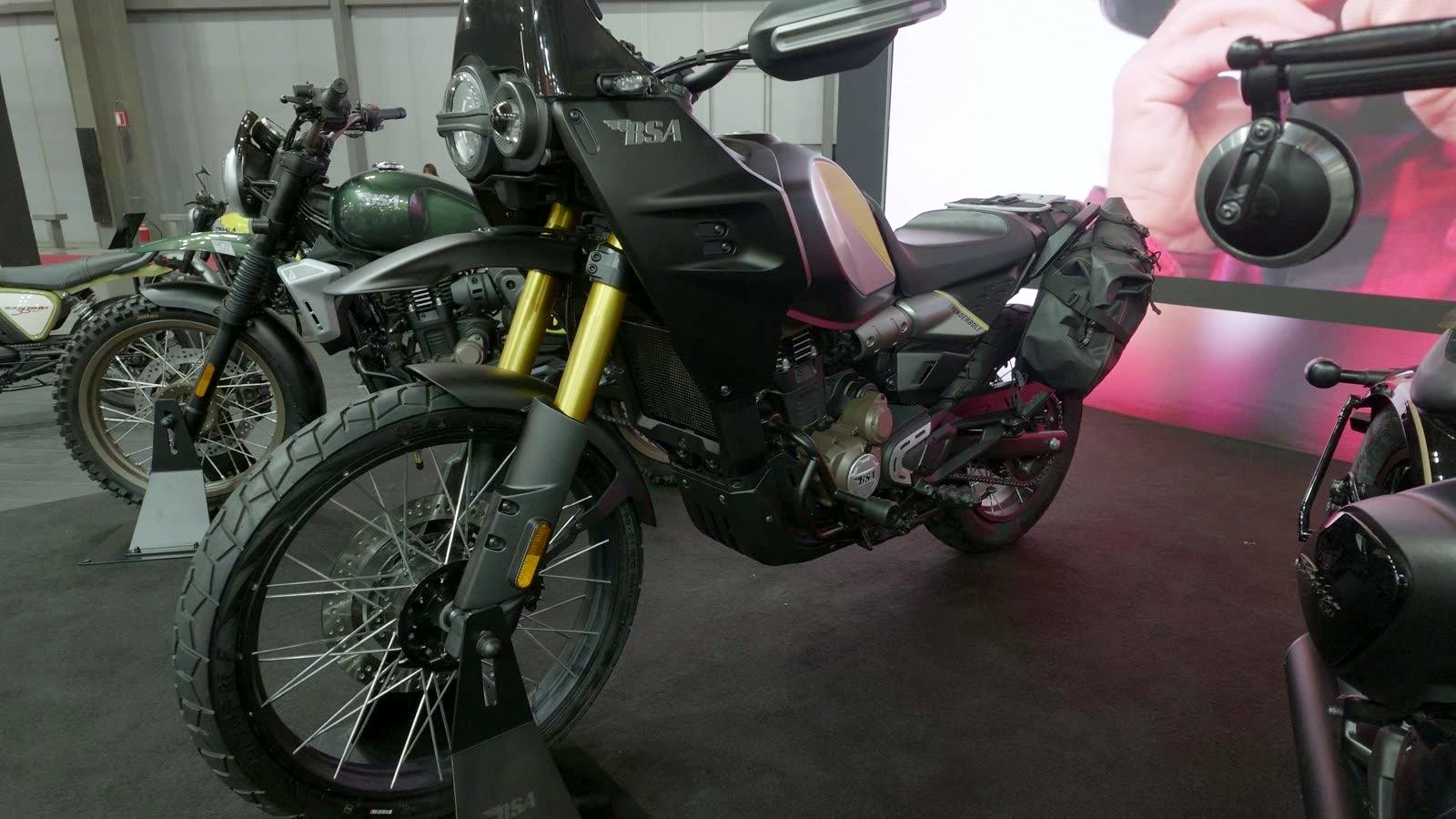
BSA hasn’t made it back to America yet. It is following a path similar to Royal Enfield’s, with dapper motorcycles at very competitive prices. The 650 Gold Star and Scrambler get new paint for 2027. The Thunderbolt 350 adventure bike is due in Europe next year, and despite no factory or ownership connection, it looks a lot like the Royal Enfield Himalayan. Two new 350s join the range, the Bantam Bobber and the Bantam Scrambler, the latter styled after the 1966 Bushman with a new, lighter engine. Both arrive in 2027, pricing to come.
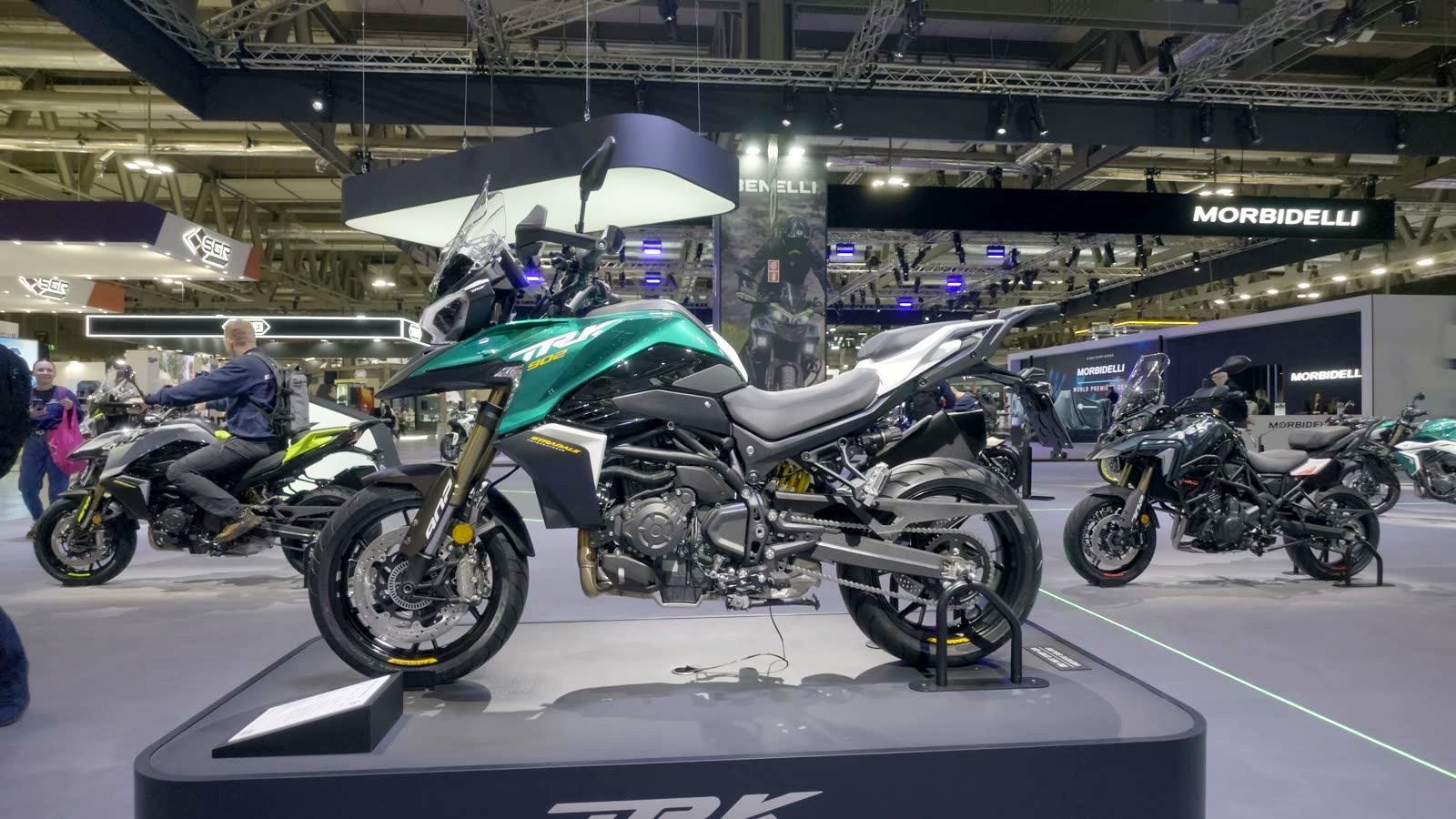
One of the harder parts of EICMA is seeing great bikes the US simply doesn’t get, and Benelli is a prime example. I’m a fan of all-rounders and adventure-inspired design, and the TRK 902 Xplorer, Benelli’s flagship adventure bike with a 95 hp parallel twin, is stunning in person. It may be a little over-designed, but I didn’t want to stop looking at it. There are 600 and 700 sizes in the range too.
I’m honestly getting a little bored of retro bikes, strong sellers as they are, but one Benelli retro won me over with a single detail: a little lion mascot perched on the front fender. Why don’t all motorcycles have one?
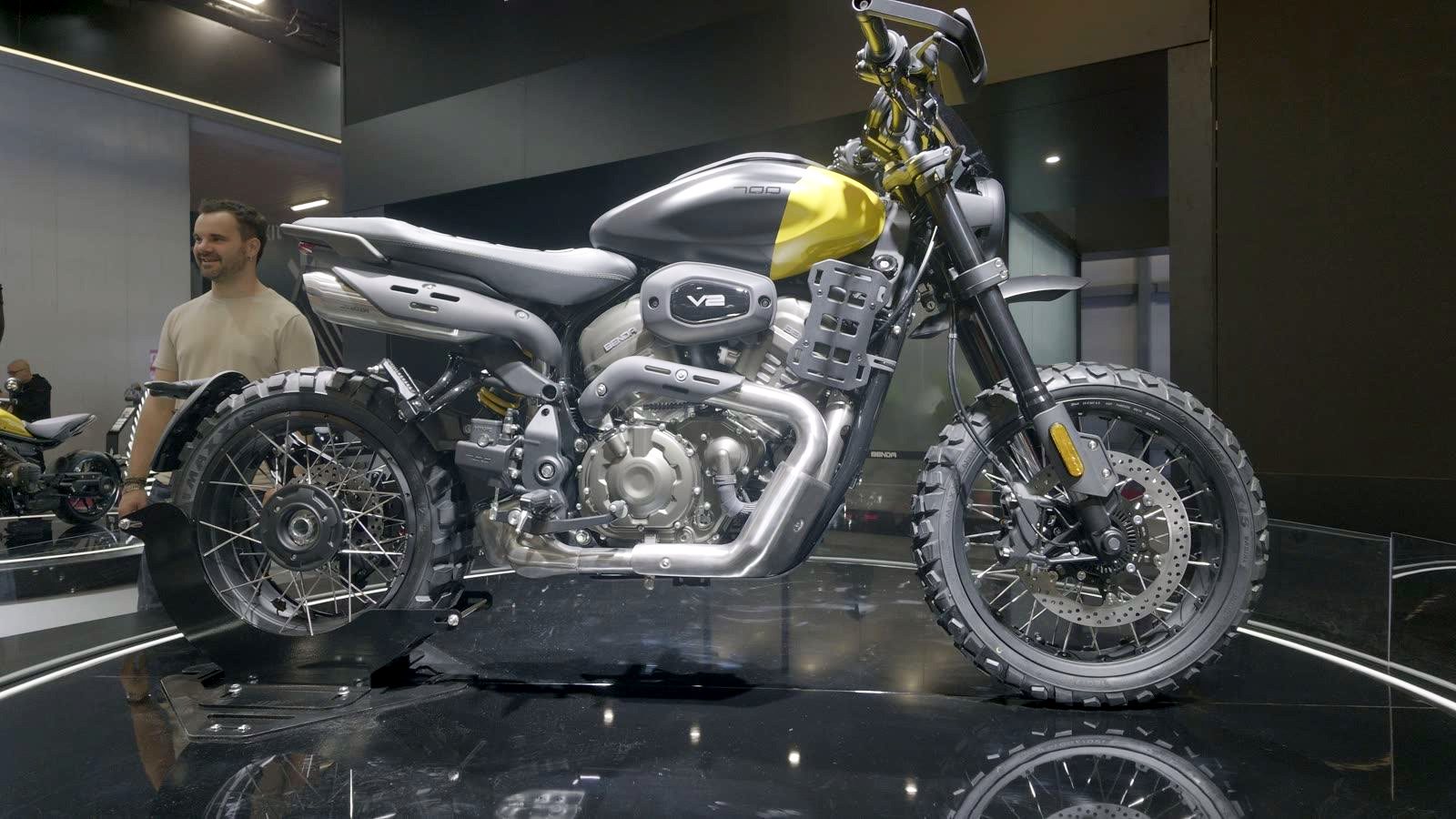
Benda earns the award for most questionable name of the show with the Benda Drover. More interesting was its hybrid: a small boxer engine with an electric motor underneath that looks like it came from Star Wars. Benda also showed a small-bore V4 using a version of an automated clutch similar to Honda’s E-Clutch, with the two actuators flipped to face up instead of down, plus a sci-fi scrambler on chunky knobbies and tubeless spoked wheels.
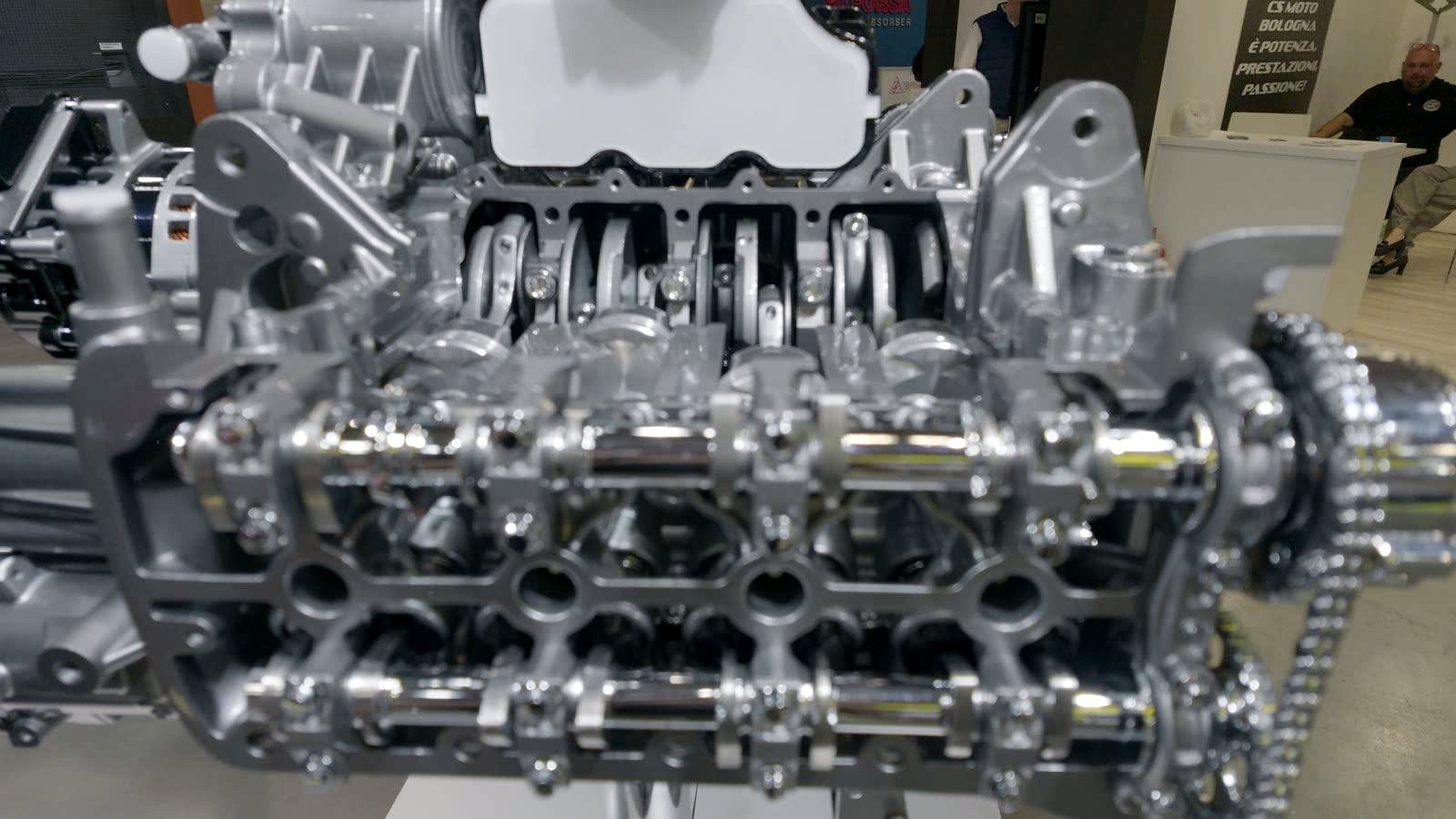
Then there is SOUO, another brand new to me, clearly aiming at the Gold Wing market with a 2,000cc flat-eight making 160 hp. I didn’t see a torque or weight figure listed. And Zero showed an SR/F 20th Anniversary Edition, a reminder that electric motorcycles are not so new after all.
What Was Your Favorite?
Lots of new motorcycles, and plenty to get excited about. Honda’s V3 is the one I would buy, the Flying Flea is the one I love, and tubeless spokes everywhere is the trend I’m happiest to see. What was your favorite bike of EICMA 2026, or your biggest disappointment? What did I miss? Watch the full video above and leave a comment on YouTube.