The Ducati Rear Brake Problem, and the $120 Fix That Actually Works
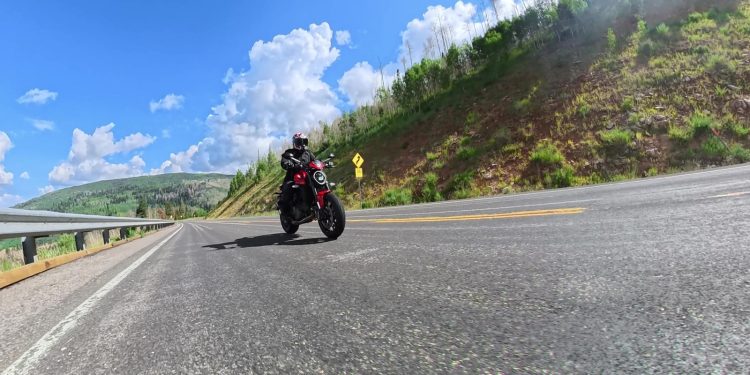
If you watched my review of this Monster, you already know the one thing that got under my skin. The rear brake. Turns out a lot of you have the same problem, because the comments were full of it. I said I would fix it, so that is the whole plan today. Let us just go sort it out.
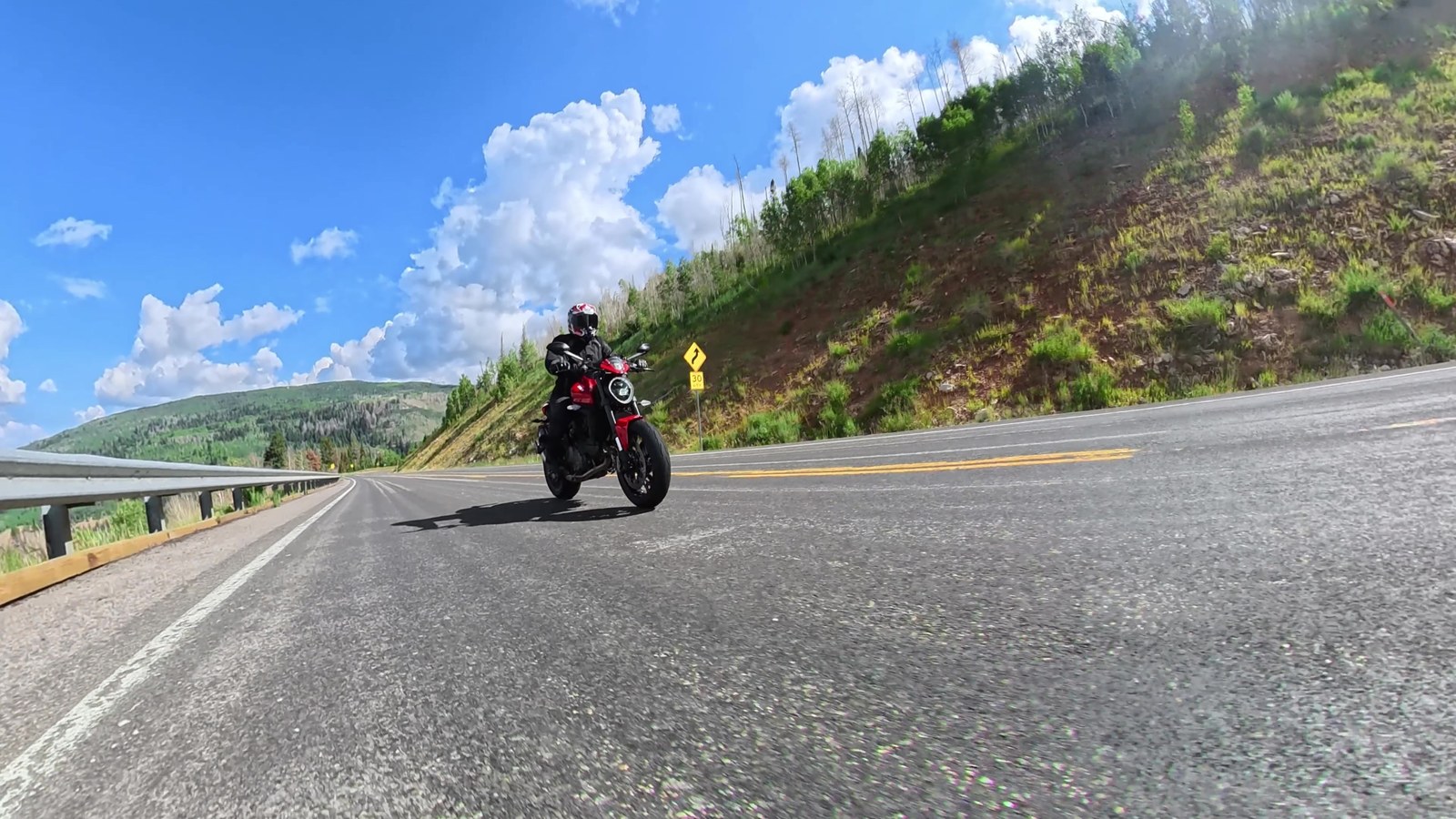
Quick thing before we dig in: this Monster is not even staying with me. It is our giveaway bike this year, so one of you is going to end up owning it, and I will tell you how at the end. Everything else about it is really good. The front brakes are excellent, the fueling is spot on, and it is the last of the desmo Monsters. It is a great bike. It is just the back brake. It is worthless. And the really annoying part is that you can bleed it, feel like a genius for about a week, and then it slowly goes soft on you again. It is not only this bike, either. Pretty much every Ducati I have owned has done some version of the same thing. So the question we need to answer is why it keeps coming back.
Why It Keeps Coming Back
So I made some calls. I talked to a couple of Ducati techs, guys who see these bikes every day, and I am not going to say who, because I do not want anyone getting grief for being straight with me. What they told me is the good part. This got serious enough that there was an actual NHTSA investigation and a recall over the rear brake hoses, thousands of bikes. And the official fix was to take the old hose off and put a new one on that looked identical and ran the exact same route, right past the exhaust in the exact same spot. That tells you something important. The hose was never really the problem. Where it runs is the problem.
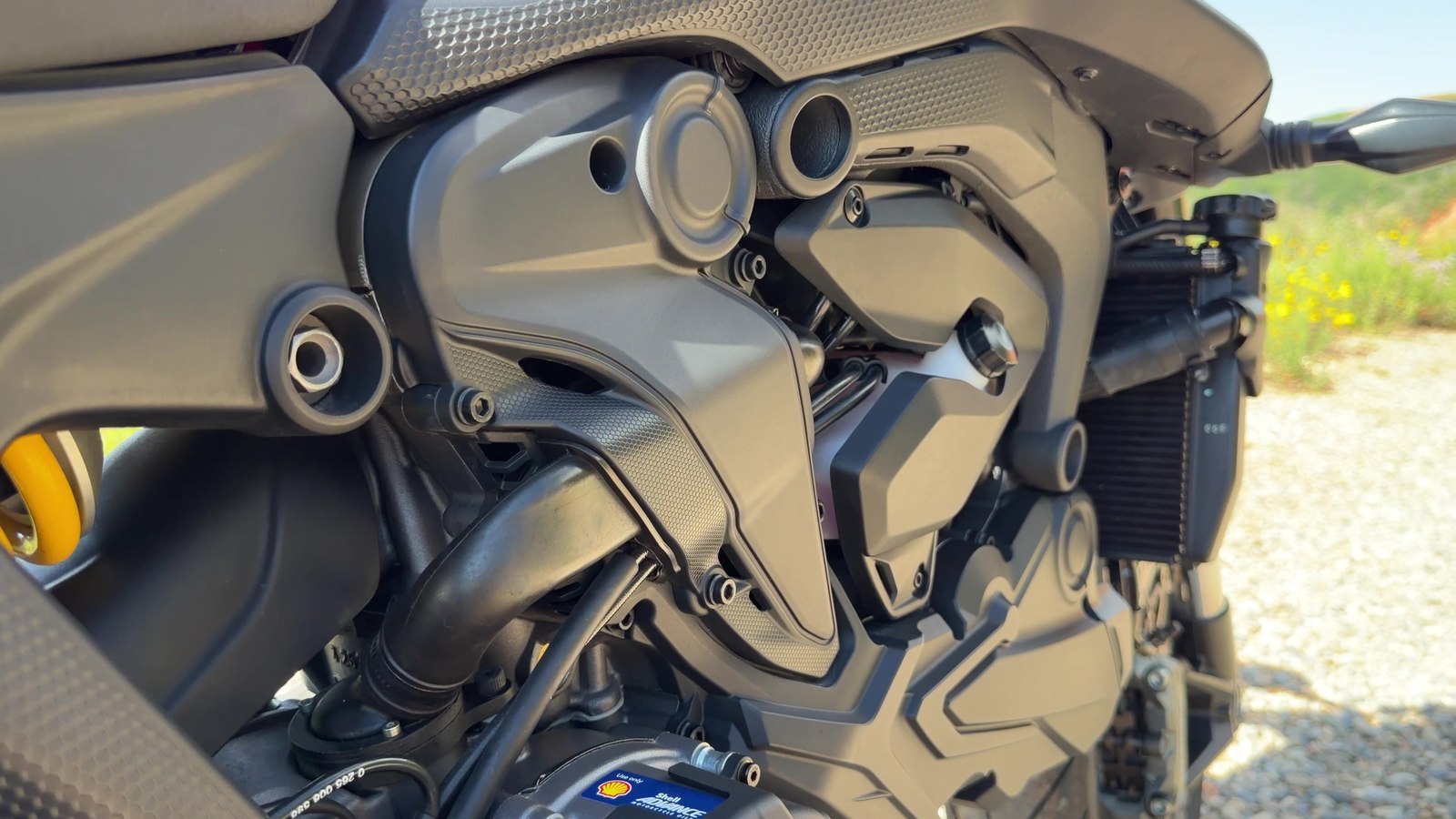
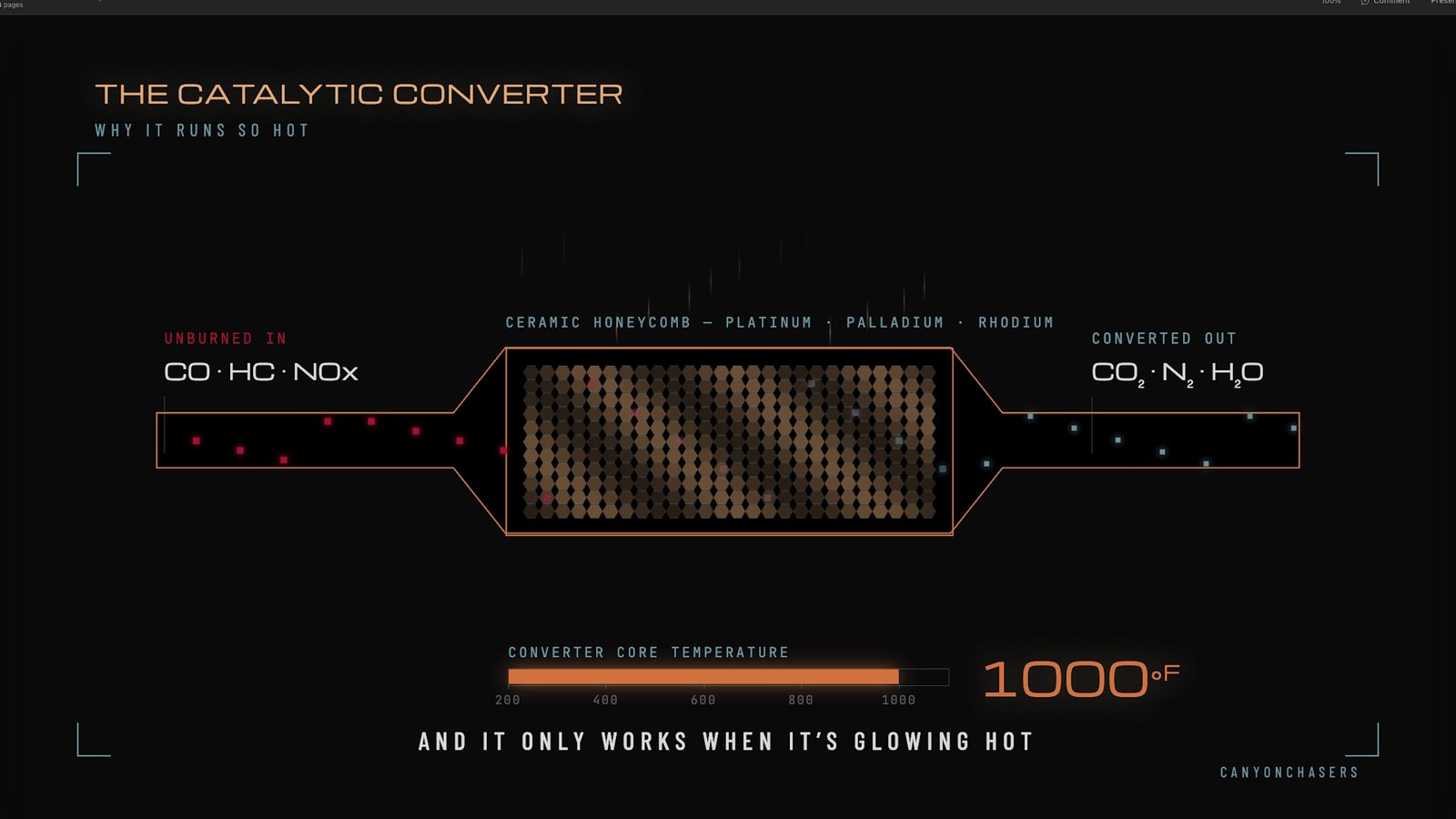
The catalytic converter is the culprit. To do its job it has to get insanely hot, and I am not kidding, upwards of a thousand degrees. Your brake fluid is sitting a couple of inches away trying to live through that. New hose, old hose, it does not matter, and even an aftermarket pipe will not completely get you out of it, because the line still runs past the rear headers. This is not unique to the Monster. These are 90 degree V-twins and V-fours making a ridiculous amount of power out of a fairly compact engine, and all of that comes with heat. That heat has to go somewhere, and it all seems to end up right where the rear brake fluid is trying to live. It honestly does not matter which model, they all seem to cook that back brake.
Now, if you go looking online, the popular fix is to hang a heavy weight on the brake pedal overnight. It sort of works, for about a day or two. All it is really doing is holding steady pressure so any loose air bubbles drift up to the reservoir, so the pedal feels firmer in the morning. The trouble is it does nothing about the water that has already worked its way into old fluid. So the next time the bike heats up, that moisture boils right back into vapor and back into the fluid. It is a band-aid, and a short-lived one. We cannot really move the line, and Ducati pretty clearly decided they were not going to. Which means the only thing left to change is the fluid.
The Science: Wet Versus Dry Boiling Point
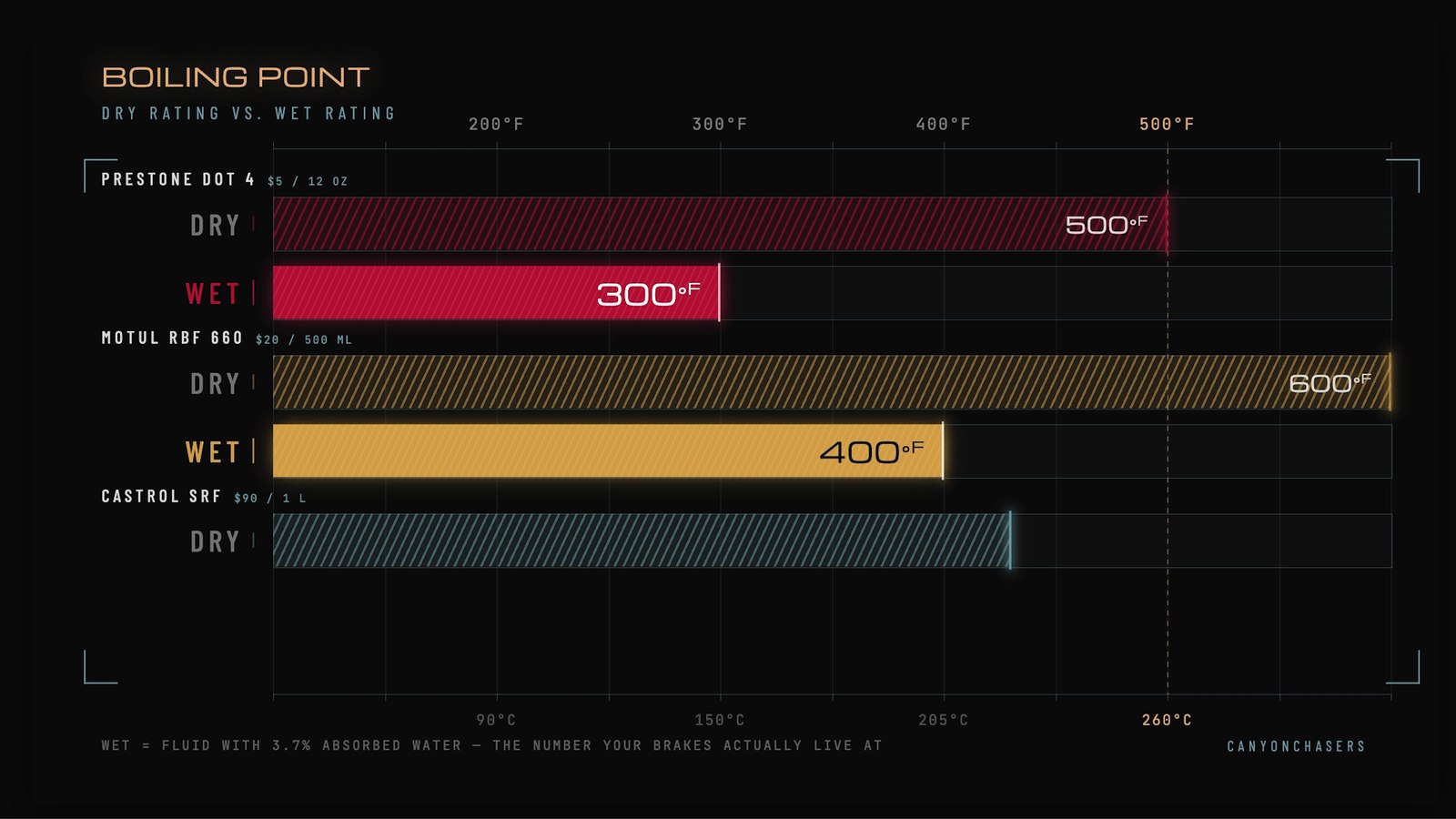
So why does a fresh bleed feel great and then go soft? Moisture. No matter how good your system is, water finds its way in, because brake fluid is hygroscopic, which is a fancy way of saying it drinks water out of the air. Fluid comes with two ratings, a dry boiling point and a wet boiling point, and the one that matters is the wet number. Dry is the fluid fresh out of a sealed bottle. Wet is the number your brakes are really living at.
A typical five dollar bottle of DOT 4 has a dry boiling point around 500 degrees, which sounds fine, but its wet boiling point is only about 300. Remember, that cat starts working around 400 and keeps climbing toward a thousand, so it is not a fair fight. Even proper track fluid, the good stuff at around 20 dollars for half a liter, is about 600 dry and only 400 wet. Better, and still not enough.
The $120 Fix
So what we need is some genuinely, offensively expensive brake fluid. This is Castrol React SRF Racing fluid. One liter, and these days it is priced just this side of a hundred and twenty dollars. A hundred and twenty. For brake fluid. I have owned motorcycles that cost less per liter to run. Here is the clever part, and it is the whole reason a single bottle costs what it does. The dry boiling point of SRF is actually a touch lower than that fancy track fluid, about 590 versus 600. But the wet boiling point, the number your brakes live at, is around 520. That is over a hundred degrees better than the track fluid and more than 200 better than the cheap stuff. 520 finally gets you into range of surviving hot exhaust a few inches away.
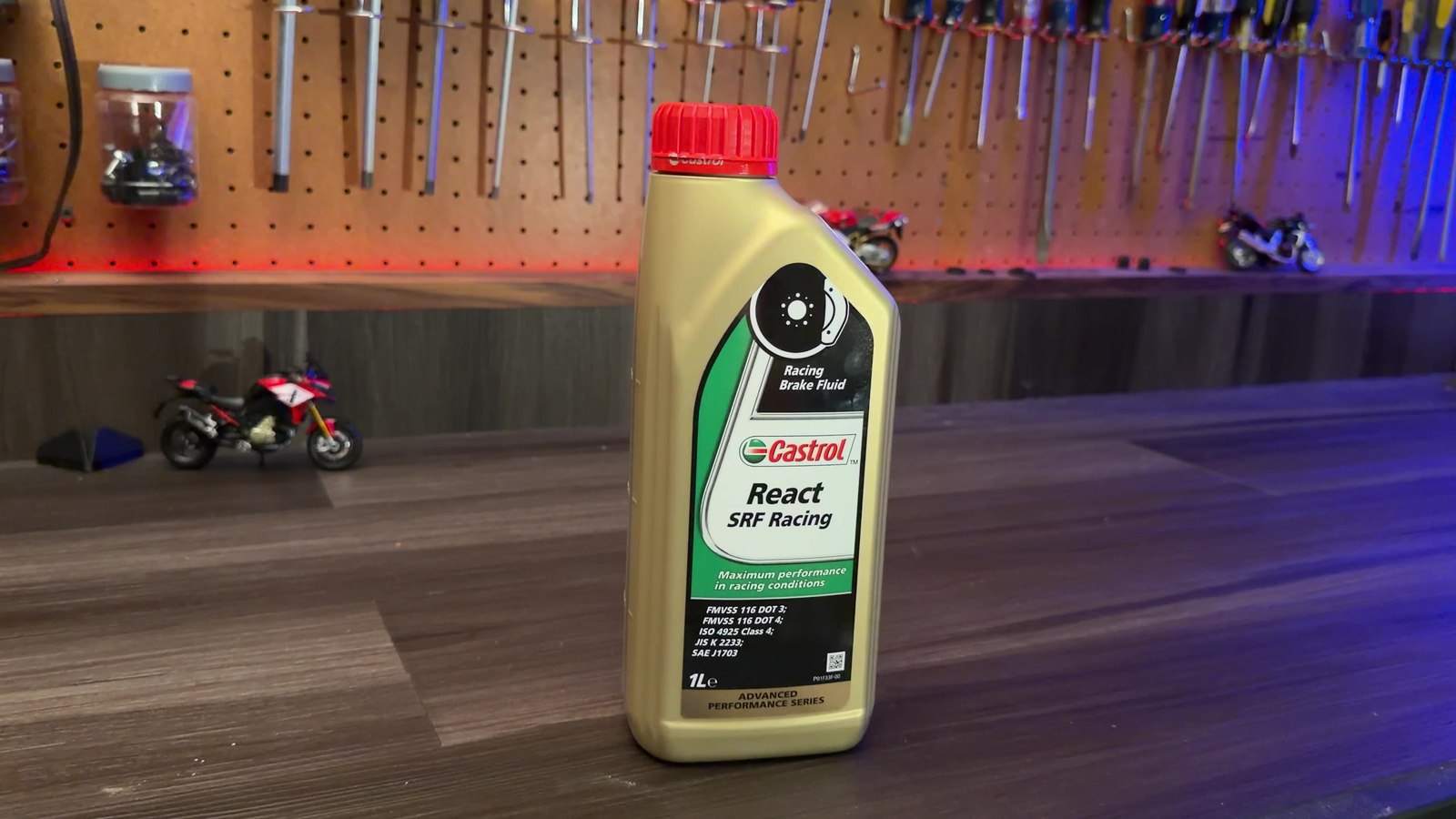
Does it actually work? I am not about to send you off to spend that kind of money on my say-so. I have been running this stuff in my Ducatis for well over a decade, and you can expect the rear brake to go two full seasons on a single bleed. Put normal fluid in that same bike and I would feel the rear starting to fade within a few hundred miles. Your mileage really can vary. Ride in the rain a lot and you will still be bleeding it more often. But if you want a back brake that actually does something for more than a single tank of gas, this is what gets you there.
One catch. Because SRF drinks moisture the moment you break the seal, an open bottle does not get to sit on a shelf and age gracefully. Once it is open, the clock is ticking. Which is why, in my garage, the day that bottle opens, it is SRF day, and everything gets SRF. The Ducati. The other Ducati. The Aprilia, the Honda, probably the lawnmower and the weed wacker. If it has a hydraulic anything, it is getting the 120 dollar racing fluid, because the alternative is pouring money down the drain, and I have poured quite enough already. The move, if you have friends who ride, is to gang up, split the cost of a bottle, and flush as many bikes as you can. Turn one absurd purchase into several sensible ones.
The Fix
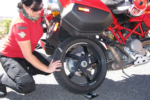
Here is the fast version. Get the rear wheel up on a stand if you can. You do not have to, it is just easier, and a foldable rear wheel stand or a center stand will do it. Now the single most useful trick in the whole job: you want the bleeder valve as high as you can get it, because air floats. Ducati likes to put the bleeder at the bottom of the caliper, which is exactly where you will trap air and old fluid. So we reposition the caliper to get the bleeder up high. Free the caliper, support it up high without straining the line or the ABS wire, crack the bleeder just enough, and flush the black stuff through until clean SRF comes out the other end. A pneumatic vacuum bleeder pulls it through fast.
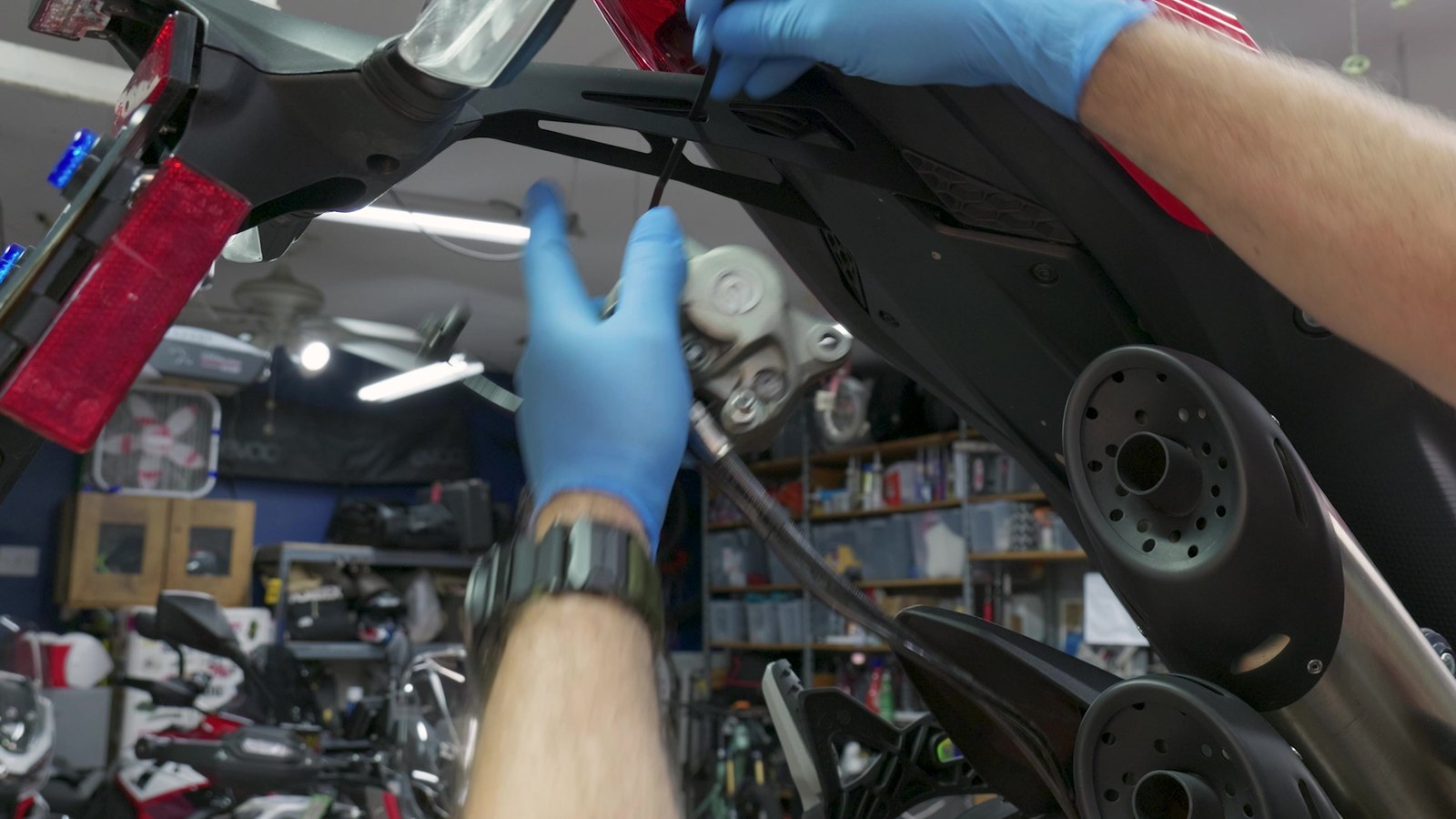
One warning. With the caliper off the bike, do not test your progress by pressing the pedal. All that does is push the pads together, and then you get to pry them apart before anything goes back together. Ask me how I know. And that is it.
This Video Is Sponsored by TEMU
TEMU is running a zero-dollar shopping event. Punch code kja8392 into the search bar in the app, not at checkout, and you can unlock select items for free. Download TEMU.
Pneumatic Vacuum Brake BleederPulls 120-dollar fluid through a stubborn caliper fastGet It ›Foldable Rear Wheel StandGets the back wheel up without a proper rear standGet It ›This Bike Could Be Yours
So back to that giveaway I mentioned at the start. This Monster, fresh 120 dollar brake fluid and all, could be yours. Head over to fanathem.com/canyonchasers to get your entries in. While you are there you can grab some exclusive merch, and there are a bunch of fun ways to stack up bonus entries. Patreon members get bonus entries too. The last bike we gave away went all the way to South Carolina, so honestly, anyone, anywhere in the continental United States, and I think it should be you.
The last desmo Monster, fresh brake fluid and all, could end up in your garage. Every entry supports the channel, and Patreon members get bonus entries. Enter before midnight on August 28.
Enter the Giveaway ›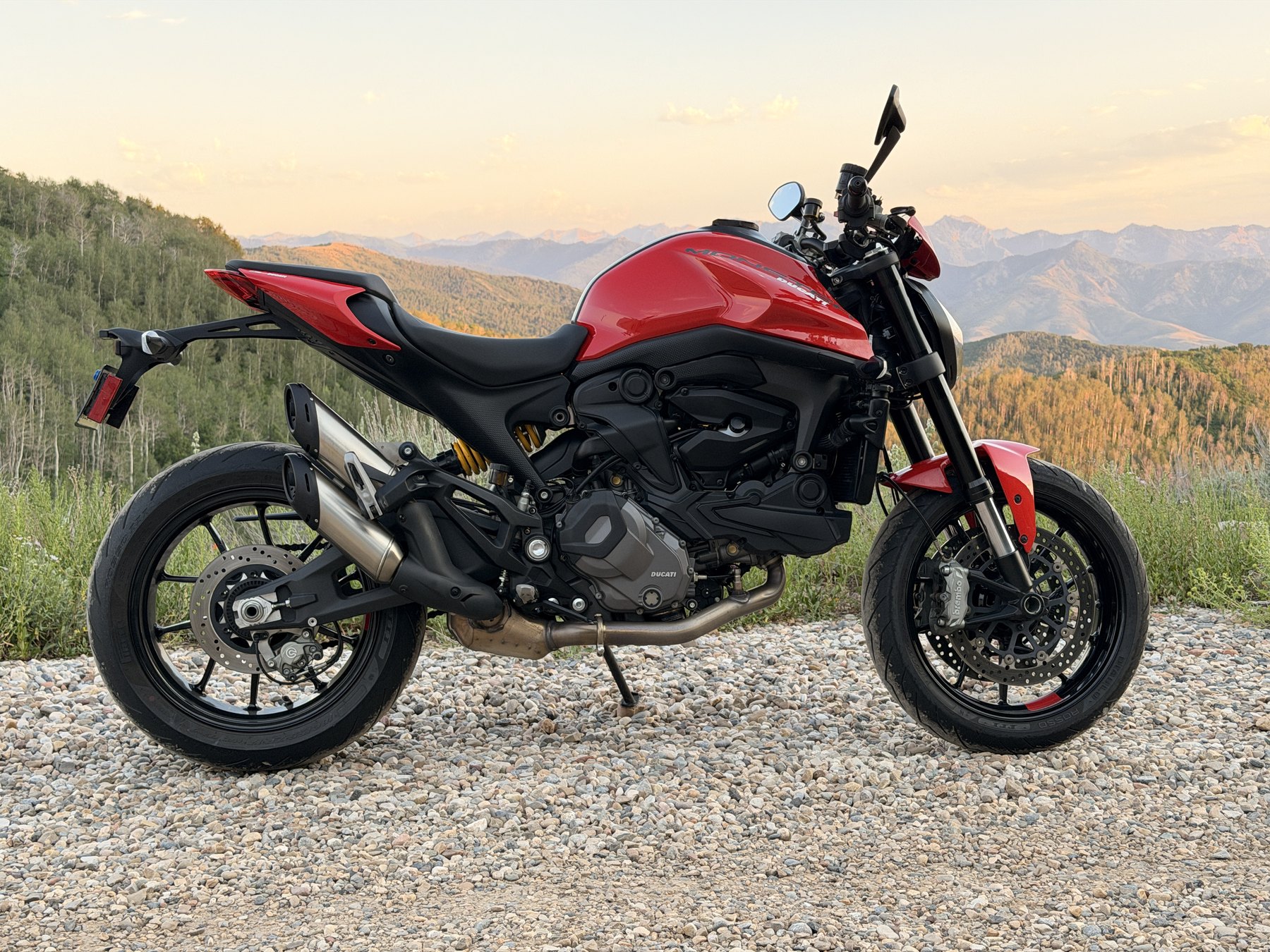
Cameras, Comms & Drone I Use
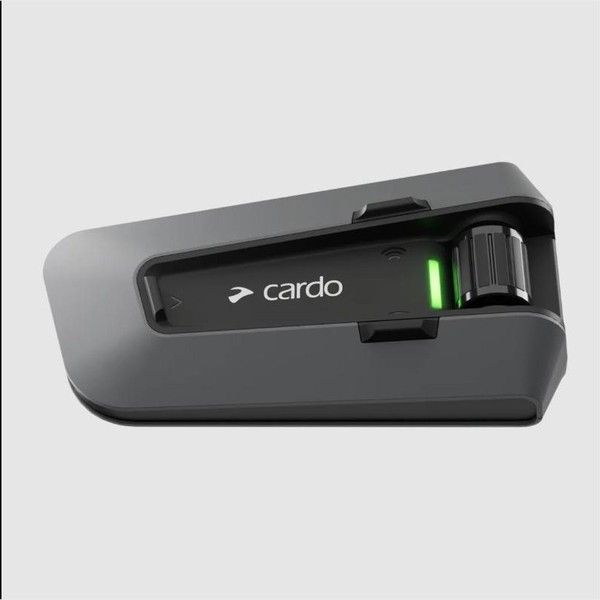
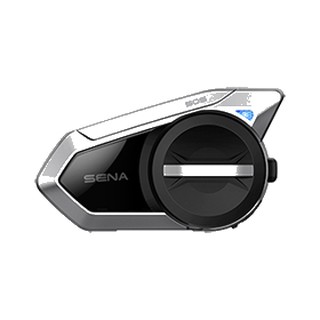
How I film and stay connected on the bike. Cardo coupon code: RideWell. Sena coupon code: CanyonChasers.
Comms HeadsetCardo Systems PacktalkShop CardoMesh HeadsetSena 50SShop Sena360 CameraInsta360 X5Shop Insta360360 DroneAntigravity A1Shop Antigravity