2026 Honda CB1000F Review: Riding Behind Freddie Spencer
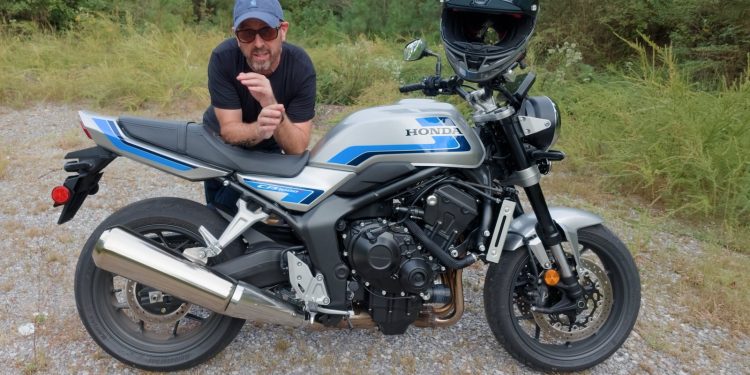
Most retro motorcycles are homesick for the 1950s and 60s: Bonnevilles, café racers, scramblers and a great deal of brown leather. They’re lovely bikes, every one of them. But I was born in the early 70s, so when I buy one of those I’m not remembering my youth. I’m borrowing my dad’s.
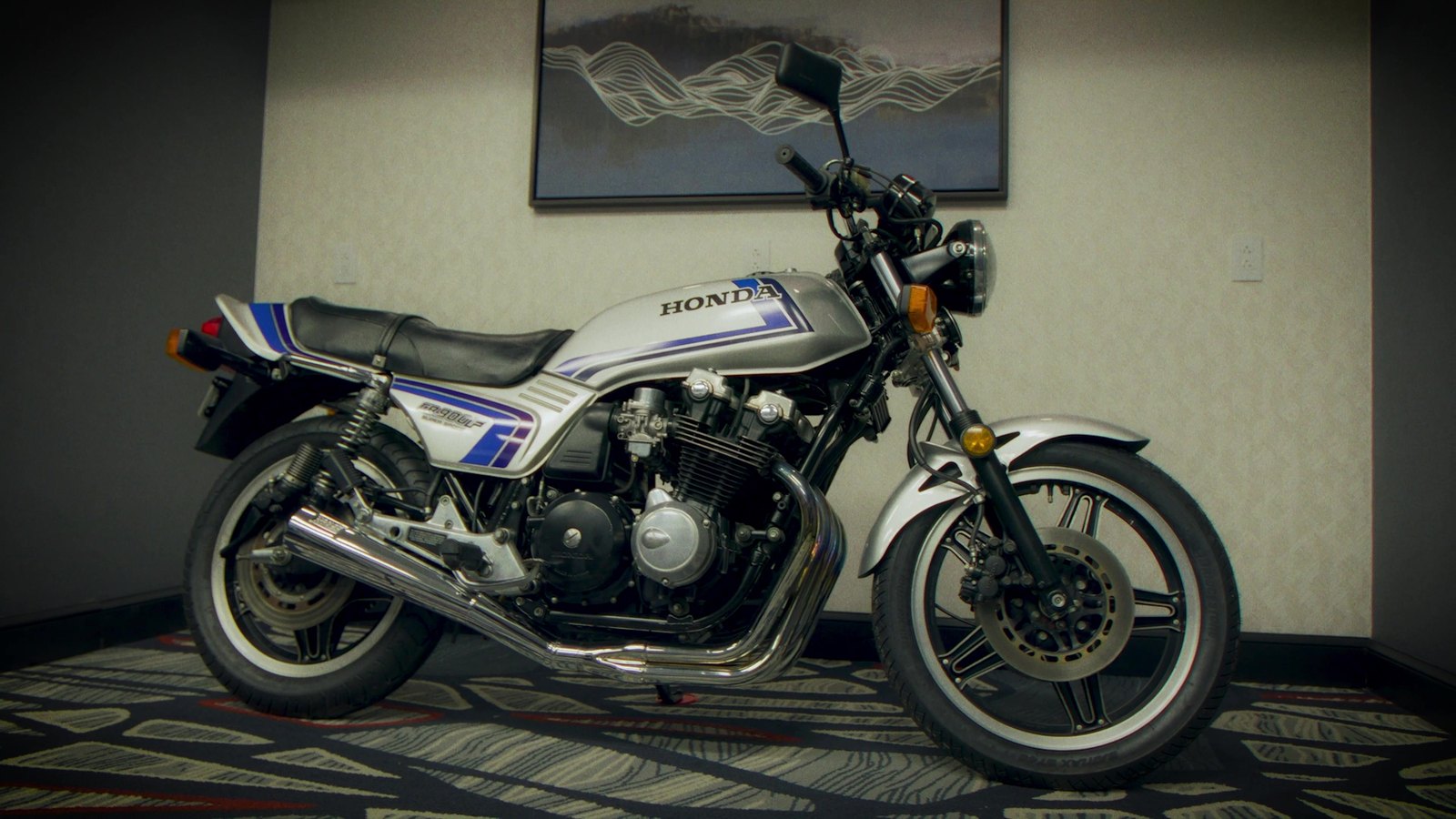
Honda’s new CB1000F is aimed squarely at riders like me. It wears the lines of the 1979 CB750F, the bike my uncle owned and the one I rode, once I was old enough to operate a motorcycle but still too young to buy a beer. I couldn’t believe a motorcycle could go that fast. The launch bikes even wore the silver and blue of Freddie Spencer’s Daytona superbike, and Spencer himself was riding with us in Alabama.
So I’ll admit up front that I’m not objective. The real question is whether this is a better motorcycle, or whether I’ve simply been bought with a paint job.
Why the CB750F Still Matters
The original CB750 landed in 1969 and changed motorcycling. Four cylinders, an electric starter and a front disc brake arrived at a time when the British were still asking you to kick it and hope. It’s the bike the word superbike got attached to.
Then the 70s happened. Kawasaki’s Z1 showed up, Suzuki followed, and Honda’s world beater spent the back half of the decade being politely overtaken. For 1979 Honda started over, with a new twin-cam, 16-valve engine built on lessons from the endurance racers that had been winning across Europe.
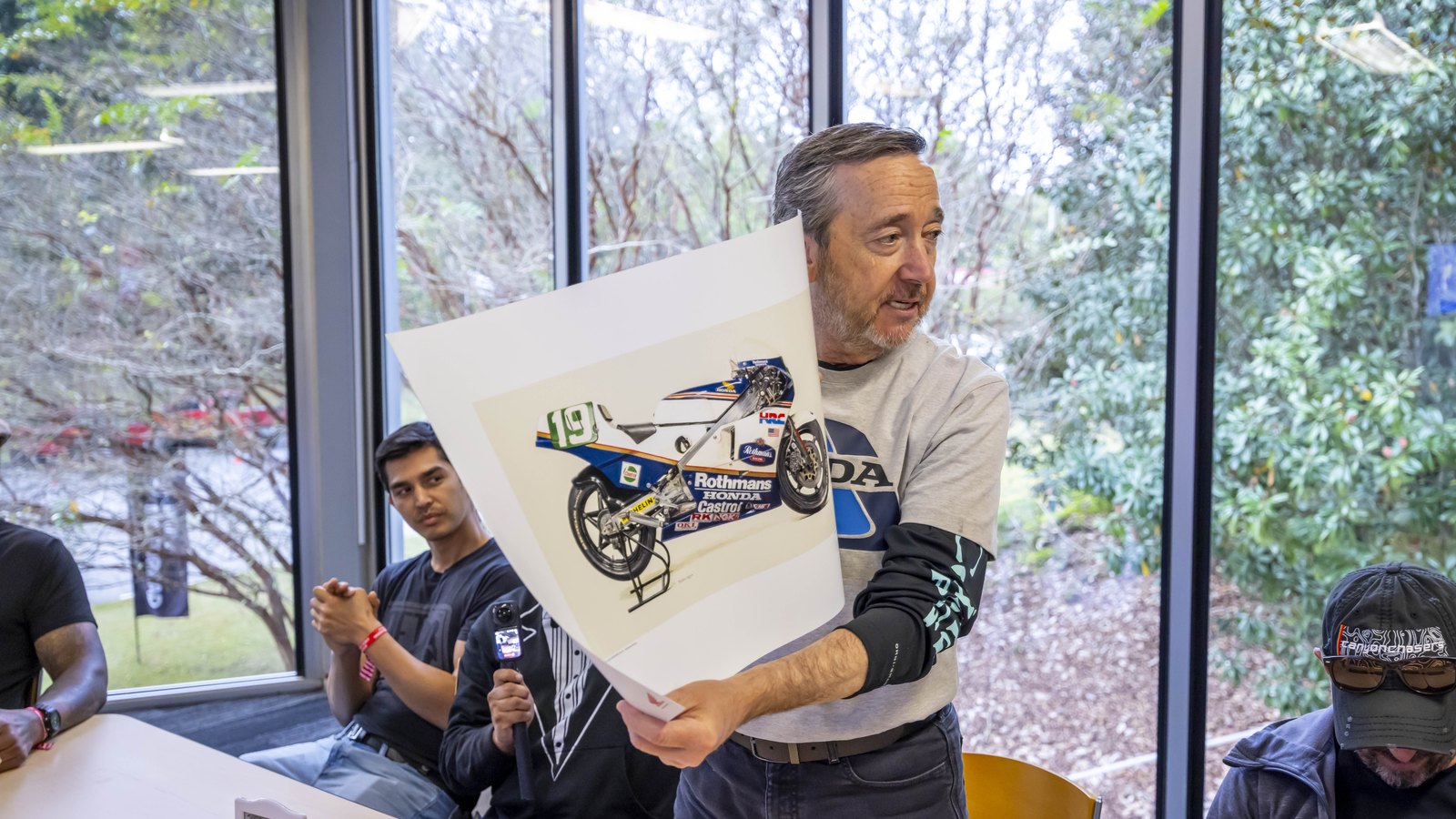
American Honda handed one to a teenager from Louisiana. Bored out to just over 1,000cc and fitted with factory race parts, it went up against Eddie Lawson’s Kawasaki. Freddie Spencer never won the AMA Superbike title on it, finishing third in 1980 and second in 1981. In 1982, though, he won the Daytona superbike race on a silver and blue number 19, and that’s the bike everybody remembers. A year later he was the 500cc world champion.
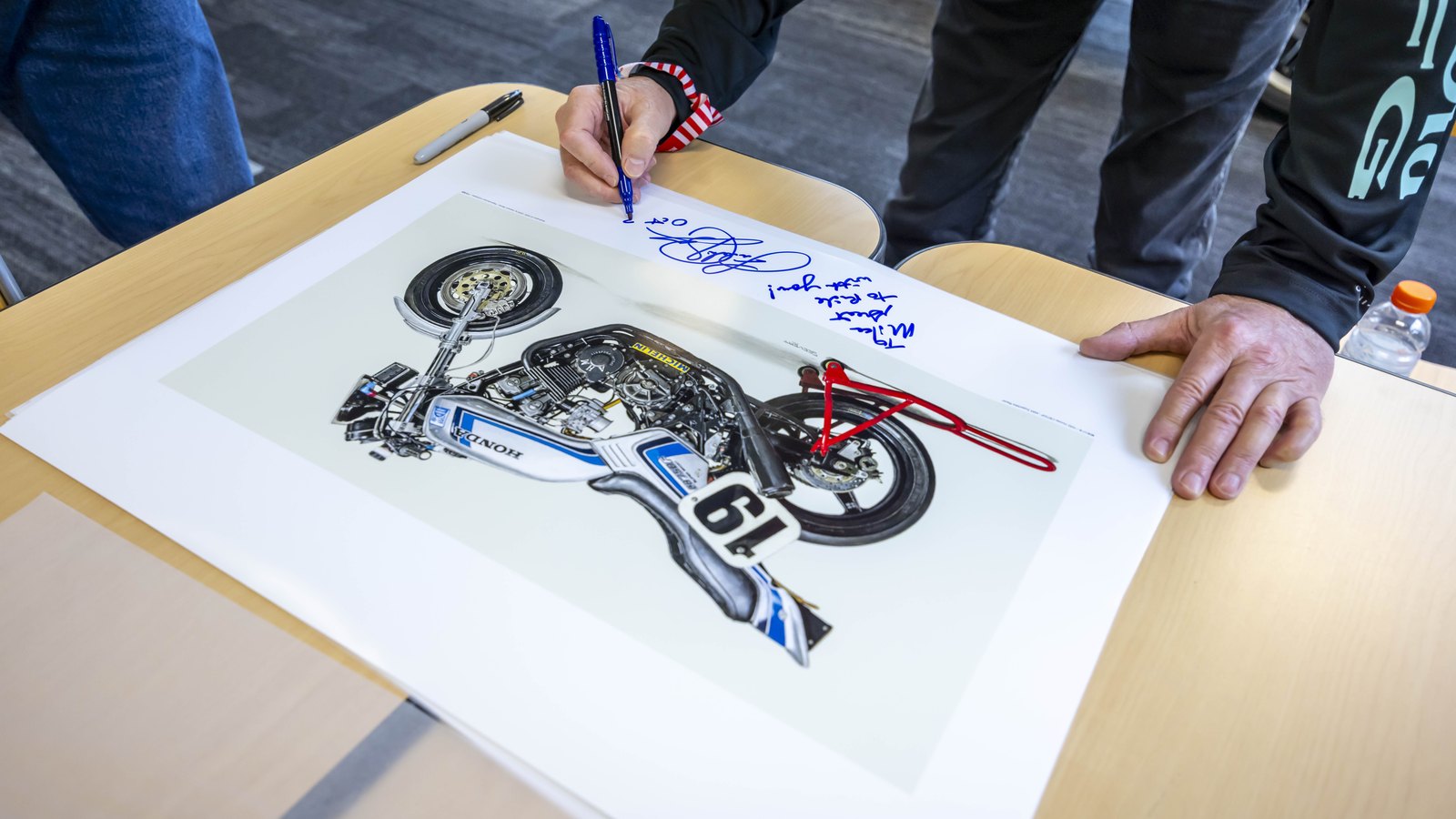
That’s the lineage, the paint and the man it belongs to. Forty-seven years later, Honda put all of it on a modern Hornet.
A Hornet With Different Priorities
On paper, the CB1000F is a CB1000 Hornet. In the US, where we only get the SP version of the Hornet, the closest comparison is the Hornet SP with its special parts removed. The Öhlins shock becomes a Showa and the Brembo calipers become Nissins. Those are two of Honda’s oldest suppliers, the companies Honda calls when it wants a part to do exactly what Honda asked.
The engine is a different story. Honda didn’t detune it with a laptop and go to lunch. It changed a lot of small details, and almost all of them point the same direction.
Intake Funnels Tuned Like Organ Pipes
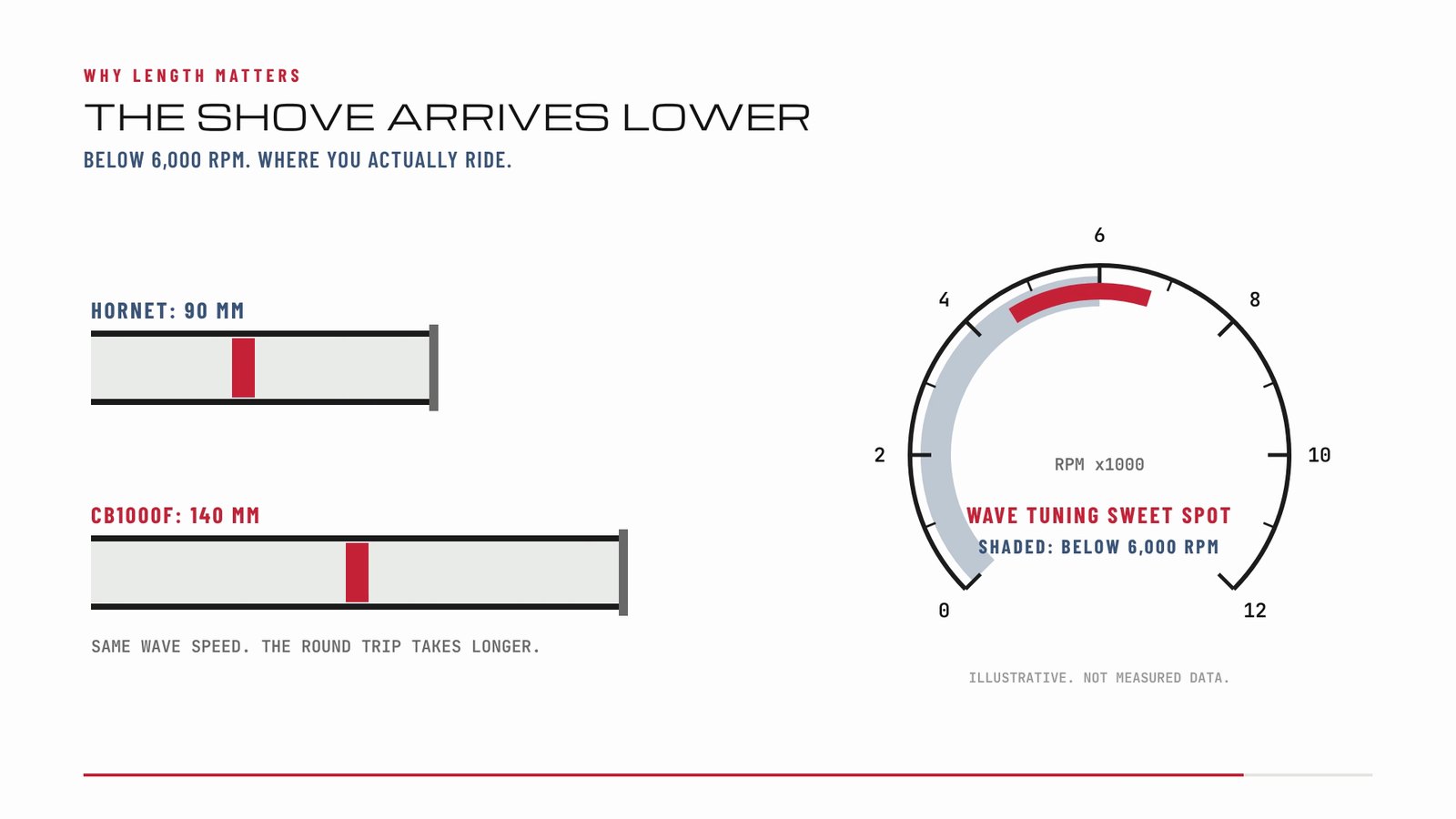
The intake funnels are 50mm (about two inches) longer than the Hornet’s, 140mm instead of 90mm, and their narrowest point shrinks from 42mm to 36mm. That matters more than it sounds.
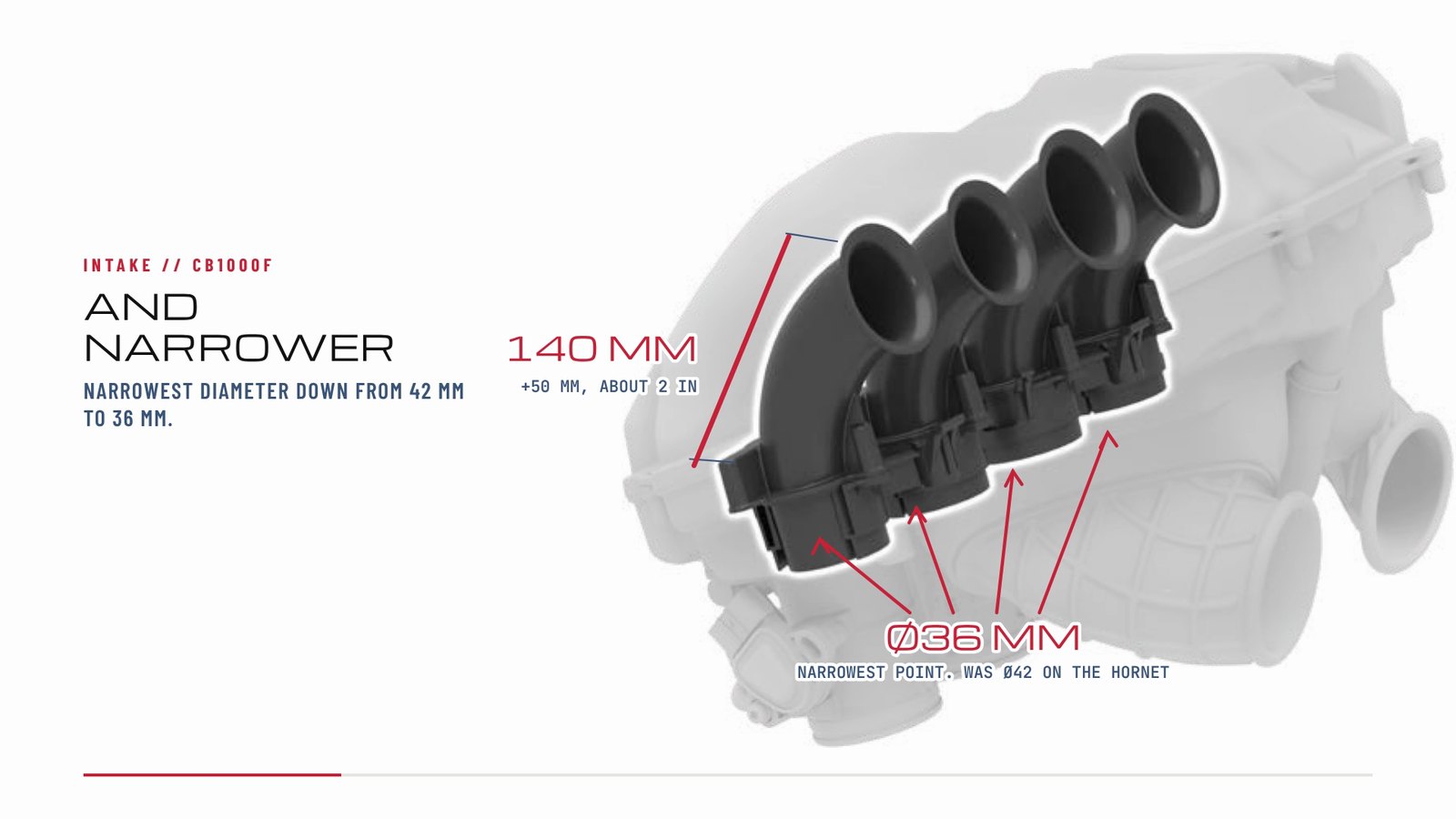
An intake behaves like an organ pipe. Every time the intake valve opens, a pressure wave travels up the funnel and bounces back. If it returns just before the valve closes, it shoves extra air into the cylinder. A longer pipe plays a lower note, so that free shove now arrives lower in the rev range, below 6,000 rpm, which is where we actually ride.
Then Honda did something deliberate. The funnel inlets on one pair of cylinders are 50mm across and on the other pair 40mm. The engine still fires evenly, like any inline-four, but two cylinders breathe a slightly different note from the other two, so the intake sound has a pulse to it. Big, big, small, small.
The camshafts get the same treatment. Each pair of cylinders runs slightly different valve timing, purely to give the engine an uneven cadence. For years people have complained that Hondas are too perfect and lack soul, so Honda designed an imperfection for the sake of sounding good, specified it in millimeters, and will build it into every engine identically. A hundred thousand miles from now it’ll still be imperfect in exactly the same way.
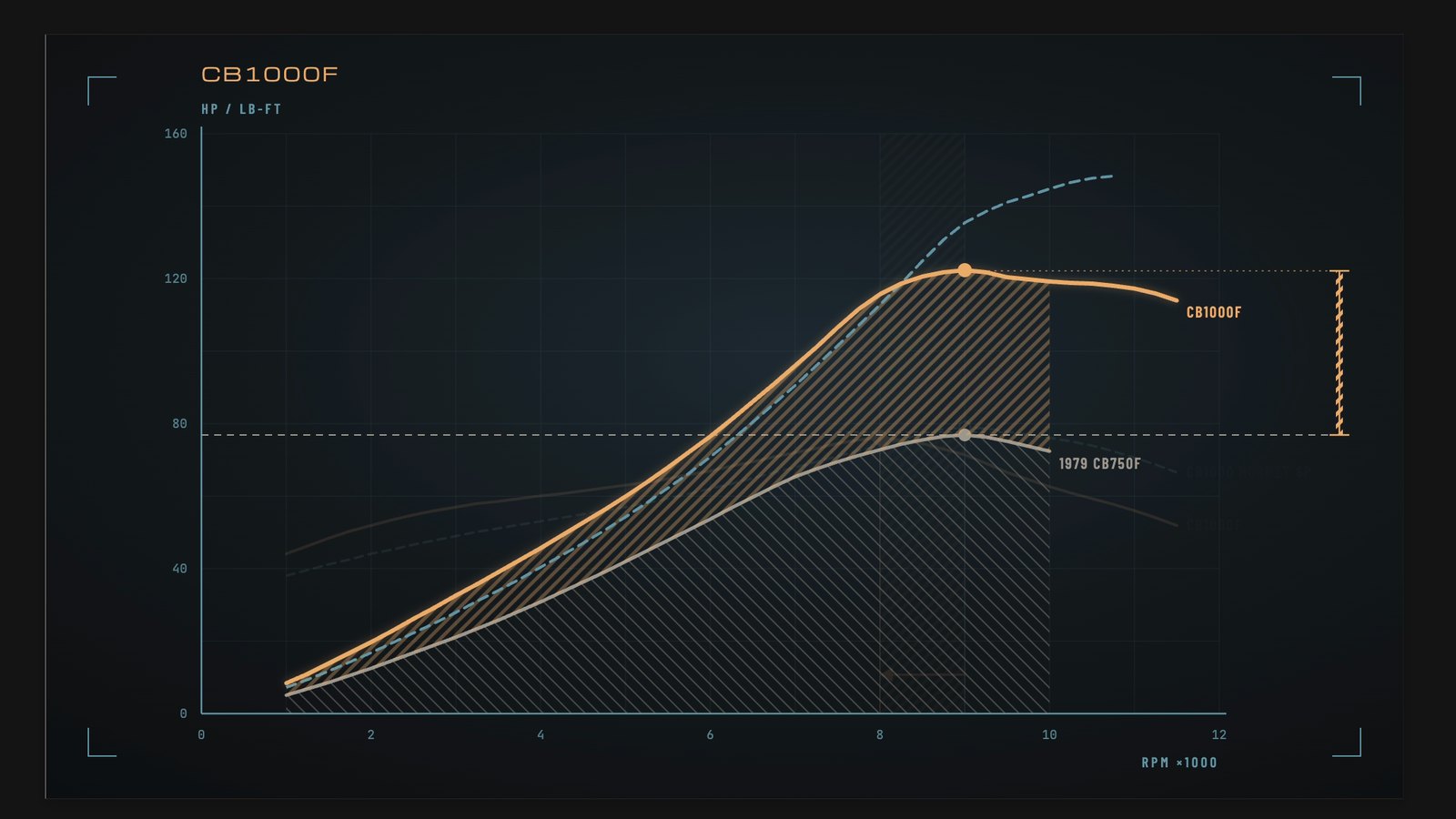
Peak torque is roughly what the Hornet makes, it just arrives about 1,000 rpm sooner. Gearing backs that up. Honda shortened the lower gears for more drive out of corners and lower-speed manners, and the bike settles to calmer revs at highway speed. The cams, the intake and the gearing all aim at the same part of the tachometer.
Does It Feel 30 Horsepower Slower?
My uncle’s CB750F made around 80 horsepower, and it rearranged my understanding of physics. This one makes over 120, and the complaint online is that Honda neutered it. Either motorcycles got a lot faster or we got a lot harder to impress.
It gives up about 30 horsepower to the Hornet SP. I went looking for that missing 30 and, in any way that matters on a road, I couldn’t find it.
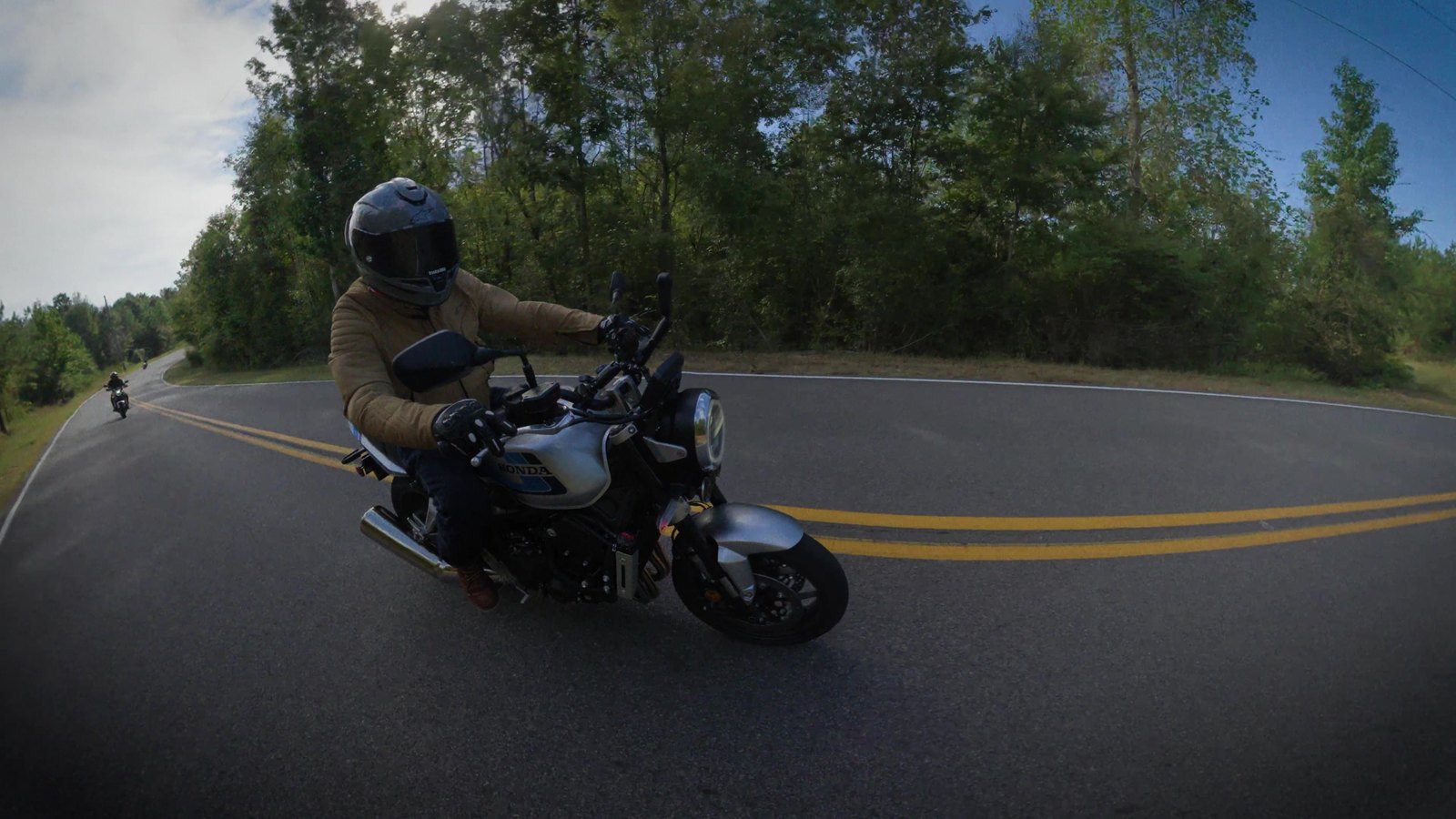
At small throttle openings the engine is calm, polite and predictable. Open it properly anywhere past roughly 3,000 rpm and it pulls hard. Same gear, same rpm. The only thing that changed is how far you twisted your wrist. It feels like two motorcycles sharing one engine, and your right hand decides which one shows up.
The SP doesn’t work that way. It has one personality and it’s in a hurry, saving its best for the top of the rev range, where you need a racetrack or a lawyer. The CB1000F does its best work in the part of the tach you visit every day.
Honda has written software to simulate the absence of software.
I know the sound talk reads like marketing, and I may simply be an impressionable man. But I think the sound is the real magic of this bike. It’s hard to put a number on and almost impossible not to notice. I kept revving it just to hear it again. I’d love to hear it with an aftermarket pipe, but the intake might be the best instrument in the orchestra, and I’d worry a loud exhaust would drown it out.
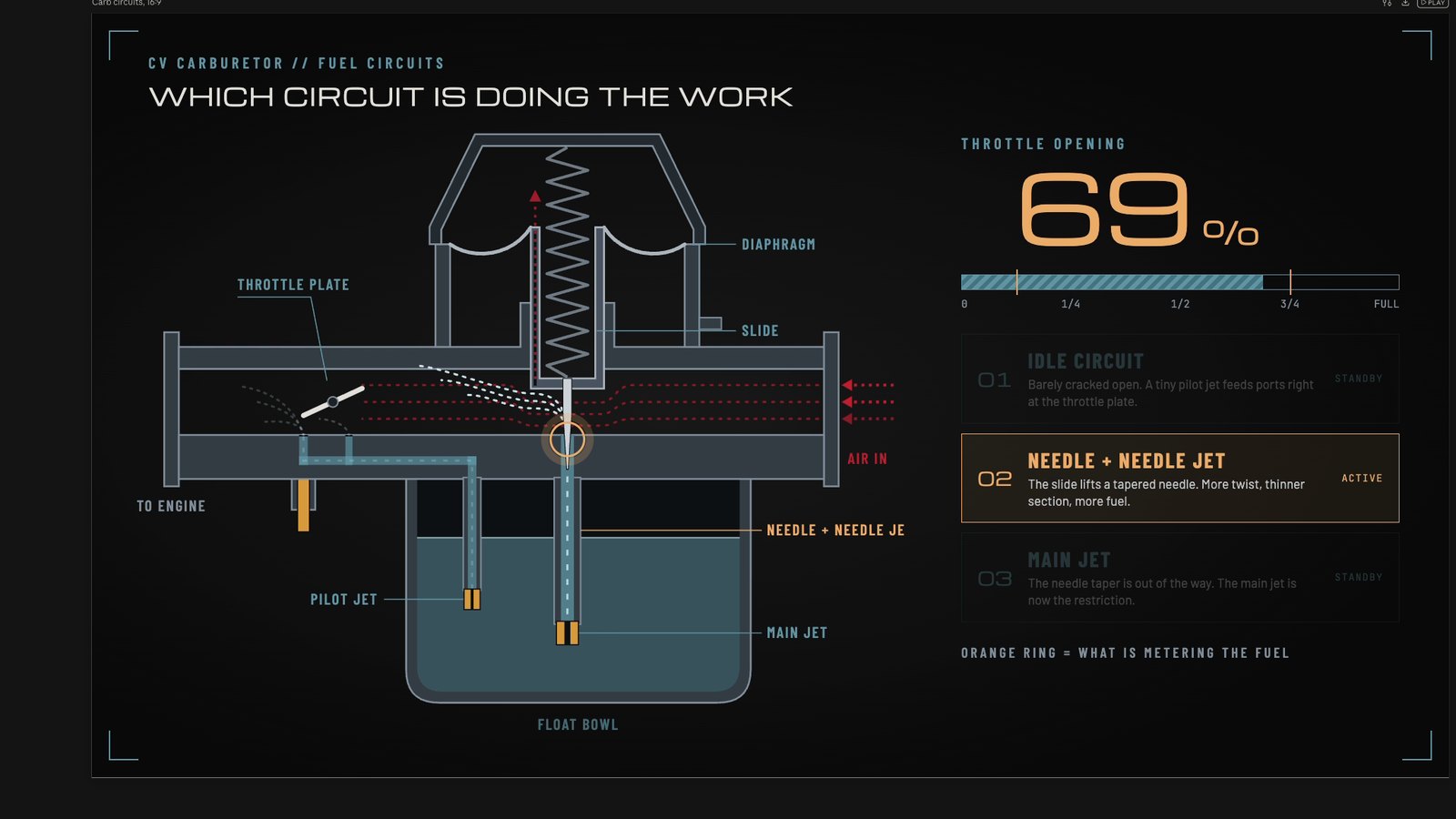
The Standard riding mode adds to the theme. Honda programmed its throttle response to feel like a bank of carburetors. Once again the too-perfect Honda has engineered a trait to capture the feel of an era when photos came from a Kodak Instamatic.
The Hidden Upgrade: a 6-Axis IMU
There’s one thing the CB1000F has that the Hornet SP doesn’t: a six-axis IMU, which brings cornering ABS and lean-sensitive traction control. So the 150 horsepower SP with the Italian brakes has no idea whether it’s leaned over, while the retro bike with the sensible engine knows exactly where it is at all times.
The cheap joke is that Honda put the lifeguard at the kiddie pool. I don’t think that’s what happened. Nobody brags about an IMU. You can’t see it in a parking lot and it never wins a spec sheet argument. It matters once, on a cold morning, in a corner you’ve ridden a hundred times, before your tires are fully warm. Honda spent the money on the day after reviewers like me finish nitpicking and go home, and the bike lives in your garage.
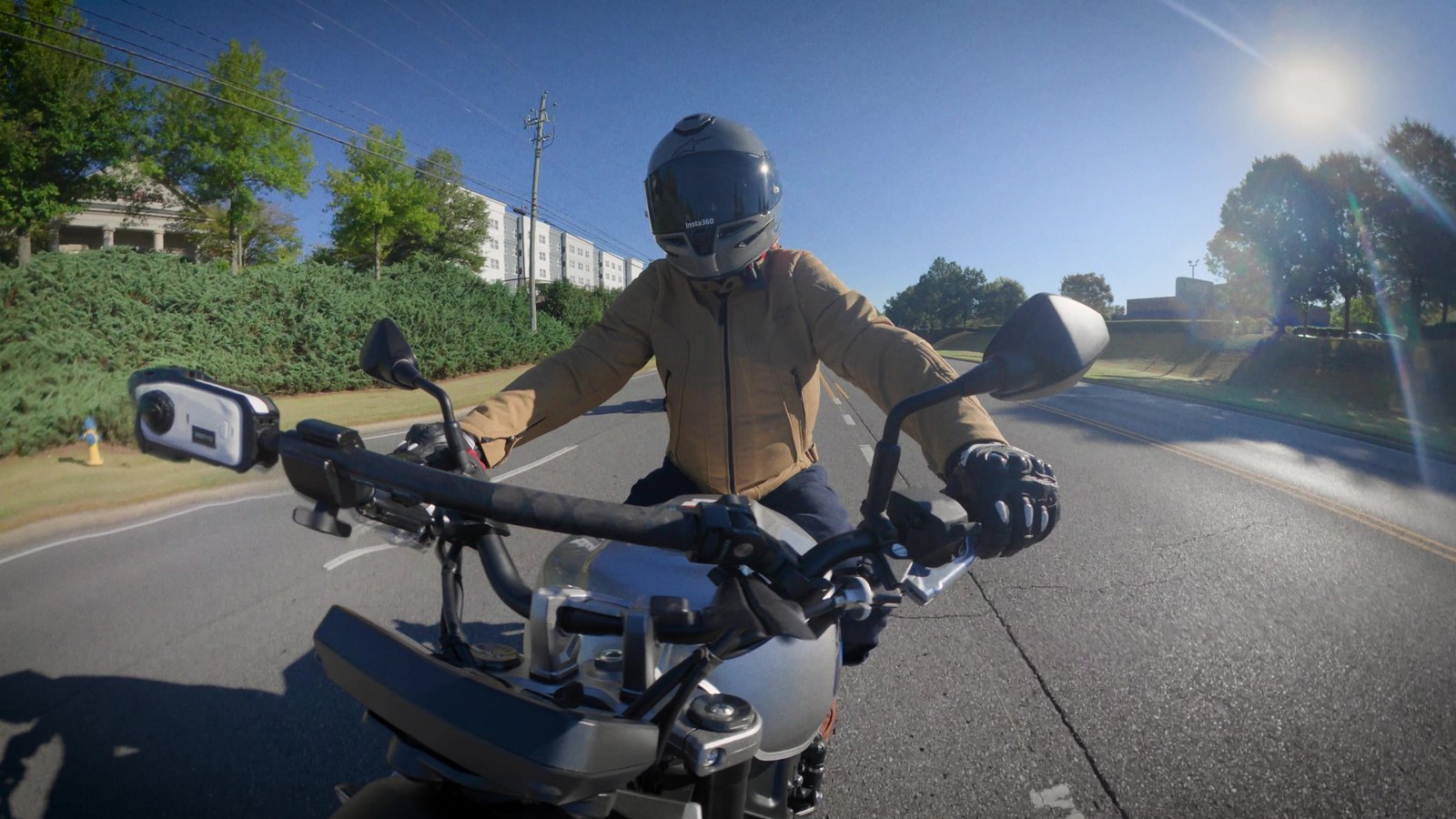
For the record, I never felt the ABS or traction control intervene. I’d love to credit my skill, but I was riding behind a three-time world champion, and I spent most of the day concentrating very hard on not becoming a story he tells at dinner parties.
Handling: Squirmy or Pinpoint?
Honda says the CB1000F handles like a middleweight. Every manufacturer says that about every large motorcycle, usually right before you try to push it backward out of a parking space. This time there’s a number behind it. The 25 degrees of rake and 98mm of trail are within a millimeter of the CB750 Hornet I just tested, a bike that weighs about 50 pounds less. Honda apparently has one front end it’s very happy with.
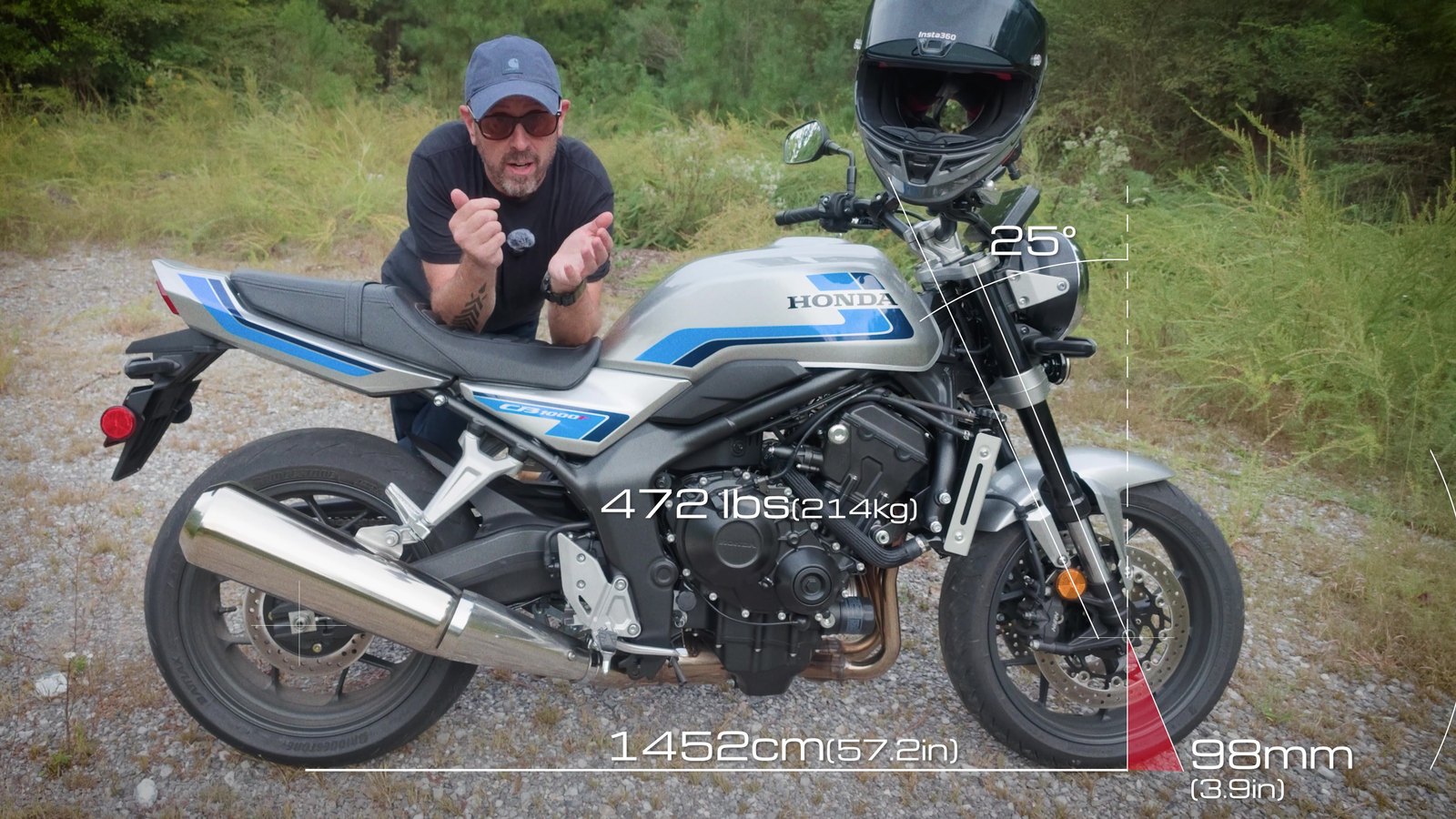
Identical geometry doesn’t guarantee identical feel, though. The CB1000F is longer, heavier, runs a fatter rear tire and is sprung softer than the Hornet SP. Other testers couldn’t agree on it either. One British tester said it squirmed on the brakes and moved around under power. A German tester at the same press launch called it pinpoint. They can’t both be right unless they were riding at very different speeds.
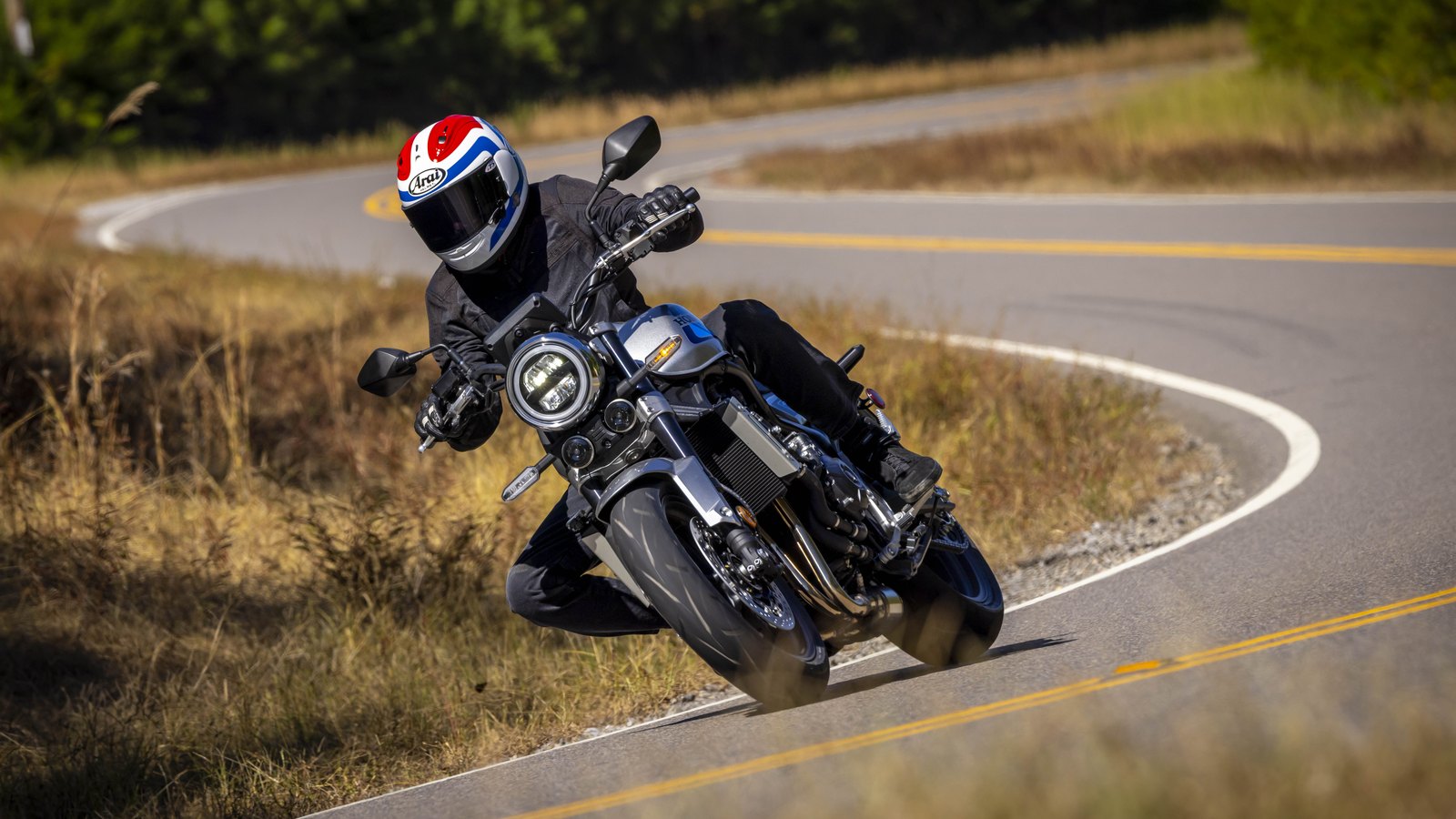
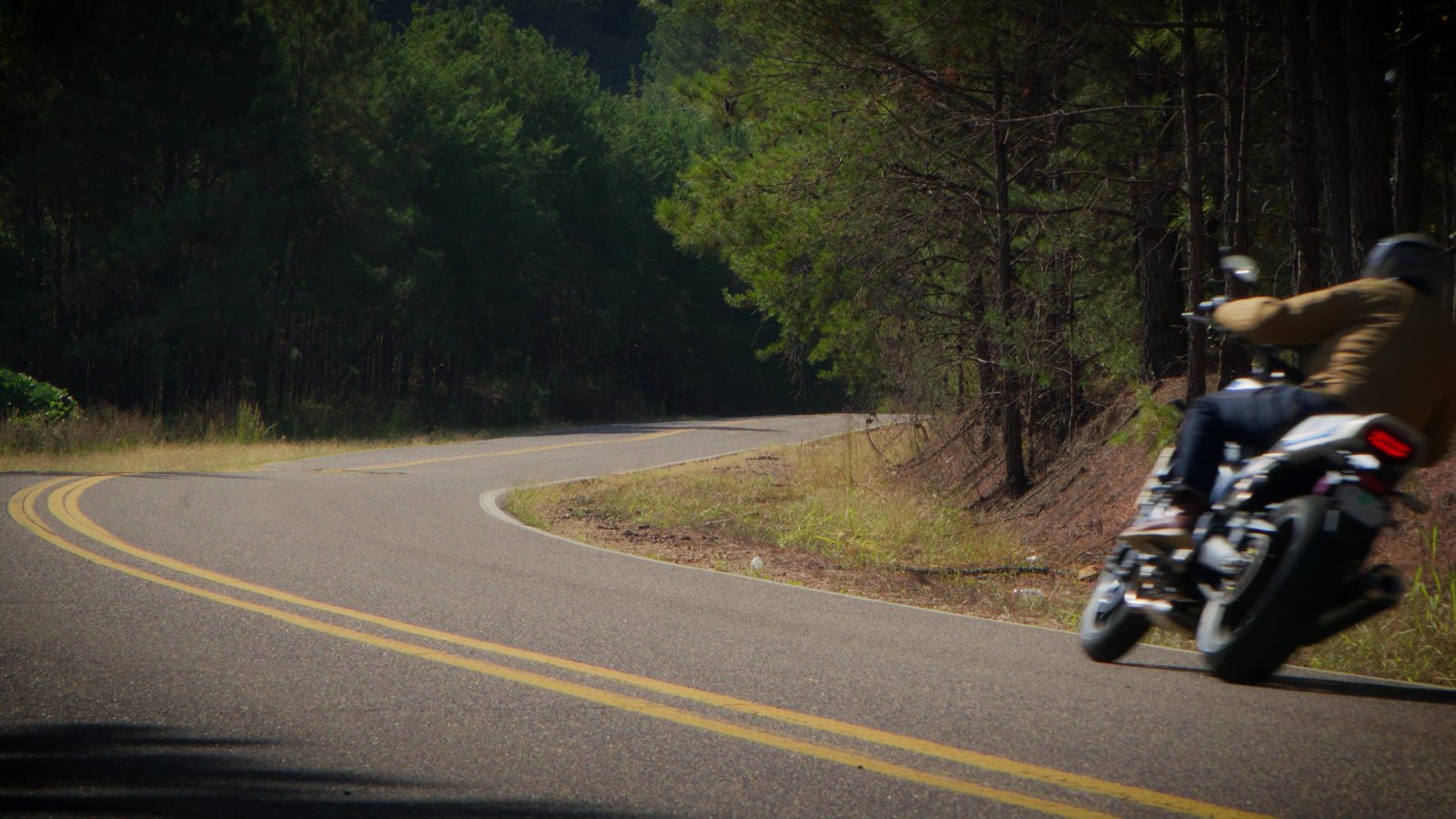
I have a theory. Honda told us it ships most bikes on two tire brands in case of supply problems, and the CB1000F comes on either the Dunlop Sportmax D214 or the Bridgestone Battlax S22. I picked a Bridgestone bike because I already know I like that tire, and on it the bike never squirmed. I rode it as hard as it took to keep Freddie Spencer in sight while he was being polite about it, and it stayed predictable and compliant. No drama.
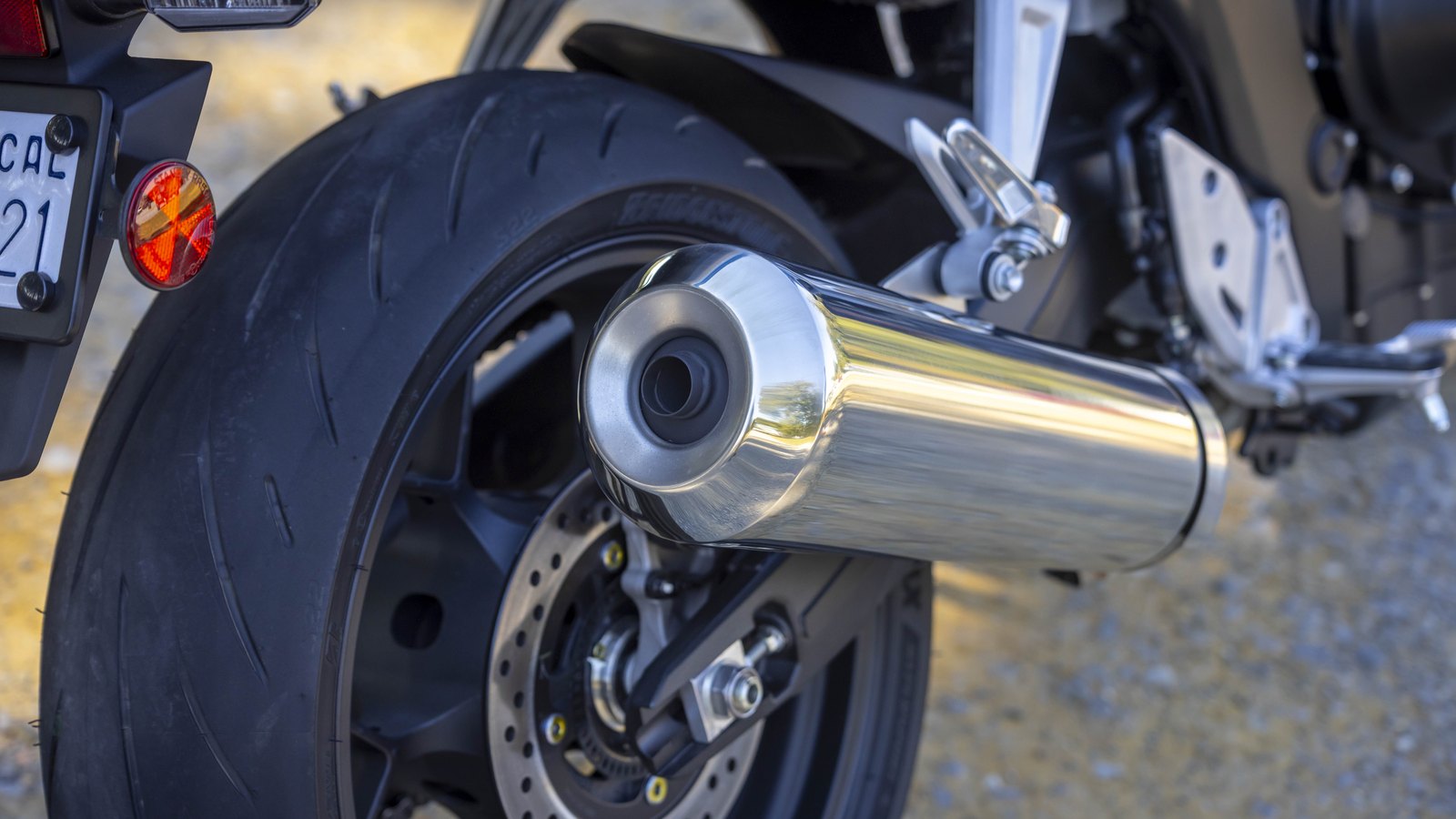
I’ve also spent plenty of time on the D214, though only on middleweights, and its carcass is noticeably softer than the S22’s. I can’t prove the tire made the difference. But if two people disagree that much about one motorcycle, I’d check what it was wearing. Neither tire would put me off, and when the first set wears out, what you fit next will say more about how you ride than anything Honda chose for you.
CB1000F vs the Hornet SP
I’ve put a lot of miles on the Hornet SP, and on paper the two are mostly the same motorcycle: the same chassis with different subframes, so the same rake, trail and wheelbase. They don’t feel the same. The SP is taut. It wants you forward over the front tire, going faster than you planned. The CB1000F sits you lower and more upright. It’s clearly sprung softer, but the damping is good and it’s happy at whatever pace you pick.
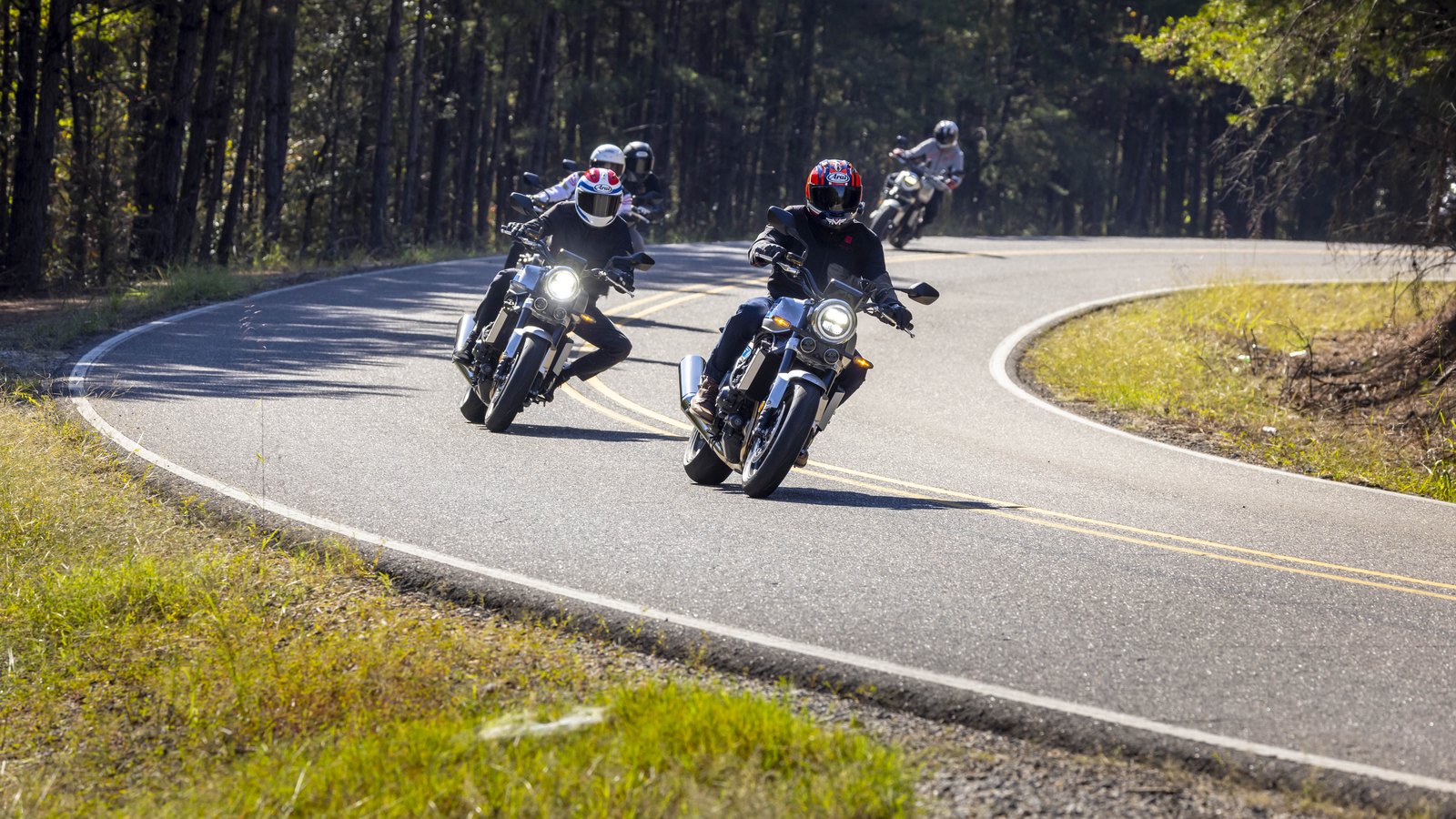
My suspicion is that the SP’s Öhlins and Brembos are the harder-edged, racier package. Blindfold me and I could tell you which bike I was on, though at that point I’d have other concerns. Still, the Showa suspension and Nissin brakes are no slouches, and nothing about them makes the CB1000F any less fun.
Brakes
Honda says it changed the expansion rate of the brake hoses for a softer, more progressive lever. Somebody in Japan has a spreadsheet of hose swelling, but I couldn’t feel it. I’d have to ride this back to back with a standard Hornet, which we don’t even get in America, and I doubt my fingers are calibrated that finely anyway.
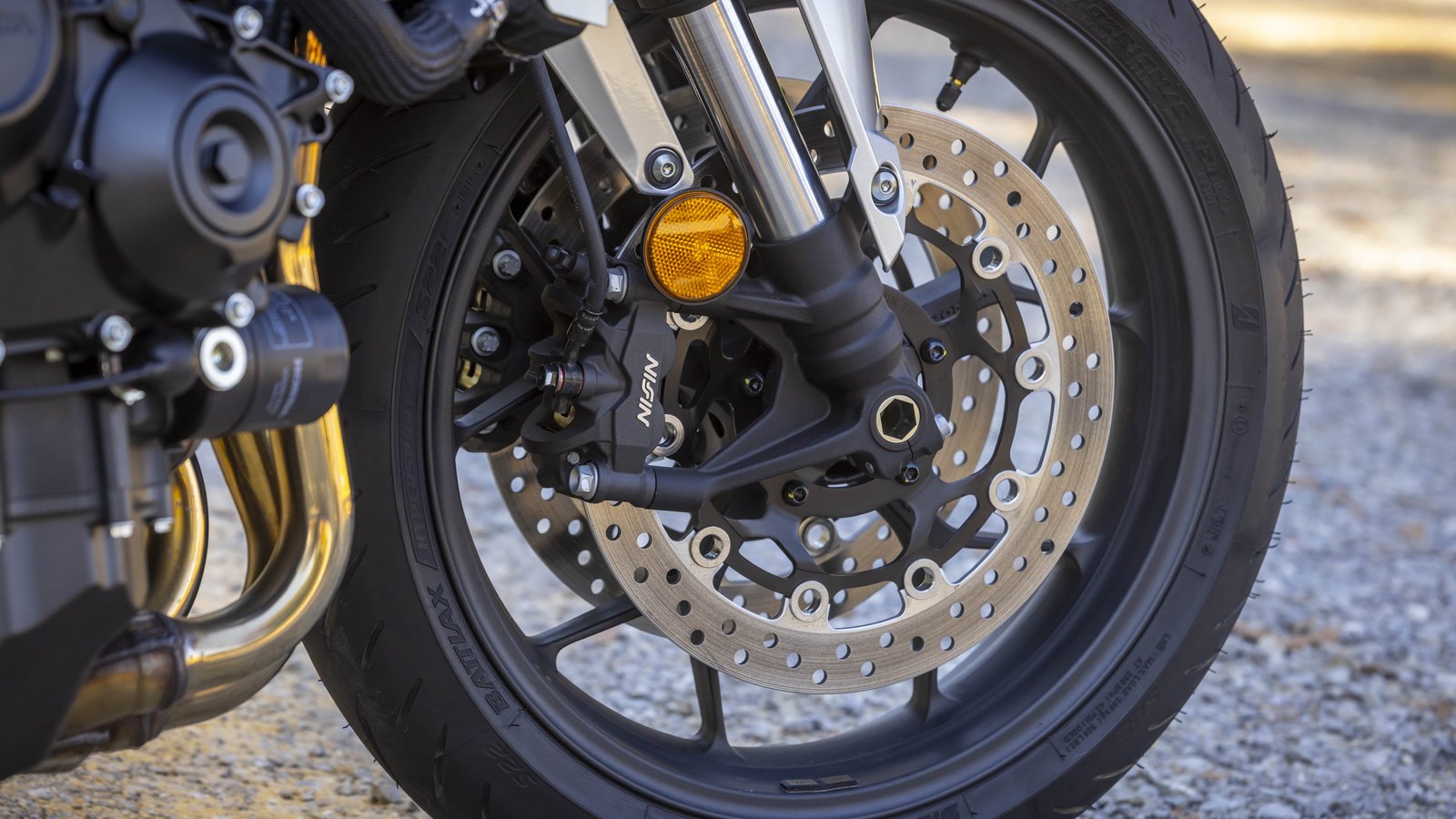
What I can tell you is that the Nissins stop the bike well and never gave me a reason to think about them. I’d fit stainless lines eventually anyway, which means Honda spent months perfecting a hose expansion I’d undo in an afternoon.
Details Worth Noticing
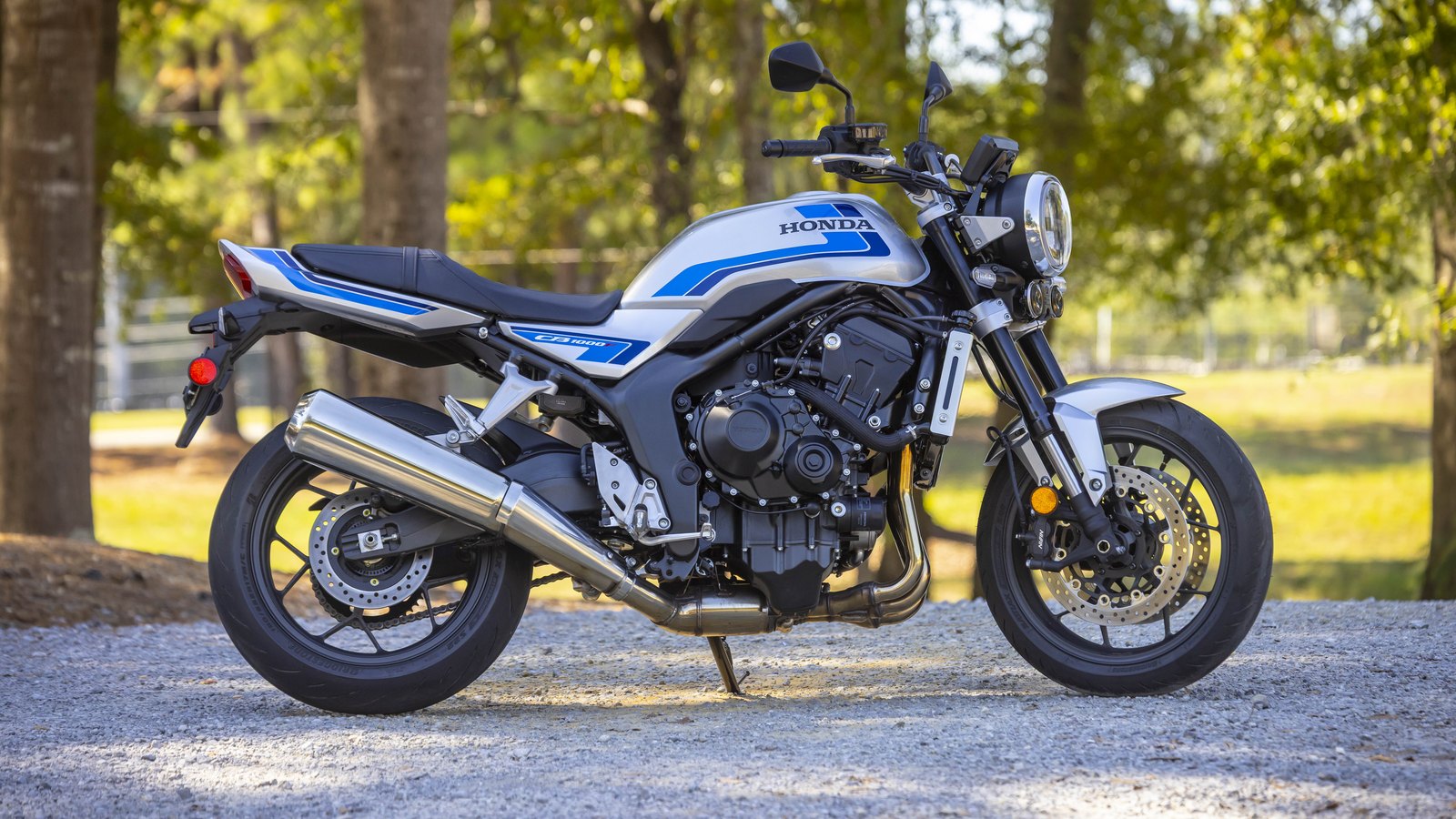
Follow the lines from the tank through the side cover to the tail section and the blue paint swoops. The original did that in 1979, every Honda four copied it for a decade, and for good reason. It looks amazing.
It has two horns, because the original had two horns. Nobody needs two horns, but somebody at Honda fought for them in a meeting and I’m glad they won. They’re also two slightly different sizes so they harmonize, just like the cam lobes and the intake funnels.
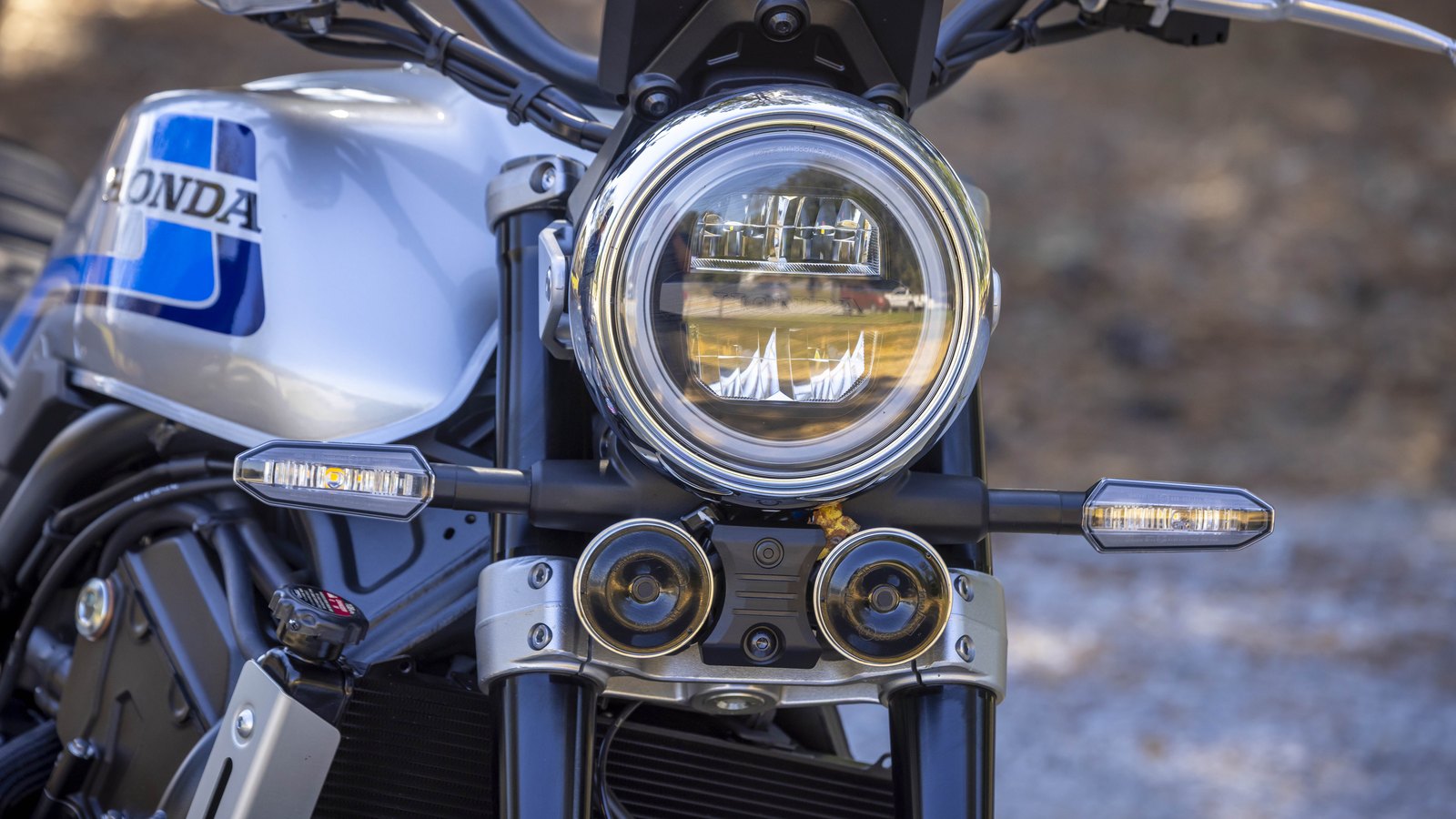
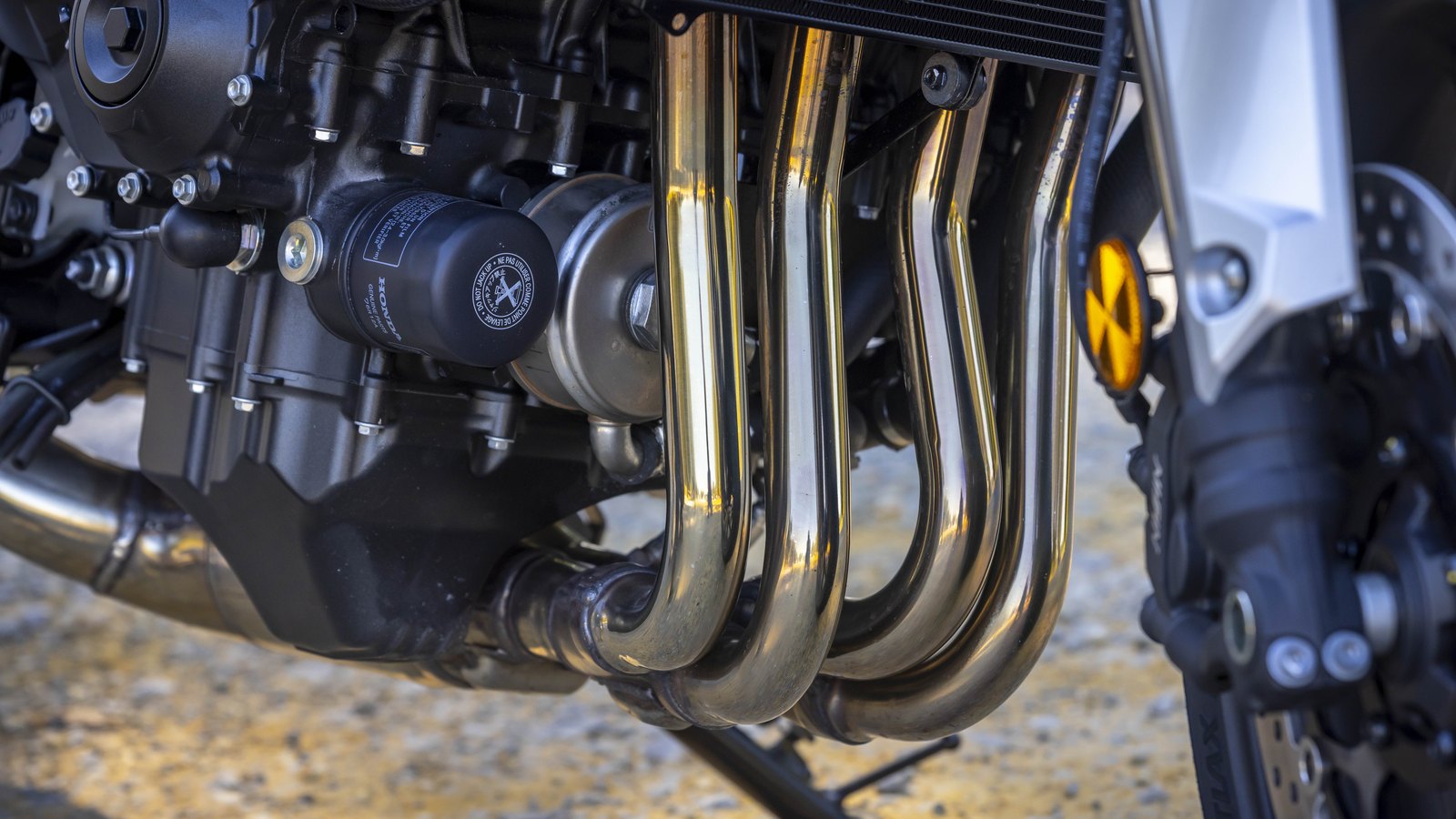
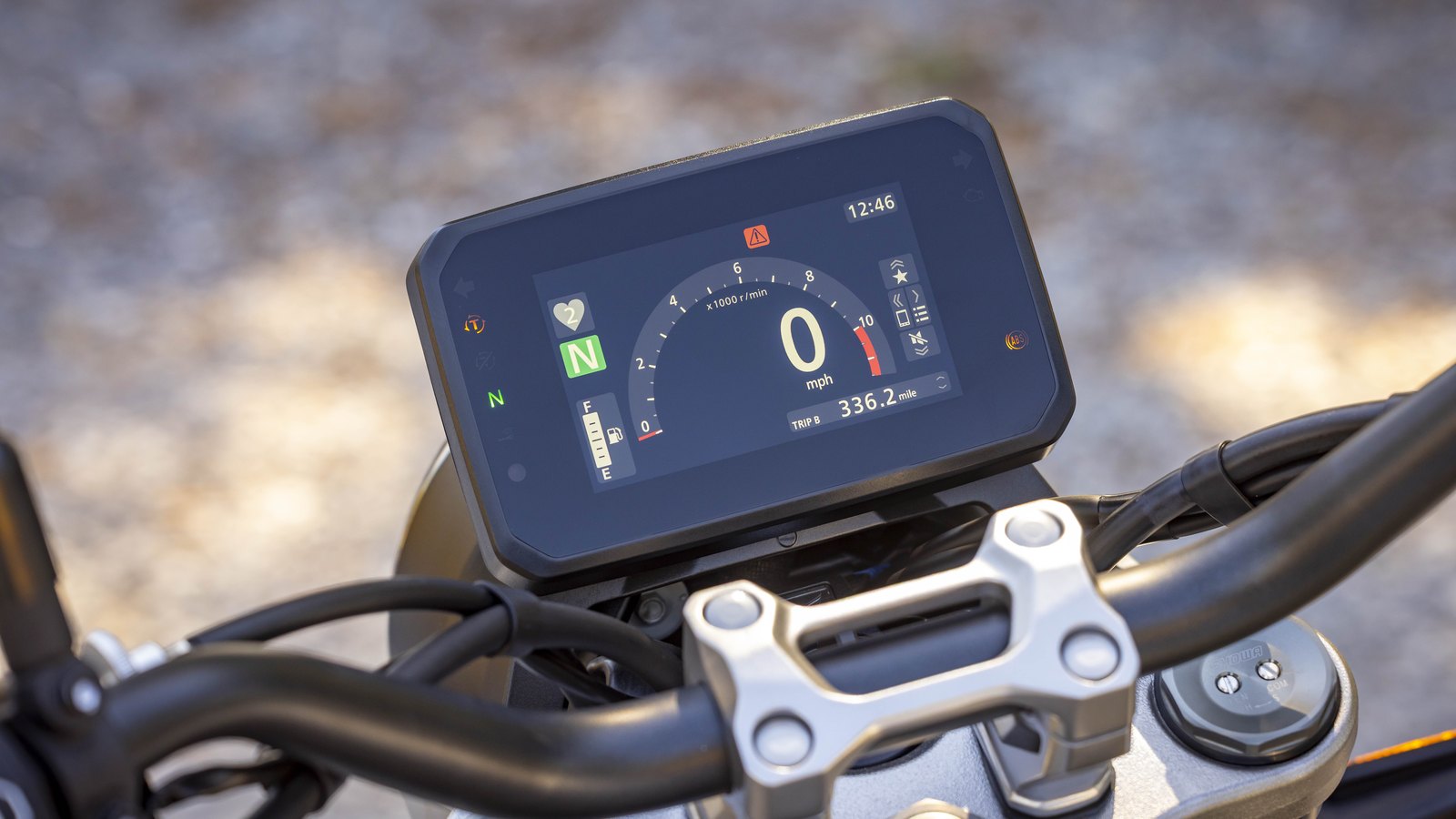
Add chrome header pipes, a megaphone exhaust and luggage hooks on the tail, as if it’s still a world where you bungee a sleeping bag to the back seat and ride through Yellowstone. Then you look down at the gauges and find the TFT from a Transalp. That might be the only aesthetic miss. A TFT can display anything, so why not two round dials, like in the before times?
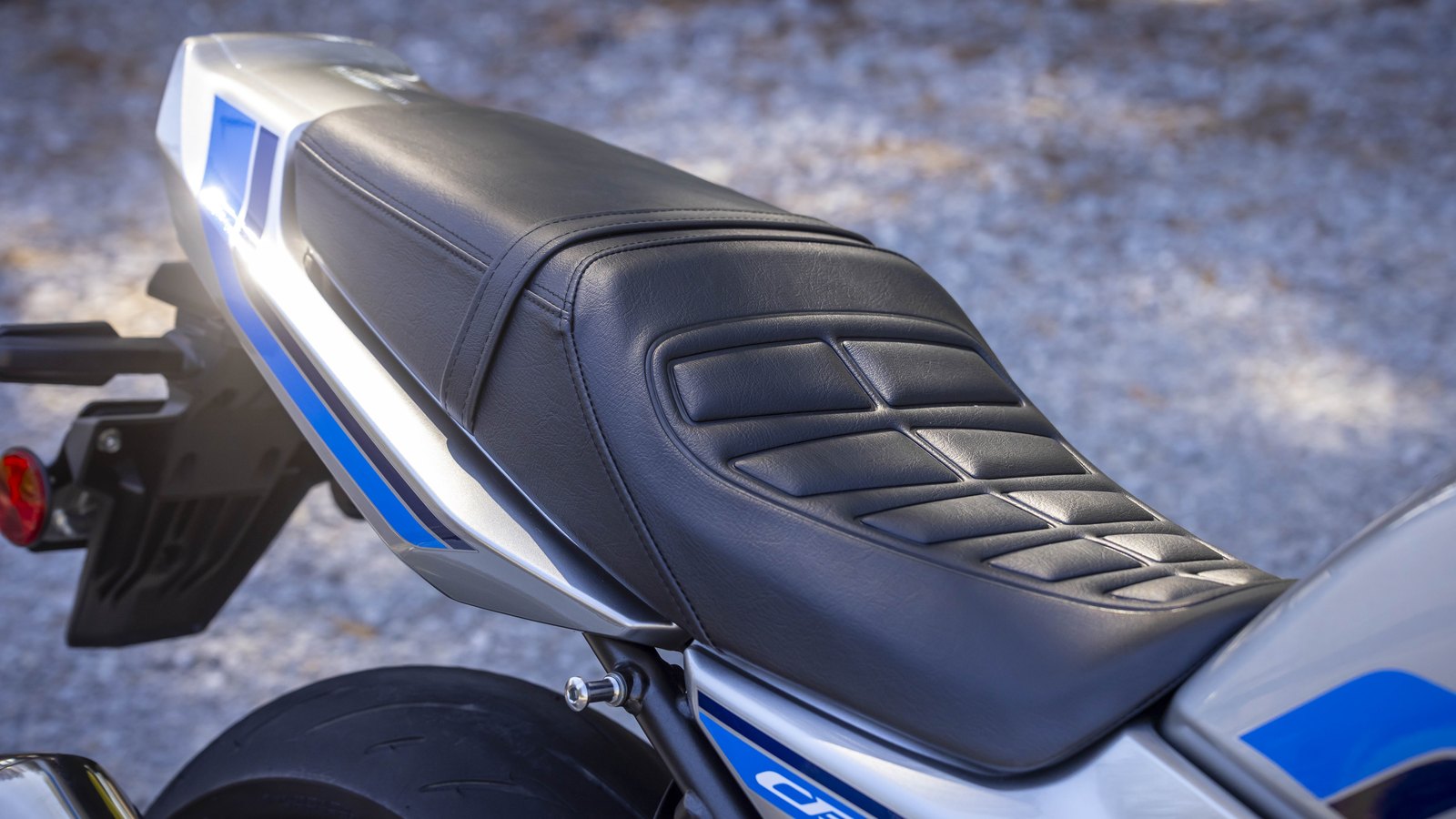
The seat is low, wide and flat. I can flat-foot it easily and sit on it all day. The pegs feel a little high relative to the seat, and the bar is tall and swept back. For how I ride, I’d shop for a slightly lower, wider bar, but that’s the joy of handlebars. Thirty minutes and you have the bike you always wanted.
One thing missing: self-canceling turn signals. Every rider in our group had clearly been spoiled by them. After nearly every turn, at least one of us rode a mile or more with a signal blinking away.
A Modern Bike Doing an Impression of an Old One
That’s really the whole motorcycle. It’s a modern bike doing an impression of an old one, built for people who remember the old one and would prefer not to own it. No choke, no carb balancing, no oil on the garage floor. Who am I kidding, it’s a Honda. The 45-year-old CB750 in your dad’s garage probably isn’t leaking oil either.
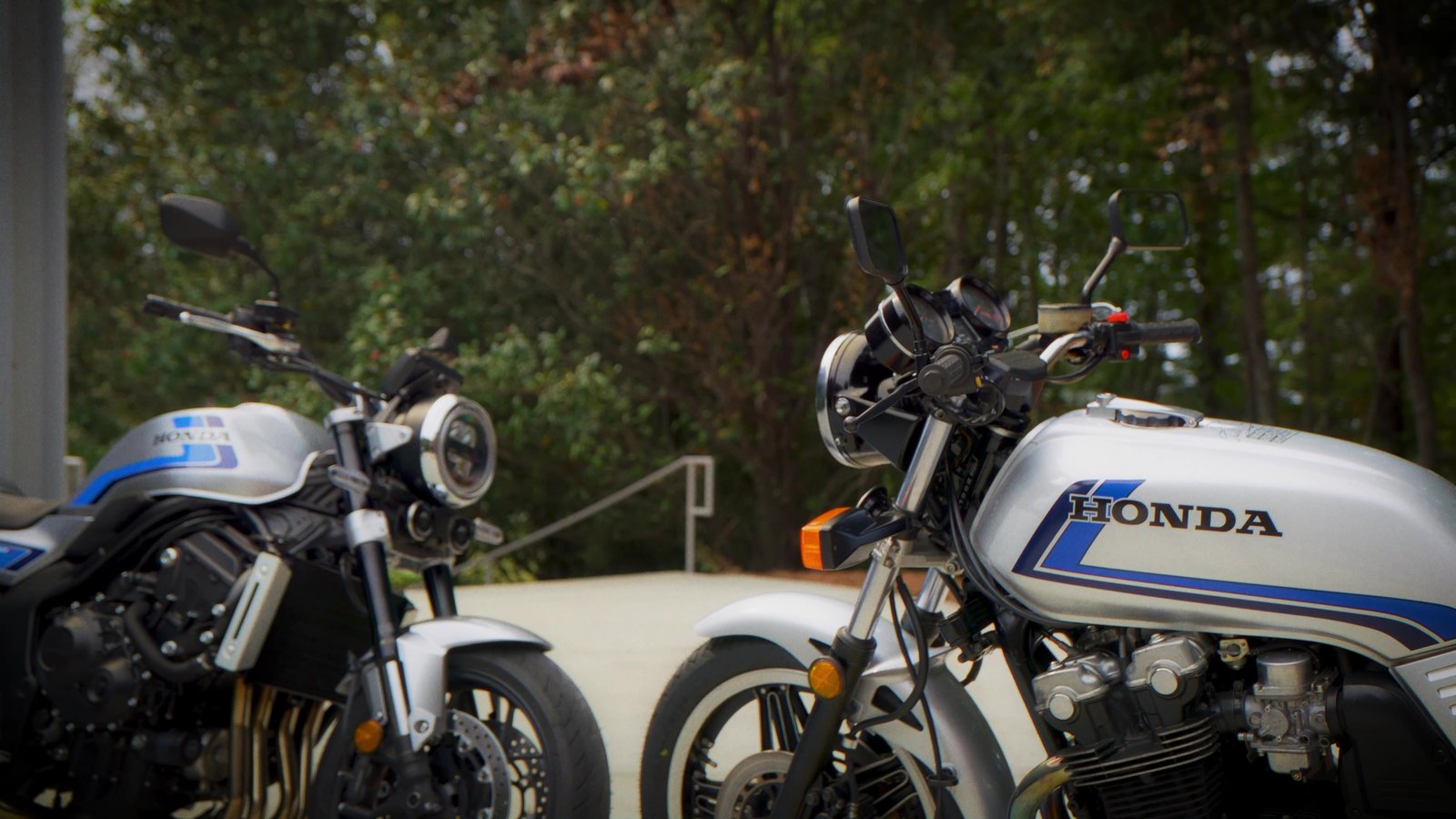
On a spec sheet, the SP wins. But I don’t think anyone considers this bike because of a spec sheet. This is the one you buy with your heart, and Honda knows it. Look at the decisions: softer suspension, a torque curve moved down low, an intake tuned to sound lumpy and a ride mode pretending to have carburetors. Every one of those pushes the bike toward riding like my uncle’s CB750F.
If you want the faster bike, the SP sits in the same showroom for $400 more, special parts included. The CB1000F only makes sense if what Honda took out is stuff you weren’t really using, and what it put in is something you can feel.
Two Real Complaints
I only have two genuine criticisms. First, if you’re going to build a time machine, give it round gauges.
Second, there’s no quickshifter. I can’t think of a reason any motorcycle at any price should leave the factory without one today. Honda will sell you its accessory quickshifter for about $350, which on a bike like this is a rounding error, so check the box at the dealership.
And a small one: Europe gets a black version and we don’t. America gets silver only. I love the silver, and I’d pick it anyway, but I’d still have liked to be asked.
Verdict: Was I Bought With a Paint Job?
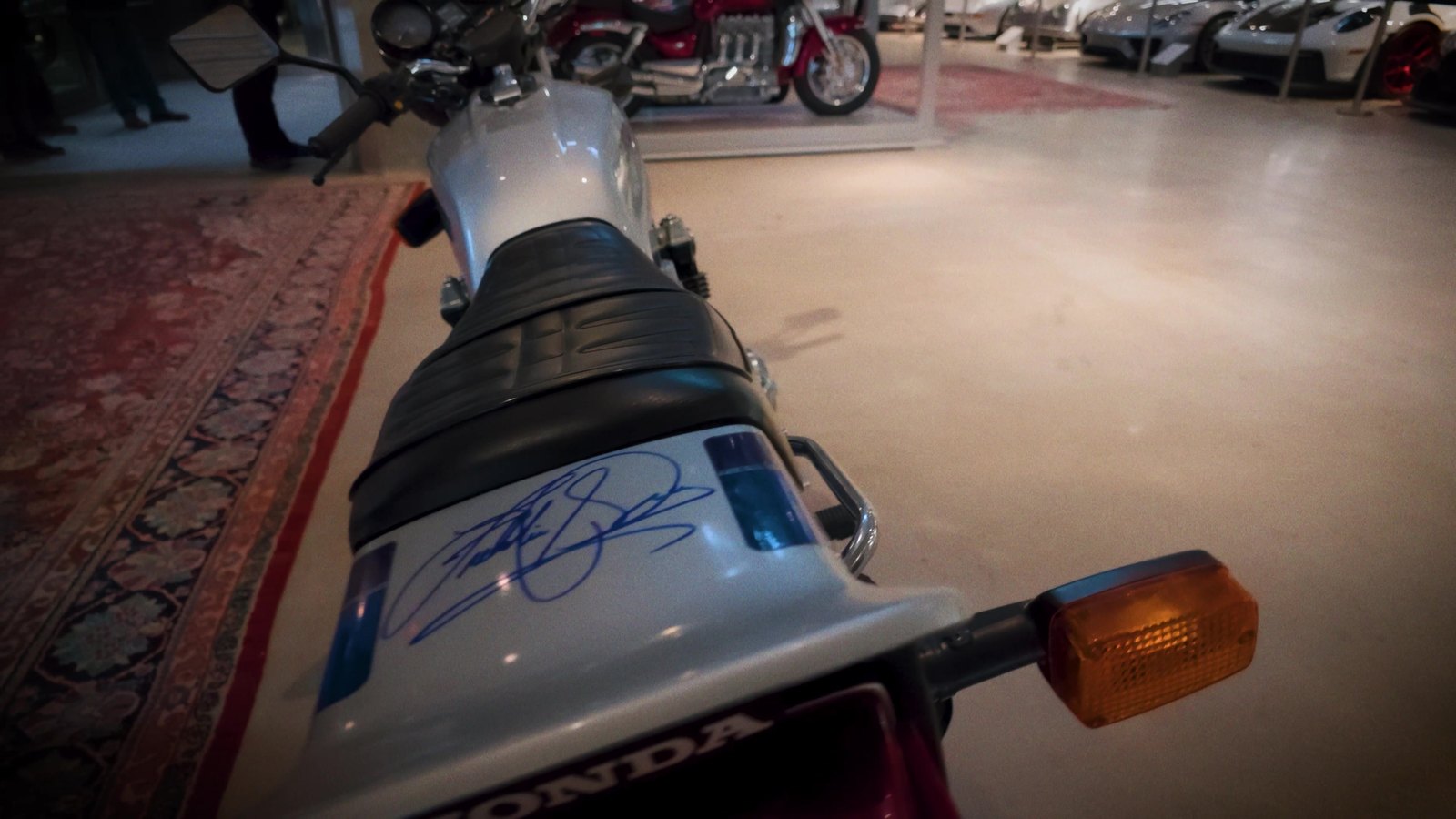
Honda parked an original 1979 CB750F beside a new CB1000F at the Barber Vintage Motorsports Museum. The new one is a little wider, but every shape stays in proportion. It’s a perfect execution, and the paint might even be a little better than the original.
I’m convinced the bike in that museum, the one on Bridgestones, is the one I rode. My only evidence is that just a few press bikes wore S22s, and with a whole fleet of identical CB1000Fs, nobody at Honda was tracking which one the middle-aged YouTuber was on. But I can live in a state of blissful delusion if I want to, so I’m going to say I’m certain. That’s a motorcycle in a museum, previously ridden by me, slowly, behind Freddie Spencer. Honda has declined to put that on the plaque.
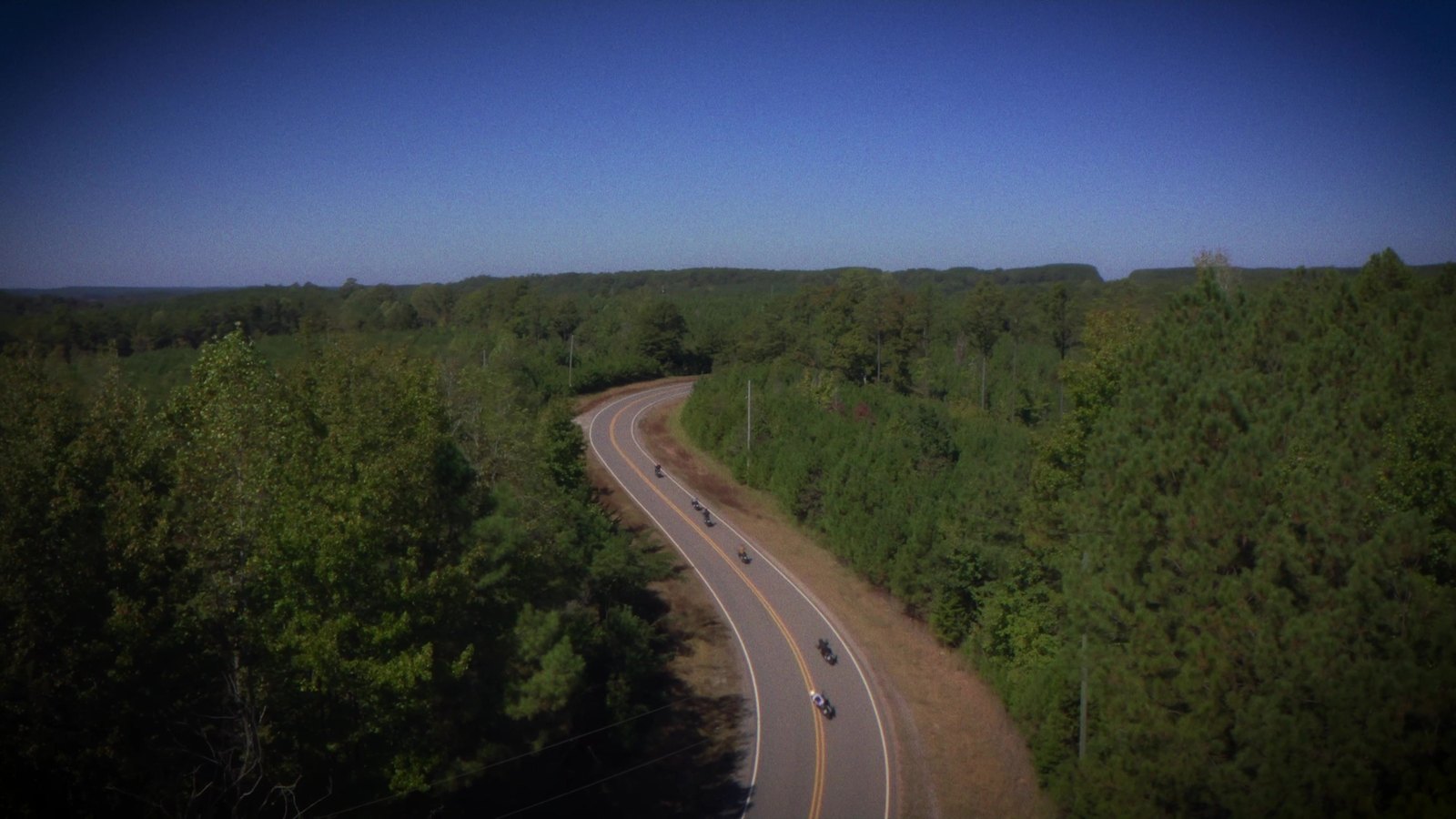
Flying home, what stayed with me was the engine. The way it sounds, the way its character changes with your wrist, the sense that somebody engineered the charm to a tolerance for the riding most of us actually do: twisty roads with boring straight bits in between. I had more fun on it than on the SP. It’s a retro that handles like a modern bike, so you get to have your cake and eat it too.
- Buy the SP if you want the faster, sharper bike and you ride near the top of the rev range.
- Buy the CB1000F if you ride roads, not lap times. Its power, gearing and sound all live where you actually ride.
- Add the quickshifter at the dealership. About $350 well spent.
- Pay attention to tires. The S22 and D214 feel different on this bike, and your next set matters more than the first.
- Budget for stainless brake lines and, depending on your build, a lower, wider bar.
The SP is the faster motorcycle. The CB1000F is the one I’d take. If I’m right, Honda will sell these hand over fist, and everyone who brings one home will be reluctant to ever let it go.