Honda XL750 Transalp
Crossing Alps Without Any Alps
The name Transalp comes from the Latin trans Alpes; to cross the Alps. It’s a promise of distance, endurance, and adaptability. Unfortunately, we’re not in Europe. We don’t have even a single alp.
But mountains come in all flavors, and alpine simply means high mountains. Utah has plenty of those. So we brought Honda’s new XL750 Transalp to Moab, where red rock replaces granite and sand replaces snow, but the nearby La Sal Mountains still climb past twelve thousand feet. If you squint, in the right light, they almost look like the Alps.
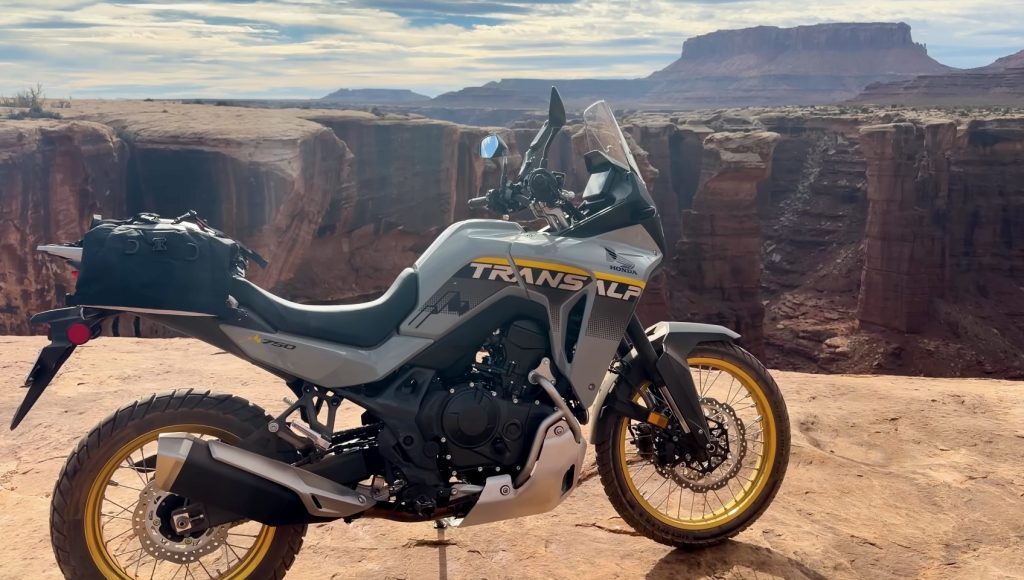
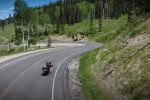
The plan was simple. We’d test the bike’s off-road credibility on the legendary White Rim Trail, then climb the La Sal Mountain Loop, a twisting ribbon of high-altitude pavement, to see if this so-called “light off-roader” could actually live up to its name.
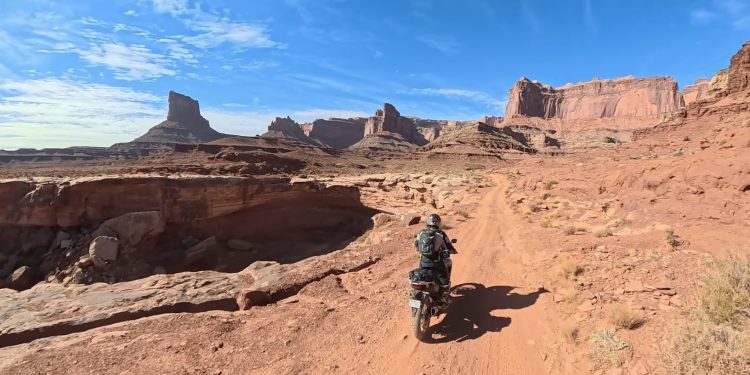
Quietly Getting Things Done on The White Rim
I kept waiting for the Transalp to throw a tantrum. It never did. The front end feels light, steering is quick, and traction control works just hard enough to keep me out of the hospital. The suspension is soft — like a hotel pillow that’s seen some things — but somehow it works. It’s not trying to win Dakar. It’s just quietly getting it done. Which, honestly, feels very Honda.
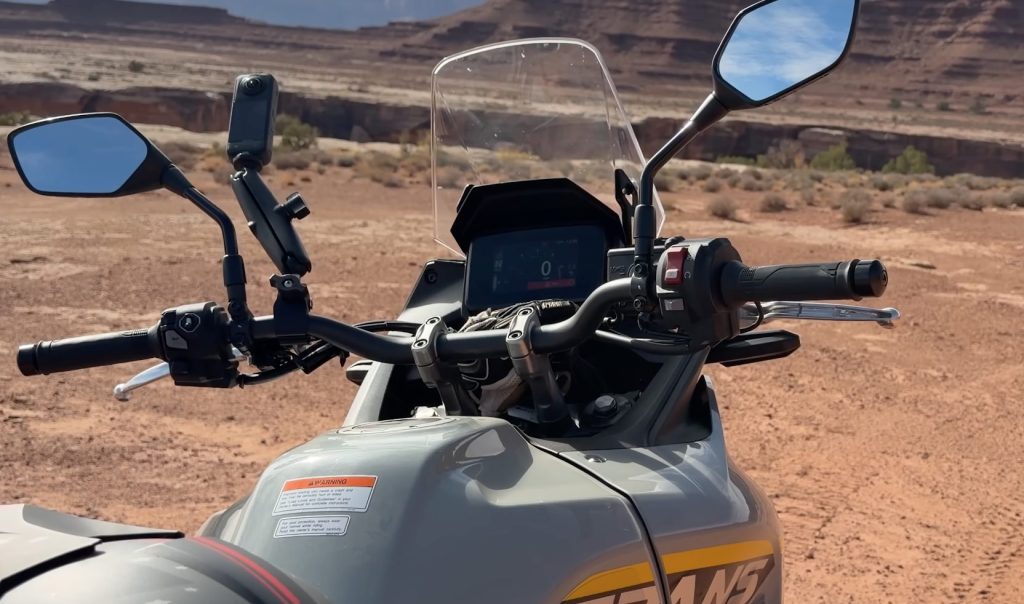
My biggest concern coming into the White Rim wasn’t the bike. It was the tires. Metzeler Karoo Streets look the part, but only barely. They’re a 70/30 tire pretending to be more adventurous than they really are, and I fully expected the first deep sand section to have me paddling like a duck on roller skates. Instead, they surprised me.
On hard-pack and gravel, they feel planted and predictable, even confident tipping into turns. The grip on loose rock is better than it has any right to be. It’s only in soft sand where the limits show themselves, the front tire beginning to search and skate just enough to make you start drafting apology letters to Honda in your head.
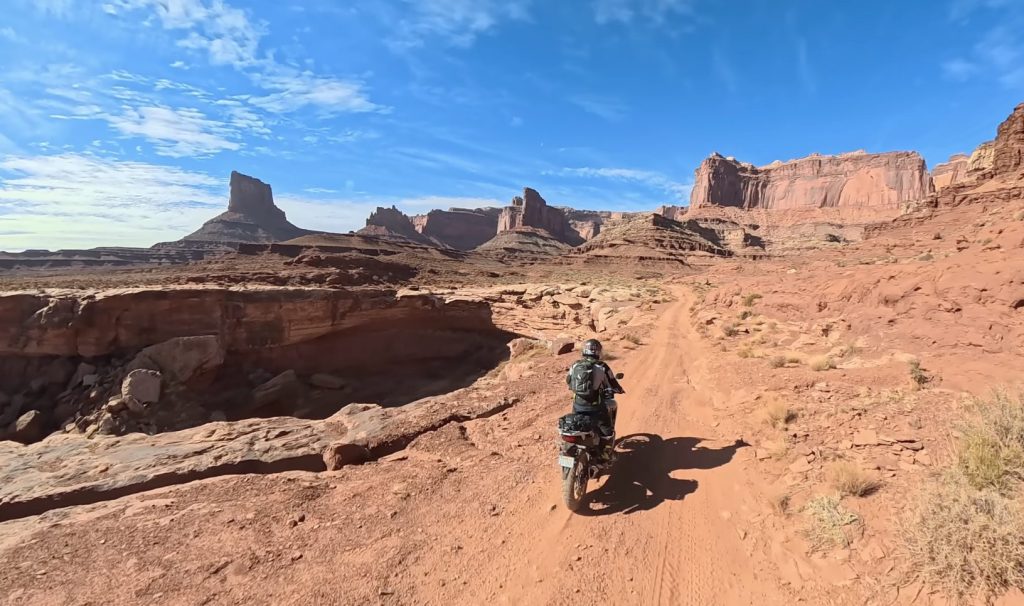
Out here, surrounded by red rock and silence, the experience feels a bit like bringing a rental Corolla onto a Jeep trail and realizing, somehow, you’re still making progress.
When Adventure Gets Real
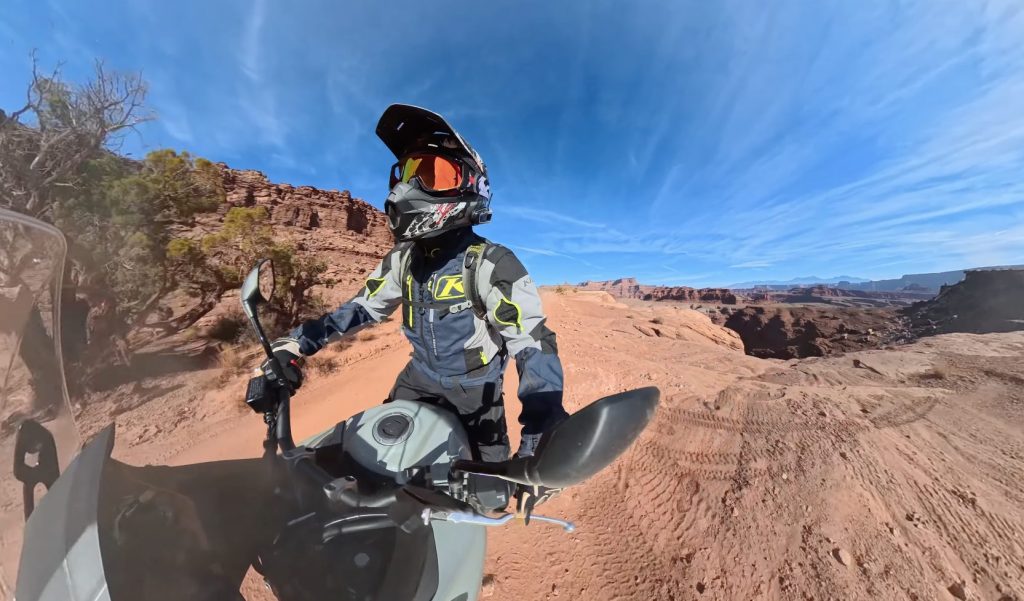
Halfway through the loop, adventure reminded us what it actually means. A rock took out the front valve stem. Flat tire. No spare tube. 50 miles to go.
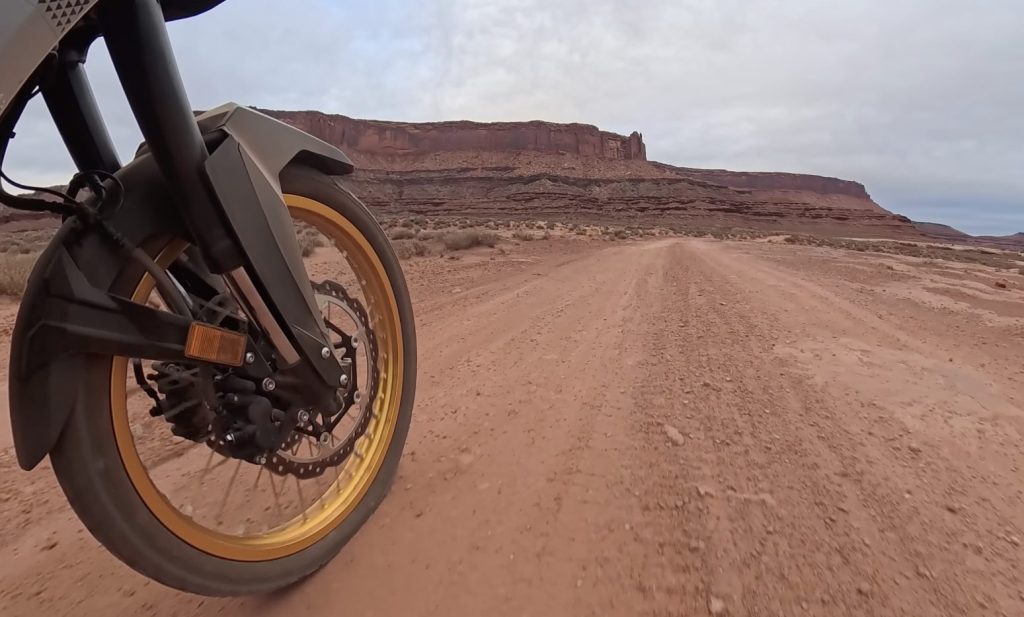
A flat front tire in the middle of Canyonlands isn’t a failure of the bike, or the tire, or Honda. It’s just one of those indifferent plot twists that come with leaving pavement and cell service behind. Adventure always sounds romantic from the couch. Out there, with the bars shaking, the daylight fading, and the temperature dropping, it feels a lot less glamorous.
The Transalp, to its credit, never complained. It just kept moving with a calm, unbothered confidence. Not wild. Not heroic. Just steady. Like it was quietly reminding me that the real variable out here wasn’t the machine.
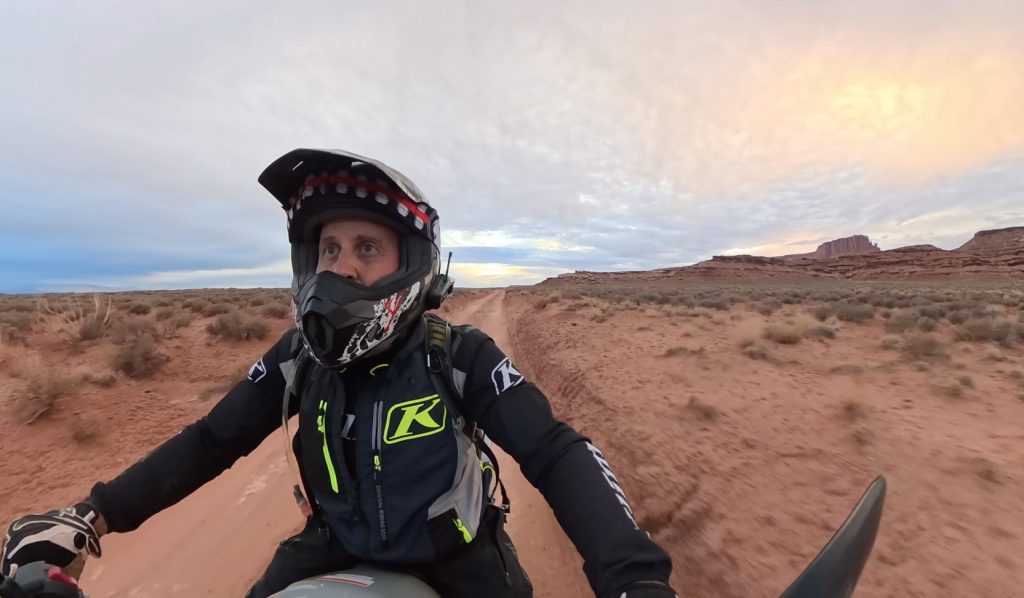
In moments like that, you stop thinking about specs and start noticing ridgelines, clouds, and stars. You become grateful that the story is about a tube and not an injury, that the bike is still upright, and that the worst you’ll take home is exhaustion, red sand on everything, and a better understanding of what “adventure” actually costs.
The Other Half of the Story
The next morning, with help from the crew at MadBro Sports, we were patched up and rolling again. With dust washed off and stress shaken loose, it was time to complete the Transalp’s namesake journey by climbing into the La Sal Mountains.
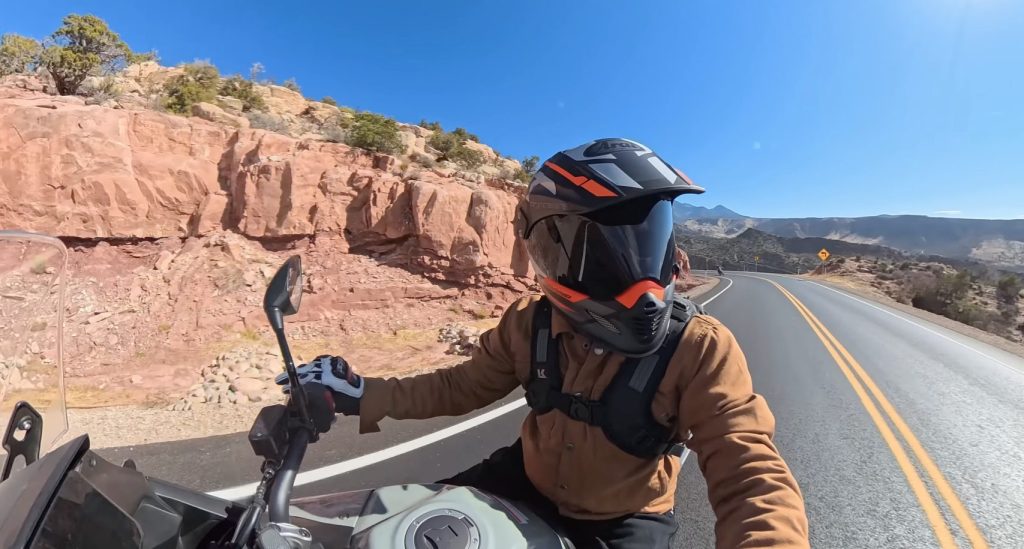
Up here, the contrast is immediate. Pines replace sandstone. Cool air replaces desert heat. And the Transalp’s nineteen-inch front wheel and compliant suspension do a surprisingly good impression of a sportbike. It’s not razor sharp, but it settles into corners with confidence and composure.
The motor feels at home here too. Sure, Europe gets more horsepower for reasons that remain unclear, but the eighty horses we get in the U.S. work hard and do the job just fine, even at altitude.
The only real limitation shows up in the brakes. The two-piston calipers that felt perfectly adequate in the dirt start to feel short on reserve during steep downhill switchbacks. They work, but politely. They ask you to plan ahead.
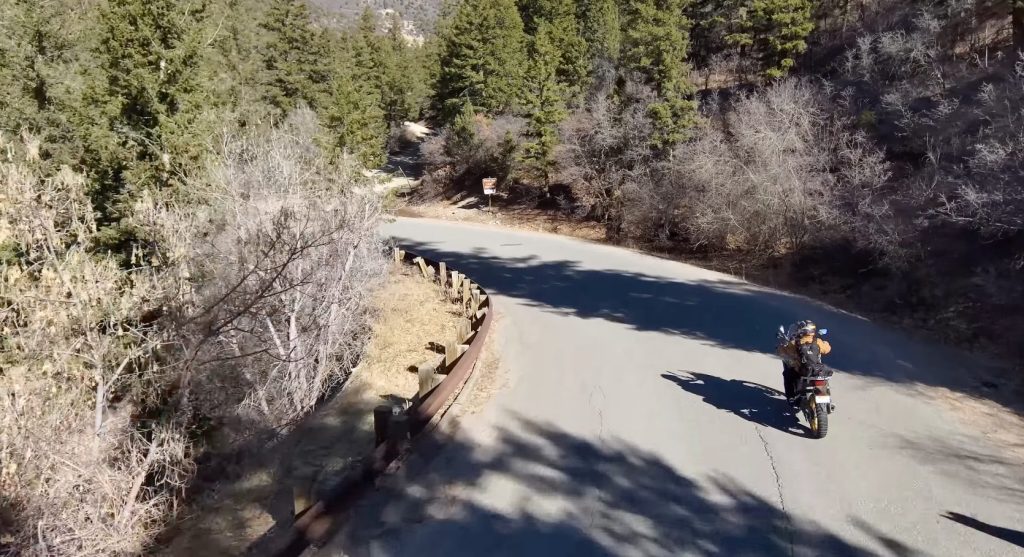
Still, the bike stays calm. Balanced. Predictable. Mile by mile, the Transalp starts to feel like it’s finally showing what it was designed to do.
As the road unwinds and the desert reappears below, it’s hard not to think that maybe this is exactly what Honda meant by Trans-Alp.
Pros
- Balanced, confidence-inspiring chassis. Feels calm and predictable on dirt, gravel, and pavement without drama.
- Approachable engine with usable torque. Smooth, flat torque curve that works well in the real world, especially off-road.
- Soft suspension that works better than expected. Not aggressive, but forgiving and effective for mixed terrain and long days.
- Excellent overall cohesion. Nothing feels mismatched. Brakes, suspension, electronics, and engine all work together.
- Surprisingly capable on pavement. Settles into corners well on the La Sal Loop despite dirt-oriented geometry.
- Traction control and ride modes are simple and effective. Gravel mode feels honest and usable, not marketing-driven.
- Quickshifter is smooth and predictable. Adds polish without getting in the way.
- High build quality and fit and finish. Feels durable, tidy, and unmistakably Honda.
- Strong value under $10,000. Feels built with purpose rather than built to a price.
Cons
- Suspension is undersprung and underdamped for aggressive riding. Bottoms if pushed hard, especially off-road.
- Brakes lack reserve on steep pavement descents. Two-piston calipers work, but require planning and don’t inspire hard charging.
- Tires are the limiting factor in sand. Karoo Streets perform better than expected, but soft terrain exposes their limits.
- Tubed wheels on a modern adventure bike. Flats in remote areas are a real consideration and add complexity.
- Only a single “Gravel” ride mode. Feels conservative and highlights the bike’s intended limits.
- Lower U.S. horsepower compared to Europe. Not a dealbreaker, but noticeable at altitude and on fast pavement.
- Not a hardcore off-road machine. It’s capable, but not designed to win Dakar or replace a true dirt bike.
The Transalp isn’t trying to be the most extreme adventure bike. It’s trying to be the most livable. If you value balance, approachability, and real-world capability over spec-sheet bragging rights, this bike makes a very strong case.
Built With Purpose
For a so-called budget adventure bike, the XL750 Transalp doesn’t feel built to a price. It feels built with purpose. Nothing is overspec’d for a brochure. Nothing is trying to impress you on paper. Everything works together.
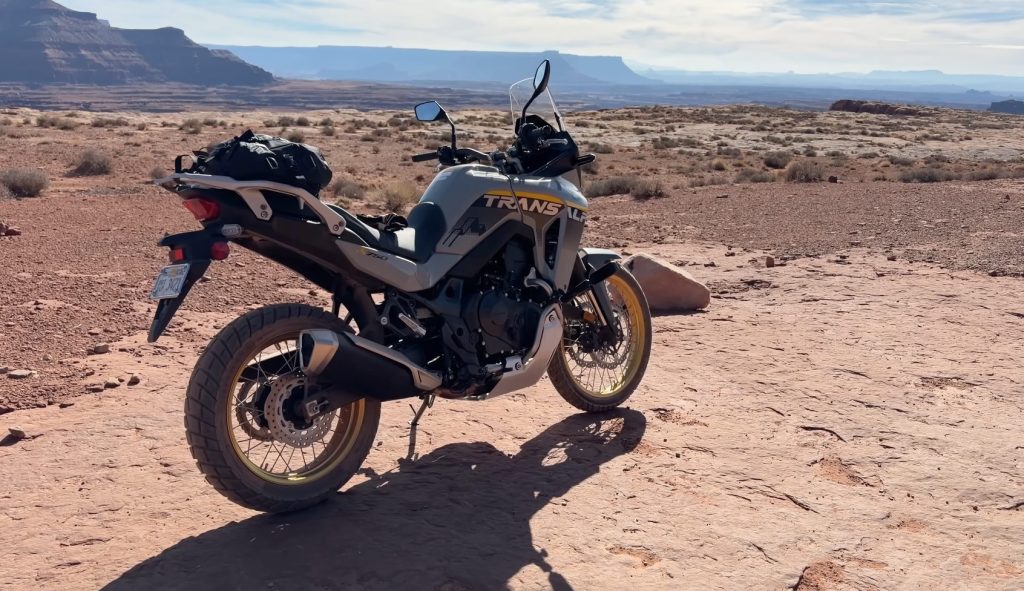
The quickshifter is smooth and predictable. The electronics are simple and intuitive. The fit and finish are exactly what you expect from Honda — tidy, durable, and quietly confident. And with Honda now announcing an E-Clutch version, this already approachable machine could become even more accessible.
After sand, gravel, high-altitude pavement, and one very real reminder of what adventure actually involves, I keep coming back to the same thought. This bike just works.
It doesn’t shout about it. It doesn’t pretend to be something it isn’t. It’s balanced, capable, and honest. An adventure bike that understands its role and executes it without drama.
Which leaves me with one question. Is there anything this bike can’t do?