The Bonneville Salt Flats Are Disappearing, and We’re Racing on What’s Left
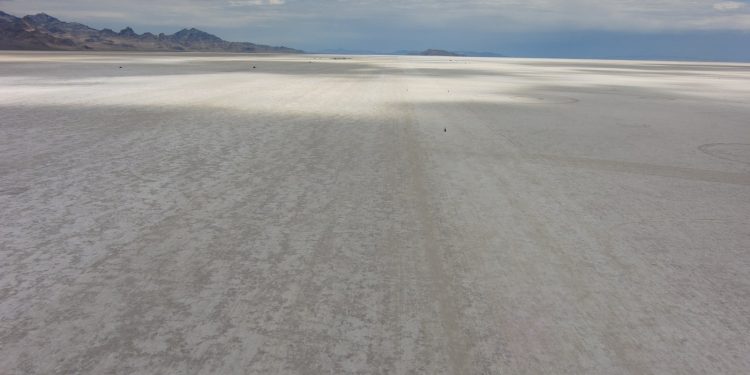
The salt looks eternal. You step out of the truck and the white just goes, miles of it, flat and blinding, running out to a rim of mountains that never seems to get any closer. It feels like the one landscape on Earth that could never change, a place that was here long before us and will be here long after. That feeling is the first thing Bonneville gives you. It is also a lie.
Kneel down and dig a fingernail into the crust and the truth comes up fast. In a lot of places out here, the hard white salt we race on is less than half an inch thick. Underneath it is clay. Not long ago this crust was measured in feet. Today it is a fragile skin stretched over mud, and every racer who comes to Wendover is quietly asking the same question: how many Speed Weeks do we really have left?
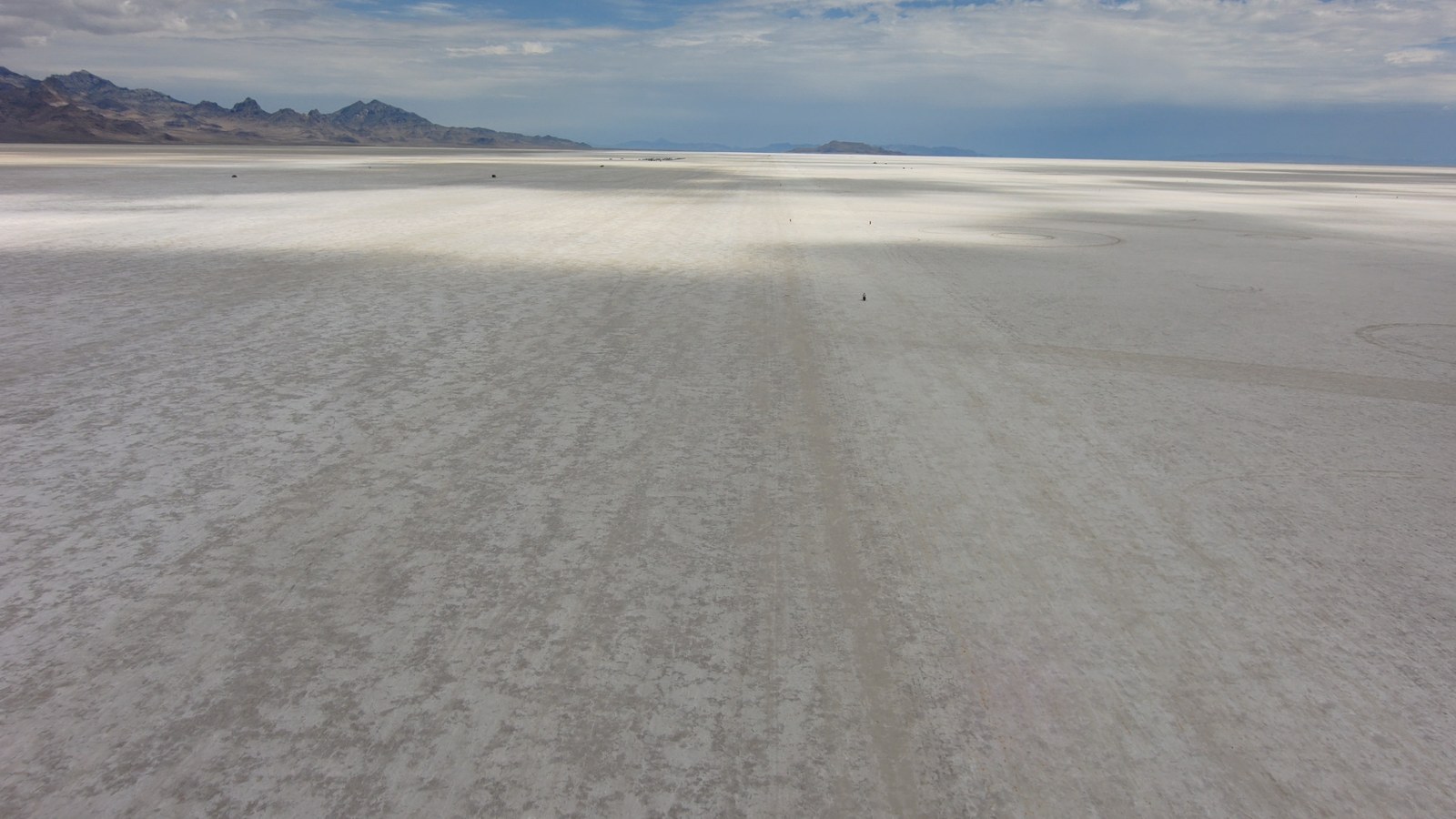
I came out to the Bonneville Motorcycle Speed Trials to shoot bikes going fast, and I did. But the longer I stood on the salt, the more I realized the real story was the ground itself. So before the engines fire, let me tell you how this place was made, what is taking it apart, and why the community that lives for one week a year on this crust might be the most remarkable thing about it.
A Cathedral of Speed
People have been chasing speed on this salt for more than a hundred years. By the 1910s the flats were already recognized as a natural high-speed surface, and by the 1930s and 40s cars and motorcycles were using them to push the outer edge of what was mechanically possible. In 1948, Rollie Free stripped down to a swimsuit and stretched flat out over his Vincent to cut wind resistance, and the photo of that run has been called the coolest motorcycle photograph ever taken. In the decades after, names like Burt Munro and Cal Rayborn turned the salt into a proving ground for anyone chasing the title of fastest on Earth.
Munro’s story became the film The World’s Fastest Indian, and that movie lit a fire under a whole generation of riders who decided they had to make the pilgrimage themselves. That is what Bonneville became: not just a place to go fast, but hallowed ground, a cathedral of speed built out of a century of ambition and risk. Motorcycles have been named after it. When you stand at the line, every run you make carries the weight of everyone who made one before you.
All of it exists because of water that is no longer here. Bonneville is the ghost of an Ice Age lake. When ancient Lake Bonneville evaporated, it left behind a glittering crust of salt that was once more than six feet thick. That is the inheritance. And we are spending it.
Half an Inch of Salt
Here is the part that should stop you cold. Decades of mining and years of drought have stripped this land down to its bones. The thick, deep crust that defined Bonneville for generations is gone in many places, worn down to that fragile half-inch skin with clay waiting just beneath. The surface now buckles and fractures like ice on a river. Every season it gets a little more brittle, and race prep has quietly become a fight with a track that no longer wants to stay whole.
To understand where all that salt went, you have to stop thinking of Bonneville as a dead, static rock. It is closer to a living, breathing thing, and right now it is struggling to breathe.
The Salt Flats Breathe (And Their Lungs Are Failing)
Every year the flats run a slow cycle of inhale and exhale. In winter they inhale, as snowmelt and rain flood the basin and dissolve the surface into a shallow, briny lake. In summer they exhale, as that water evaporates and redeposits its dissolved minerals back into the hard white crust we race on. Inhale water, exhale salt. Do that for ten thousand years and you get Bonneville.
The problem is that the lungs are now failing, and the primary reason sits just south of Interstate 80: the industrial footprint of a potash operation working the ground right next to the racing surface.
The Industrial Puncture
Potash is a potassium-rich salt used around the world as crop fertilizer. The way you harvest it here is to tap the natural brine stored deep beneath the salt crust and pump it up into giant solar evaporation ponds, where the sun does the rest. It sounds harmless. It is not, at least not to the salt.
When you pull that much fluid out of the deep layers, you create a pressure vacuum underneath the flats. Think of it as an industrial-scale puncture in the system. Without that pressurized brine below to hold the surface up, groundwater levels drop and the flow of the entire basin reverses. Instead of the salt exhaling upward to rebuild the crust each year, the flow moves down, and the salt begins to leak away, carrying the racetrack’s foundation into the deep earth. The place is not just wearing out from the top. It is being drained from below.
We Are Trading a Cathedral for a Rounding Error
Here is what makes it hard to stomach. The global potash market is a seventy-six-million-ton machine dominated by enormous mines in Canada and Russia. The operation out here near Wendover is a rounding error by comparison, producing less than one-tenth of one percent of the world’s supply.
If the pumps stopped tomorrow, the global fertilizer market would barely blink. We are not trading the salt flats for food security. We are trading them for a local industrial convenience.
That is the math that keeps racers up at night. This is not a hard choice between feeding the world and saving a racetrack. It is one of the most storied places in all of motorsport being quietly drained away for a sliver of production the world would never miss.
The Climate Squeeze
On top of the mining, a changing climate is making the whole fragile cycle more erratic. Long droughts mean there is not enough fresh water to dissolve and heal the salt back into a smooth surface. Then the rain that does come often arrives as violent flash floods that wash the salt away instead of letting it settle and harden. Heal too little, or wash away too much. Neither one rebuilds a racetrack.
Since 1997 a salt laydown project has tried to pump brine back onto the surface to slow the loss. It helps, but it is a bandage on a system that is fundamentally broken. The salt is disappearing faster than anyone can put it back. For the people standing at the starting line, the clock is not just timing their runs anymore. It is counting down the life of the fastest landscape on Earth.
Why Racing on Salt Is Nothing Like Racing on Pavement
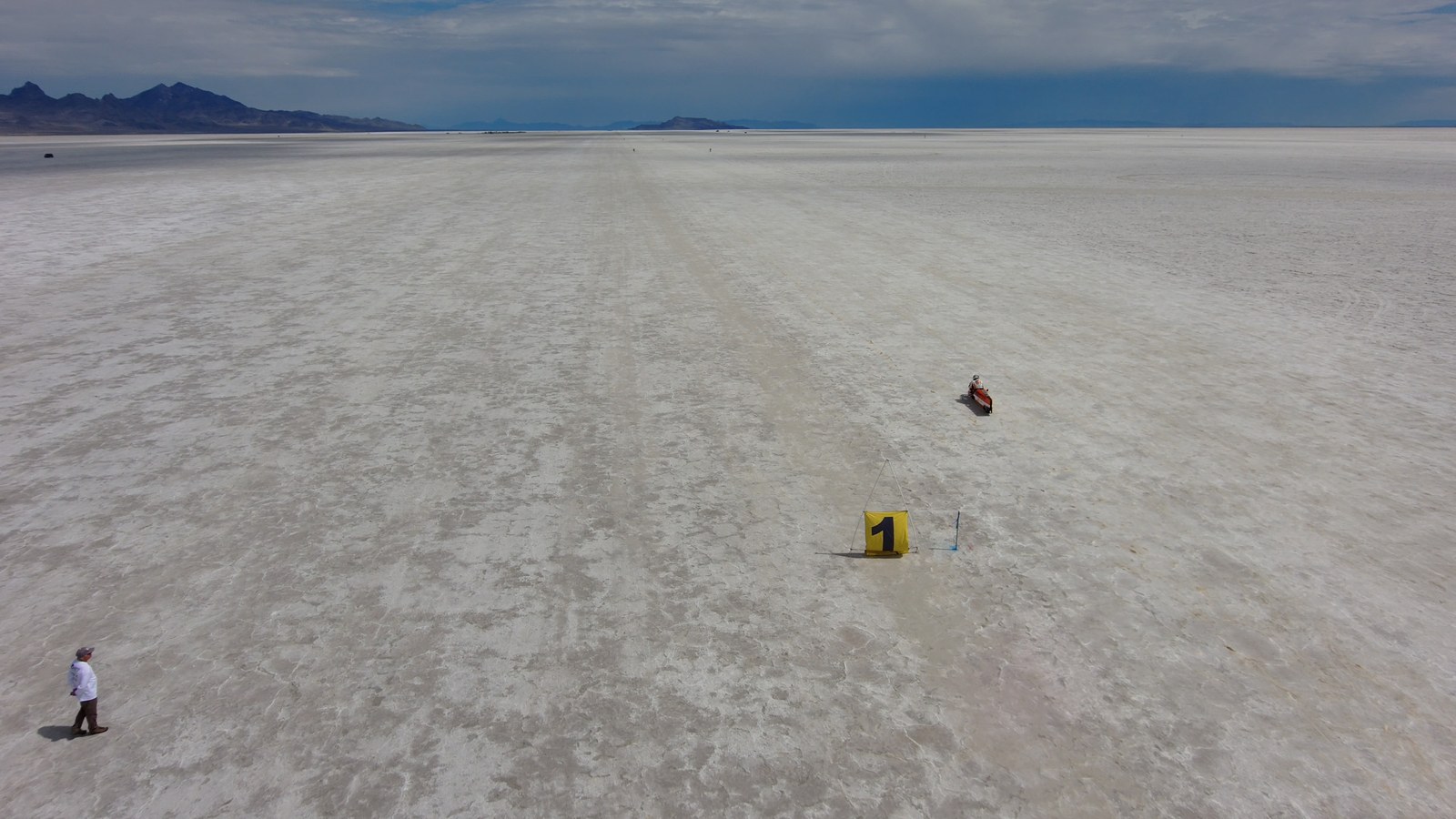
If you have only ever watched roadracing, Bonneville will scramble your instincts. The surface is rough, bumpy, and offers limited grip. Racers get nearly a mile just to build speed before the timed section even begins, and to set a record you have to run it in both directions.
Then there is salt-slip. The rear wheel can spin far faster than the bike is actually traveling, so the salt is quietly stealing speed the entire way down the course. And because the moisture in the salt is always shifting, the grip changes with it, sometimes from one hour to the next. Add altitude to that. You are already at forty-five hundred feet, and as the day heats toward triple digits the air thins further. Racers call it density altitude, and every run literally pulls power out of the engine.
The thinning surface makes all of it more dangerous. On four wheels a bad patch is unsettling but survivable. On a motorcycle, the same fracture in the crust can turn into a life-threatening moment in a heartbeat. And maybe the strangest part is the emptiness. There are no reference points out here, no trees or buildings, just a horizon that never moves and a line of flags. Riders cannot use the usual visual cues to sense speed, and it is easy to get disoriented. The machine and the rider get tested in ways you will not find anywhere else on Earth.
The Most Democratic Racetrack in the World
Here is the twist that made me fall for this place. For all its brutality, Bonneville might be the most democratic racetrack on the planet. MotoGP and World Superbike are essentially gated communities for the ultra-wealthy. The salt belongs to anyone with a wrench and a dream. You do not need a factory contract or a six-figure sponsor to get your name in the record books. You need to show up.
The scale of it is staggering. There are more than seven hundred racing classes. Whether you are running a 50cc moped from the sixties, an electric bike with a hand-built sidecar, or a modern turbocharged liter-bike, there is a category built for exactly the thing you welded together in your garage. Nowhere else in motorsport is the door held open this wide.
Two Vincents and a Sixty-Year-Old Dream
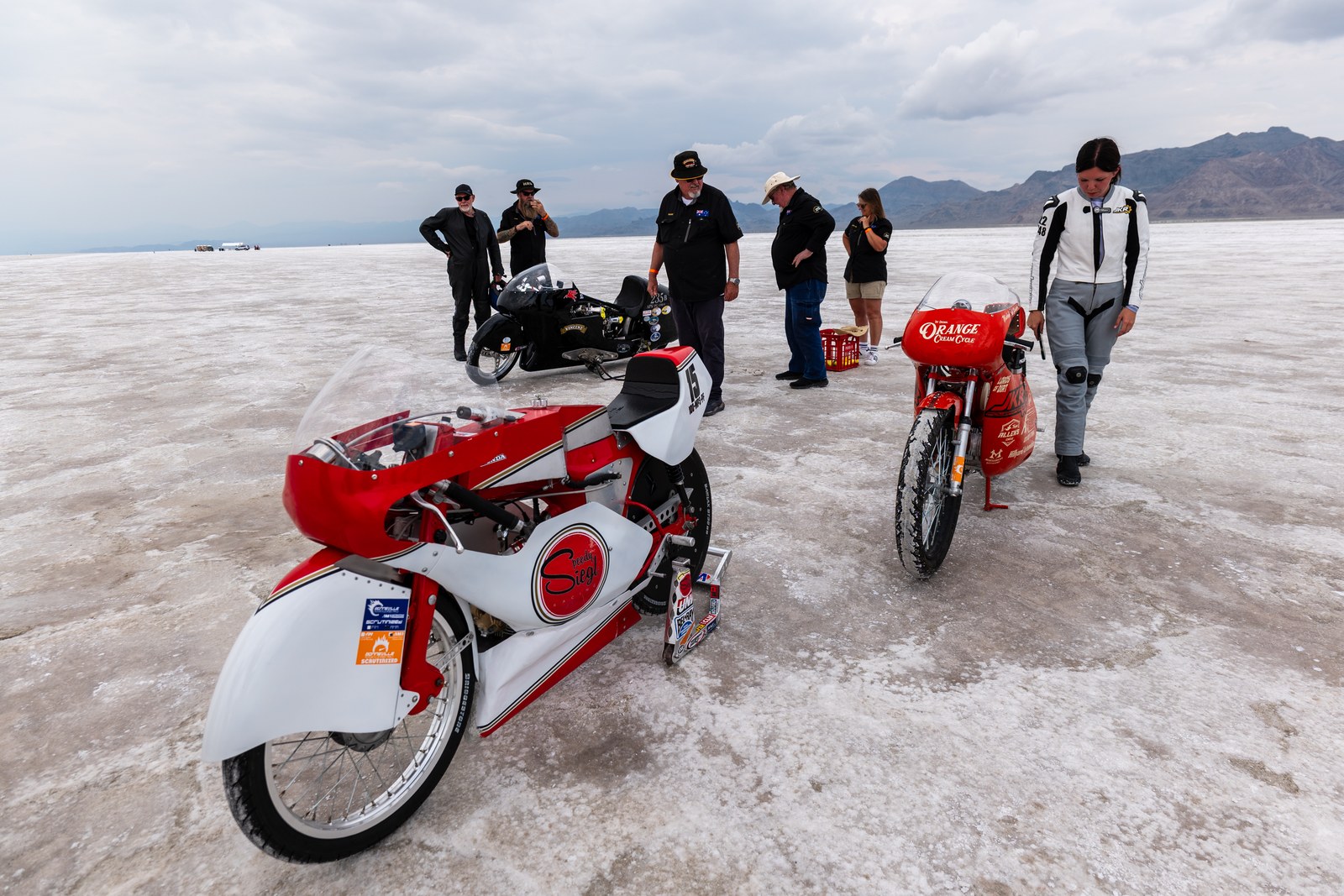
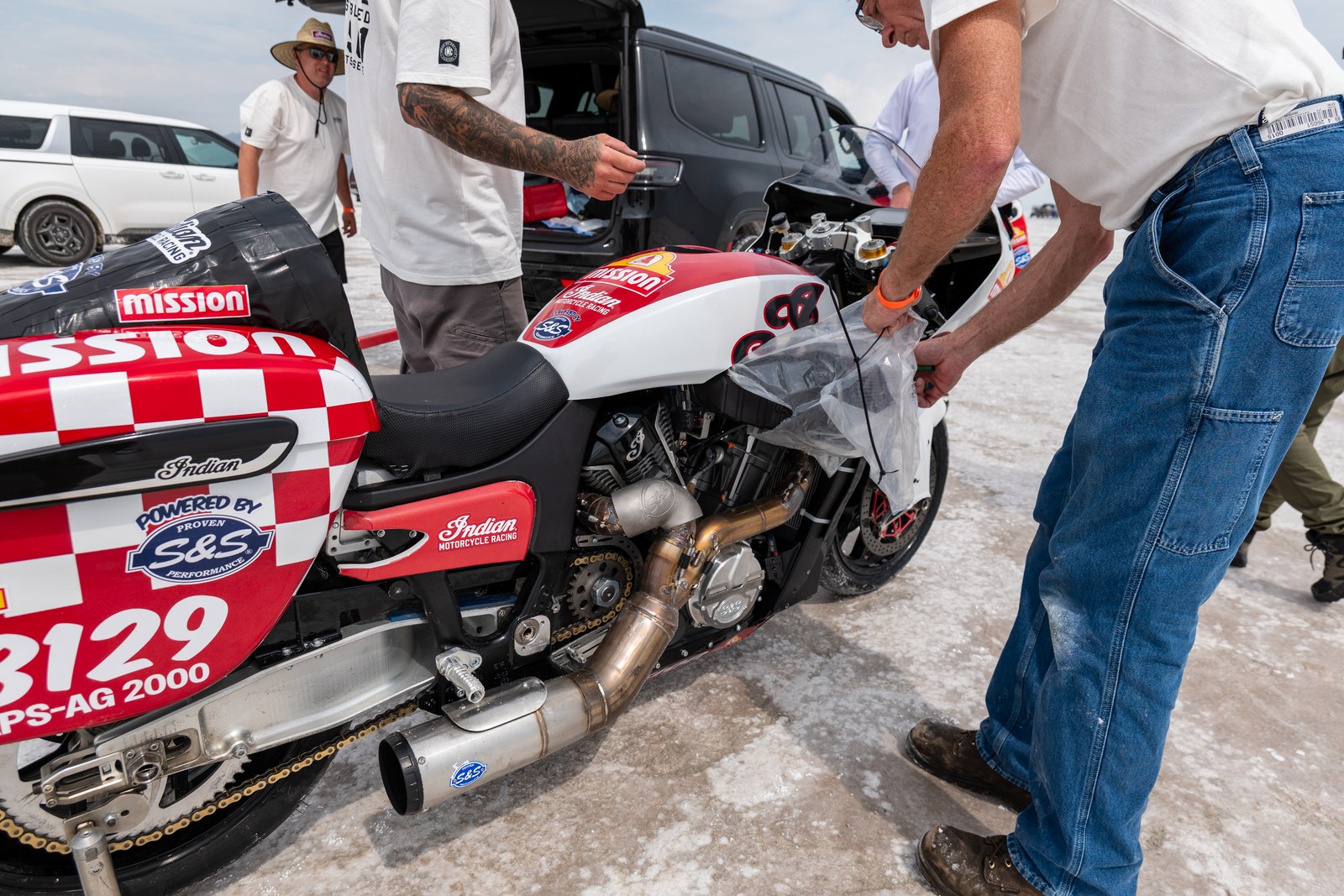
Sometimes the thing in your garage is a piece of living history. During the trials I watched two legendary Vincents run at the same event, direct descendants of the Black Lightning that Rollie Free made famous back in 1948. One of the teams had hauled a sixty-year-old masterpiece all the way from Australia, across an ocean, just to see what it could still do on the white crust.
To see one Vincent on the salt is rare. To see two of them lined up, pinned and howling against that motionless horizon, is close to a miracle. It is a reminder that Bonneville is not really a racetrack at all. It is a sanctuary for mechanical soul.
From the Sidelines to the Start Line
The salt has a way of getting into people. You see it happen every year. Someone shows up just to watch, or to hold a bit of shade for a bigger team, standing in the heat for the real racers. Then five years later she is the one in the leathers, and on her very first pass she clears the far side of 130 miles per hour.
That is the real opportunity of this place. It is not about where you start. It is about the fact that the salt makes room for you. You find father-and-daughter teams who spent years in a garage at two in the morning, hand-hammering a fuel tank for a bike that might only run sixty miles an hour. Whether you are chasing a record at sixty or trying to earn a red hat for going over two hundred, the respect is the same. The salt does not care about your pedigree. It only cares whether you kept showing up.
The Code of the Salt
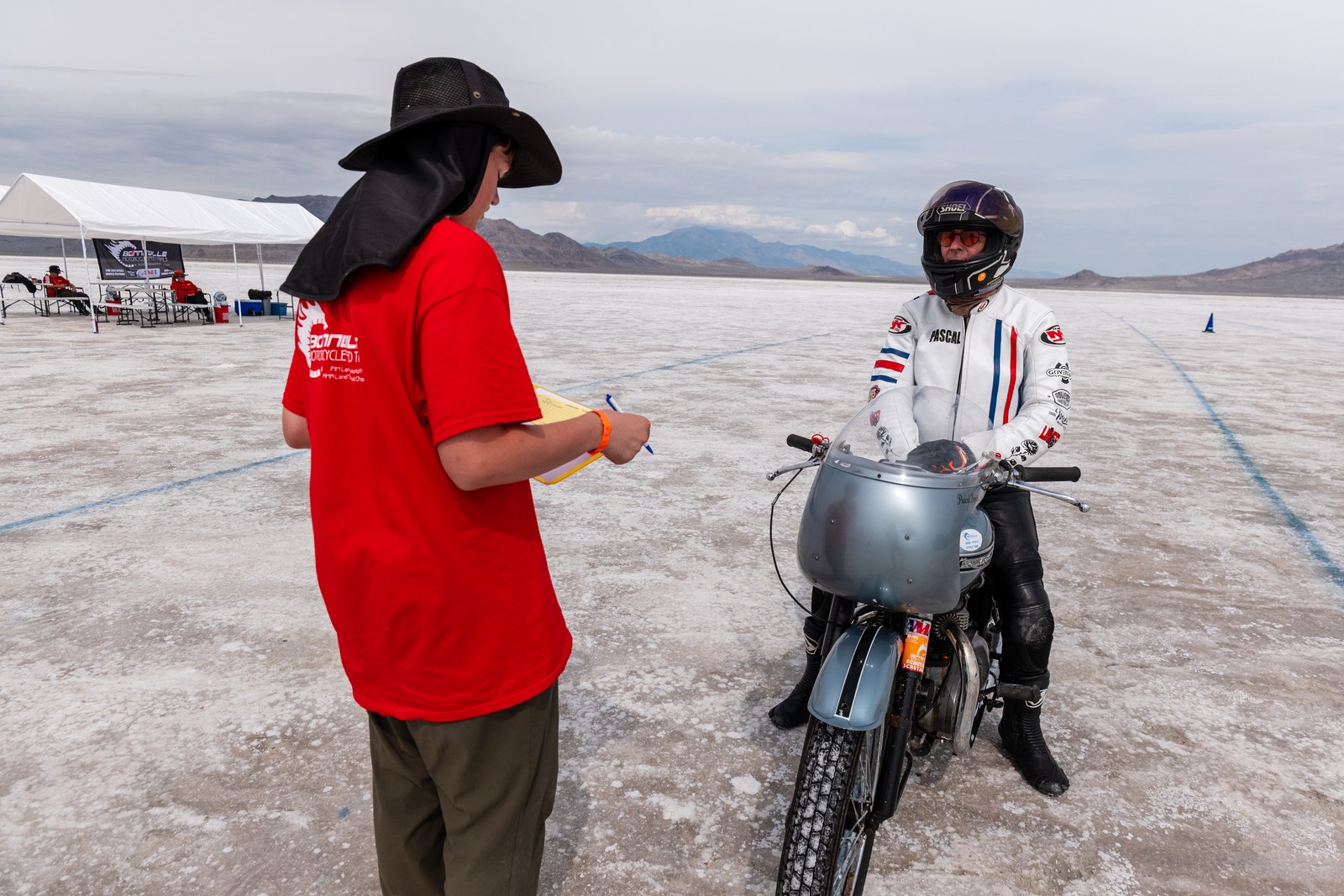
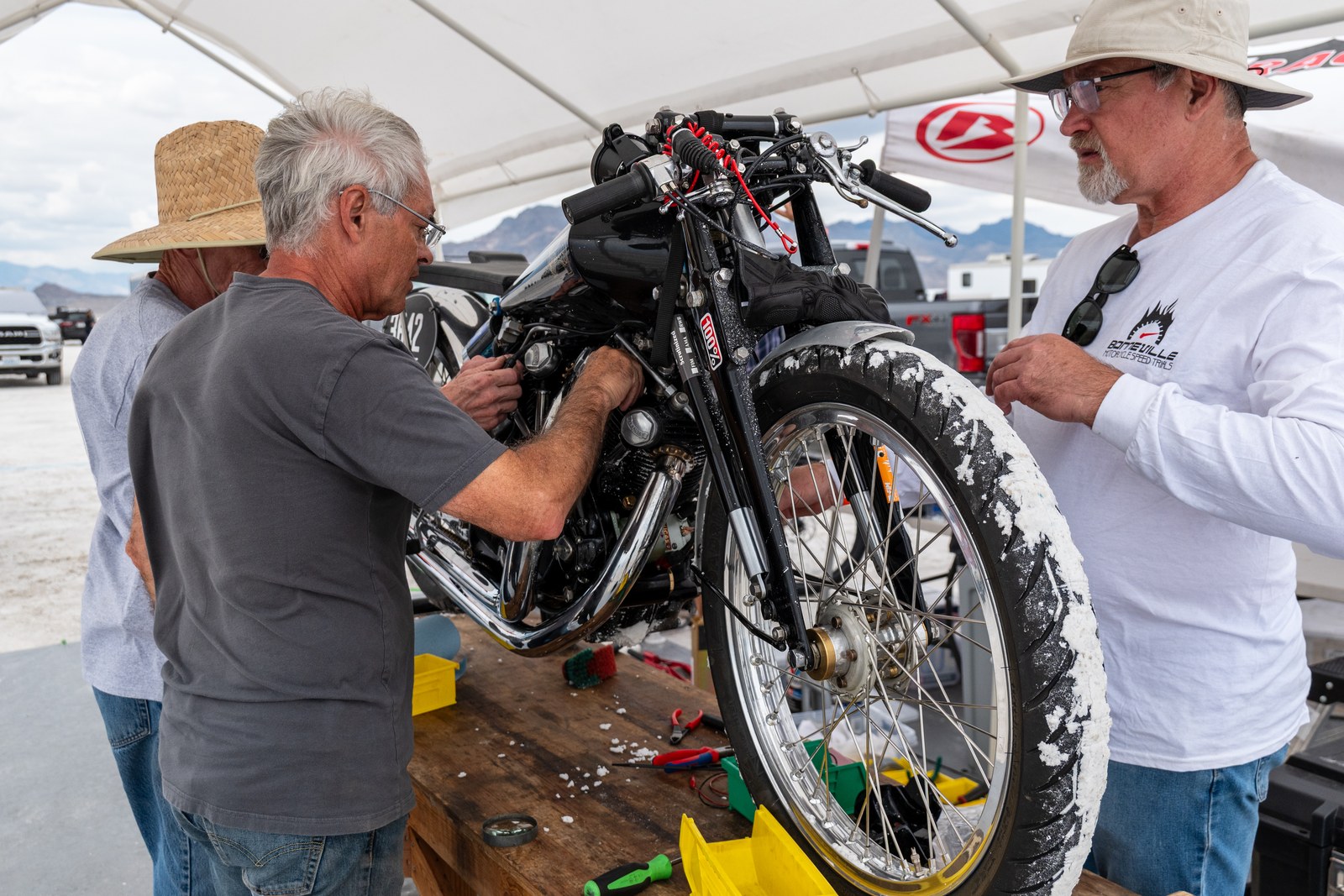
That shared struggle creates a kind of generosity you will not find in any other paddock. Bonneville draws an eclectic cast: veterans in wide-brimmed hats, wide-eyed rookies, couples who have spent their whole lives chasing this horizon together. And they all live by one unwritten rule. You never want to see a bike sit still.
The racer whose name is in the record book right now will be the first person to hand you the sprocket you need to take that record away from him. You will see rivals fixing each other’s engines and total strangers holding shade for a rider they have never met. The extraction and the droughts have taken a lot from this place. The one thing they have not touched is this.
The Silence at the Far End
The most powerful moments out here do not happen at the start line. They happen miles away at the far end of the course, past the crowds and the radios, where it goes quiet. There is a specific kind of magic in sitting on a ticking, cooling motorcycle next to the person you love, both of you looking back at a horizon that finally, for one moment, stood still.
We talk about Bonneville in terms of speed, but for the people who live for this week it was never really about the number. It is about the run. It is about showing up with something unfinished and believing it deserves a chance to move. The salt may be thinning and the future may be uncertain, but that spirit is the part no drought and no pump has been able to drain away.
Go See It While You Still Can
Bonneville is not a spectator sport the way most racing is. Safety keeps you well back from the course, so you will not watch bikes tear past from start to finish. But nowhere else on Earth can you wander the pits, talk with the racers, and become part of their journey the way you can here. The people are as eclectic as the machines, and together they make this event unlike anything in motorsport.
So if the white horizon has pulled at you at all, know that the gate is open. This is an invitation, not a show meant to be watched from a distance. Whether you want to volunteer, help preserve the flats, or eventually line up at the start yourself, the path runs through the Bonneville Motorcycle Speed Trials, an all-volunteer event that lives and breathes this salt. You can find the rulebook, class listings, and registration at BonnevilleMST.com.
And if you are not ready to twist the throttle just yet, consider joining the fight for the ground itself. Groups like Save the Salt are working to pressure for restoration of the crust, so that one-tenth of one percent of the world’s potash does not end up costing us the fastest place on Earth. The salt is thinning, but it is not gone. There is still time to walk this cathedral, to hold a wrench for a stranger, and to find out exactly how fast your own dreams can go. Do not wait for the final chapter. Come out to Wendover. See it, smell it, race it. Because once you have tasted the salt, the horizon never looks the same again.