Motorcycling Is Not Dying. But It Is Dying Here.
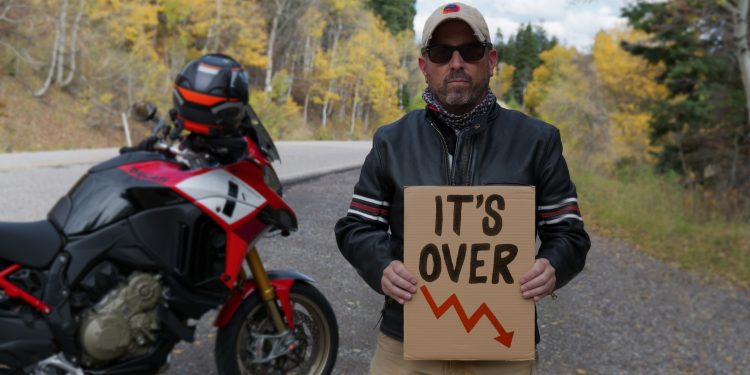
Motorcycling is dying. That sounds dramatic. Statistically, it is also true.
In the first half of 2025, new motorcycle sales in the United States dropped 9 percent. That is the weakest start in more than a decade. Used motorcycle sales are also falling, which almost never happens.
Meanwhile, India sold roughly 20 million motorcycles last year and continues to grow more than 3 percent annually. Latin America is up more than 20 percent. Europe is down slightly, but globally, motorcycling has never been bigger.
Half of the world uses a motorcycle or scooter every single day. Just not us.
In the United States and Canada, motorcycling increasingly looks like vinyl records. A nostalgic hobby for people who remember blowing on Nintendo cartridges to make them work. And the data shows it. The median age of a US rider is now 47.
- It was 40 in 2009.
- It was 32 in 1990.
Only 6 percent of riders are under 25, down from 16 percent thirty years ago. That trend shows up clearly in my own analytics.
- Only 5.7 percent of viewers on this channel are under 25.
- Seventeen percent are under 34.
- Twenty one percent are under 44.
- Twenty two percent are under 54.
That means roughly a third of you are over 55.
People who grew up dreaming about motorcycles are aging out. Almost nobody is replacing them. So the real question is not whether motorcycles are dying. They are not. The real question is why they are dying here.
The Cost Problem Is Real
Part of the answer is money. It is almost always money. The average price of a new motorcycle has increased more than 40 percent since 2020. That is before insurance, riding gear, or the nine hundred dollar helmet you convinced yourself was an investment.
Insurance for young riders now averages around two thousand dollars per year. For most twenty year olds, that is not weekend toy money. That is ramen noodle money.
Combine that with student debt, record high rent, and wage growth that moves slower than an electric Harley project, and you have a problem. Motorcycles are no longer accessible entry points. They are luxury purchases priced like used cars.
The Perception Problem Is Worse
When I was a kid, motorcycles meant freedom. They meant rebellion. They meant Steve McQueen jumping fences and Tom Cruise racing jets down runways.
Today, motorcycles are more likely to appear in a life alert commercial.
But this is not just a vibe problem. It is a math problem. We are losing riders faster than we are finding new ones. No one has figured out how to sell a retirement home track day package yet. That creates what the industry calls a demographic time bomb.
Even if sales look acceptable today, the entire ecosystem depends on a customer base that is aging out. Helmets, jackets, tires, training, events, insurance all rely on riders who are closer to retirement than their first motorcycle.
The younger generation grew up with phones that summon transportation in seconds. For them, motorcycles are not freedom. They are extra steps.
And frankly, you cannot blame them. For decades, we told young people motorcycles were dangerous, irresponsible, and expensive. Then we priced them like compact cars.
The Part Nobody Likes to Admit
Money matters. Demographics matter. Culture matters. But the fourth reason is more uncomfortable. Maybe motorcycling is dying here because of us. We say we want new riders. Then the moment someone buys a 250, a guy named Bruiser appears in the comments to call them a coward.
We tell beginners to start small. Then someone mocks them for not buying something with at least one hundred horsepower.
We say we learned the hard way. Then we use that as justification to haze the next generation. Entry level riding has turned into “you are not a real rider yet.” I see it constantly. Any time I post about new riders, automatic transmissions, or smaller bikes, the same comments appear.
- Real riders use a clutch.
- Only girls ride small bikes.
- If you are afraid, you should not ride.
I pin those comments on purpose. Nothing highlights stupidity like giving it the microphone. Mentorship has quietly turned into gatekeeping. And gatekeeping pushes people away before they ever fall in love with riding.
When we were new, someone handed us the keys. They let us stall, tip over, and figure it out. Usually in a driveway with the bike pointed directly at the neighbor’s rosebush.
Somewhere along the way, we decided the next generation had not earned what we were freely given.
What Hooked Me Was Not Power
When I was a kid, I dreamed about a minibike. Specifically, the Honda CT70. It was not fast. It was not powerful. It was not even cool compared to the sportbike posters on my wall. But it was possible.
It was small enough to manage and light enough to pick up. More importantly, it gave permission. Permission to explore. Permission to fail. Permission to try again.
That is what hooked me. Not speed. Not horsepower. The realization that I could go anywhere. Motorcycles were never supposed to be status symbols. They were freedom machines. Somewhere along the way, we lost that.
The Kids Might Already Be Showing Us the Future
Today, I see groups of kids riding small electric minibikes and mopeds. They ride through neighborhoods, parks, and bike paths. They wave at police officers. Nobody cares.
They are outside. They are social. They are modding controllers, overvolting batteries, and hacking speed limiters. It is the same spirit we had with carb jets and sprockets. Just different tools. They hate loud exhausts. They hate fumes. They do not care about displacement or brand prestige. They care about the feeling. And the industry barely sees it.
Manufacturers are busy building thirty thousand dollar electric motorcycles with two hundred horsepower that nobody under fifty can afford or wants. I own one of those bikes. This is not judgment.
But these small, affordable, unintimidating machines might matter more. They are what the CT70 was, reimagined in lithium.
Maybe We Have It Backwards Maybe saving motorcycling is not about making bikes louder, faster, or more expensive. Maybe it is about making them possible again. That means fewer gates and more gardens. That means celebrating quiet, weird, affordable bikes that get people hooked.
That means manufacturers building entry points instead of ego trophies. The next generation does not need us to sell them a lifestyle. They need us to leave the gate open. Because these kids are not ruining motorcycling. They are discovering it.
And if that first moment of freedom comes from an electric motor instead of a carbureted one, the feeling is the same. Different, yes. Soulless, no.
If we stop sneering and start nurturing, motorcycling does not die. It changes. And maybe, just maybe, it comes back to life.